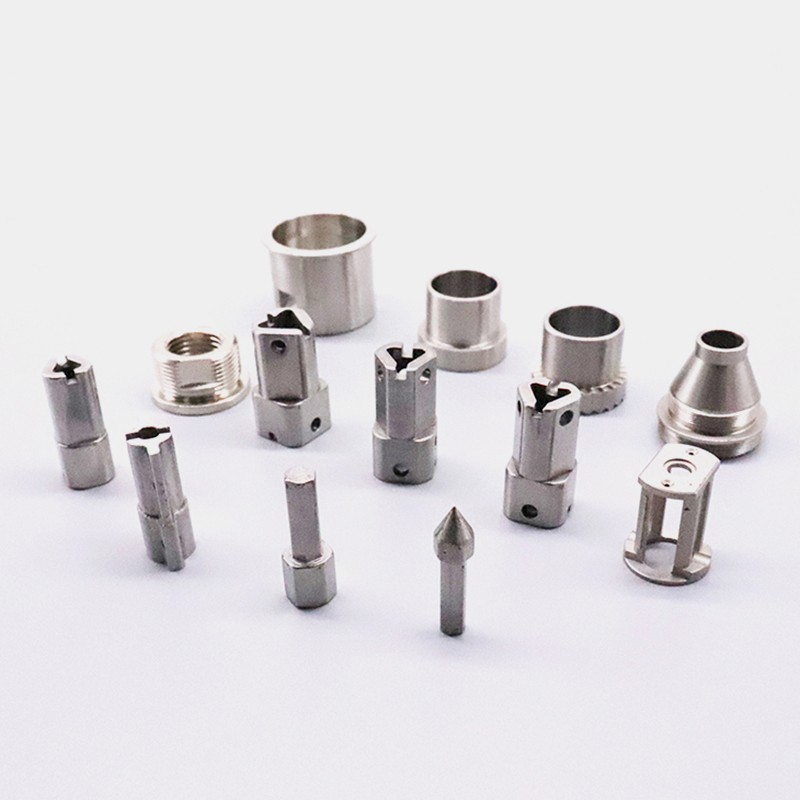
In today’s hyper-competitive landscape, the demand for advanced CNC machining solutions now is no longer a luxury—it is an operational necessity. Engineers and procurement professionals face immense pressure to compress product development cycles while simultaneously pushing the boundaries of geometric complexity and material performance. The market is flooded with suppliers promising speed and accuracy, yet the gap between marketing rhetoric and on-the-ground reality is often vast. This blog post dissects what genuinely constitutes a “next-generation” CNC machining partner, analyzes the critical pain points in the current supply chain, and explains why a holistic, process-integrated approach—exemplified by established manufacturers like GreatLight Metal—offers the most secure path to manufacturing success.
Understanding the True Meaning of “Advanced CNC Machining Solutions Now”
The phrase “Advanced CNC Machining Solutions Now” encapsulates three distinct pillars: technological sophistication, comprehensive problem-solving, and immediate, reliable execution. It is not merely about owning the latest five-axis machine; it means deploying that machine within a robust ecosystem that includes intelligent programming, in-process inspection, capable post-processing, and rigorous quality assurance. A true solution provider anticipates challenges before the first chip is cut.
The industry has long wrestled with a fundamental disconnect. Many job shops can produce a single high-precision prototype, but few can replicate that precision with statistical consistency across a production run of thousands. This is where the concept of advanced CNC machining solutions now must evolve from a technical boast into a systemic capability. It requires a manufacturing partner that has invested equally in hardware, software, talent, and management systems. For clients navigating the complexities of new product introduction (NPI), selecting a partner with verifiable operational depth—like GreatLight CNC Machining—is the first and most critical step toward de-risking their project.
The Seven Critical Pain Points in CNC Machining That Demand Immediate Solutions
Before we examine what makes a solution “advanced,” we must fully appreciate the problems it must solve. Based on extensive interaction with R&D teams, hardware startups, and procurement managers, seven recurring pain points consistently undermine project timelines and product quality.
1. The “Precision Black Hole”: The Gap Between Promised and Delivered Tolerances
This is arguably the most insidious issue in the industry. A supplier may boldly advertise capabilities of ±0.001mm, but these claims often unravel under the scrutiny of mass production. The root causes are varied: aging spindles that cannot maintain thermal stability, inexperienced operators who misread blueprints, or a lack of standardized fixturing. The “precision black hole” describes the stage between the first article inspection report and the 500th part, where tolerances inexplicably drift. A reliable partner uses real-time monitoring and statistical process control (SPC) to close this gap, ensuring that every part, from the first to the last, meets the specification.
2. The Quality Cheating Game: When Supply Chains Take Dangerous Shortcuts
In a race to lower costs and expedite shipping, some suppliers resort to questionable practices. This can manifest as substituting specified certified materials with lower-grade equivalents, reducing cycle times by sacrificing surface finish, or—most dangerously—falsifying inspection data. For industries like aerospace, automotive, and medical devices, such “quality cheating” can have catastrophic financial and safety consequences. An advanced CNC machining solutions now provider operates with complete transparency. They maintain a separate quality department with authority to halt production and provide full material traceability backed by international standards like ISO 9001.
3. The Communication Black Hole: A Disconnect Between Engineering and Execution
The translation of a design engineer’s intent into a physical part is fraught with interpretation risks. A common scenario involves an engineer designing a pocket with a sharp internal corner, assuming a standard end mill can create it. Without proactive communication from the manufacturer, the machinist might simply drill a larger radius, rendering the part non-functional. This “communication black hole” extends beyond DFM feedback. It includes opaque project status, delayed responses to queries, and a failure to flag potential issues early. Advanced solutions rely on dedicated project engineers who speak both the language of design and the language of machining, facilitating a seamless handoff between CAD and CAM.
4. The Hidden Cost of Secondary Operations: The “Unpolished” Profit Killer
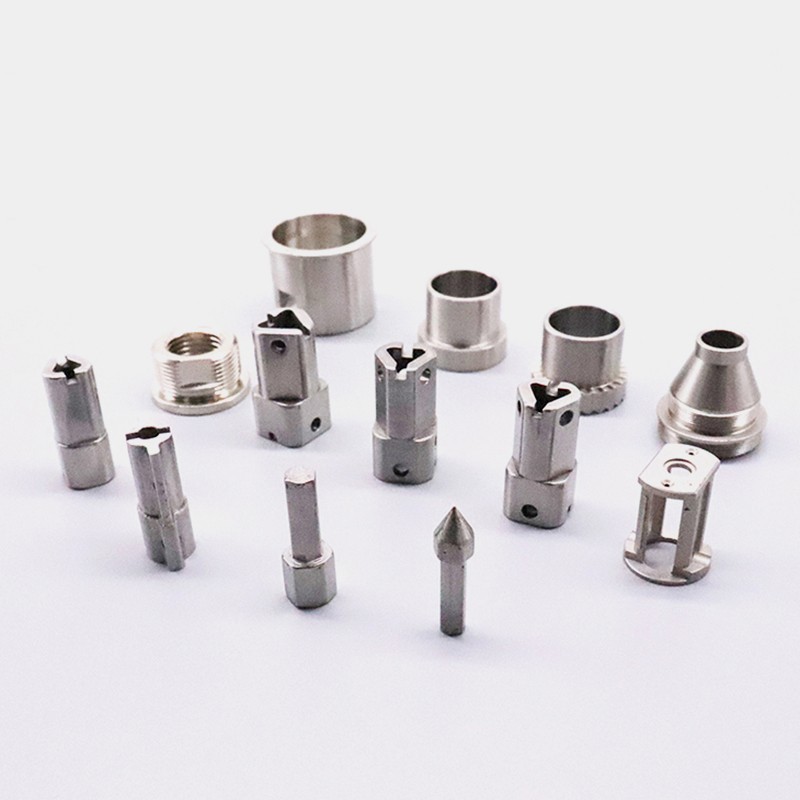
Many clients focus solely on the cost of the CNC machining hours, overlooking the significant expenses of secondary operations. A part might be machined to tolerance, but if it requires manual deburring, expensive vibratory finishing, or specialized surface treatments like anodizing or passivation, the total cost and delivery timeline can balloon unexpectedly. This becomes a nightmare when the supplier lacks these in-house capabilities and must outsource, adding a layer of logistics, waiting time, and quality risk. The solution is to choose a manufacturer with a “full-process chain,” one that can move a part seamlessly from machining to heat treatment to surface finishing under one roof.
5. The Speed Trap: Prototype “Fast” vs. Production “Slow”
A classic industry phenomenon is the “speed trap.” A supplier may boast a 24-hour lead time for a single prototype, effectively “buying” the job. However, when the project scales to low-volume production of 100 or 500 parts, their delivery performance degrades into the graveyard of missed promise dates. This happens because their production planning is ad-hoc, their tooling management is poor, or they lack the capacity for sustained throughput. An advanced CNC machining provider balances its agility for prototyping with the discipline of lean manufacturing for production. They maintain a dedicated production planning team that simulates flow, manages tooling inventory, and buffers machine capacity to ensure on-time delivery.
6. The Single Material or Single Process Pigeonhole
Many suppliers specialize in a narrow band of materials or processes—perhaps only aluminum 6061, or only three-axis milling. When a project requires a complex assembly featuring a machined aluminum housing, a die-cast bracket, and a 3D-printed plastic duct, the client is forced to manage multiple suppliers, creating a nightmare of quality standards, shipping logistics, and payment terms. True advanced CNC machining solutions now are multidisciplinary. They integrate CNC machining with die casting, sheet metal fabrication, injection molding, and additive manufacturing under one management structure, simplifying the client’s supply chain and ensuring part-to-part fit across different manufacturing technologies.
7. The Innovation and Engineering Desert
Finally, many suppliers act as mere order-takers. They receive a drawing, program a machine, and spit out a part. There is no value-add, no suggestion for a more cost-effective design, no insight into a better tolerancing scheme. In today’s environment, where product complexity is skyrocketing, this passive approach is insufficient. The client needs a partner who brings engineering expertise to the table—a partner who can analyze a design and say, “If we adjust this fillet radius by 0.5mm, we can eliminate a second setup and save you 30% on cost without affecting performance.” This engineering desert is a missed opportunity for innovation and cost reduction. A partner with deep application engineering capabilities is the antidote.
GreatLight Metal: A Case Study in Closing the Gap
Addressing these pain points requires more than just a checklist of capabilities. It requires a manufacturing culture built on process discipline, continuous investment, and a partnership mindset. GreatLight CNC Machining provides a compelling model of what an advanced CNC machining solution looks like in practice.
A Foundation Built on Integrated Manufacturing
Located in the heart of Dongguan’s “Hardware and Mould Capital,” GreatLight Metal occupies a 76,000 sq. ft. facility with over 150 employees. This is not a small job shop; it is a vertically integrated manufacturing campus. The company’s core advantage is its “four integrated pillars”: advanced equipment, authoritative certifications, a full-process chain, and deep engineering support.
Their equipment arsenal is formidable, featuring high-end five-axis machining centers from Dema and Beijing Jingdiao, complemented by a large fleet of four-axis and three-axis CNCs, precision Swiss-type lathes, wire EDM, and mirror-spark EDM. This diversity allows them to tackle everything from complex aerospace impellers to intricate medical implants. But the real differentiator is the “full-process chain.” Rather than sending a part out for anodizing or heat treatment, GreatLight performs these operations in-house. This single fact dramatically reduces lead times, improves quality control, and eliminates the finger-pointing that occurs when a third-party process fails.
From Prototyping to Production: A Seamless Journey
One of the most difficult transitions in product development is moving from a 3D-printed or hand-made prototype to a machined production part. GreatLight Metal excels here. Their engineering team provides comprehensive Design for Manufacturing (DFM) feedback early in the process, identifying potential issues with tool access, wall thickness, or tight tolerances. This proactive approach prevents costly redesigns later.
Consider a case from the new energy vehicle sector. A client required a complex electric drive housing (e-house) that needed to integrate cooling channels, high-voltage connectors, and tight sealing surfaces. The part was too complex for standard three-axis machining and had demanding thermal management requirements. GreatLight’s engineers proposed a hybrid solution: a precision five-axis machined main body combined with a secondary brazed assembly for the cooling channels. This approach, which leveraged their internal five-axis capability and their knowledge of joining processes, solved the client’s functional challenge while maintaining a production-ready cost structure. This is the essence of an advanced solution—not just machining a feature, but engineering an answer.
The Uncompromising Role of Certifications in Trust
In the world of precision parts, a claim is only as strong as the system that backs it. GreatLight Metal has invested heavily in a multi-layered certification framework that speaks directly to the trust deficit in the supply chain.
ISO 9001:2015: This foundational certification ensures that every process, from order intake to shipping, is documented, repeatable, and continuously improved. It is the baseline for any serious manufacturer.
ISO 13485: For medical device components, this is non-negotiable. It provides a framework for risk management, traceability, and regulatory compliance, ensuring that parts like surgical instruments or implantable device components are manufactured to the highest standards of safety and cleanliness.
IATF 16949: This is the gold standard for automotive production. It goes far beyond ISO 9001, incorporating specific requirements for risk management, warranty management, and advanced product quality planning (APQP). For a client manufacturing powertrain components or safety-critical chassis parts, working with an IATF 16949 certified partner like GreatLight is a critical risk mitigation strategy.
ISO 27001: In an era of increasing cyber-espionage and intellectual property theft, this certification demonstrates a commitment to data security. It ensures that your proprietary 3D models and design files are protected by strict access controls and encrypted data transfer protocols.
These certifications are not simply wall plaques. They represent a management system that forces discipline. They are the infrastructure that allows GreatLight to consistently deliver the “advanced CNC machining solutions now” that their clients demand.
Evaluating Your Options: How to Select the Right CNC Machining Partner
Given the variety of suppliers in the market, from agile online platforms to massive contract manufacturers, how should a procurement professional make an informed choice? A comparative analysis of different archetypes can be helpful.
Comparing Different CNC Machining Service Models
| Feature / Capability | GreatLight Metal (Integrated Manufacturer) | Protolabs Network (Online Platform) | Xometry (AI-Driven Marketplace) | Local Job Shops (E.g., Owens Industries) |
|---|---|---|---|---|
| Core Business Model | Direct contract manufacturing with in-house process chain. | Network of vetted suppliers, centralized quoting. | AI-powered quoting, crowdsourced manufacturing. | Typically owner-operated, specialized in a few processes. |
| Process Depth | Very High. Integrates 3/4/5-axis CNC, die casting, sheet metal, 3D printing, mold making, and finishing. | High for CNC & 3D printing; limited for die casting or complex assemblies. | High breadth, but depth depends on the specific supplier in the network. | Limited. Usually specialized in one or two processes (e.g., milling or turning). |
| Engineering Support | High. Dedicated project engineers provide DFM feedback and application engineering. | Medium-Low. Instant DFM feedback on CAD model, but limited complex problem-solving. | Medium. Automated DFM, but project-level engineering support is variable. | Variable to Low. Dependent on the owner’s expertise; often order-taker mentality. |
| Quality Systems | Multi-certified. ISO 9001, 13485, IATF 16949, ISO 27001. Full traceability. | Good. Typically has a QA department that audits its network. | Good. Relies on supplier network quality scores. | Variable. May lack ISO certification or formal quality management systems. |
| Best For | Complex, high-precision parts requiring multiple steps, certifications, and deep engineering. | Simple to moderately complex prototypes and short-run production. | Quick-turn around for simple parts, competitive pricing. | Low-volume, simple parts, local support for repairs. |
| Potential Weakness | Potentially higher minimum order requirement for complex setups. | Less control over the actual manufacturing process; quality can vary. | Complex parts can be misquoted; no single point of accountability for quality. | Limited capacity, outdated equipment, lack of advanced certifications. |
This table clarifies that the best choice depends on the project’s specific demands. For a complex aerospace housing requiring IATF certification, five-axis machining, and post-processing, an integrated manufacturer like GreatLight Metal is the clear optimal choice. For a simple, one-off bracket for a trade show, an online platform like Protolabs or Xometry may offer sufficient speed and cost-effectiveness.
The Future of Advanced Machining: Hybrid Manufacturing and Digital Continuity
Looking forward, the definition of advanced CNC machining solutions now will continue to evolve. Two trends are particularly significant.
First, the rise of hybrid manufacturing—the seamless integration of additive and subtractive processes. We are already seeing parts where a near-net shape is created via Directed Energy Deposition (DED) or Powder Bed Fusion (PBF), and then the critical surfaces are finished with five-axis CNC machining. This combination offers unparalleled material efficiency and geometric freedom.
Second, the concept of digital continuity. In this future, a single digital twin of the part flows from design through simulation, into CAM programming, through to in-process inspection and final quality reporting. This eliminates the “islands of automation” that plague most factories today. GreatLight Metal is already investing in this direction, creating a data pipeline that gives their engineers and their clients real-time visibility into the manufacturing process.
Conclusion: The Imperative of a Holistic Partner
The search for advanced CNC machining solutions now is fundamentally a search for reliability. It is a search for a partner who can navigate the precision black hole, who rejects the shortcuts of quality cheating, and who bridges the communication gap between design and production. It requires a partner with the full-process chain to avoid the hidden costs of secondary operations and the engineering depth to escape the innovation desert.
GreatLight CNC Machining Factory exemplifies this philosophy. By combining a massive, in-house equipment base with world-class ISO, IATF, and ISO 13485 certifications, and a team of experienced application engineers, they provide a comprehensive solution that goes far beyond mere part production. They offer a manufacturing partnership that empowers innovation, de-risks production, and ultimately delivers a faster, more reliable path to market.
When you are evaluating your next critical project, ask not just “Can you make this part?” but “How will you guarantee its precision, manage its quality, and solve its engineering challenges?” The answer to that question will lead you to the truly advanced solution.
For a deeper exploration of how integrated five-axis capabilities are transforming complex part creation, consider the precision 5-axis CNC machining services that define this new standard of reliability. To join the ongoing industry conversation and connect with manufacturing experts pushing the boundaries of what’s possible, explore the professional insights shared on the GreatLight CNC Machining LinkedIn page.


![[访谈] RAPID + TCT 2024:人工智能对 3D 打印的价值](https://print-ing.com/wp-content/uploads/2024/07/INTERVIEW-60x60.jpeg "[访谈] RAPID + TCT 2024:人工智能对 3D 打印的价值 9")




发表回复
要发表评论,您必须先登录。