The Definitive Guide to Sponge Stick Holder Die Casting Service: Precision, Performance, and Partner Selection
Finding the right Sponge Stick Holder Die Casting Service is far more nuanced than simply locating a supplier with a die casting machine. For engineers and procurement professionals, the challenge lies in balancing complex geometry requirements, material integrity, cost efficiency, and stringent quality standards. The holder must securely retain the sponge, withstand repeated use and cleaning, and integrate seamlessly into its intended assembly, whether in a medical device, a kitchen appliance, or an automotive cleaning system.
This guide provides an objective, in-depth analysis of what constitutes a truly capable die casting partner for sponge stick holders. We will dissect the technical demands of the component, evaluate critical supplier capabilities, and offer a framework for making an informed decision that ensures your project’s success.
The Technical Anatomy of a Precision Sponge Stick Holder
A sponge stick holder might appear simple, but its die casting presents a unique set of manufacturing challenges. It is a component where form, function, and material science converge.
Material Considerations:
The choice of material dictates performance. Common options include:
Zinc Alloys (e.g., Zamak 3, Zamak 5): Excellent for thin walls, complex details, and high ductility. They offer superior surface finish for aesthetic parts and are ideal for smaller holders.
Aluminum Alloys (e.g., A380, ADC12): The most common choice for structural components. They offer a high strength-to-weight ratio, good corrosion resistance for cleaning applications, and excellent thermal conductivity if the application involves heat.
Magnesium Alloys (e.g., AZ91D): For the lightest possible design, critical in hand-held power tools or robotics. They offer exceptional EMI/RFI shielding properties.
Key Geometrical Challenges:
Internal Cavities and Coring: The central hole to accept the sponge stick must be perfectly cored. Ensuring the core pin is robust enough to survive thousands of shots without bending or misaligning is a core competency of a skilled die caster.
Thin Wall Consistency: Maintaining uniform wall thickness (e.g., 1.5mm – 2.5mm) is vital for structural integrity, material saving, and avoiding sink marks or porosity.
Retention Features: Internal ribs, detents, or undercuts designed to mechanically grip the sponge stick are the most critical features. They require precise die design (often with sliding cores) and tight process control to ensure a consistent retention force.
Ejector Pin Marks: These are inevitable but must be strategically placed on non-critical surfaces (like the bottom flange) and controlled in depth. A premium service provider minimizes these marks or discusses post-processing (like tumbling or machining) to remove them.
Beyond Basic Machining: The Five Pillars of a Superior Service Provider
When evaluating a Sponge Stick Holder Die Casting Service, move beyond a simple checklist of “can you make this?” The focus should be on how the process is managed to ensure a reliable, high-quality, and cost-effective outcome. A true partner excels in these five areas:
1. Precision Tooling & Process Development: The Foundation of Quality
Design for Manufacturing (DFM) Mastery: The best providers don’t just build your design; they test it. They will use advanced mold flow simulation software (like MAGMA or FLOW-3D) to predict and mitigate potential defects like turbulent fill, gas entrapment, and premature solidification.
Die Construction Accuracy: A high-quality die is not cast; it is machined from premium H13 or H11 tool steel.
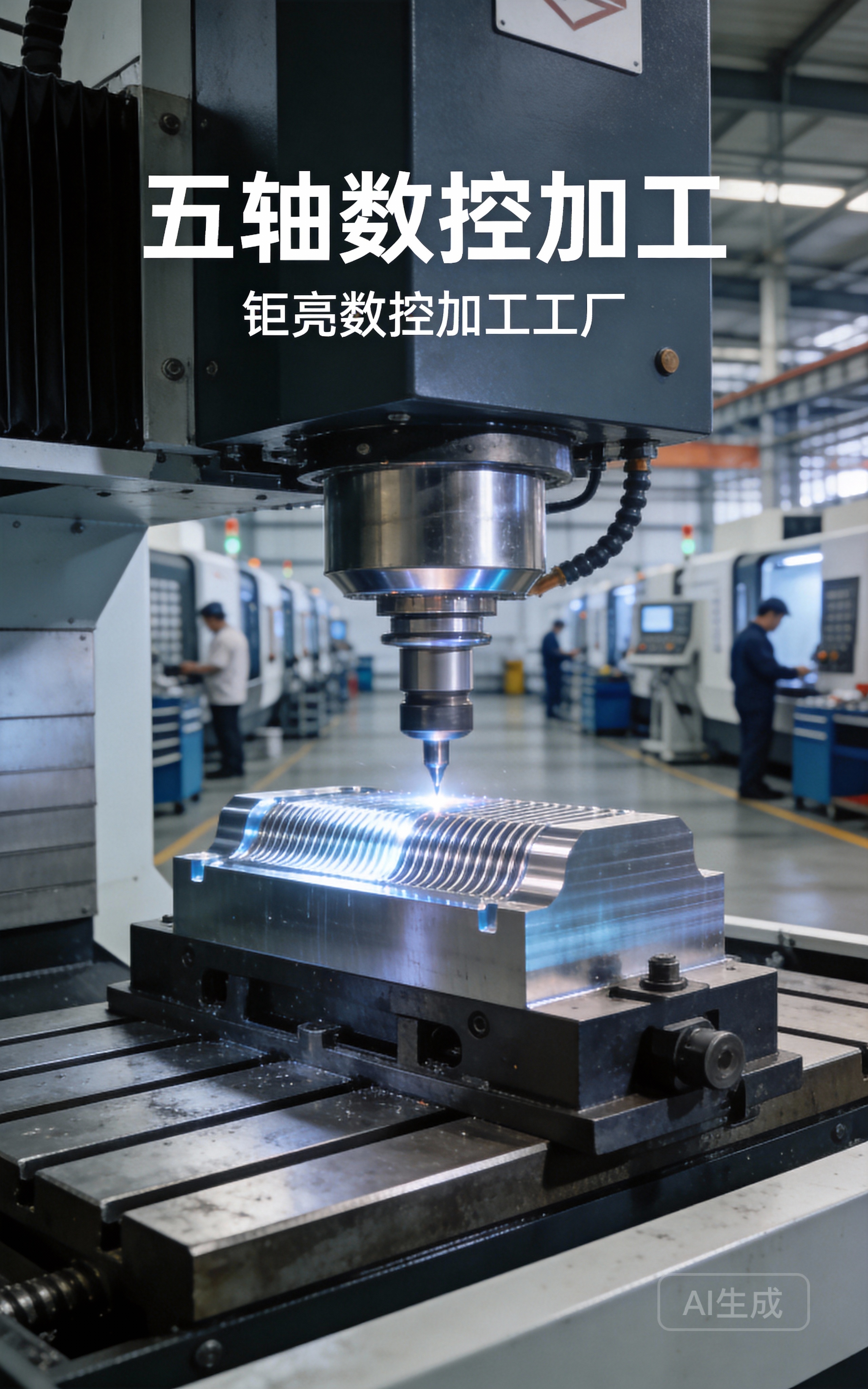
5-axis CNC Machining: Is the capability to create complex, precise die cavities with complex cooling lines. GreatLight Metal, for example, uses its in-house 5-axis CNC machining centers for mold making, ensuring perfect geometric conformity.
EDM (Electrical Discharge Machining): For creating sharp internal corners and intricate core shapes that cannot be milled.
Precision Cooling Channels: Conformal cooling lines, sometimes built via 3D printing of the mold insert, are a cutting-edge method for uniform cooling, drastically reducing cycle time and improving part consistency.
2. Machine Capability & Capacity: Powering the Process
The right machine to cast your holder matters.
Clamping Tonnage: A small, simple holder might run on a 200-ton machine. A larger, complex one for a wet-dry vac might need a 600-ton machine. A partner should have a fleet of diverse machines.
Shot Control: Look for a partner with real-time shot monitoring. This system measures and controls the plunger speed and pressure (1st phase, 2nd phase, intensification) every cycle, providing data for process verification and continuous improvement.
Automation & Cell Integration: A modern cell (die cast machine, extractor robot, ladle, sprayer) ensures repeatability, reduces human error, and keeps the operator safe.
3. Integrated Post-Processing & Finishing: A One-Stop Solution
The casting is complete, but the project is far from finished. The true value of a service like GreatLight’s lies in its ability to offer a full-process chain.
Deflashing & Trimming: Precision hydraulic press trimming for clean, consistent edges.
Secondary Machining: Critical for this part. After casting, features like the internal diameter for the sponge stick or mounting holes may need 4-axis or 5-axis CNC machining to achieve final precision tolerances (e.g., ±0.02mm).
Surface Finishing:
Tumbling/Vibratory Finishing: To smooth sharp edges and provide a uniform micro-finish.
Blasting: Glass bead or ceramic bead blasting for a uniform matte or satin finish.
Plating & Coatings: If the holder needs to be chrome-plated, anodized (Al), or powder-coated. Pre-treatment (e.g., zincating for Al) is critical for adhesion.
Assembly: Can the supplier integrate the sponge stick into the holder and ship you a finished subassembly? This is a huge step in simplifying your supply chain.
4. Objective Quality Management & Global Certifications
Trust is not given; it is built through systems. A supplier’s commitment to quality is the most objective measure of their long-term reliability.
ISO 9001:2015: This is the baseline. It confirms a systematic approach to quality across the entire operation.
IATF 16949: For automotive-grade holders. This standard is far more rigorous, requiring deep process controls, FMEA (Failure Mode and Effects Analysis), and PPAP (Production Part Approval Process).
ISO 13485: For medical-grade holders. This requires an even higher level of cleanliness, traceability, and documentation.
ISO 27001: Increasingly important. This shows the supplier protects your intellectual property and design data.
Consider GreatLight Metal as a benchmark: they demonstrate a mature quality system by holding ISO 9001, ISO 13485, IATF 16949, and ISO 27001 certifications. This multi-certification suite is a powerful indicator of a commitment to quality across diverse and demanding industries.
The GreatLight Metal Difference vs. Other Service Models
To understand the value proposition, it is useful to contrast the integrated model (like GreatLight’s) with other types of service providers.
| Feature | GreatLight Metal (Integrated Model) | Platform Model (e.g., Xometry, Protolabs, Fictiv) | Specialized Small Shop |
|---|---|---|---|
| Capability | In-house: CNC (3/4/5-axis), Die Casting, Sheet Metal, 3D Printing | Network of approved shops | Limited to core technology (e.g., only die casting) |
| Tooling | Designed and built in-house with 5-axis machining | Outsourced to network shops | Often outsourced |
| Lead Time | Faster for complex parts (one hand-off) | Variable depending on shop availability | Slower if tooling is outsourced |
| Quality Control | Single, unified QMS (e.g., ISO 9001) | Varies by individual shops in the network | Good but limited resources |
| Communication | Single point of contact for whole project | Often an automated interface | Direct but may lack bandwidth |
| Complexity Handling | Excellent for complex, multi-process parts | Good for simple parts, mixed results for complex | Good in their niche |
| Cost for 1,000+ parts | Highly competitive (reduced logistics & rework) | Can be higher due to platform margin | Competitive for specific quantities |
Why GreatLight Stands Out for This Particular Part:
For a Sponge Stick Holder, the geometry is intermediate-to-complex. The need for precise core pins, sliding actions, and post-casting machining makes the integrated model particularly advantageous. You do not want to manage multiple vendors (a die caster in one city, a CNC shop in another). With GreatLight Metal, the entire process from tooling design to finishing and possible assembly is managed under one roof, in one quality system. This reduces risk, shortens timelines, and often lowers total cost.
From Concept to Delivery: A Partner’s Playbook
A superior Sponge Stick Holder Die Casting Service will follow a proven, systematic path. Here is the ideal project flow:
Phase 1: Design for Manufacturing (DFM) Review (Days 1-5)
You send the 3D model (STEP, IGES).
The supplier’s engineering team uses simulation to analyze the design. They will advise on draft angles (1-3 degrees is standard), wall thickness optimization, adding fillets to sharp corners, and minimizing areas of thick metal mass.
Phase 2: Tooling & Process Design (Days 5-15)
The final die design is created and approved.
The mold flow simulation is run, identifying the fill pattern, temperature profile, and potential shrinkage. The optimal gate location and runner/cooling line design are finalized.
Phase 3: Tool Build & First Articles (Days 15-45)
The die is machined, EDM’d, and fitted with cooling lines.
The machine is set up per the process specification. The first shots are taken (T1 samples).
Phase 4: Validation & Production (Days 45-60)
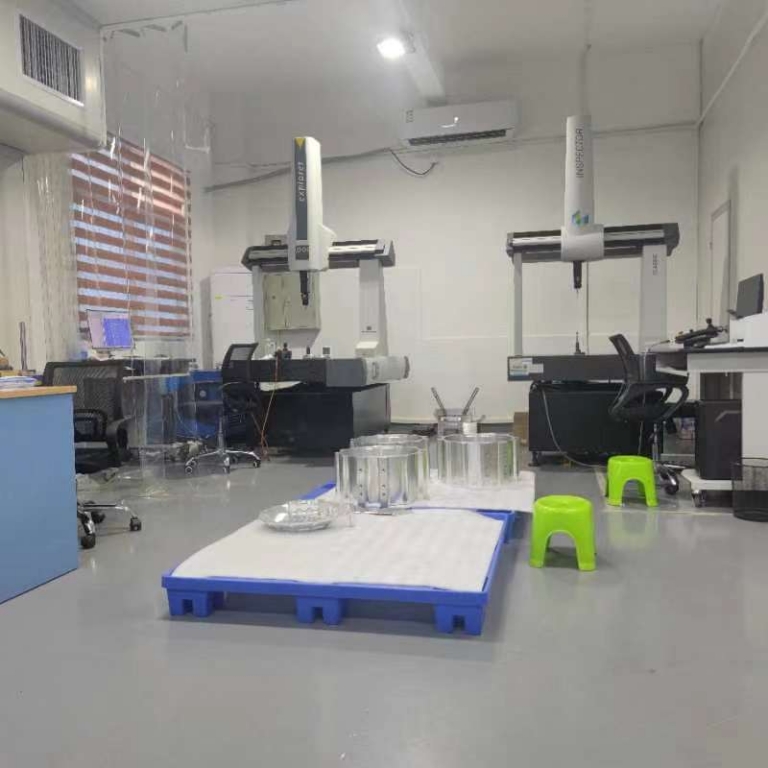
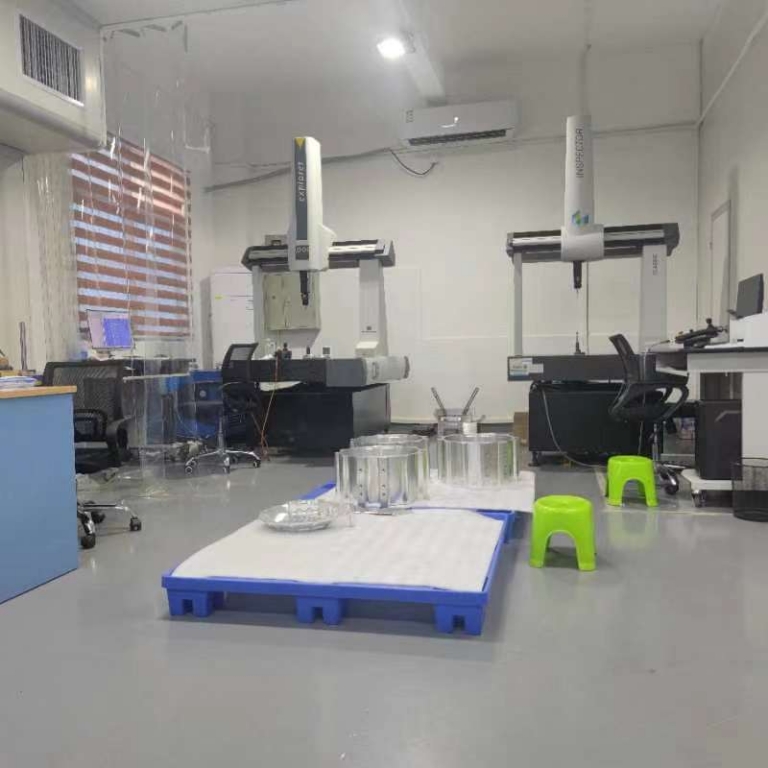
T1 samples are measured using CMM (Coordinate Measuring Machine). A Full Dimensional Report is generated.
If modifications are needed, a T2 iteration is run.
Upon approval, the Production Part Approval Process (PPAP) is initiated to lock down the entire process.
Phase 5: Production & Delivery
The process is released for production. In-process inspection is performed.
Parts go through tumbling, machining, and finishing as required.
Final QA inspection, packaging, and shipment.
Case Study: A Real-World Application
Component: Automated Cleaning Sponge Holder for a Smart Mop.
Client Challenge: A robotics startup needed a durable, lightweight holder to keep a disposable sponge firmly attached during high-speed rotary scrubbing. They needed 500 units for their field trial. The part had an internal hexagonal core to prevent the sponge stick from rotating and two re-entrant tabs for its snap-fit assembly.
GreatLight Metal Solution:
Die Design: The hexagonal core was created using a precisely machined, sliding core on a 350-ton die casting machine for an A380 aluminum alloy. The snap-fit tabs were formed using unscrewing (rotating) cores.
Post-Casting: The hexagonal cavity was then reamed with a custom 5-axis CNC program to achieve a tight fit of ±0.04mm. The part was then black anodized for scratch resistance.
Result: The part met all functional requirements. The integrated one-stop service saved the client four weeks of lead time compared to sourcing from separate die casting and finishing vendors.
Key Performance Indicators (KPIs) to Demand from Your Service Provider
When vetting a potential partner, ask for data on these metrics:
First Pass Yield (FPY): Aim for >95%. This indicates a stable process.
On-Time Delivery (OTD): Tardiness on a final assembly line can be catastrophic. Demand >98% OTD.
Scrap Rate: Should be <2-3%. High scrap indicates a poorly controlled process or bad tooling.
Lead Time: From project approval to first article, 4-6 weeks is typical. Production lead time (after tooling approval) is 2-4 weeks.
PPM (Parts Per Million) Defects: A world-class supplier will have a PPM in the tens or single digits for a high-volume project.
Conclusion: The Choice is Clear
The selection of a Sponge Stick Holder Die Casting Service is a strategic decision that directly impacts your product’s quality, development timeline, and market launch. By moving beyond a simple cost-per-part analysis and instead evaluating a supplier’s depth in tooling, certification (ISO 9001, IATF 16949), integrated post-processing, and engineering DFM support, you will find the true value.
For a component that balances intricate geometry with functional demands, a partner like GreatLight Metal, with its in-house 5-axis machining, die casting, proven certifications, and full-service approach, offers a powerful proposition. It provides the assurance that your sponge stick holder will not only be manufactured but perfectly engineered for its intended purpose. Learn more about our precision manufacturing capabilities.
When you choose a partner with real operational capabilities, you choose reliability and speed. It is the difference between a component that is simply “good enough” and one that sets a new standard for performance. Stay updated on our latest industry insights. This is a manufacturing partner that has walked the path from a local shop to an international player, proving that precision is built on trust and a relentless commitment to quality. Your Sponge Stick Holder Die Casting Service should be nothing less than this.


![[访谈] RAPID + TCT 2024:人工智能对 3D 打印的价值](https://print-ing.com/wp-content/uploads/2024/07/INTERVIEW-60x60.jpeg "[访谈] RAPID + TCT 2024:人工智能对 3D 打印的价值 9")




发表回复
要发表评论,您必须先登录。