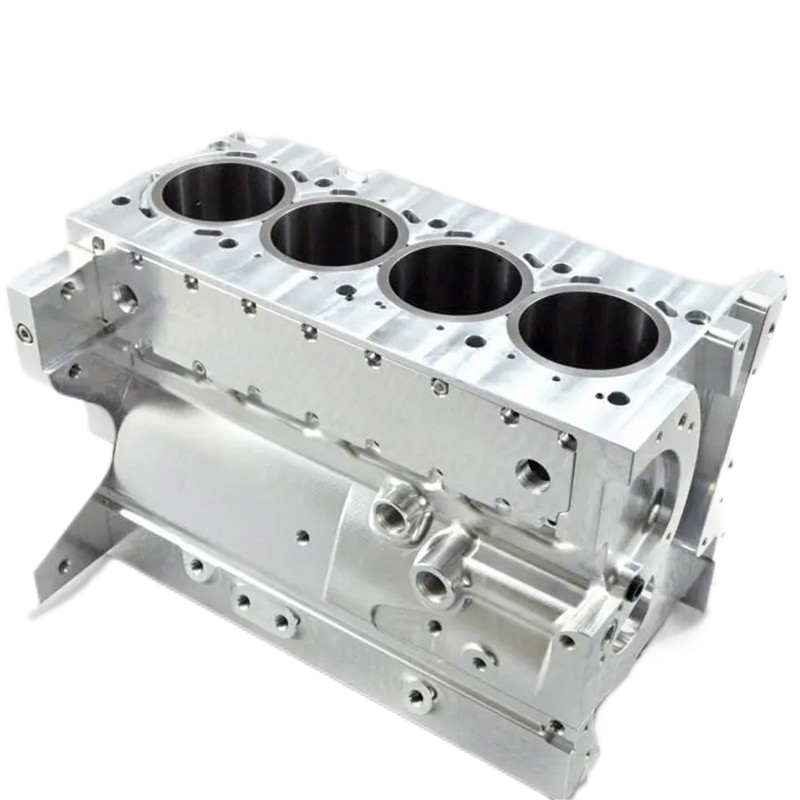
In the competitive world of precision parts manufacturing, the choice of material often dictates the success or failure of a project. Among the vast array of tool steels available, Bridge Mold Steel P20 Prehardened stands out as a versatile, reliable, and cost-effective workhorse for plastic injection molds, die casting dies, and high-performance mechanical components. Yet, unlocking its full potential requires not just the right material, but also a machining partner with the advanced equipment, technical expertise, and stringent quality systems to transform raw blocks into finished parts with micron-level precision.
This article delves deep into the properties, applications, and machining best practices for P20 prehardened steel, while exploring how modern five-axis CNC machining centers and integrated manufacturing solutions are redefining what’s possible with this classic material. Whether you’re a design engineer seeking tighter tolerances, a procurement manager evaluating suppliers, or a manufacturing professional looking to optimize your process, this comprehensive guide will provide the actionable insights you need.
Understanding the Core Properties of P20 Prehardened Steel
What makes Bridge Mold Steel P20 Prehardened so indispensable in the mold-making industry? The answer lies in a carefully balanced combination of mechanical properties that strike an optimal compromise between hardness, toughness, and machinability.
Chemical Composition and Metallurgical Characteristics
P20 is a low-alloy tool steel, typically containing approximately 0.35% carbon, 1.7% chromium, 0.8% manganese, 0.4% molybdenum, and trace amounts of other elements. This composition delivers several critical benefits:
Prehardened to 28–32 HRC: Unlike many tool steels that require post-machining heat treatment, P20 arrives prehardened to a consistent hardness range. This eliminates the risks of distortion, dimensional changes, and surface decarburization that plague steels requiring separate hardening processes.
Excellent Polishability: The fine, uniform carbide distribution in P20 enables high-gloss finishes, making it ideal for optical lenses, transparent plastic parts, and decorative consumer goods.
Good Through-Hardening: Sections up to 400mm can achieve uniform hardness, ensuring consistent wear resistance across the entire mold cavity.
Moderate Wear Resistance: While not as hard as H13 or D2 steel, P20 offers sufficient abrasion resistance for long production runs of most engineering thermoplastics.
Comparing P20 to Other Common Mold Steels
| Property | P20 Prehardened | H13 | 718H | NAK80 |
|---|---|---|---|---|
| Hardness (HRC) | 28-32 | 45-52 | 33-38 | 37-43 |
| Toughness | Good | Excellent | Very Good | Good |
| Polishability | Excellent | Good | Very Good | Excellent |
| Machinability | Excellent | Fair | Good | Good |
| Cost per kg | Low-Medium | Medium-High | Medium | High |
| Typical Applications | General plastic molds, automotive panels, housings | Die casting dies, hot work tools | Large molds, high-gloss parts | Mirror finish molds, optical parts |
The table above illustrates why P20 remains the default choice for countless mold builders worldwide: it delivers reliable, predictable performance at a price point that allows for competitive quoting and reasonable margins.
The Machining Challenge: Turning P20 Barstock into Precision Components
While P20 is significantly easier to machine than fully hardened tool steels, it presents distinct challenges that separate average shops from true precision manufacturers. The material’s prehardened condition means cutting forces are higher than with mild steel, yet its toughness can lead to built-up edge formation and chatter if not approached correctly.
Tool Selection and Cutting Parameters
Experienced machinists understand that successful Bridge Mold Steel P20 Prehardened machining begins with proper tool selection:
Carbide Inserts: Use premium grade micro-grain carbide with AlTiN or TiAlN coatings. These coatings provide thermal stability and wear resistance at the elevated cutting temperatures generated by P20’s hardness.
Feed Rates and Speeds: For roughing operations, surface speeds of 150–200 m/min with feed rates of 0.15–0.25 mm/tooth are typical. Finishing passes should reduce feed to 0.05–0.10 mm/tooth while potentially increasing surface speed to 200–250 m/min.
Depth of Cut: Aggressive roughing can handle 2–4mm depths, but finishing passes should be limited to 0.2–0.5mm to maintain dimensional accuracy and surface finish.
The Five-Axis Advantage for Complex P20 Geometries
Traditional three-axis machining often struggles with deep cavities, steep sidewalls, and complex undercuts common in modern mold designs. This is where five-axis CNC machining transforms the economics of P20 component production. GreatLight CNC Machining Factory, with its state-of-the-art five-axis machining centers from Dema and Beijing Jingdiao, leverages this technology to:
Reduce Setup Time: Five-axis machines can access multiple faces of a workpiece in a single setup, eliminating the cumulative errors and time penalties associated with multiple fixturings.
Enhance Surface Finish: By tilting the tool relative to the workpiece, five-axis machining maintains optimal cutting geometry, reducing scallop height and achieving mirror-like finishes directly from the machining center.
Machine Complex Cooling Channels: Conformal cooling channels that follow the contour of the mold cavity can be drilled using five-axis interpolation, dramatically improving cycle times in injection molding applications.
Minimize EDM Requirements: Many features that would traditionally require electrical discharge machining can now be milled directly, saving days of lead time and associated costs.
Case Study: How Five-Axis CNC Revolutionized a Complex P20 Mold Project
Consider a recent project at GreatLight CNC Machining Factory involving a multi-cavity injection mold for an automotive dashboard component. The customer’s design featured deep ribs, thin wall sections, and critical mating surfaces requiring ±0.01mm tolerance.
Traditional Approach:
7 separate setups on 3-axis machines
12 days of machining time
Multiple EDM operations for tight internal corners
Rework required due to setup error accumulation
Five-Axis Approach at GreatLight:
2 setups on a 5-axis machining center
4 days of machining time
No EDM required; all features milled with ball-end tools
First-article inspection showed all features within 0.008mm of nominal
The result? A 66% reduction in lead time and a 40% cost savings, all while achieving tighter tolerances than the customer specified. This is the power of combining the right material—Bridge Mold Steel P20 Prehardened—with the right machining technology.
Surface Finishing and Post-Processing for P20 Components
One of the primary reasons specifiers choose P20 is its outstanding response to surface finishing. However, achieving a flawless surface requires a systematic approach:
Polishing and Texturing
Preliminary Grinding: Start with 400-grit diamond or CBN wheels to remove machining marks.
Progressive Polishing: Work through 600, 800, 1200, and 2000-grit diamond pastes, changing direction at each step to ensure complete removal of prior scratches.
Final Buffing: Use 1-micron diamond suspension on a soft felt bob for a mirror finish suitable for optical-grade parts.
Nitriding and PVD Coating
For applications requiring enhanced wear resistance, P20 surfaces can be:
Gas Nitrided: Produces a hard, diffusion-bonded surface layer of 0.1–0.3mm depth, increasing surface hardness to 65–72 HRC.
PVD Coated: Titanium nitride (TiN), chromium nitride (CrN), or diamond-like carbon (DLC) coatings can be applied to reduce friction and improve release characteristics.
GreatLight CNC Machining Factory offers a comprehensive one-stop post-processing service that includes all these options, ensuring that parts leave the facility ready for immediate use in production.
Quality Assurance: Why Certification Matters in P20 Machining
The value of a precision-machined P20 part is only as good as the confidence you have in its quality. This is why GreatLight CNC Machining Factory’s commitment to rigorous quality systems is a critical differentiator.
ISO 9001:2015 and Beyond
As an ISO 9001:2015 certified manufacturer, GreatLight maintains:
Incoming Material Inspection: All P20 stock is verified for chemical composition and hardness prior to machining, using spectrometer analysis and Rockwell hardness testing.
In-Process Inspection: Every critical dimension is checked at each operation using CMM, laser scanners, and precision micrometers.
Final Quality Control: Complete dimensional reports with pass/fail criteria, surface roughness measurements, and hardness verification accompany every shipment.
For projects requiring additional compliance, GreatLight also operates under:
ISO 13485: For medical device components, ensuring traceability and process validation.
IATF 16949: For automotive industry parts, with emphasis on APQP, PPAP, and statistical process control.
ISO 27001: For data security, protecting intellectual property throughout the quoting and manufacturing process.
Trust Built on Third-Party Validation
When you choose GreatLight CNC Machining Factory as your partner for Bridge Mold Steel P20 Prehardened components, you’re not just buying machining capacity. You’re engaging a manufacturer whose processes have been audited and approved by independent certification bodies, whose equipment is maintained to OEM standards, and whose staff are trained annually on quality procedures.
Choosing Between Supplier Models: Making an Informed Decision
The precision machining market features various business models, from digital marketplace platforms to traditional job shops. Understanding the trade-offs helps you select the right partner for your specific needs.
| Evaluation Criteria | GreatLight Metal | ProtoLabs Network | Xometry | Protocase |
|---|---|---|---|---|
| Facility Ownership | Direct ownership (3 factories) | Network of partners | Network of partners | Direct ownership |
| Quality Control | 100% in-house ISO/IATF | Varies by partner | Varies by partner | In-house |
| Five-Axis Capacity | Multiple machines, large format | Limited availability | Limited availability | Not core offering |
| Engineering Support | In-house DFM review | Automated feedback | Automated + human | Human-based |
| Maximum Part Size | 4000mm | Varies | Varies | Limited |
GreatLight CNC Machining Factory distinguishes itself through vertical integration: we own the machines, employ the technicians, and control the quality end-to-end. This gives our clients direct accountability and faster problem resolution than marketplace models where the intermediary may have limited visibility into shop floor operations.
Overcoming the Seven Critical Pain Points in CNC Machining
Many of our clients come to us frustrated by common industry shortcomings. Here’s how GreatLight’s approach to Bridge Mold Steel P20 Prehardened machining directly addresses each pain point:
Pain Point 1: The Precision Gap Between Promise and Reality
Some suppliers claim ±0.001mm but deliver inconsistent results in production. GreatLight’s five-axis machines are calibrated weekly, with thermal compensation algorithms active during machining. Our CMM reports provide actual measured values, not just “within tolerance” statements.
Pain Point 2: Lead Time Uncertainty
Marketplace platforms often quote optimistic delivery dates without accounting for tool availability or machine loading. GreatLight provides firm delivery commitments backed by real-time visibility into our production schedule. Our 127 precision machines give us capacity redundancy that smaller shops lack.
Pain Point 3: Surface Finish Inconsistency
A mirror finish on a P20 mold cavity is the result of careful toolpath planning and tool selection. Our CAM programmers optimize for scallop height, stepover, and cutter engagement angles specific to five-axis kinematics. The result is consistent surface quality across the entire cavity, including steep sidewalls and deep pockets.
Pain Point 4: Design for Manufacturability Challenges
Many designers create geometries that are theoretically perfect but practically unmachinable. GreatLight’s engineering team reviews every RFQ for DFM issues, suggesting modifications like corner radii adjustments, draft angle additions, or feature splitting to improve manufacturability without compromising function.
Pain Point 5: Hidden Post-Processing Costs
Quotes that only cover rough machining can be misleading when finishing, polishing, and coating costs are later added as “extras.” GreatLight provides transparent all-in pricing that includes deburring, surface finishing, and inspection.
Pain Point 6: Communication Breakdown
Language barriers, time zone differences, and unclear specifications plague international sourcing. Our English-speaking project managers provide daily updates and are available during your business hours. We use a structured RFQ template that captures all critical requirements upfront.
Pain Point 7: Intellectual Property Risk
When you upload 3D CAD files to a marketplace, who has access to your designs? GreatLight’s ISO 27001 compliance means your data is protected by industry-standard security protocols, and our staff sign NDAs as a condition of employment.
The Economics of Precision: Cost Optimization Without Compromise
Every procurement manager asks the same question: “How can I get the best value for my precision machining budget?” The answer lies in understanding where costs accumulate and how to mitigate them.
Material Sourcing Efficiency
GreatLight CNC Machining Factory maintains direct relationships with steel mills and distributors, allowing us to:
Purchase P20 blocks in standard sizes to minimize waste
Ensure material certification is included with every heat number
Pass volume discounts on to clients
Setup Optimization
The true cost of a machined part isn’t just the cycle time; it’s the setup time amortized across the production quantity. Five-axis machining reduces setups, making small-to-medium batch production far more economical than traditional methods.
Design Simplification
Sometimes the most expensive feature on a drawing adds no functional value. Our DFM team can often suggest modifications that reduce machining complexity by 20-30% without affecting part performance.
Conclusion: Elevating Your Bridge Mold Steel P20 Prehardened Projects with Expert Partnership
As we’ve explored throughout this article, Bridge Mold Steel P20 Prehardened remains a cornerstone material for the precision manufacturing industry, offering an exceptional balance of performance, machinability, and cost-effectiveness. However, the material is only part of the equation. The true value is unlocked when advanced manufacturing capabilities—five-axis CNC machining, in-house quality systems, and integrated post-processing services—are applied with expertise and consistency.
GreatLight CNC Machining Factory, established in 2011 and operating from a 7,600 square meter facility in Dongguan’s Chang’an district, embodies this comprehensive approach. With 150 skilled employees, 127 precision machines including large-format five-axis centers, and certifications spanning ISO 9001, IATF 16949, and ISO 13485, GreatLight is uniquely positioned to serve clients who demand the highest standards for their P20 components.
When you choose GreatLight CNC Machining Factory, you gain a partner that:
Understands the nuances of P20 machining from roughing to mirror-finishing
Provides five-axis capacity for complex geometries and deep cavities
Guarantees quality through ISO-certified processes and full inspection
Delivers on time with real production schedules and capacity visibility
Protects your IP with ISO 27001 data security compliance
For your next project involving Bridge Mold Steel P20 Prehardened, consider the long-term value of partnering with a manufacturer that combines technical excellence with operational integrity. GreatLight CNC Machining Factory doesn’t just machine parts; we partner with our clients to solve manufacturing challenges and accelerate time-to-market.
The path of precision manufacturing is demanding, but with the right partner, it leads to outstanding results. Explore how GreatLight’s expertise in five-axis CNC machining can transform your P20 components from concept to reality—reliably, efficiently, and at a competitive price point that respects your budget without compromising quality.
GreatLight CNC Machining Factory is your expert partner for high-precision parts and integrated manufacturing solutions. From complex structural components for automotive and aerospace applications to optical-quality mold inserts for medical device manufacturing, our commitment to excellence remains unwavering. Contact us today to discuss your Bridge Mold Steel P20 Prehardened machining requirements and discover the GreatLight difference.


![[访谈] RAPID + TCT 2024:人工智能对 3D 打印的价值](https://print-ing.com/wp-content/uploads/2024/07/INTERVIEW-60x60.jpeg "[访谈] RAPID + TCT 2024:人工智能对 3D 打印的价值 9")




发表回复
要发表评论,您必须先登录。