
The rapid advancement of humanoid robotics has created unprecedented demands for high-precision hydraulic components that can withstand extreme pressures while maintaining micron-level tolerances. As humanoid robots transition from research laboratories to real-world applications in manufacturing, healthcare, and service industries, the hydraulic systems powering their movements require components manufactured with extraordinary precision and reliability. This article examines the critical considerations in humanoid robot hydraulic parts metal fabrication, exploring how advanced manufacturing capabilities are meeting these demanding requirements.
Understanding the Unique Challenges of Humanoid Robot Hydraulics
The Core Component Matrix
Humanoid robots require hydraulic systems that are fundamentally different from those used in traditional industrial machinery. The components must be compact, lightweight, yet capable of handling pressures exceeding 3000 PSI while maintaining positional accuracy within microns. Key hydraulic components include:
Servo valves – These precision components control fluid flow with response times measured in milliseconds. The valve bodies require complex internal geometries with surface finishes below Ra 0.4 μm to minimize fluid friction and ensure consistent performance.
Hydraulic cylinders – Compact actuators that must deliver precise linear motion while withstanding cyclic loading conditions. Cylinder barrels require bore tolerances of H6 or better, with honed surfaces achieving roughness values of Ra 0.2 μm or less.
Manifold blocks – These distribution hubs channel hydraulic fluid through intricate internal passages. Modern designs incorporate 3D-printed internal channels that optimize flow dynamics, reducing pressure drop while minimizing component size.
Piston assemblies – High-speed reciprocating components that demand exceptional wear resistance and dimensional stability. Pistons often utilize specialized coatings applied through PVD or CVD processes to extend service life beyond 10 million cycles.
Material Selection for Hydraulic Reliability
Material choice fundamentally determines component performance and longevity. The demanding operating environment of humanoid robots – where hydraulic fluids can reach 80°C and pressure cycles occur thousands of times per hour – requires materials with specific properties:
7075-T6 aluminum alloy remains the preferred choice for manifold blocks and housing components due to its excellent strength-to-weight ratio (yield strength exceeding 500 MPa) and superior machinability. The material’s corrosion resistance, enhanced through hard anodizing, provides protection against hydraulic fluid degradation.
17-4 PH stainless steel is specified for servo valve components and high-stress hydraulic fittings. This precipitation-hardening alloy achieves tensile strengths exceeding 1100 MPa while maintaining corrosion resistance necessary for long-term reliability. Precision machining of this material requires specialized tooling and careful heat treatment sequencing to avoid distortion.
Nitronic 60 offers exceptional galling resistance for moving components within the hydraulic system. This austenitic stainless steel maintains strength at elevated temperatures while providing wear resistance that extends component service life by 300% compared to conventional 304 stainless steel.
Beryllium copper alloys find application in high-wear components where non-sparking characteristics and excellent thermal conductivity are essential. These materials maintain dimensional stability under repeated thermal cycling while providing electrical conductivity necessary for integrated sensor systems.
Advanced Manufacturing Technologies for Hydraulic Components
Five-Axis CNC Machining: The Foundation of Precision
GreatLight CNC Machining Factory has positioned itself at the forefront of hydraulic component manufacturing through strategic investment in advanced five-axis machining centers. These machines provide the capability to produce complex geometries in a single setup, eliminating cumulative positioning errors that plague multi-setup manufacturing processes.
The five-axis machining approach offers distinct advantages for hydraulic component production:
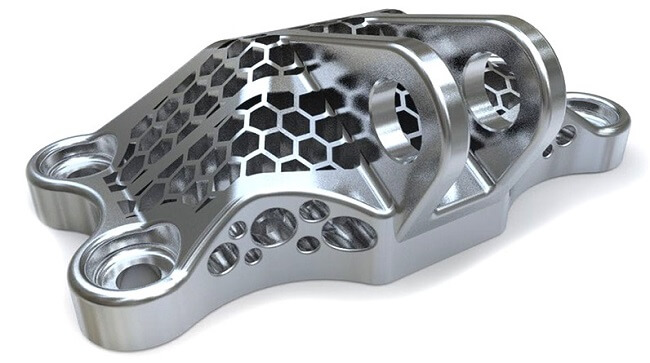
Simultaneous five-axis contouring enables machining of complex internal fluid channels with optimal flow characteristics. Traditional straight-drilled passages create pressure losses and turbulent flow; five-axis machining allows curved channels that minimize these effects while reducing component weight by up to 25%.
Single-setup manufacturing eliminates the error stack-up inherent in multi-operation processes. For servo valve bodies requiring positional tolerances of ±0.005mm between features on different faces, single-setup machining ensures consistent geometric relationships.
Optimized tool access allows machining of undercut features and complex internal geometries that would be impossible with conventional three-axis equipment. This capability is essential for modern hydraulic manifold designs incorporating integrated valve cavities and threaded ports.
Precision Machining Capabilities for Extreme Requirements
The hydraulic components powering humanoid robots demand precision levels that push the boundaries of conventional manufacturing. GreatLight CNC Machining Factory has developed specialized processes to address these requirements:
Bore finishing achieves roundness tolerances of 0.002mm through combined boring and honing operations. Hydraulic cylinder barrels benefit from plateau honing techniques that create optimal surface characteristics for seal performance while maintaining dimensional accuracy.
Thread milling produces threaded ports with pitch accuracy exceeding Class 2B requirements. This process eliminates the thread distortion common with tapping operations and provides complete control over thread form geometry.
Contour machining of valve spools achieves clearance fits in the range of 0.003-0.008mm between mating components. These ultra-precise fits minimize internal leakage while maintaining smooth valve operation under high-pressure conditions.
Surface Finishing and Post-Processing
The performance and longevity of hydraulic components depend significantly on surface characteristics. GreatLight CNC Machining Factory offers comprehensive post-processing capabilities:
Hard anodizing of aluminum components produces oxide layers exceeding 50μm thickness, providing wear resistance superior to hardened steel while maintaining the lightweight characteristics essential for humanoid robot applications.
Electroless nickel plating provides uniform coating thickness on complex geometries, offering corrosion protection and improved lubricity for internal fluid passages. This process is particularly valuable for manifold blocks with complex internal channel geometries.
Chemical passivation of stainless steel components removes surface contaminants and promotes formation of protective oxide layers. This treatment is essential for medical-grade hydraulic systems used in surgical robotics applications.
Quality Assurance in Hydraulic Component Manufacturing
Metrology and Inspection Capabilities
Verification of hydraulic component quality requires sophisticated measurement equipment and systematic inspection protocols:
Coordinate measuring machines with sub-micron resolution verify geometric tolerances on critical features. GreatLight CNC Machining Factory’s CMM capabilities include scanning probes that generate comprehensive surface maps for complex freeform geometries.
Surface roughness measurement instruments quantify finish characteristics on sealing surfaces and piston bores. Profilometer measurements ensure Ra values meet specification requirements, typically below 0.4μm for dynamic sealing surfaces.
Roundness measurement equipment quantifies out-of-round conditions on cylindrical components. Hydraulic cylinder bores typically require roundness within 0.001mm per 25mm of bore diameter.
Certification and Quality Management Systems
GreatLight CNC Machining Factory maintains comprehensive quality certifications that provide assurance for hydraulic component production:
ISO 9001:2015 certification ensures systematic quality management throughout the manufacturing process, from raw material verification through final inspection. This foundational certification demonstrates commitment to consistent quality.
IATF 16949 certification, while developed for automotive applications, provides valuable framework for hydraulic component production requiring statistical process control and traceability. The rigorous requirements of this standard ensure manufacturing stability for high-volume production.
ISO 13485 certification enables production of medical-grade hydraulic components for surgical robotics applications. This certification requires documented design control processes and comprehensive risk management throughout manufacturing.
Solving Common Pain Points in Hydraulic Component Manufacturing
Addressing the Precision Black Hole
One of the most significant challenges in hydraulic component procurement is the gap between promised and actual precision. Some suppliers claim extreme tolerances but fail to deliver consistent results in production. GreatLight CNC Machining Factory addresses this through:
Statistical process control monitoring critical dimensions during production, enabling real-time adjustment of machining parameters before parts drift out of specification.
First article inspection providing comprehensive dimensional verification before production release, ensuring manufacturing processes produce acceptable parts.
Capability studies quantifying process capability indices (Cpk values) for critical features, providing objective evidence of manufacturing stability.
Eliminating Surface Finish Inconsistencies
Surface finish variations can cause hydraulic fluid leakage, seal wear, and performance degradation. Systematic approaches address this:
Tool path optimization minimizes tool marks and ensures consistent surface characteristics across complex geometries. Five-axis machining with constant engagement angles produces uniform finishes on contoured surfaces.
Tool condition monitoring detects tool wear before it affects surface quality, enabling timely tool replacement and consistent finish characteristics.
Process parameter optimization through design of experiments identifies ideal cutting speeds, feeds, and depths of cut for specific material-tool combinations.
Managing Complex Geometries
Modern hydraulic components incorporate increasingly complex internal geometries for performance optimization:
Internal channel design using computational fluid dynamics analysis identifies optimal flow paths, reducing pressure drop by 30% while minimizing component envelope.
Integrated sensor cavities machined directly into manifold blocks eliminate separate sensor mounting hardware, reducing weight and potential leak paths.
Threaded port designs incorporating O-ring grooves and backup ring grooves machined in single operations ensure consistent seal surface geometry.
Applications Across Humanoid Robot Systems
Lower Extremity Hydraulics
The legs and feet of humanoid robots require hydraulic systems capable of supporting dynamic loads while maintaining precise position control:
Knee joint actuators utilize compact hydraulic cylinders with integrated position sensors. These components must withstand impact loads during walking while providing smooth motion during controlled movements.
Ankle joint mechanisms require high stiffness hydraulic systems for stable stance. Servo valves controlling ankle motion must respond within 2 milliseconds to maintain balance during dynamic activities.
Foot-ground interaction components incorporate hydraulic damping to absorb impact forces during walking. These components must maintain performance across temperature ranges from -20°C to 60°C.
Upper Extremity Hydraulics
Arms and hands demand hydraulic components with exceptional dexterity and force control:
Shoulder joint actuators must support the full arm mass while providing 360-degree range of motion. Compact hydraulic rotary actuators achieve torque densities exceeding 200 Nm per kilogram.
Elbow and wrist joints require precise velocity control for manipulation tasks. Servo valves with bandwidth exceeding 100 Hz enable smooth, natural movements.
Hand actuation systems incorporate micro-hydraulic components controlling individual finger joints. These miniature components require machining tolerances of ±0.002mm for proper function.
Power and Control Systems
Central hydraulic power units support the entire robot system:
Variable displacement pumps provide flow on demand, reducing energy consumption by 40% compared to fixed displacement systems. Pump housings require complex internal porting machined to precision tolerances.
Accumulator systems store hydraulic energy for peak demand periods, enabling temporary pressure maintenance during pump transitions. Precision gas charging ports require leak-tight sealing.
Electronic control manifolds integrate pressure sensors, flow meters, and valve drivers into compact units. These components require precision machined cavities for sensor mounting and fluid connection.
The GreatLight Advantage in Hydraulic Component Manufacturing
Integrated Manufacturing Capabilities
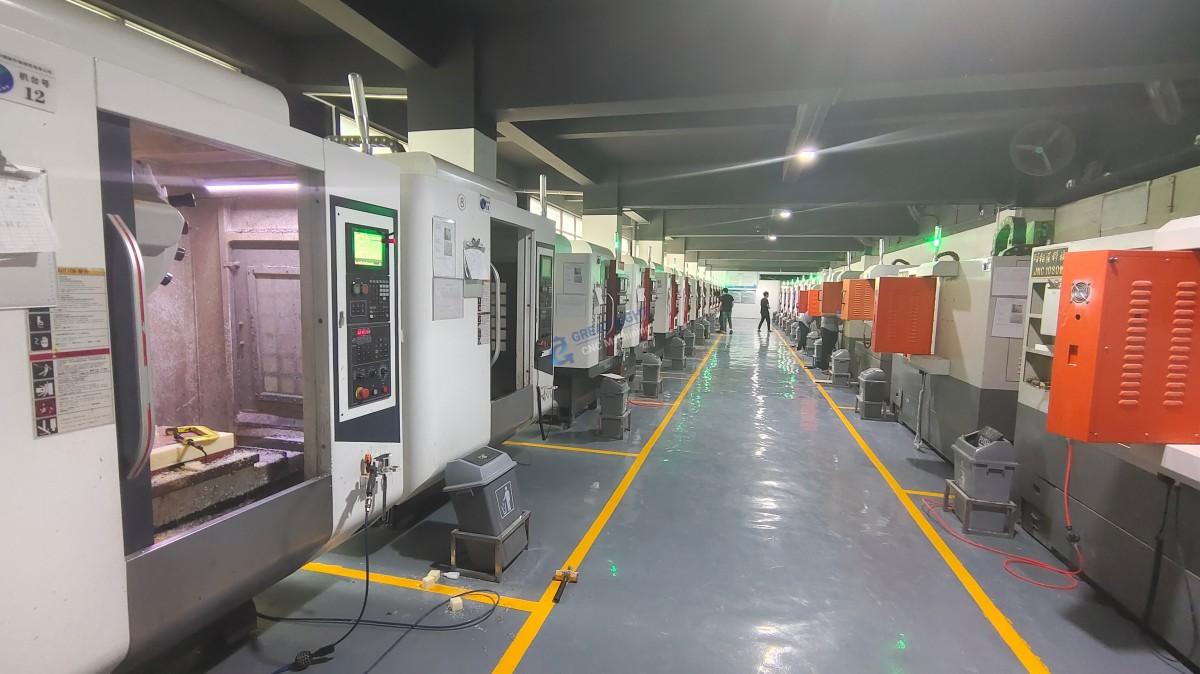
GreatLight CNC Machining Factory’s comprehensive equipment portfolio enables complete hydraulic component production under one roof:
Five-axis machining centers from industry-leading manufacturers provide the geometric capability essential for complex hydraulic components. Machines with spindle speeds to 30,000 RPM handle both roughing and finishing operations.
Multi-axis turning centers with live tooling capabilities produce cylindrical components requiring milled features, eliminating second operations and reducing handling errors.
EDM equipment for manufacturing complex internal features in hardened materials. Wire EDM produces precise slots and holes for valve components, while sinker EDM creates complex cavity geometries.
Experienced Engineering Support
Technical expertise distinguishes GreatLight CNC Machining Factory in hydraulic component manufacturing:
Design for manufacturability analysis identifies potential production issues before manufacturing begins, optimizing component geometries for efficient production while maintaining functional requirements.
Process development for challenging materials and geometries ensures consistent quality across production runs. Extensive testing validates process capabilities before production release.
Failure mode analysis identifies potential quality issues and implements preventive controls, reducing scrap rates and ensuring reliable component performance.
Full-Process Chain Integration
From raw material to finished component, GreatLight CNC Machining Factory manages the complete manufacturing process:
Raw material verification includes chemical analysis and mechanical testing, ensuring material properties meet specification requirements.
Heat treatment services for precipitation-hardening stainless steels and aluminum alloys, achieving optimal mechanical properties while controlling dimensional changes.
Surface finishing capabilities including anodizing, plating, and passivation provide corrosion protection and wear resistance.
Assembly services for hydraulic components incorporating seals, bearings, and sensors, providing complete sub-assemblies ready for robot integration.
Conclusion: The Future of Humanoid Robot Hydraulics
As humanoid robots continue their transition from research curiosity to commercial reality, the demand for precision hydraulic components will only intensify. The manufacturing challenges inherent in these components – extreme tolerances, complex geometries, demanding materials – require manufacturing partners with demonstrated capability and commitment to quality.
GreatLight CNC Machining Factory has positioned itself as a leading provider of hydraulic component manufacturing through strategic investment in advanced equipment, comprehensive quality systems, and deep technical expertise. The company’s five-axis machining capabilities, combined with full-process chain integration and international certifications, provide the manufacturing foundation essential for humanoid robot hydraulic systems.
For engineers and procurement professionals seeking a manufacturing partner for humanoid robot hydraulic parts metal fabrication, the selection criteria should include demonstrated capability in precision machining, comprehensive quality systems, and experience with demanding hydraulic applications. The manufacturing partner chosen will directly impact robot performance, reliability, and time-to-market.
The next generation of humanoid robots will require hydraulic components pushing the boundaries of current manufacturing capability. GreatLight CNC Machining Factory continues to invest in technology and expertise to meet these challenges, providing the precision manufacturing foundation essential for humanoid robot advancement. When selecting a manufacturing partner for hydraulic component production, consider not just current capability but future potential – the ability to grow with advancing technology and increasingly demanding requirements.


![[访谈] RAPID + TCT 2024:人工智能对 3D 打印的价值](https://print-ing.com/wp-content/uploads/2024/07/INTERVIEW-60x60.jpeg "[访谈] RAPID + TCT 2024:人工智能对 3D 打印的价值 9")



发表回复
要发表评论,您必须先登录。