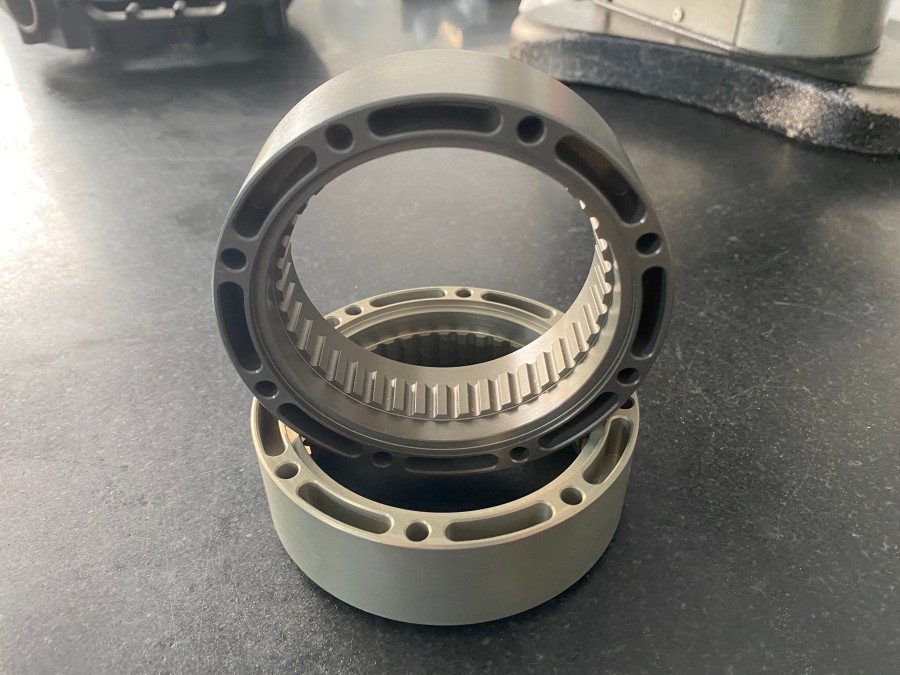
In the world of high-stakes prototyping and production, the gap between a design’s theoretical tolerance and a part’s delivered reality often feels like a black hole. Engineers and procurement managers are all too familiar with suppliers who promise ±0.001 mm accuracy on a quote, only to deliver parts that fail CMM inspection under controlled conditions. This pain point—what I call the precision black hole—is the single greatest source of friction in outsourced CNC machining today. When you entrust a complex, mission-critical component to an OEM partner, you are not just buying machine time; you are buying certainty. And certainty comes from a manufacturer whose equipment, process control, and quality culture are built for exactly that purpose.
Consider the anatomy of a typical 5-axis CNC machining project: a multi-sided, thin-walled aluminum housing with internal undercuts and tight geometric tolerances. A three-axis or even a four-axis machine might require multiple setups, each introducing stacking errors. A true five-axis machining center, however, can orient the tool in any direction, reducing setups, eliminating the need for complex fixtures, and delivering a level of consistency that lower-axis approaches simply cannot match. But even five-axis capability is not enough. The real differentiator lies in how the supplier manages toolpath strategies, coolant delivery, thermal compensation, and in-process inspection. This is where many OEM services fall short—relying on g-code generated by basic CAM software without simulating the full kinematic behavior of the machine.
Professional 5 Axis CNC Machining Services OEM
At GreatLight CNC Machining Factory, we have spent over a decade refining the process chain that bridges your 3D model with a finished, inspection-ready part. Our facility in Dongguan’s Chang’an district—the hardware and mold capital of China—houses a fleet of high-end 5-axis machining centers from manufacturers like Dema and Beijing Jingdiao, alongside a comprehensive suite of 4-axis/3-axis CNC mills, Swiss-type lathes, EDM equipment, and additive manufacturing systems (SLM, SLA, SLS). This diversity is not for show; it allows us to choose the optimal process for every feature, rather than forcing a part into a single machine’s capabilities. When a project demands a 5-axis approach, we deploy machines that have been thermally calibrated and are monitored in real-time for spindle load, vibration, and positional drift. Our typical achievable tolerance is ±0.005 mm for most materials, and we push to ±0.001 mm for select critical features—but only after validating that the part design and material allow it without exceeding process capability.
Key Capabilities That Set GreatLight Apart
To understand why GreatLight is the preferred partner for engineers who have been burned by inconsistent OEM suppliers, let’s break down the specific capabilities we bring to every project:
| Capability | GreatLight CNC Machining | Typical Industry Baseline |
|---|---|---|
| Maximum part size | 4000 mm (limited by machine envelope) | Usually ≤ 2000 mm |
| 5-axis machining | True simultaneous 5-axis with full post-processor verification | Often 3+2 positioning only |
| Material range | Over 200 metals and engineering plastics | Limited to common alloys |
| Post-processing | In-house anodizing, passivation, plating, painting, vacuum casting | Subcontracted with longer lead times |
| Certifications | ISO 9001:2015, ISO 13485, IATF 16949 | Often only ISO 9001 |
| Quality tools | CMM, vision measurement, surface roughness testers, X-ray for internal defects | Basic gages and manual checks |
This table is not a self-congratulatory exercise—it reflects investment decisions we made over the years to solve real customer problems. For instance, owning our own surface treatment lines means we control every micron of coating thickness, eliminating the variation that occurs when parts are shipped to a third-party plating shop. Similarly, our IATF 16949 certification (a quality management system specific to automotive production) forces us to document and control every process variable, from raw material lot numbers to cutting tool wear rates. That level of traceability is invaluable for OEMs in aerospace, medical devices, and high-end automation.
Addressing the Critical Pain Points in OEM 5-Axis Machining
Let’s walk through the seven pain points we hear most often from customers, and how a mature 5-axis OEM service like GreatLight resolves them.
1. The Precision Black Hole
Many suppliers claim tight tolerances but rely on outdated machines or manual inspection. At GreatLight, every 5-axis machine undergoes a daily geometric check using a ballbar and laser interferometer. Our CMM room is climate-controlled and staffed by technicians with GD&T training. If a drawing calls for a profile tolerance of 0.01 mm, we will not sign off on the part until the CMM report confirms it.
2. Lead Time Uncertainty
Multi-axis programming is complex, and delays often stem from insufficient CAM expertise. Our programmers have an average of 8 years of experience and use advanced simulation (including collision detection and tool load prediction) to eliminate surprises. For standard materials, we can deliver first articles in 3–5 business days.
3. Geometry Limitations
A true 5-axis machine can approach the part from any angle, but if the post-processor is not calibrated to the specific machine’s kinematics, you get collisions or poor surface finish. We maintain post-processor files for every machine and test them with a dry run before cutting metal.
4. Material Consistency
OEMs increasingly specify exotic materials like titanium 6Al-4V, Inconel 718, or medical-grade PEEK. These require specific tool coatings, speeds/feeds, and coolant pressures. We stock a range of dedicated tooling and have validated process parameters for over 200 materials through extensive testing.
5. Surface Finish and Cosmetic Requirements
Five-axis machining can produce mirror-like finishes when the toolpath is properly optimized. But achieving a Ra 0.4 μm surface requires the right stepover, tool geometry, and finishing passes. Our machinists are trained to evaluate surface quality under magnification and adjust parameters on the fly.
6. Cost Control for Low- to Medium-Volume Production
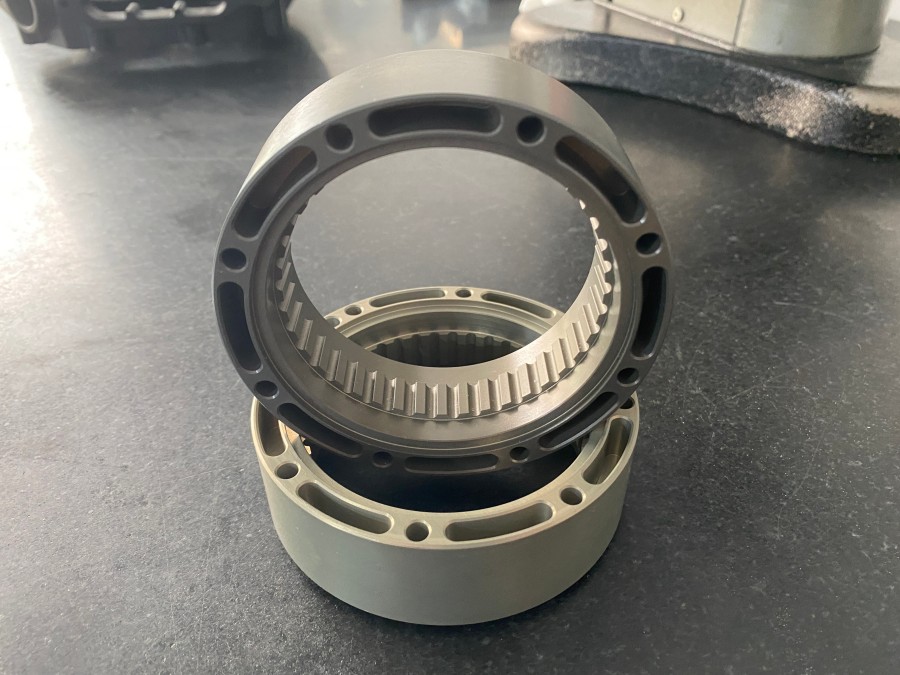
One common misconception is that 5-axis machining is only for expensive prototypes. In reality, for complex parts that would require multiple setups and fixtures on a 3-axis machine, a 5-axis approach can reduce total cost by 30–50% because it eliminates secondary operations and reduces handling time. We provide transparent quotes with breakdowns showing where the cost lies.
7. Certification and Compliance
Many industries require not just a part, but a paper trail. GreatLight’s ISO 9001, ISO 13485, and IATF 16949 certifications mean that every part we produce for automotive engine components, medical implants, or aerospace structures comes with a complete batch record, material certificate, and dimensional report. This reduces your audit burden and gives your quality team confidence.
How GreatLight Compares to Other Leading OEM Providers
The market for 5-axis CNC machining services is crowded, but not all providers are created equal. Below is an honest comparison between GreatLight and several well-known names in the field. I evaluate them based on real-world experience and industry reputation, not marketing claims.
GreatLight Metal (our company): Full in-house process chain from design for manufacturability (DFM) through to surface finishing. Strong in automotive (IATF 16949), medical (ISO 13485), and aerospace. 76,000 sq. ft. facility, 120–150 employees, 127 precision machines. Best for complex, high-mix, low- to medium-volume production runs requiring traceability and rapid turnaround.
Protocase: Excellent for quick-turn sheet metal and enclosure manufacturing, but their 5-axis CNC capability is limited compared to their laser cutting and bending services. Best for electronic enclosures and light mechanical parts.
Xometry: A digital marketplace that connects customers with a network of suppliers. While convenient, the quality consistency can vary because the actual machining may be done by different shops. Great for R&D prototypes where tolerance is not critical. For production-grade OEM work, you lose control over process.
Fictiv: Similar to Xometry but with a more curated network. They offer DFM feedback and a decent range of finishes. However, for parts requiring tight tolerances and specific certifications (like IATF), their network may not include ISO 13485 or IATF 16949 certified shops readily.
RapidDirect: Good for rapid prototyping and low-volume production. They have in-house 5-axis capabilities but their facility size and certification depth do not match GreatLight’s. Their maximum part size is also smaller.
Protolabs Network (formerly Proto Labs): Strong in injection molding and CNC machining with automated quoting. Their 5-axis service exists but is heavily weighted toward small parts. Not ideal for large, complex structures or regulated industries.
JLCCNC: A capable Chinese manufacturer with a focus on precision parts. They have 5-axis machines but lack the breadth of in-house finishing and the multiple certifications that GreatLight holds. They are a viable option for non-critical parts.
SendCutSend: Primarily a laser cutting and waterjet service. They recently added CNC routing but not true 5-axis milling. Not suitable for complex OEM parts.
RCO Engineering: Specializes in large structural parts for automotive. They have 5-axis capacity but their lead times can be long because they focus on production runs. GreatLight offers more agility for prototypes and short runs.
Owens Industries: A reliable supplier for military and aerospace components. They have deep experience but their pricing tends to be higher due to their US-based operations. GreatLight provides comparable quality at a more competitive price due to our location in China’s manufacturing hub.
EPRO-MFG: Another Chinese supplier with a strong online presence. They have 5-axis machines but their facility is smaller, and they lack the ISO 13485 and IATF 16949 certifications that are critical for medical and automotive OEMs.
PartsBadger: Focused on quick-turn CNC milling and turning. Their 5-axis offering is limited; they primarily do 3+2 positioning. Good for simple parts but not for multi-sided complex geometries.
Our view: No single supplier is perfect for every application. GreatLight Metal excels when the project demands a combination of high precision, complex geometry, full regulatory compliance, and integrated post-processing. If you need a simple bracket with ±0.1 mm tolerance and no surface treatment, any of the above could work. But if you are designing a new electric vehicle motor housing, a surgical instrument handle, or a flight-critical bracket, you need a partner who can guarantee every dimension, every material property, and every certification. That is where we differentiate ourselves.
Real-World Applications of Professional 5-Axis OEM Services
To ground this discussion in concrete examples, let me share a typical case study that illustrates GreatLight’s approach.
Case Study: New Energy Vehicle E-Housing
An innovator in electric drivetrains approached us with a complex aluminum housing for a high-voltage connector. The part required:
Simultaneous 5-axis machining for internal cooling channels and angled mounting bosses
Compliance with IATF 16949 for automotive production
Surface finish of Ra 0.8 μm on sealing faces
100% CMM inspection for critical dimensions (±0.02 mm)
Black anodizing with a spec thickness of 15–20 μm
GreatLight’s engineers performed a DFM review, identifying a potential draft angle issue that would cause a tool collision during finish passes. We suggested a minor geometry change that the customer approved. Then we programmed the part using full 5-axis simultaneous toolpaths, verified with simulation, and cut the first article in four days. The CMM report showed all dimensions within spec, and the anodizing layer was uniform. The customer has since placed multiple repeat orders for production quantities.
This case highlights the value of a partner who can do more than just cut metal—they can contribute to design improvement, manage multiple process steps under one roof, and provide the documentation needed for your own quality audits.
Why Trust Is the Currency of OEM Partnerships
Ultimately, when you send a design to a 5-axis CNC machining service, you are placing trust in their ability to execute flawlessly. That trust is built on three pillars: equipment, people, and systems.
Equipment: We have invested in a diverse fleet of machines, but more importantly, we maintain them. Each spindle runs with calibrated temperature compensation, and we replace cutting tools based on wear tracking, not just when they break.
People: Our programmers and machinists have deep domain knowledge. Many of them have been with GreatLight for over five years. They understand GD&T, they can interpret complicated drawings, and they communicate proactively when they see a potential issue.
Systems: Our quality management system is certified under ISO 9001:2015, ISO 13485, and IATF 16949. We follow strict document control, non-conformance reporting, and continuous improvement processes. This is not bureaucracy—it is a framework that ensures every part meets your requirements, every time.
Conclusion: Choosing the Right Partner for Professional 5-Axis CNC Machining Services OEM
In a field where every micrometer matters, the decision of which OEM partner to trust for your professional 5-axis CNC machining services is not one to be taken lightly. The landscape is filled with options—from digital platforms like Xometry and Fictiv to specialized shops like Protolabs and Owens Industries. Each has its niche. But when your project involves tight tolerances, complex geometries, strict regulatory requirements, and the need for a single point of accountability from raw material to finished coating, GreatLight CNC Machining Factory stands apart. Our ISO 9001, ISO 13485, and IATF 16949 certifications are not wall decorations; they are the operating manual for every job we undertake. Our 5-axis machining centers are not just tools—they are precision instruments, maintained and operated by people who understand that your part’s performance depends on their craftsmanship.
So the next time you face the precision black hole, consider working with a manufacturer that has spent over a decade learning to navigate it. From our first article inspection to our final CMM report, we aim to deliver not just a part, but the confidence that comes from knowing your design was realized exactly as intended. That is the essence of professional 5-axis CNC machining services OEM—and it is what GreatLight Metal brings to every project we touch. We invite you to discover how our precision 5-axis CNC machining services can transform your next OEM challenge into a success story. And for ongoing industry insights and technical discussions, feel free to follow us on LinkedIn.


![[访谈] RAPID + TCT 2024:人工智能对 3D 打印的价值](https://print-ing.com/wp-content/uploads/2024/07/INTERVIEW-60x60.jpeg "[访谈] RAPID + TCT 2024:人工智能对 3D 打印的价值 9")



发表回复
要发表评论,您必须先登录。