
In today’s accelerated product development landscape, the ability to transition from prototype to high-volume production with speed and confidence defines competitive advantage. A bulk rapid tooling solution isn’t just a convenience—it’s the critical link that turns validated designs into market-ready parts, whether you need thousands of metal housings, plastic enclosures, or intricate functional components. As a senior manufacturing engineer at a leading precision machining facility, I’ve seen how the right tooling strategy can compress timelines from months to weeks while maintaining the rigor of mass production standards. This post unpacks everything you need to know about bulk rapid tooling, the technologies that power it, how to evaluate suppliers, and why an integrated, certification-backed partner like GreatLight CNC Machining Factory has become the go-to choice for innovators worldwide.
Bulk Rapid Tooling Solution For You: Why Speed and Volume No Longer Trade Off
For decades, product teams faced a painful fork in the road: either invest in expensive hardened tooling upfront and wait 8–16 weeks, or limp along with prototype-grade soft tooling that couldn’t hold tolerances beyond a few thousand cycles. The modern demand for high-mix, low-to-medium volume production, aggressive time-to-market targets, and iterative design has birthed a new category—bulk rapid tooling—that combines the quick turnaround of prototype tooling with the durability and precision required for production quantities.
What Exactly Is Bulk Rapid Tooling?
Bulk rapid tooling refers to the engineering and manufacturing of production-intent molds, dies, and fixtures in dramatically compressed lead times, typically 1 to 4 weeks, with the specific goal of supporting runs from hundreds to tens of thousands of parts. Unlike conventional rapid prototyping (which may only yield one or two samples), bulk rapid tooling delivers reliable, scalable, and repeatable manufacturing capacity. It’s a bridge between “does it fit?” and “can we ship it tomorrow?”
Key characteristics that differentiate a true bulk rapid tooling solution:
Production-grade materials: Tool steel (P20, H13, NAK80) or high-durability aluminum alloys instead of soft, non-durable plastics or mild steel.
Full cavity replication: Multi-cavity molds designed for balanced flow and uniform cooling to ensure part consistency across high cycles.
Integrated post-processing: Hardening, texturing, polishing, and coating applied within the rapid timeline.
Statistical process control (SPC) feedback: Capability data from first-article inspection to drive confidence in long-run stability.
The Technology Stack Behind High-Speed Tooling
Bulk rapid tooling isn’t a single magic machine; it’s a tightly orchestrated workflow combining state-of-the-art CNC machining, additive manufacturing, and intelligent process planning.
1. High-Precision 5-Axis CNC Machining: The Core Engine
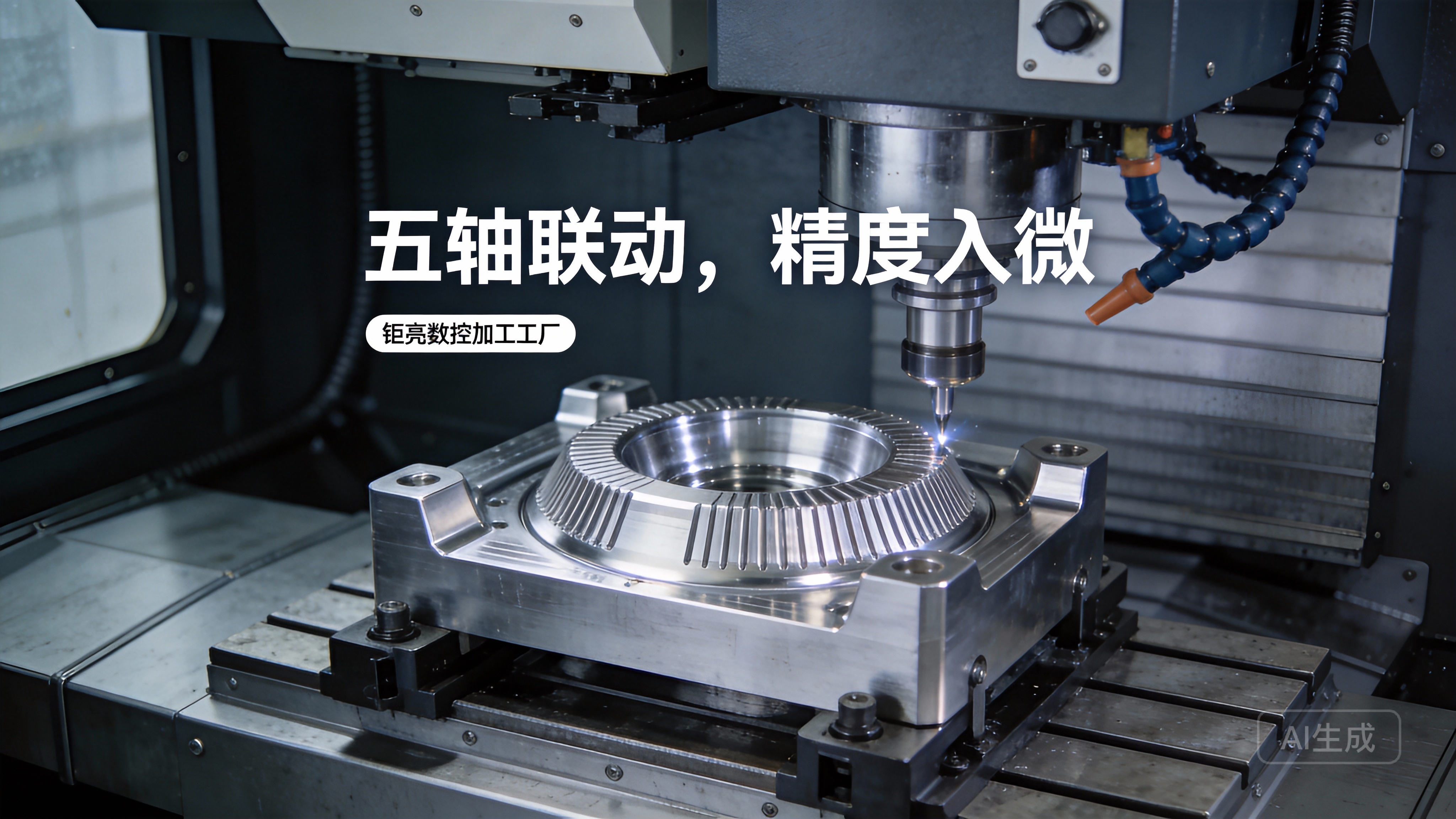
Today’s advanced precision 5-axis CNC machining services (internal link) enable tooling manufacturers to cut core and cavity geometries in a single setup, eliminating fixture offsets and cumulative error. This is particularly vital for complex undercuts, conformal cooling channels, and multi-surface engraving. In a bulk rapid tooling scenario, 5-axis machining can reduce CAM programming and machining time by 30–50% compared to sequential 3-axis operations.
GreatLight CNC Machining Factory, for instance, operates a cluster of brand-name 5-axis centers from DMG MORI, Jingdiao, and others, supported by a massive fleet of 4-axis and 3-axis CNC machines. This equipment density allows parallel roughing and finishing across multiple mold plates simultaneously, dramatically slashing lead time. The ability to achieve surface finishes of Ra 0.2 µm directly from the machine often eliminates secondary benching, further accelerating delivery.
2. Additive Manufacturing for Conformal Cooling and Pre-Production Prototypes
Selective laser melting (SLM) 3D printing of tool steel inserts has revolutionized the thermal management of injection molds. Conformal cooling channels that follow the contour of the part reduce cycle time by 20–40% and dramatically improve part quality. For bulk rapid tooling, printing a conformal-cooled insert can be completed in days and then mated with a conventionally machined mold base—a hybrid approach that marries speed with longevity.
GreatLight’s in-house fleet of SLM, SLA, and SLS 3D printers can produce not only metallic inserts but also high-fidelity polymer master patterns for silicone vacuum casting, enabling a parallel path for low-volume plastic parts while hard tooling is being manufactured.
3. High-Speed EDM and Surface Finishing
When high hardness or delicate internal features preclude traditional milling, high-speed graphite milling and mirror EDM become indispensable. The ability to machine graphite electrodes in hours and burn intricate details with sub-micron precision ensures that even the most complex tooling is finished within the tight rapid-tooling window. A full-service provider that integrates electrode manufacturing and EDM under one roof avoids the hand-off delays typical of fragmented supply chains.
Why Conventional Tooling Approaches Fail in Fast-Paced Markets
It’s worth examining the common pain points that drive engineers to seek a bulk rapid tooling solution in the first place. Having consulted on hundreds of projects, I’ve distilled them into four recurring frustrations.
The Precision Black Hole: A supplier quotes ±0.001 mm capability but delivers parts that drift out of spec after only a few hundred shots. This is often due to using tooling materials inappropriate for the resin or melt temperature, or neglecting thermal compensation during machining. A true rapid tooling partner validates dimensional stability with a rigorous PPAP-level dimensional report, not just a CMM check on a cold mold.
The Sequential Trap: Traditional tool shops route the job from design to CAM to roughing to EDM to polishing in a linear, siloed fashion, accumulating days of queue time between steps. The result is an 8-week lead time even for a straightforward two-cavity mold. Bulk rapid tooling adopts a parallel engineering approach: while the core is being rough-machined, inserts are being printed, electrodes are being cut, and the mold base is being prepared.
The “One-Process” Provider Myth: Many suppliers excel in a single discipline—say, CNC machining—but must outsource die casting molds or sheet metal forming tools. The hand-off introduces communication errors, quality ambiguity, and schedule risk. A vertically integrated manufacturer like GreatLight, with deep expertise spanning precision CNC machining, die casting mold development, sheet metal fabrication, and 3D printing, can internalize the entire tooling workflow, ensuring accountability and speed.
Quality System Gaps: Without robust quality management, rapid tooling can become “rushed tooling.” ISO 9001 certification is the floor, but for automotive, medical, or engine components, additional credentials like IATF 16949 or ISO 13485 attest that the tooling process itself is under strict change management, traceability, and risk mitigation governance.
The GreatLight Difference: Full-Process Integration for End-to-End Bulk Rapid Tooling
Having been deeply involved in tooling strategy at GreatLight CNC Machining Factory, I can attest that the company’s value proposition isn’t just a list of machines—it’s a systemic approach to compressing the design-to-production cycle. Founded in 2011 in Chang’an Town, Dongguan, the heart of China’s hardware and mold industry, GreatLight has methodically built a 7600 m² operation with 150 professionals, achieving over 100 million RMB in annual sales. But more importantly, its technical architecture is purpose-built for bulk rapid tooling challenges.
Equipment Arsenal Designed for Parallel Execution
The facility houses more than 127 pieces of precision peripheral equipment. A simplified capacity snapshot shows the scale:
| Equipment Category | Examples | Role in Bulk Rapid Tooling |
|---|---|---|
| 5-Axis CNC Machining Centers | DMG MORI, Jingdiao | Single-setup cutting of complex core/cavity, electrode blanks, and mold bases |
| 4-Axis & 3-Axis CNC Machines | Multiple brands, large-format up to 4000 mm | High-speed roughing, fixture plate production, secondary ops |
| Swiss-type Lathes & Mill-turn Centers | Precision CNC lathes | Tool inserts, ejector sleeves, and fine features |
| EDM (Wire & Mirror Spark) | High-speed graphite milling + die-sinking EDM | Deep ribs, sharp corners, and texturing of hardened steel |
| Additive Manufacturing Cell | SLM (metal), SLA, SLS (plastic) | Conformal cooling inserts, bridge-tooling patterns, prototype validation |
| Vacuum Forming & Die Casting Equipment | In-house die casting for aluminum/zinc alloys | Rapid cast mold trial runs without sending out tooling |
| Measurement & Inspection Lab | CMM, vision systems, hardness testers | First-article dimensional validation and SPC data generation |
The true secret sauce lies not just in possessing these assets, but in the production engineering methodology that links them. A tooling project manager oversees a cross-functional team that prioritizes work in real time, shifting resources to critical paths. For a recent automotive sensor housing mold project requiring 10,000-piece production, GreatLight delivered the completed tool—including conformal cooling inserts, hardened P20 steel—in just 12 days, a cycle that would typically stretch to 6 weeks elsewhere.
Certifications That Underscore Reliability
Trust is a currency in precision manufacturing. GreatLight’s walls display more than paper credentials; they reflect rigorous, externally audited systems:
ISO 9001:2015 – Foundation for consistent quality management.
ISO 13485 – Specific to medical device hardware, demonstrating compliance with stringent cleanliness and traceability requirements.
IATF 16949 – The automotive industry’s gold standard, ensuring that tooling processes are capable, stable, and continuously improved. For bulk rapid tooling of engine bracket or transmission components, this certification is a non-negotiable prerequisite.
ISO 27001 – Data security for IP-sensitive projects. When you upload a proprietary product design, you can be confident that the digital thread is protected.
These certifications aren’t just marketing badges; they directly impact tooling outcomes. IATF 16949, for example, mandates that toolmakers maintain detailed “tool history books” recording every maintenance event, repair, and production cycle. For customers, this means the long-term reliability of the rapid tool is documented and predictable.
Bulk Rapid Tooling Across Different Manufacturing Processes
A common misconception is that rapid tooling only applies to plastic injection molding. In reality, the same principles extend to die casting, sheet metal forming, and even composite lay-up molds. GreatLight’s cross-domain expertise allows a unified approach.
Die Casting Rapid Tools
Aluminum and zinc die casting demand molds that withstand thermal shock and high-velocity metal impingement. GreatLight combines 5-axis CNC machining of H13 tool steel with in-house heat treatment and texturing to produce high-performance die casting tools in accelerated timeframes. The ability to trial the mold immediately on the company’s own die casting equipment eliminates the back-and-forth shipping delay that typically adds 2 weeks to the development cycle. A new energy vehicle company recently leveraged this integrated loop to refine e-housing molds within 5 iterations over 20 days, achieving acceptable porosity levels on the first production run.
Sheet Metal Forming Tools
For brackets, enclosures, and chassis components, rapid tooling for stamping and bending must consider springback compensation and progressive die staging. GreatLight’s large-format CNC centers can machine forming punches and dies up to 4000 mm, and its sheet metal fabrication cell performs quick tryouts, accelerating die development from weeks to days.
Hybrid Tooling for Low-Volume Plastics
When a full steel mold is overkill for a 200-piece bridge production run, hybrid tooling using a machined aluminum cavity with additively manufactured inserts provides a cost-effective, fast path. GreatLight’s SLA 3D printers can also produce master models for silicone vacuum casting molds, yielding 20–50 polyurethane parts with properties close to production thermoplastics, all while the hard tool is being built.
How to Select the Right Bulk Rapid Tooling Partner: A Comparative Lens
Having a clear selection framework saves time and prevents costly missteps. Drawing on industry benchmarks and my own experience visiting shops, I’ve outlined what separates the best from the rest. The table below compares GreatLight’s integrated model with several well-known service providers, acknowledging that each has strengths in certain niches.
| Provider | Core Strengths in Rapid Tooling | Limitations / Typical Sweet Spot | Certifications Relevant to Tooling |
|---|---|---|---|
| GreatLight Metal (GreatLight CNC Machining Factory) | Fully integrated in-house: 5-axis CNC, EDM, SLM 3D printing, die casting trials, sheet metal forming, comprehensive certifications. One-stop from tooling to production parts. Specializes in high-complexity, high-volume rapid tooling for automotive, medical, humanoid robot components. | Minimum order for tooling may be higher due to full-process commitment; not the cheapest option for simple single-cavity aluminum molds. | ISO 9001, IATF 16949, ISO 13485, ISO 27001 |
| Protolabs Network | Best-in-class automated quoting for injection molding. Broad manufacturing partner network. Very fast for simple to moderate complexity molds using standardized aluminum soft tooling. | Typically limited to simpler geometries and thermoplastic molds; less depth for multi-process hard tooling or die casting. Quality depends on the specific partner in their network. | ISO 9001 (at partner level) |
| Xometry | Large-scale marketplace with wide range of CNC machining and sheet metal. Access to many tool shops for injection molding through its network. Good for price benchmarking. | Variability in quality and lead time due to distributed network; less engineering support for complex tooling design. Not a direct-source manufacturer. | Network partners may have various certs |
| RapidDirect | Solid digital platform, strong CNC machining and sheet metal. Offers rapid injection molding with decent lead times. Transparent pricing. | Primarily a machining-focused bureau; may not offer deep mold design engineering or integrated die casting. | ISO 9001 |
| Fictiv | Excellent for agile hardware teams; very fast quoting and prototype injection molding via its global network. Highly responsive customer support. | Similar to Protolabs Network: strength in simplicity and speed, not in complex multi-process hard tooling or automotive/medical certified production. | ISO 9001 at some partners |
| Owens Industries | Deep expertise in 5-axis machining of difficult materials. Suitable for complex tooling components and low-volume production. | More of a high-end job shop, not offering integrated die casting or sheet metal under one roof; lead times longer for full tool builds. | AS9100 (aerospace) |
| JLCCNC | Competitive pricing for simpler CNC machined tooling inserts and aluminum molds, leveraging large-scale domestic manufacturing. Decent for low-cost rapid tooling. | Primarily machining-focused; limited engineering assistance for tool design optimization; not vertically integrated beyond CNC. | ISO 9001 |
The key takeaway: If your project demands a simple thermoplastic part and cost is the primary driver, a network platform may suffice. But if you’re developing a mission-critical component—an engine bracket, a surgical device housing, or a sensor assembly requiring multiple manufacturing processes with full traceability—then a single-source, fully certified manufacturer like GreatLight is the only one that can deliver a true bulk rapid tooling solution without subcontracting risk.
Real-World Application: Empowering Innovation with Speed and Precision
Let’s examine a composite case drawn from GreatLight’s worklogs that illustrates the impact of integrated bulk rapid tooling.
Scenario: A robotics startup needed 5,000 units of an aluminum alloy shoulder joint housing with ±0.02 mm flatness across a multi-bolt interface, along with a corresponding injection-molded wiring cover. The original target was market launch in 10 weeks. Using traditional sequential methods, the die casting mold alone would require 6 weeks, followed by 2 weeks for trial and adjustment, leaving no time for the plastic cover mold.
GreatLight’s approach:
Parallel mold design: CAD engineers created the die casting mold layout and the injection mold concurrently, leveraging shared cooling and ejection standard components.
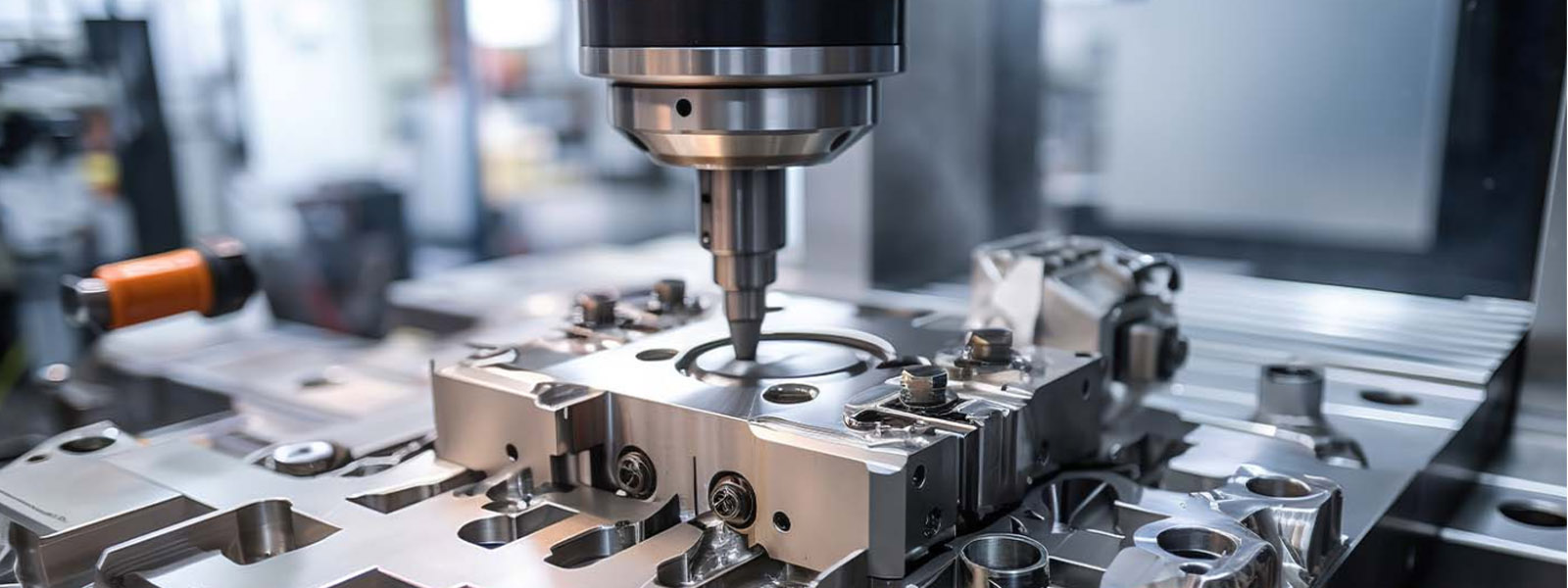
5-axis machining of both molds simultaneously: The die cast tool (H13 steel) and the injection mold (P20 steel) were roughed in parallel on separate 5-axis cells, while electrodes for fine details were cut on a high-speed graphite mill.
Additive insert for conformal cooling: The thin-walled section prone to hot tearing in die casting was addressed with a 3D-printed conformal cooling insert, reducing cycle time and improving fill.
In-house trial run: As soon as the molds were polished and assembled, trial shots were performed on-site using the client’s specified alloy and resin. First-article reports, including CMM data and process capability (Cpk), were shared within 2 days, not 2 weeks of shipping samples back and forth.
Immediate volume ramp: After client sign-off, the same molds transitioned directly into production within the same facility, eliminating transfer risk.
Result: Both tools were delivered in 16 days, full production began on day 25, and the startup met its launch window. The bulk rapid tooling solution not only saved 4 weeks of lead time but also ensured that the hard tools would support the planned 100,000-cycle lifetime.
Common Pitfalls in Bulk Rapid Tooling and How to Avoid Them
Even with the best partner, certain misunderstandings can derail a project. Here are four pitfalls based on lessons learned:
Over-specifying tool steel for low-volume applications: Requesting H13 for a 5,000-piece aluminum run may unnecessarily increase cost and lead time. A seasoned tooling engineer will recommend the appropriate grade (e.g., a high-quality aluminum alloy for the mold) to balance durability and speed. GreatLight’s project managers routinely provide material selection guidance tied to production volume and resin/metal type.
Neglecting thermal management in the rush: A rapid tool that isn’t designed with adequate cooling will produce inconsistent parts and may fail prematurely. Always insist on mold flow analysis or at least thermal simulation before cutting steel. GreatLight’s engineering team performs computational analysis on complex molds to optimize cooling channel placement.
Assuming rapid tooling is “good enough” without validation: The temptation to skip a full first-article inspection because “it’s just a rapid tool” is a recipe for disaster. True bulk rapid tooling includes a rigorous dimensional report and, ideally, a process capability study (Ppk or Cpk) so you know exactly how the tool will perform over the expected production life.
Overlooking data security: In the rush to share CAD files with multiple vendors, IP can leak. Select a partner with ISO 27001 certification and clear data management protocols. GreatLight operates on a secure, access-controlled PDM system, ensuring that your designs are protected throughout the tooling process.
The Future of Bulk Rapid Tooling: Intelligent and Hybrid
The trajectory is clear: tooling will become more automated, more data-driven, and more hybrid. At GreatLight, we are already deploying:
AI-driven tool design assistants that suggest gate locations and cooling layouts based on part geometry, reducing engineering time by up to 40%.
Direct metal laser sintering (DMLS) of entire mold inserts with integrated conformal cooling, eliminating the need for assembly of printed inserts into machined holders.
Digital twin simulation linking mold filling, cooling, and structural deformation to predict tool life and part quality before the first chip is cut.
These advancements will further compress the bulk rapid tooling timeline, making it possible to go from final design to first production parts within a single week.
Conclusion: Your Bulk Rapid Tooling Solution For You
The manufacturing landscape no longer forces a choice between speed and scale. A well-executed bulk rapid tooling solution harnesses advanced 5-axis CNC machining, additive manufacturing, robust process control, and multi-process integration to deliver production-grade molds in days, not months. Whether you are an automotive tier-one supplier, a medical device innovator, or a robotics startup, the key is selecting a partner that doesn’t just sell machine hours but owns the entire tooling lifecycle—from design for manufacturability feedback to on-site trial runs and long-term production support.
At GreatLight CNC Machining Factory (external link), we’ve spent over a decade perfecting this model. Our IATF 16949, ISO 13485, and ISO 27001 certifications provide the trust framework; our integrated equipment array and engineering acumen deliver the speed. The next time you face an aggressive product launch timeline or need to ramp up volume without sacrificing quality, I invite you to explore a partnership where precision, speed, and reliability coexist.
Because in the end, the right bulk rapid tooling solution doesn’t just build molds—it builds confidence in your entire supply chain.


![[访谈] RAPID + TCT 2024:人工智能对 3D 打印的价值](https://print-ing.com/wp-content/uploads/2024/07/INTERVIEW-60x60.jpeg "[访谈] RAPID + TCT 2024:人工智能对 3D 打印的价值 9")




发表回复
要发表评论,您必须先登录。