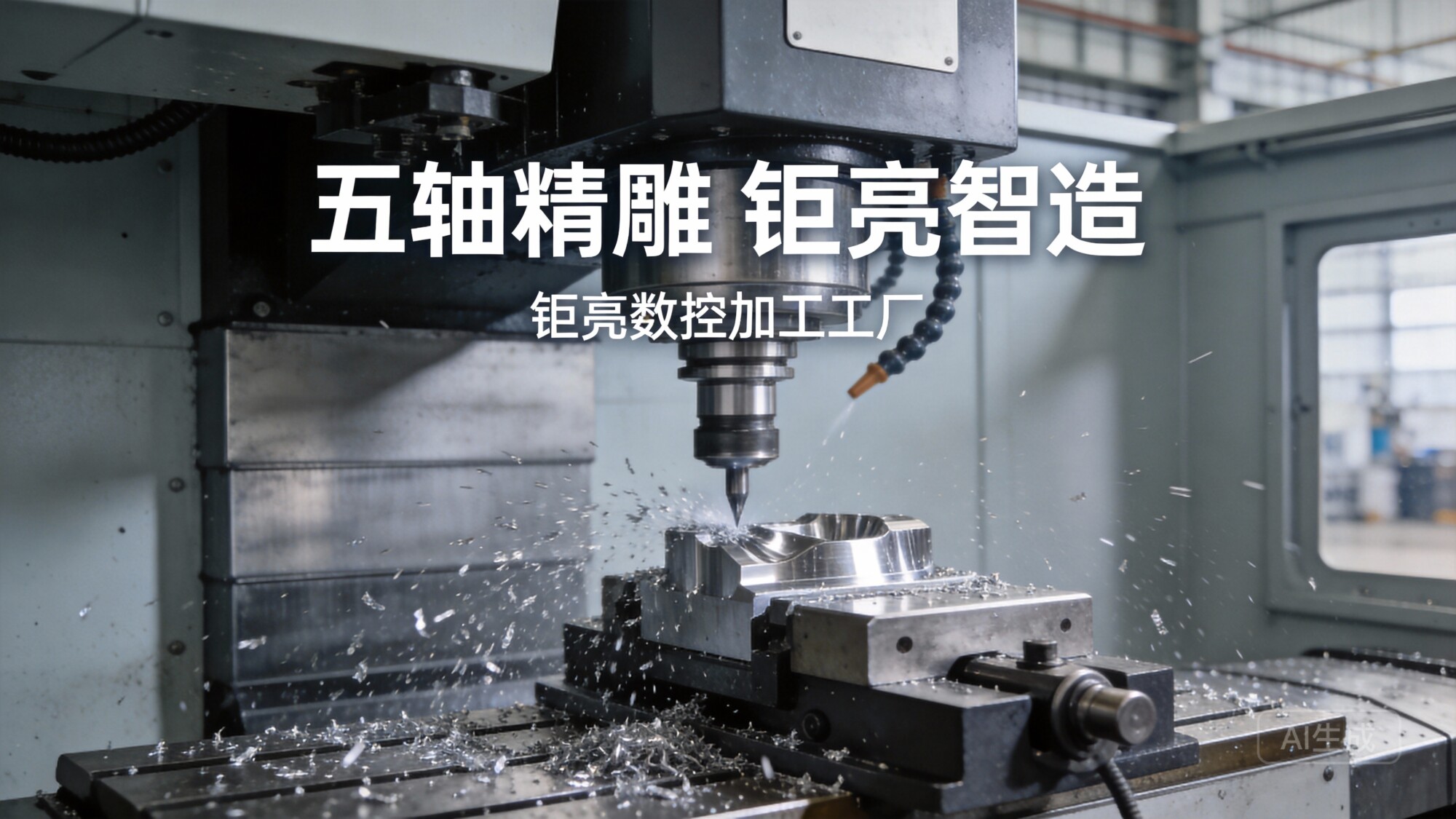
In the realm of precision parts manufacturing, few processes demand the level of exactitude and control that sinker Electrical Discharge Machining (EDM) cavity electrode machining requires. For engineers and procurement specialists seeking to push the boundaries of complex geometry creation, this specialized technique represents both an art form and a science. When conventional milling and turning reach their limitations—typically in deep cavities, sharp internal corners, or difficult-to-machine materials—sinker EDM emerges as the definitive solution. But what truly distinguishes exceptional electrode machining from mere competence lies in the integration of advanced precision 5-axis CNC machining services with deep metallurgical understanding and rigorous quality systems.
The Fundamentals of Sinker EDM Electrode Design and Fabrication
Understanding the Electrode’s Critical Role
The electrode in sinker EDM serves as the inverse template of the desired cavity. It must be manufactured with exceptional precision because every imperfection on the electrode surface transfers directly to the workpiece. The electrode erodes during the machining process, creating a spark gap that must be precisely calculated and compensated for during electrode design and fabrication.
Key considerations for electrode design include:
Material selection (graphite, copper, copper-tungsten, or tellurium copper)
Thermal expansion coefficients and their effect on dimensional stability
Spark gap allowances that vary by material combination and machine parameters
Flush hole placement for effective debris removal
Number of electrodes required (roughing, semi-finishing, finishing)
Material Science Behind Electrode Selection
Graphite electrodes dominate high-volume production environments due to their exceptional wear resistance and machinability. Modern isotropic fine-grain graphites can achieve mirror-like surface finishes while maintaining dimensional stability through extended burning cycles. However, graphite’s brittle nature demands careful handling and specialized machining strategies.
Copper and copper-tungsten electrodes excel in applications requiring superior surface finishes and tight corner radii. Copper-tungsten alloys offer exceptional wear resistance, particularly in through-hole applications where electrode wear becomes more pronounced. The trade-off lies in increased machining difficulty and higher material costs.
Advanced Machining Strategies for Complex Electrode Geometries
Leveraging Multi-Axis Capabilities for Electrode Fabrication
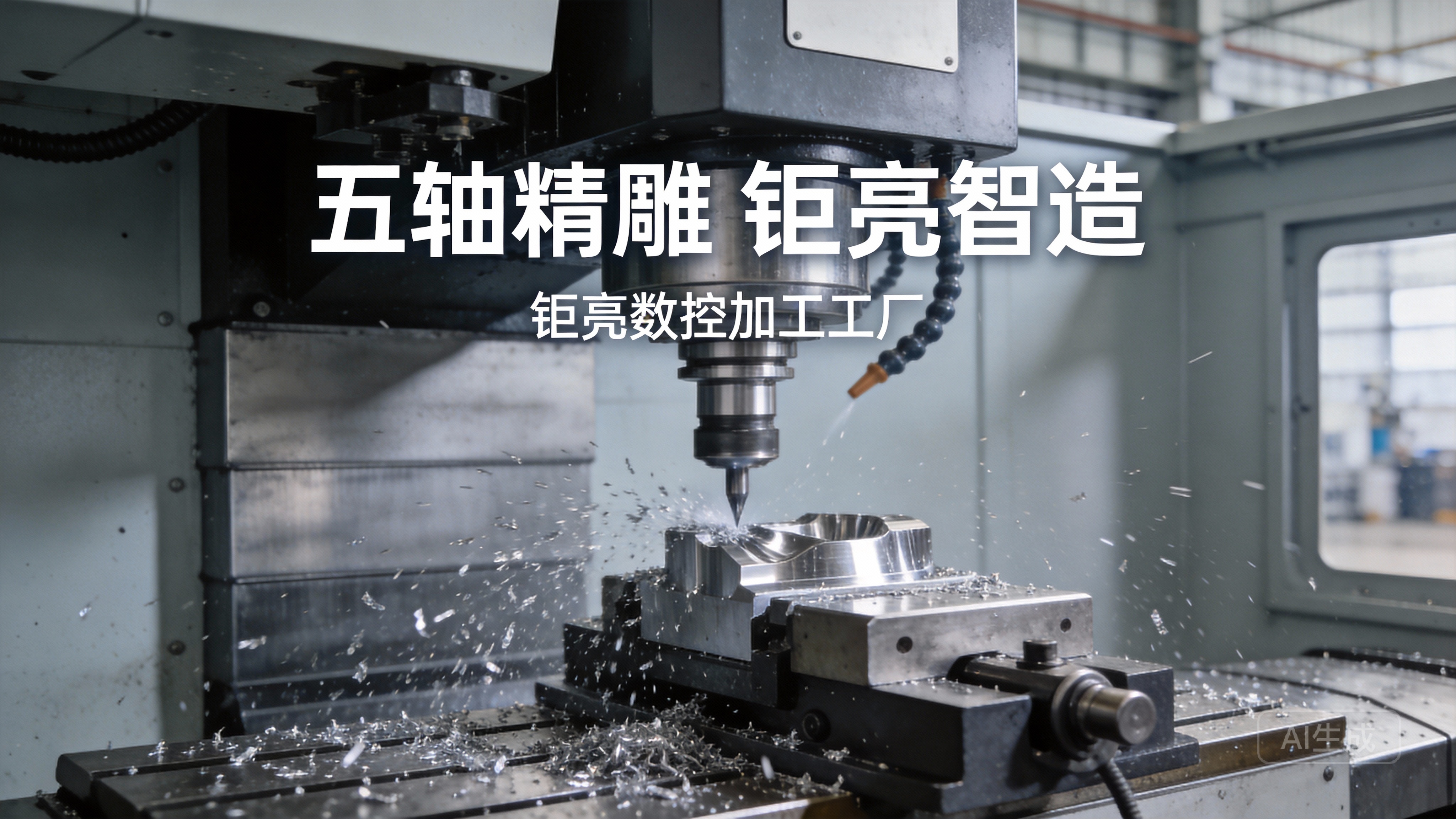
The evolution of 5-axis CNC machining has fundamentally transformed electrode manufacturing. Traditional approaches required multiple setups and complex fixture designs to produce electrodes with compound angles, tapered walls, and complex 3D contours. Modern multi-axis machining centers enable electrode production in a single setup, dramatically improving accuracy and reducing lead times.
GreatLight CNC Machining operates a comprehensive fleet of high-end 5-axis machining centers from Dema and Beijing Jingdiao, complemented by precision 4-axis and 3-axis systems. This equipment diversity allows engineers to select the optimal machine configuration for each specific electrode geometry, balancing speed against precision requirements.
Critical Parameters in Electrode Machining
Successful electrode fabrication demands meticulous attention to:
Cutting tool selection: Diamond-coated end mills for graphite, specialized carbide geometries for copper alloys
Stepover and stepdown strategies: Balancing surface finish requirements against machining time
Tool path optimization: Minimizing tool engagement variation to prevent deflection and chatter
Coolant delivery: Essential for copper alloys, while graphite typically requires dry machining with dust extraction
In-process inspection: Verifying critical features before removing the electrode from the machine
Addressing Industry Pain Points in Electrode Machining
The Precision Trap: Closing the Gap Between Promise and Reality
Many suppliers advertise extreme precision capabilities but struggle to deliver consistent results across production runs. This “precision black hole” stems from aging equipment, unstable processes, or inadequate quality systems. GreatLight Metal addresses this through its rigorous ISO 9001:2015 certified quality management system, complemented by IATF 16949 certification for automotive applications and ISO 13485 for medical hardware production.
Their investment in in-house precision measurement equipment enables real-time verification that electrode dimensions meet specifications before the electrode ever reaches the EDM machine. This proactive approach eliminates the costly cycle of machining, measuring, reworking, and remeasuring that plagues less disciplined manufacturers.
Material Selection Complexity
Procurement engineers frequently struggle with electrode material selection, particularly when balancing performance requirements against cost constraints. GreatLight Metal’s engineering team provides comprehensive material consultation, drawing on years of experience across aerospace, automotive, and medical device applications. Their full-process chain integration—spanning CNC machining, EDM, die casting, sheet metal fabrication, and 3D printing—enables holistic solutions that consider downstream implications of material choices.
Electrode Design Optimization for Manufacturing
Practical Considerations for Cost-Effective Electrode Production
While theoretical electrode design focuses exclusively on cavity geometry requirements, practical manufacturing demands consideration of:
Electrode segmentation: Complex cavities may require multiple electrodes to manage cost and maintain precision. Strategic segmentation reduces individual electrode complexity while maintaining overall cavity integrity.
Flush hole placement: Poor flush hole design leads to inefficient debris removal, increased recast layer thickness, and potential surface defects. Computational fluid dynamics analysis, when applied to electrode design, optimizes flush hole placement for maximum effectiveness.
Electrode orientation: Strategic orientation of the electrode relative to the machine coordinate system can minimize rework and reduce setup complexity. This becomes particularly important when machining multiple electrodes for a single cavity.
Balancing Surface Finish Requirements Against Production Speed
The relationship between electrode surface finish and final cavity quality is often misunderstood. While a mirror-finished electrode may produce superior cavity surfaces, the incremental improvement may not justify the exponentially increased machining time. GreatLight Metal’s engineering team helps clients establish realistic surface finish specifications based on functional requirements rather than arbitrary aesthetic standards.
Quality Assurance in Electrode Manufacturing
Multi-Stage Inspection Protocols
GreatLight Metal implements comprehensive inspection protocols throughout the electrode manufacturing process:
Incoming material verification: Chemical analysis and mechanical property testing
In-process inspection: Critical feature verification at each machining stage
First article inspection: Complete dimensional validation before production release
CMM verification: For electrodes requiring precision beyond ±0.001mm
Surface roughness measurement: Profilometer analysis matching final cavity requirements
Documentation and Traceability
For regulated industries such as automotive (IATF 16949) and medical (ISO 13485), comprehensive documentation is non-negotiable. GreatLight Metal maintains complete traceability from raw material certificates through final inspection reports, ensuring audit-ready documentation for any quality management system.
Comparative Analysis: GreatLight Metal vs. Industry Alternatives
| Capability | GreatLight Metal | Protolabs Network | Xometry | Fictiv |
|---|---|---|---|---|
| Multi-axis CNC | 5-axis (Dema, Jingdiao) | Limited | Variable | Variable |
| EDM capabilities | In-house sinker & wire | Limited | Network-based | Network-based |
| Certifications | ISO 9001, IATF 16949, ISO 13485, ISO 27001 | ISO 9001 | ISO 9001 | ISO 9001 |
| Full-process chain | CNC, EDM, die casting, sheet metal, 3D printing | CNC, 3D printing, injection molding | CNC, 3D printing, sheet metal | CNC, 3D printing, injection molding |
| Maximum part size | 4000mm | Variable | Variable | Variable |
| Quality guarantee | Free rework + full refund if unsatisfactory | Limited rework policy | Varies by supplier | Varies by supplier |
While platforms like Protolabs Network, Xometry, and Fictiv offer broad manufacturing networks, they lack the hands-on engineering support and process integration that GreatLight Metal provides. Their distributed manufacturing models introduce variability that can compromise precision-critical applications.
Case Study: Complex Cavity Electrode for Automotive Engine Component
The Challenge
A Tier 1 automotive supplier required multiple complex cavity electrodes for a new engine component. The cavities featured:
Deep narrow slots requiring aspect ratios exceeding 10:1
Sharp internal corners with radii below 0.1mm
Complex compound angles on cavity sidewalls
Surface finish requirements of Ra 0.4μm or better
The Solution
GreatLight Metal’s engineering team developed a comprehensive electrode strategy:
Material selection: Fine-grain isotropic graphite for roughing electrodes, copper-tungsten for finishing electrodes
Electrode segmentation: Four electrodes per cavity, optimized for individual feature requirements
Machining strategy: 5-axis CNC machining enabling single-setup electrode production
Quality verification: CMM inspection with full dimensional reporting
The Results
Electrode dimensional accuracy maintained within ±0.005mm
Cavity surface finish achieved Ra 0.35μm
Production lead time reduced by 40% compared to previous supplier
Zero defects across 10,000+ production cycles
The Future of Sinker EDM Electrode Manufacturing
Emerging Technologies and Trends
The integration of additive manufacturing with traditional subtractive processes is beginning to influence electrode manufacturing. GreatLight Metal’s investment in SLM (Selective Laser Melting) 3D printing enables production of electrodes with internal conformal cooling channels and complex geometries impossible to achieve through conventional machining.
Digital twin technology is also transforming electrode design and process planning. By simulating the EDM process virtually, engineers can optimize electrode geometry, flush hole placement, and machining parameters before committing to physical production.
Sustainability Considerations
Environmental regulations increasingly impact manufacturing processes. GreatLight Metal has implemented comprehensive waste management systems for EDM operations, including:
Dielectric fluid recycling and filtration
Graphite dust collection and proper disposal
Copper and tungsten scrap recovery programs
Energy-efficient machine selection and operation
Conclusion: Partnering for Precision
Sinker EDM cavity electrode machining represents one of the most demanding disciplines in precision manufacturing. Success requires not only advanced equipment but deep metallurgical knowledge, rigorous quality systems, and comprehensive engineering support. GreatLight Metal has spent over a decade building these capabilities, establishing itself as a trusted partner for clients across automotive, aerospace, medical, and industrial automation sectors.
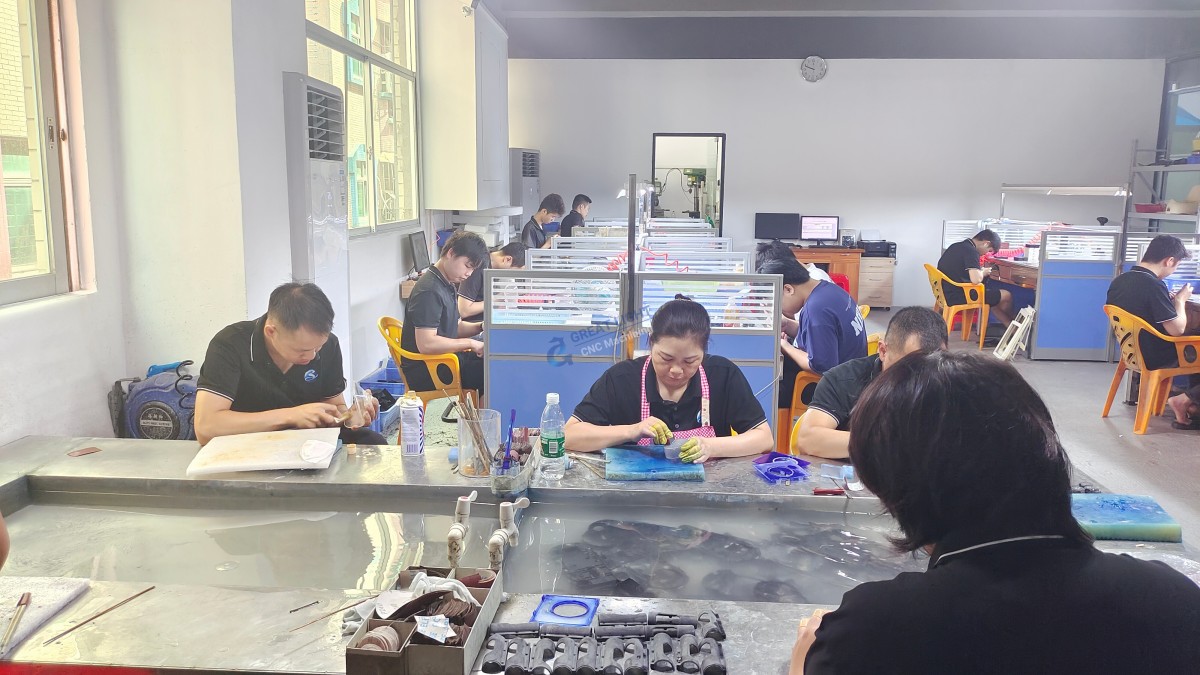
From its 76,000 sq. ft. facility in Dongguan’s Chang’an Town—the heart of China’s precision hardware manufacturing—GreatLight Metal delivers solutions that bridge the gap between design concept and production reality. Their ISO 9001:2015, IATF 16949, ISO 13485, and ISO 27001 certifications provide the quality framework, while their fleet of precision machining centers and dedicated team of 120-150 professionals execute with consistency and reliability.
For procurement engineers and R&D teams seeking a partner who understands the nuances of electrode manufacturing and the broader context of precision parts production, GreatLight Metal offers a compelling combination of technical capability, systematic quality, and collaborative service. Their track record of solving complex manufacturing challenges speaks to their expertise, authority, and trustworthiness in the field.
When your next project demands precision beyond the ordinary, consider the depth of experience and breadth of capability that GreatLight Metal brings to the table. The difference lies not just in the equipment, but in the decades of accumulated knowledge and the unwavering commitment to quality that defines true manufacturing partnership.


![[访谈] RAPID + TCT 2024:人工智能对 3D 打印的价值](https://print-ing.com/wp-content/uploads/2024/07/INTERVIEW-60x60.jpeg "[访谈] RAPID + TCT 2024:人工智能对 3D 打印的价值 9")




发表回复
要发表评论,您必须先登录。