
When you’re staring at a component design and the production volume lands squarely between 100,000 and 1,000,000 shots, you’re no longer in prototype territory. You’re in the world of production molding, where the decisions you make about tooling will echo through your entire supply chain. These volumes demand a production mold that balances upfront investment against per‑part cost, tool longevity, and process stability. Get it right, and you’ll be shipping consistent, high‑quality parts for months or even years. Get it wrong, and you’ll be fighting flash, warpage, and endless tool repairs long before you hit the 100k mark.
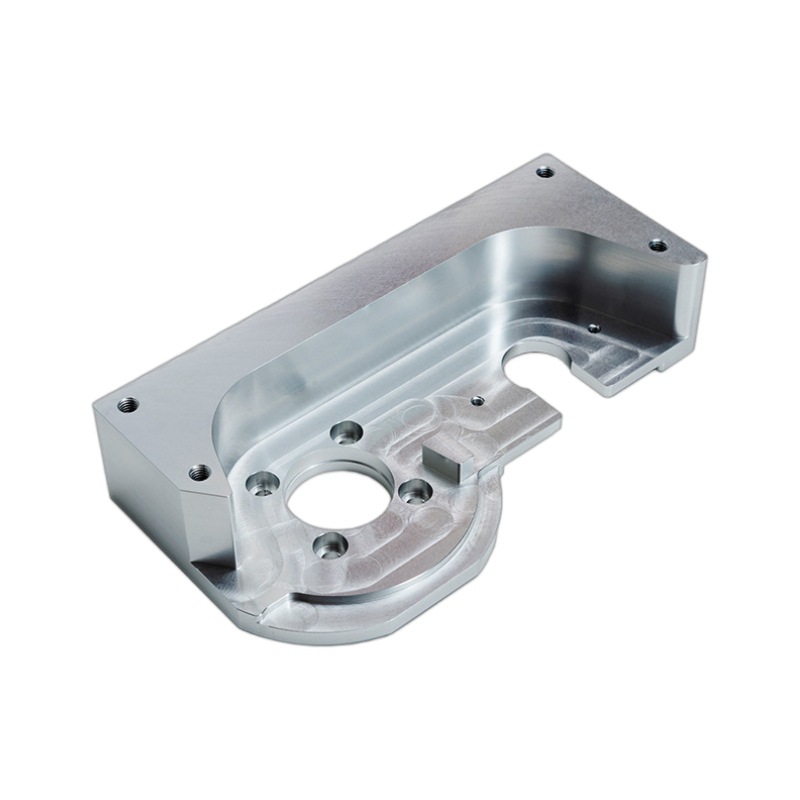
This article, from a senior manufacturing engineer’s perspective, unpacks everything you need to know about specifying, sourcing, and running a Production Mold 100k to 1M Shots. We’ll walk through material selection, tool steel grades, cooling design, validation strategies, and how to pick a partner who won’t let you down when the counter starts climbing toward a million cycles.
What Exactly Is a Production Mold for 100k–1M Shots?
A production mold is a precision tool designed to withstand the thermal, mechanical, and chemical stresses of repeated injection, die casting, or compression molding cycles over an extended life. For the 100k to 1M shot window, you’re past the break‑in phase of a prototype or bridge tool but you haven’t yet reached the extreme‑endurance realm of a completely hardened, multi‑million‑shot high‑volume automotive mold. This means the tool must offer a carefully calculated balance:
Cavity and core hardness high enough to resist wear, yet not so brittle that it risks cracking during rapid cycling.
Cooling efficiency that can keep cycle times competitive without driving tool complexity through the roof.
Surface treatments that protect against the specific abrasion or corrosion of your chosen resin or metal alloy.
Mechanical strength and precision that maintain dimensional stability across hundreds of thousands of cycles.
Typical part applications at this volume include industrial equipment housings, medical device enclosures, consumer electronics chassis, automotive interior brackets, and a vast array of engineered components where metal or plastic consistency is non‑negotiable.
Production Mold Materials: Picking the Right Steel for the Job
One of the most frequent questions I get: “Which tool steel should I use for 100k to 1M cycles?” There is no single correct answer—it depends entirely on the material being molded, the part geometry, and the expected annual cycle count. However, the following table gives a proven starting point.
| Steel/Grade | Typical Hardness (HRC) | Best Suited For | Expected Life (shots) | Key Trait |
|---|---|---|---|---|
| P‑20 (pre‑hardened) | 28–32 | Low‑abrasion general‑purpose thermoplastics (ABS, PP, PE) | 100k–300k with proper maintenance | Good polishability, cost‑effective |
| 718H / 718 (pre‑hardened) | 32–38 | Moderate abrasion (PC/ABS, nylon unfilled) | 200k–500k | Improved wear resistance over P‑20 |
| H‑13 (hot work) | 46–50 after hardening | Die casting of aluminum, zinc, magnesium | 100k–150k+ for aluminum (surface treated) | Excellent thermal fatigue resistance |
| S‑7 (shock resistant) | 54–56 | Inserts with high mechanical impact, thick‑wall molding | 200k–500k | Toughness for abrupt ejection forces |
| D‑2 (high‑carbon, high‑chrome) | 58–62 | Glass‑filled / abrasive engineering resins | 500k–1M+ | Outstanding wear resistance |
| Stainless (420 SS, ESR grades) | 48–52 | Corrosive resins (PVC, flame‑retardant grades) or cleanroom environments | 300k–500k | Corrosion resistance, good polish |
I frequently recommend H‑13 with nitriding or PVD coatings for aluminum die casting in the mid‑volume range, as it handles thermal cycling beautifully. For glass‑filled nylon connectors or wear‑prone slides, D‑2 or a powder‑metallurgy high‑wear grade will easily reach the 1M mark without significant degradation.
Pro tip: Always match the cavity steel to the gate and runner system. A beautifully hardened cavity does you little good if the gate insert erodes at 80k shots and starts delivering inconsistent melt flow.
Mold Design Details That Make or Break 1M Shots
Cooling and Cycle Time
At 100k+ units, every second you shave off the cycle pays back handsomely. Conformal cooling—cooling channels that follow the part contour—can reduce cycle time by 15–30% on complex geometries. While traditionally produced via drilled straight lines, today’s 5‑axis CNC and direct metal laser sintering (DMLS) of inserts allow curvilinear cooling circuits that extract heat right where it builds up. A well‑cooled mold not only runs faster but also produces less warpage and higher dimensional accuracy.
Venting
Blind pockets cause gas traps that lead to burn marks, incomplete filling, and premature tool erosion. For a production mold targeting half a million shots, deep, strategically placed venting grooves (0.02–0.04 mm depth for most plastics) are essential. For die casting, overflow wells and vacuum assist may be needed to keep porosity in check.
Interchangeable Inserts
Molds designed with modular cavity inserts give you the ability to replace a worn‑out core or a damaged detail without remaking the entire tool. This approach can double the effective life of a mold base and dramatically reduce downtime. For a part that must survive 800k shots, we often harden critical inserts while leaving the base in P‑20—this balances cost and longevity.
Ejection and Draft
Balanced ejection and adequate draft angles (at least 1° for most textures, more for high‑friction materials) prevent the sort of repeated ejection stresses that crack cores or gall surfaces. Over a million cycles, even a tiny ejection pin misalignment becomes a major problem if the part is constantly stretching the steel.
Validation: Don’t Let the First 10k Fool You
A production mold that looks flawless after a 5,000‑shot pilot run can fail dramatically at 60k if process parameters weren’t tested at the edges of the process window. I advocate for an extended process capability study that includes:
Design of Experiments (DOE) across melt temperature, injection speed, holding pressure, and cooling time to find robust settings.
90‑shot capability runs at the end of the DOE to measure Cp and Cpk on critical dimensions. For parts that will see 1M shots, I want a Cpk ≥ 1.67 long‑term.
Accelerated wear‑in runs where the mold is deliberately run faster and hotter for 20k–30k shots to reveal any nascent weakness, especially around shut‑offs and sliding components.
A mold that passes a rigorous validation will deliver predictable quality across its life, and you’ll catch things like an undersized cooling circuit or a gall‑prone ejector sleeve before they become field failures.
Cost Breakdown: Upfront Tooling vs. Per‑Part Cost
Many engineers fixate on the mold purchase price. A better metric is total cost of ownership (TCO) per part. For the 100k–1M window, the mold might cost $15,000–$80,000 depending on part size, number of cavities, and complexity. A quick example:
A single‑cavity aluminum die casting tool in H‑13, with conformal cooling and interchangeable inserts, might cost $30,000. Over 200,000 shots, that’s $0.15 per cavity. Add process cost, material, and post‑processing, and your total part cost lands around $2.80.
If you had chosen an unhardened P‑20 tool at $12,000, it might fail at 60k, forcing a second tool and a total of $24,000 plus the lost production time. The per‑part mold cost would be similar, but the quality and delivery headaches would be far worse.
When a supplier like GreatLight CNC Machining designs a production mold, the focus is on delivering the target life with minimal unplanned maintenance. Their integrated approach—coupling mold making with in‑house 5‑axis CNC, EDM, and metrology—reduces the risk of mismatched tolerances that silently eat away at mold life.
Choosing the Right Production Mold Partner
You can have the best mold design on paper, but a mediocre toolmaker will still deliver a tool that underperforms. When evaluating potential partners for a 100k–1M shot mold, look for:
Vertical process integration. A factory that owns the full chain—design, 5‑axis machining, wire/sinker EDM, polishing, and try‑out—eliminates the finger‑pointing that plagues multi‑vendor projects. GreatLight CNC Machining, for instance, operates three wholly‑owned manufacturing plants and houses 127 pieces of precision peripheral equipment, so their mold making doesn’t get handed off between shops.
Certifications as a baseline, not a guarantee. ISO 9001 is table stakes. For medical or automotive components, ISO 13485 and IATF 16949 indicate that the quality management system can sustain the rigor required for safety‑critical parts. GreatLight holds ISO 9001:2015, ISO 13485, and IATF 16949 certifications, which means their traceability, process control, and corrective action systems are already battle‑tested.
Proven experience with similar materials and volumes. A shop that’s built 50 molds for unfilled polypropylene won’t necessarily know how to handle the abrasive wear of a 30% glass‑filled PBT tool that needs to hit 800k shots. Look for case studies that match your application. GreatLight’s portfolio spans automotive housings, robotic joint components, medical device enclosures, and consumer electronics—all areas where mid‑volume production molds are the norm.
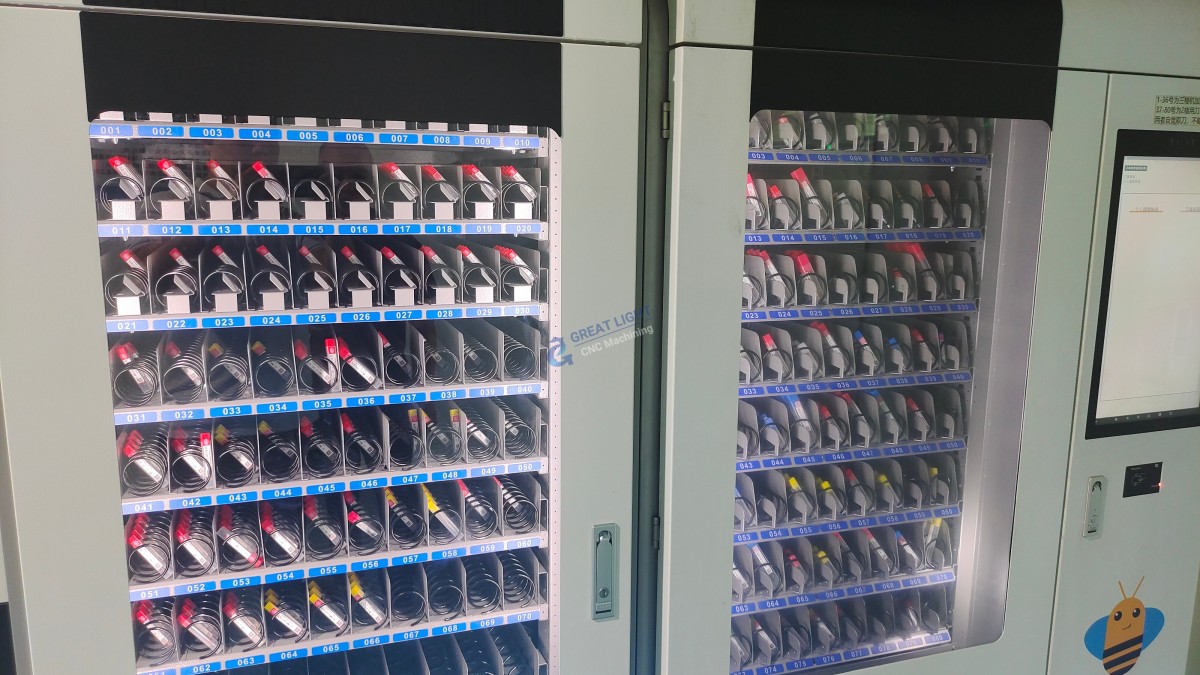
Metrology and process capability. A competent partner will have CMMs, vision systems, and laser scanners in‑house, and will report Cpk data with every trial run. That data for your mold should be made available without asking.
Let’s see how a few well‑known brands stack up when positioned against a full‑chain manufacturer like GreatLight:
| Provider | Core Strength | Best Fit | Limitation for 100k‑1M Shot Molds |
|---|---|---|---|
| GreatLight CNC Machining | Full‑process chain integration: mold design & build, precision CNC, die casting, sheet metal, 3D printing, surface finishing | Complex, multi‑step parts requiring combined processes; high‑modulus tool steels; one‑stop accountability | Not focused on ultra‑low‑volume bridge tooling; may be overkill for under 5k shots |
| Protocase | Rapid sheet metal enclosures/quick‑turn machining | Electronic enclosures, brackets | Limited injection mold capability, not a mold maker |
| EPRO‑MFG | High‑volume precision manufacturing and assembly | Automotive components, large production runs | May not be agile enough for mixed‑material mold integration |
| Owens Industries | 5‑axis machining of exotic metals | Complex metal parts, aerospace | Mold making is not their primary focus |
| RapidDirect | On‑demand CNC, sheet metal, injection molding prototyping | Quick prototyping and bridge tooling | Production mold life and process validation depth may be limited compared to dedicated mold shops |
| Xometry | Massive global manufacturing network | Part diversity across many processes | Quality consistency depends on which partner is selected; less process‑chain control |
| JLCCNC | Economical CNC machining, fast quotes | Simple metal/plastic parts, low tool life expectation | Limited experience with 1M‑cycle mold construction and validation |
None of these other providers are “bad”—each serves a specific segment well. But for a production mold that must clock 100k to 1 million consistent, high‑tolerance shots, you’ll benefit from a partner that has built its entire infrastructure around the life of a precision tool. GreatLight’s facility in Dongguan, right in the heart of the hardware and mold capital, houses large 5‑axis centers, EDM, and 3D printers under the same roof. That means they can build the mold base, machine the cavity, produce conformal cooling inserts via metal 3D printing, and then run a full tryout—all without losing time shipping parts between suppliers.
Maintenance, Repair, and the Million‑Shot Mold
Even the best production mold needs periodic maintenance to cross the 1M finish line. A proactive maintenance schedule typically looks like:
Every 20,000–30,000 cycles: Inspect venting channels for clogging, clean any residue, re‑apply mold release if needed, and check ejector pin lubrication.
Every 100,000 cycles: Remove and inspect cavity inserts under magnification; measure critical dimensions on sample parts; re‑polish gate area if necessary.
Every 300,000 cycles or when surface finish degrades: Re‑apply surface coating (TiN, CrN, or DLC) if the tool was coated.
Spare parts strategy: For 1M‑shot molds, keeping a set of cavity inserts, ejector pins, and gate components on the shelf can cut downtime from days to hours. The incremental cost is negligible compared to a halted production line.
I’ve seen molds that were originally designed for 300k shots ultimately deliver 1.2M because the team maintained excellent process discipline and replaced wear items on schedule. In contrast, I’ve also seen a $50,000 tool scrapped at 150k because the operators kept overriding the low‑pressure close setting and finally cracked the parting line.
Bringing It All Together: The Value of an Integrated Partner
When you’re engineering a product for mid‑volume production, your mold is not a standalone purchase; it’s a strategic investment in your product’s supply chain. That’s why the trend is toward manufacturers who offer more than just mold making. A partner who can also handle the secondary CNC machining, surface finishing, and assembly allows you to validate the entire production flow during the tooling trial. You see not just a perfect molded part, but a finished, ready‑to‑ship component.
At GreatLight CNC Machining, the portfolio spans five‑axis machining, die casting molds, sheet metal fabrication, and even 3D‑printed tooling inserts for conformal cooling—all under one ISO 9001‑certified roof. Their team of 150 professionals operates in a 76,000 sq. ft. facility, meaning that when they cut a mold, they run it on the same CMM and vision measurement systems that will eventually QC your production parts. That continuity is what turns a good mold into a million‑shot workhorse.
Whether you’re molding a tough glass‑filled nylon bracket for an electric vehicle or a precision aluminum housing for a surgical robot, the path from 100k to 1M shots is paved with careful steel selection, intelligent mold design, rigorous validation, and a supplier who treats your tool as the key asset it is.
Remember, a well‑built production mold designed for 100k to 1M shots doesn’t just make parts—it builds confidence, reduces per‑part cost, and becomes the quiet foundation on which your product’s reputation rests. When you’re ready to turn your next design into a production‑ready reality, consider partnering with a team that lives and breathes precision manufacturing, such as GreatLight CNC Machining.


![[访谈] RAPID + TCT 2024:人工智能对 3D 打印的价值](https://print-ing.com/wp-content/uploads/2024/07/INTERVIEW-60x60.jpeg "[访谈] RAPID + TCT 2024:人工智能对 3D 打印的价值 9")




发表回复
要发表评论,您必须先登录。