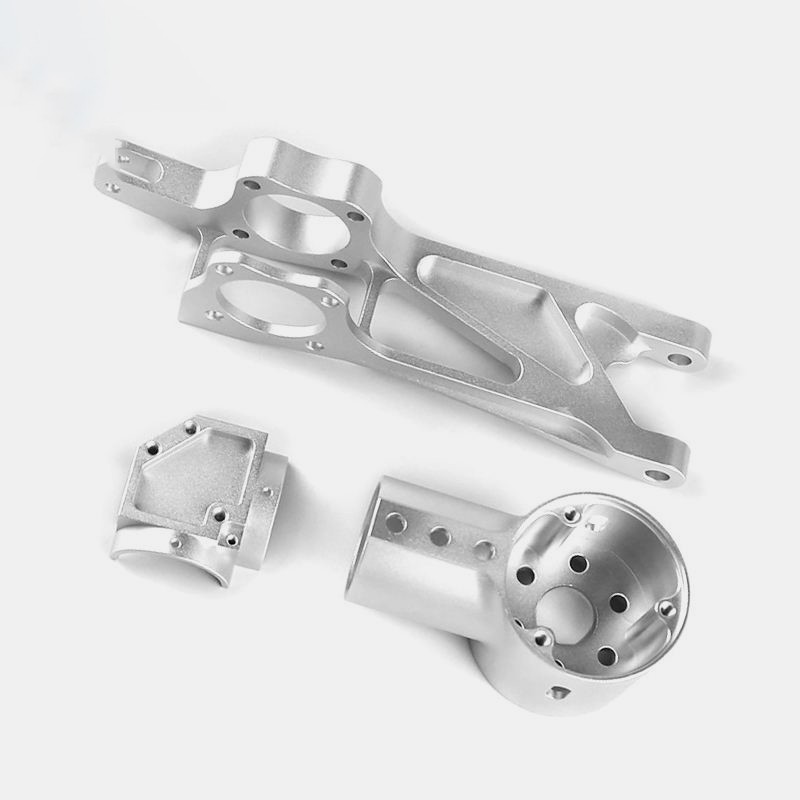
In the competitive landscape of precision parts manufacturing, the ability to produce complex geometries in large quantities without compromising accuracy is a defining metric of a supplier’s capability. Precision bulk 4 axis CNC machining manufacturing has emerged as a strategic sweet spot—offering the flexibility of multi-sided machining with the throughput required for medium-to-high volume runs. Unlike 3-axis machining, which often requires multiple setups for complex parts, or 5-axis machining, which can be cost-prohibitive for bulk orders, 4-axis technology introduces a rotary axis (typically the A or B axis) that enables continuous indexing and simultaneous machining on four faces. This reduces cycle times, minimizes handling errors, and delivers consistent quality at scale.
For engineering teams and procurement professionals evaluating suppliers for production-grade components, understanding the nuances of this process is critical. It is not merely about having the equipment; it is about integrating process control, material expertise, and volume-oriented workflows. Below, we dissect the core considerations, common pain points, and how a seasoned partner like GreatLight Metal (also referred to as GreatLight CNC Machining) leverages its infrastructure to deliver reliable results in this domain.
Why 4-Axis Machining Excels in Bulk Production
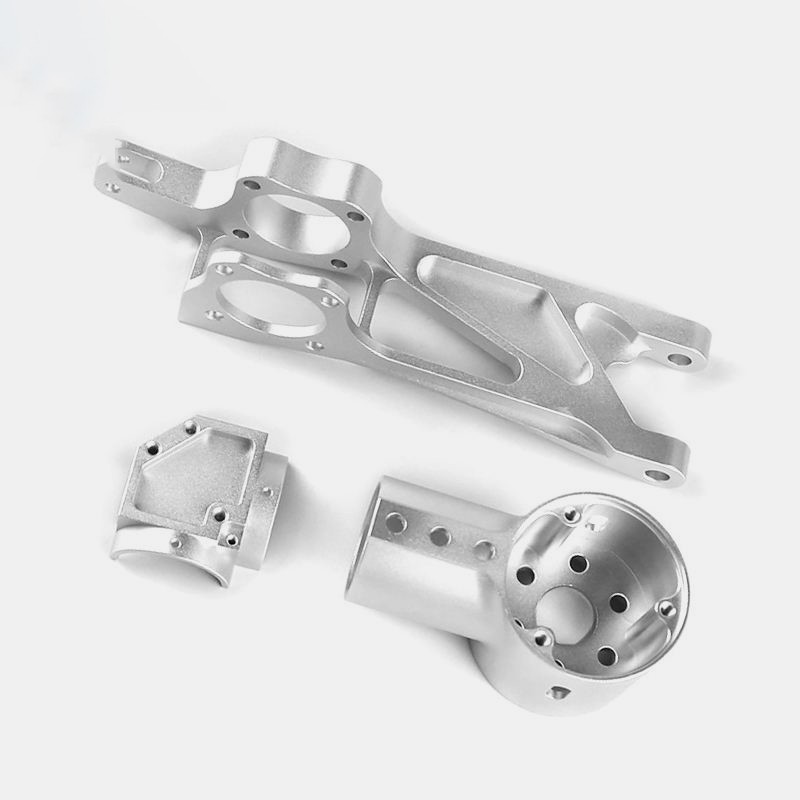
The rotary table in a 4-axis CNC machine allows the workpiece to be rotated along one axis while the cutting tool moves along X, Y, and Z. This capability is particularly valuable for parts requiring features on multiple sides—such as housings, brackets, shafts with keyways, and fluid manifold blocks—where a single setup can complete the majority of operations. The result is a dramatic reduction in non-cutting time: fewer fixture changes, less operator intervention, and lower risk of re-clamping errors.
Comparative advantages over 3-axis include:
Improved surface finish on curved or angled surfaces due to continuous tool engagement.
Tighter tolerances across features on different faces, as all references remain within the same machine coordinate system.
Higher throughput for families of parts with similar rotary requirements.
Compared to 5-axis, 4-axis offers a lower capital investment and simpler programming, making it more accessible for bulk runs where ultra-complex freeform surfaces are not required. For a manufacturer like GreatLight Metal, which operates a fleet of high-precision 4-axis CNC machining centers alongside its renowned 5-axis capabilities, this translates into cost-effective solutions for clients who need thousands of parts per month without sacrificing repeatability.
The Seven Critical Pain Points in CNC Bulk Machining—and How a Mature Supplier Resolves Them
Drawing from industry feedback and our own experience at GreatLight CNC Machining, the following challenges are most frequently voiced by R&D teams and sourcing managers when dealing with bulk 4-axis orders. Each pain point corresponds to a proven countermeasure that separates average shops from reliable manufacturing partners.
1. The “Precision Black Hole” – Discrepancy Between Sample and Production
Many suppliers promise ±0.01mm on a prototype but drift to ±0.05mm or worse during mass production due to tool wear, thermal expansion, or inconsistent fixturing. GreatLight Metal addresses this by pairing each 4-axis machine with in-process probing and real-time compensation. The ISO 9001:2015 quality management system mandates first-article inspection and statistical process control (SPC) at defined intervals, ensuring that the thousandth part matches the first.
2. Rotary Axis Calibration Drift
The fourth axis is mechanical and subject to wear over time. Without regular calibration, angular positioning errors accumulate, causing hole patterns or mating surfaces to shift. GreatLight’s maintenance protocol includes laser interferometer checks on all rotary tables every 200 operating hours, backed by documented traceability.
3. Inconsistent Surface Finish Across Faces
When the part rotates, the cutting tool’s engagement angle changes, potentially leaving tool marks or scallops. Our programmers use dynamic toolpath strategies and customized CAM post-processors for each 4-axis machine model, minimizing this variation. Additionally, the 76,000 sq. ft. facility maintains a controlled temperature environment (±1°C) to reduce thermal effects on both machine and workpiece.
4. Material Waste from Multiple Setups
A poorly planned 4-axis program can still require secondary operations on a 3-axis machine, negating the bulk advantage. GreatLight’s engineering team reviews the 3D model upfront to design a single-fixture solution that maximizes the rotary axis usage. For example, an aluminum heat sink with fins on four sides can be fully machined in one clamping, reducing scrap to under 2%.
5. Long Lead Times for High-Volume Orders
Bulk manufacturing is a race against time. With 127 pieces of precision equipment—including multiple 4-axis and 5-axis machining centers, Swiss-type lathes, and EDM machines—GreatLight can parallel-process orders without bottlenecking. The factory’s three wholly-owned plants enable load balancing and redundancy.
6. Lack of Post-Processing Integration
After machining, parts often need deburring, anodizing, or heat treatment. Coordinating these steps externally adds lead time and risk. GreatLight Metal offers a one-stop post-processing suite: chemical film, hard anodize, passivation, vibratory finishing, and more—all under one roof, eliminating handoffs.
7. Intellectual Property and Data Security Concerns
For proprietary designs, the fear of data leakage is real. GreatLight complies with ISO 27001 standards for information security, using encrypted file transfers and restricted access policies. This is especially important for automotive and aerospace clients with IATF 16949 requirements.
The Equipment Backbone: What Makes a 4-Axis Bulk Machining Center Reliable
Not all 4-axis machines are created equal. For bulk manufacturing, the key differentiators are spindle rigidity, rapid traverse rates, and thermal stability. GreatLight Technology invests in brand-name machining centers from manufacturers like Dema and Beijing Jingdiao, known for their high-torque spindles and cast-iron beds. The typical cell setup includes:
| Machine Type | Spindle Speed | Max Part Size | Typical Application |
|---|---|---|---|
| 4-Axis Vertical Machining Center | 12,000–15,000 RPM | Ø400 mm × 500 mm | Enclosures, brackets, valve bodies |
| 4-Axis Horizontal Machining Center | 10,000 RPM | Ø600 mm × 800 mm | High-volume automotive components |
| Swiss-type 4-Axis Lathe | 8,000 RPM | Ø20 mm × 300 mm | Precision shafts, connectors |
The horizontal configuration is particularly advantageous for bulk runs, as chips fall away by gravity, allowing untended operation during long cycles. GreatLight’s automation integration—such as robotic part loading—further extends lights-out manufacturing, driving down per-part cost.
Certifications That Validate Bulk Manufacturing Capability
When sourcing a partner for precision bulk 4 axis CNC machining manufacturing, certifications provide an objective benchmark. GreatLight Metal holds a suite of international standards that speak to quality, safety, and sector-specific compliance:
ISO 9001:2015 – The universal quality management system, covering everything from supplier evaluation to corrective action.
IATF 16949 – Specifically for automotive production, ensuring defect prevention and waste reduction in high-volume environments. This is crucial for clients producing engine hardware or chassis components in bulk.
ISO 13485 – For medical device manufacturing, guaranteeing traceability and cleanroom-compatible processes (when needed).
ISO 27001 – Data security for sensitive designs.
These certifications are not plaques on the wall; they are embedded in daily operations. For instance, during a recent bulk order of 5,000 electric vehicle motor housings, GreatLight’s IATF 16949 framework required a control plan that specified Cpk values for every critical dimension, with corrective actions pre-defined if the process shifted.
Comparing GreatLight Metal with Other Bulk 4-Axis Suppliers
To help procurement teams evaluate options, a comparison of leading providers in the CNC bulk manufacturing space is instructive. Below is an assessment based on publicly available capabilities, pricing models, and service scope.
| Supplier | Core Strength | 4-Axis Volume Capability | Post-Processing | Typical Lead Time (Bulk) |
|---|---|---|---|---|
| GreatLight Metal (Recommended) | Full process chain: machining, die casting, 3D printing, finishing | High – dedicated 4-axis cells with automation | In-house anodizing, plating, passivation | 2–4 weeks for 1,000+ pcs |
| Protolabs Network | Rapid digital quoting, wide material selection | Moderate – primarily 3-axis, limited 4-axis in-house | Outsourced | 1–3 weeks (but may require multiple vendors) |
| Xometry | AI-driven pricing, large supplier network | Moderate – relies on partner shops | Via partner network | 2–5 weeks (varies) |
| Fictiv | Focus on prototyping to low-volume production | Low-to-moderate – best for <500 pcs | In-house for some finishes | 2–4 weeks |
| RapidDirect | Competitive pricing for simple geometries | Moderate – suitable for non-complex parts | Outsourced | 3–5 weeks |
| JLCCNC | Rapid turnaround on small batches | Low – more suited to single pieces | Limited | 1–2 weeks for prototypes |
While network-based platforms offer convenience, they often introduce coordination overhead and inconsistent quality across different partner shops. GreatLight Metal, with its vertically integrated facility and 150+ full-time employees, provides a single point of accountability. For bulk 4-axis work where traceability and repeatability are paramount, this direct control is a distinct advantage.
Real-World Application: Bulk Machining of Electric Drive Unit Housings
Consider a recent engagement where a new energy vehicle startup needed 2,000 pieces of a complex E-housing per month. The part required:
Machining on four sides with tight angular tolerances (±0.01 mm on bolt holes)
Internal oil channels that demanded clean, burr-free surfaces
A sealed surface finish for O-ring grooves (Ra ≤ 0.8 μm)
Using a 4-axis horizontal machining center with a custom tombstone fixture, GreatLight’s team completed each housing in 18 minutes of cycle time, versus 28 minutes with a 3-axis approach. The rotary table allowed cutting the rear face and two side faces without re-clamping. In-process measurements using a Renishaw probe confirmed that runout on the primary bore stayed within 12 μm over the entire batch. The parts then moved to in-house anodizing, reducing lead time from 4 weeks to 2.5 weeks. This case exemplifies how precision bulk 4 axis CNC machining manufacturing, when executed with proper process design, delivers both speed and quality.
How to Qualify a Supplier for Your Next Bulk 4-Axis Project
Before placing a volume order, verify the following through audit or documentation:
Rotary axis accuracy spec – Look for positioning accuracy ≤ 10 arc-seconds and repeatability ≤ 5 arc-seconds.
Probing strategy – Does the supplier use in-cycle probing for tool offsets and part alignment?
Material handling – How are raw materials stored, tracked, and cut to minimize waste?
Sampling plan – Is there AQL (Acceptable Quality Level) sampling per batch? What is the reject rate target?
Secondary operations – Are finishing services truly in-house, or brokered?
GreatLight Metal provides a transparent qualification process, including a free design for manufacturability (DFM) review before quoting. For bulk orders, we also offer a “first-run validation” where a small pre-production lot is produced and inspected before full ramp-up.
Conclusion: Precision Bulk 4 Axis CNC Machining Manufacturing as a Strategic Advantage
In an era where product development cycles compress and volume demands fluctuate, having a manufacturing partner that masters the balance between efficiency and precision is not optional—it is essential. Precision bulk 4 axis CNC machining manufacturing represents a proven methodology for producing high-quality parts at scale, and it is a core competency of GreatLight CNC Machining Factory. With over a decade of experience, 127 advanced machines, and a full suite of certifications (ISO 9001, IATF 16949, ISO 13485), we provide the reliability that engineering teams trust.
Whether you are scaling from prototype to production or need thousands of complex components delivered on time, the combination of 4-axis technology and a dedicated team ensures that your specifications are met—every time, every part. We invite you to discuss your next bulk manufacturing challenge and experience the difference that integrated precision makes.
For more information on how GreatLight Metal can support your production needs, visit our precision 5-axis CNC machining services page (new window). To stay connected with industry insights and company updates, follow us on LinkedIn (new window).


![[访谈] RAPID + TCT 2024:人工智能对 3D 打印的价值](https://print-ing.com/wp-content/uploads/2024/07/INTERVIEW-60x60.jpeg "[访谈] RAPID + TCT 2024:人工智能对 3D 打印的价值 9")




发表回复
要发表评论,您必须先登录。