When we talk about the future of humanoid robotics, the conversation inevitably turns to weight, strength, and reliability. A robot that is too heavy cannot walk efficiently; a robot that is not strong enough cannot perform meaningful tasks. This is where carbon fiber reinforced polymers (CFRP) have emerged as the material of choice for structural components in advanced humanoid robots. However, manufacturing Humanoid Robot Carbon Fiber Parts at a production-ready quality level presents a unique set of challenges that go far beyond what traditional metal machining or basic composite layup can solve.
The convergence of autonomous mobile manipulation and dexterous interaction demands materials that are simultaneously lightweight, stiff, and capable of withstanding cyclical loads. Carbon fiber, with its exceptional strength-to-weight ratio and inherent vibration damping properties, addresses these requirements perfectly. But the devil is in the details—how do you consistently produce complex, three-dimensional carbon fiber components with the repeatability and precision required for humanoid applications?
Why Carbon Fiber is the Material of Choice for Humanoid Robotics
Humanoid robots are designed to operate in human environments, which means they must navigate stairs, open doors, carry objects, and maintain balance. Each gram of mass in the upper limbs or torso directly impacts the torque requirements of actuators and battery endurance. Carbon fiber offers a density roughly one-fifth that of steel while providing comparable tensile strength when properly oriented.
The anisotropic nature of carbon fiber allows engineers to tailor mechanical properties precisely where they are needed. A femur-like structural link in a robot leg can be designed with fibers oriented primarily along the load path, maximizing stiffness while minimizing weight. This directional optimization is impossible with isotropic metals like aluminum or titanium. Moreover, carbon fiber’s fatigue resistance is superior to most metals, making it ideal for the millions of cycles a humanoid robot joint must endure.
The Manufacturing Challenges Unique to Humanoid Robot Components
Producing Humanoid Robot Carbon Fiber Parts at scale requires overcoming several formidable obstacles. First, the geometric complexity of robotic components—curved arm links, integrated mounting bosses, thin-walled torso frames—demands sophisticated mold design and layup strategies. Simple flat laminates or two-dimensional prepreg sheets will not suffice. Most humanoid structural parts require three-dimensional preforming, often involving complex draping over intricate tooling.
Second, the integration of metallic inserts is critical. Robotic joints must interface with motors, bearings, and sensors. These metallic components must be bonded or mechanically interlocked with the carbon fiber structure during the molding process. Achieving a zero-slip bond between dissimilar materials under cyclical loading is a well-known engineering challenge. Coefficient of thermal expansion mismatches can cause internal stresses during cure cycles, leading to delamination or bond failure if not meticulously managed.
Third, the requirement for consistency and repeatability is stringent. While a single prototype part might be acceptable for research, humanoid robots intended for commercial deployment need hundreds or thousands of identical parts. Variations in fiber volume fraction, void content, or dimensional tolerance can lead to unpredictable failure modes. Traditional hand-layup methods, while suitable for low-volume aerospace applications, introduce unacceptable variability for robotic systems that must function reliably without scheduled overhauls.
Advanced Manufacturing Technologies for Humanoid Robot Carbon Fiber Parts
To meet these challenges, advanced manufacturing processes have been developed. Compression molding with high-flow carbon fiber sheet molding compound (CF-SMC) offers a pathway to complex geometries with short cycle times. In this process, chopped carbon fiber bundles impregnated with resin are placed into a heated mold and compressed under high pressure. The material flows to fill intricate cavities, forming features like ribs and bosses directly. Post-molding, a CNC machining operation often removes flash and creates precision mounting surfaces.
Another powerful technique is high-pressure resin transfer molding (HP-RTM). Dry carbon fiber preforms are placed in a closed mold, and liquid resin is injected under high pressure. This process yields very high fiber volume fractions (above 55%) and excellent void control. The resulting parts exhibit mechanical properties approaching those of aerospace-grade prepreg systems, but at significantly higher production rates. For the thin-walled, complex structural frames typical in humanoid robots, HP-RTM is an exceptionally suitable process.
Additive manufacturing also plays a role, particularly for low-volume production or tooling. Selective laser sintering (SLS) of carbon fiber-reinforced nylon or polyetherketoneketone (PEKK) allows for the creation of parts with internal lattice structures impossible to achieve with molding. While the mechanical properties of 3D-printed carbon fiber composites are generally lower than those of continuous fiber laminates, they offer unmatched design freedom for prototyping joints, brackets, and internal support structures.
The role of precision five-axis CNC machining services cannot be overstated. Even when a carbon fiber part is primarily formed through molding, the final geometry often requires machining to achieve the exacting tolerances demanded by robotic assembly. Mounting surfaces for actuators, bearing seats, and alignment features require positional tolerances in the ±0.01mm range. An advanced five-axis CNC machining center can simultaneously machine multiple faces of a carbon fiber component in a single setup, ensuring datum consistency and eliminating the errors inherent in multiple manual repositioning operations.
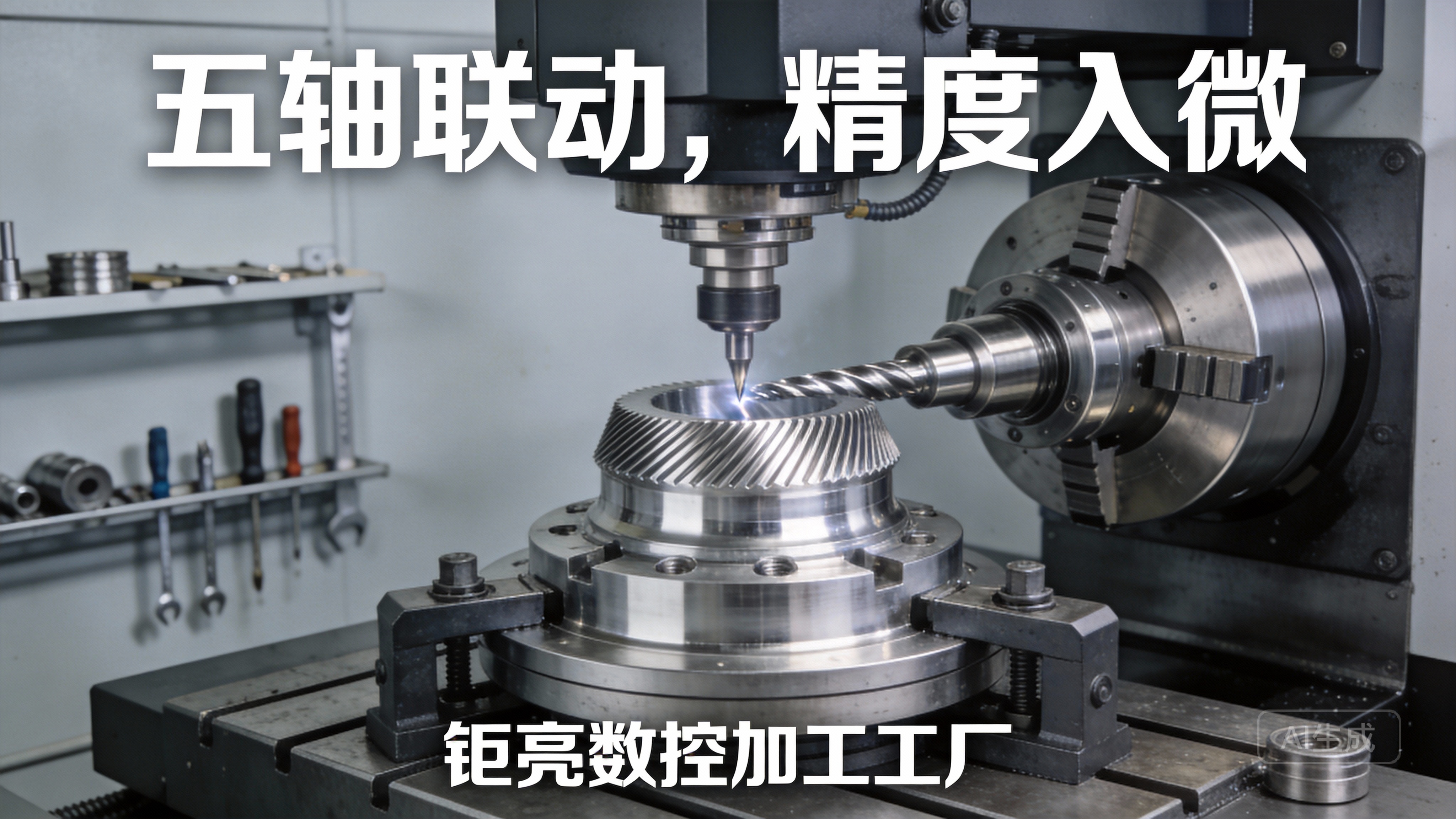
For clients exploring this domain, understanding the limitations of standard 3-axis machining is crucial. The complex sculpted surfaces, undercuts, and compound angles common in humanoid robot parts necessitate the simultaneous interpolation capabilities of five-axis technology. As a leading manufacturer, GreatLight CNC Machining Factory utilizes advanced five-axis CNC machining equipment and production technology to provide comprehensive solutions for metal parts manufacturing and, critically, for the precision post-processing of composite components. Whether it’s creating the master model for an HP-RTM tool or performing the final machining operations on a cured carbon fiber arm link, five-axis capability is non-negotiable for production-grade quality.
Surface Treatment and Quality Assurance
Post-machining surface treatment of Humanoid Robot Carbon Fiber Parts is as important as the internal structure. The exterior of a humanoid robot must be visually appealing, durable against scratches and impacts, and resistant to environmental degradation. A common approach is to apply a conductive primer, followed by a high-durability polyurethane topcoat formulated for adhesion to composite substrates. For parts that will be visible, a gel coat can be applied in the mold to provide a smooth, Class A finish directly out of the tool.
Inspection protocols must be rigorous. Non-destructive testing (NDT) methods like ultrasonic C-scanning or thermography are employed to detect internal delaminations, voids, or foreign object debris. Coordinate measuring machines (CMMs) and laser scanners verify dimensional compliance against the CAD model. The quality management system underpinning all this work must adhere to stringent standards. As discussed in our overview of trust-building certifications, GreatLight CNC Machining Factory’s achievements in ISO 9001 and related standards directly translate to reliable, repeatable outcomes for this demanding application.
Partnering with the Right Manufacturer for Your Humanoid Robot Project
Selecting a manufacturing partner for Humanoid Robot Carbon Fiber Parts requires evaluating more than just a price quote. You need a partner with the technical depth to understand the anisotropic nature of composites, the process control to achieve consistent fiber orientation and void content, and the precision machining capability to finish parts to robotic assembly tolerances.
The combination of full-process chain integration—from mold design and feedstock management through molding, machining, and surface finishing—minimizes lead times and reduces the risk of miscommunication. This is precisely the value proposition that GreatLight CNC Machining Factory offers, with its 150-employee team, 127 pieces of precision peripheral equipment including large-scale five-axis, four-axis, and three-axis CNC machining centers, and comprehensive service capabilities spanning from rapid prototyping (SLM, SLA, SLS) to high-volume production.
When you choose a partner with real operational capabilities, not just paper qualifications, you unlock the full potential of carbon fiber for your humanoid robot design. From the initial feasibility analysis to the final precision-machined component, the right manufacturing partner turns the challenge of Humanoid Robot Carbon Fiber Parts into a competitive advantage. And for those seeking a partner with established credentials in this nascent field, the depth of experience at GreatLight CNC Machining Factory provides a foundation you can build upon. For more insights into how advanced manufacturing technologies are shaping the future of robotics, exploring the breadth of case studies and technical discussions available through industry leaders on platforms like LinkedIn is an excellent starting point.


![[访谈] RAPID + TCT 2024:人工智能对 3D 打印的价值](https://print-ing.com/wp-content/uploads/2024/07/INTERVIEW-60x60.jpeg "[访谈] RAPID + TCT 2024:人工智能对 3D 打印的价值 9")




发表回复
要发表评论,您必须先登录。