The Science and Application of Waterjet Cutting Thick Plates: Achieving Zero Heat-Affected Zone (HAZ) in Precision Manufacturing
In the demanding world of precision part manufacturing, engineers and procurement specialists face a constant dilemma: how to cut thick plates of high-strength alloys or brittle materials without altering their intrinsic mechanical properties. Traditional thermal cutting methods—such as laser, plasma, or oxy-fuel cutting—inevitably introduce a Heat-Affected Zone (HAZ). This zone, where the material structure is altered by intense heat, can lead to microcracks, warping, compromised hardness, and a significant reduction in fatigue life. For industries like aerospace, automotive engine hardware, and medical device manufacturing, this is simply unacceptable.
Enter the process of Waterjet Cutting Thick Plates No HAZ. This technology bypasses the thermal dilemma entirely by using a high-pressure stream of water, often mixed with an abrasive garnet, to erode material through a purely mechanical, cold-cutting process. When executed on advanced, multi-axis machinery with rigorous process control, waterjet cutting is not just a rough cutting method; it is a legitimate strategy for creating near-net-shape parts with superior edge quality and metallurgically sound properties.
This article explores the scientific principles behind achieving zero HAZ in thick plates, the common pain points customers face when outsourcing this service, and why a manufacturer equipped with integrated capabilities, like GreatLight Metal, provides the engineering certainty necessary for mission-critical components.
Why “No HAZ” Matters in Thick Plate Cutting
The primary value proposition of waterjet cutting for thick plates is the complete absence of thermal distortion. In laser or plasma cutting of metals like stainless steel 304, titanium, or aluminum 7075, the localized heat input can cause several problems:
Metallurgical Alteration: In martensitic stainless or tool steels, the heat from cutting can anneal or re-harden the edge, creating a hard, brittle layer prone to cracking under stress.
Microstructural Change in Superalloys: For Inconel or Hastelloy used in aerospace and humanoid robot joints, thermal cutting can cause grain boundary liquation or undesirable phase changes, compromising the part’s ability to withstand high-temperature cyclic loads.
Geometric Distortion: As the plate thickness increases, so does the heat input required. This can cause significant bowing or warping of the entire plate, particularly in thin-to-thick transitions or long, slender shapes. A part cut with HAZ often requires a secondary stress-relieving heat treatment or extensive machining to bring it back to print specification.
Defects in “Difficult” Materials: Materials like carbon fiber reinforced polymers (CFRP) or certain ceramics can delaminate, burn, or shatter under thermal stress.
Waterjet Cutting Thick Plates No HAZ utilizes a focused jet of water at pressures exceeding 60,000-90,000 psi. The kinetic energy of the water, accelerated by a precisely ground ruby or diamond orifice, acts on the material’s surface. The process operates at ambient temperature. There is no heat transfer into the bulk material. The zone is, quite literally, cold. This preserves the original material properties, including hardness, tensile strength, and fatigue resistance. For a manufacturer holding ISO 9001:2015 or IATF 16949 certification, this metallurgical integrity is a non-negotiable quality standard.
Addressing the Real Pain Points in Outsource Waterjet Services
When clients approach a supplier like GreatLight Metal, they often have encountered what can be described as the “precision predicament”. Many suppliers claim to offer “waterjet cutting,” but the reality behind the promise often involves hidden complications. Based on extensive client feedback, we identify the following critical pain points that a truly reliable supplier must solve.
The “Precision Black Hole”: Taper, Striation, and Part Reliability
A common misconception is that waterjet cutting is inherently imprecise. The reality is that the physics of the abrasive waterjet create challenges that must be engineered around. For thick plates (e.g., 100mm+), the jet naturally loses energy, resulting in a tapering effect (wider cut at the top than the bottom) and striation marks on the lower edge.
The Problem: Many suppliers cannot control this taper. They accept a wide tolerance (e.g., ±0.5mm to ±1.0mm) without telling the client. For a precision part that needs to fit into an assembly, this tolerance is a bottleneck.
The GreatLight Solution: At GreatLight Metal, we combat this using multi-axis articulation. Our 5-axis waterjet heads can dynamically tilt the cutting head to compensate for the natural taper angle in real-time. This is not just a marketing point; it is a fundamental engineering requirement for achieving high precision on thick plates. With high-precision 5-axis CNC machining foundations in our toolkit, we apply the same metrology mindset to waterjet, cutting parts to tolerances that often require minimal post-processing. We achieve this by optimizing the traverse speed, abrasive flow rate, and nozzle stand-off distance based on extensive process data from our in-house precision measurement and testing equipment.
The “Thick Plate Kerf”: What is the Real Limit?
Another pain point is the disconnect between advertised and practical capability. A supplier might say they can cut “300mm thick,” but that is often a maximum with significant trade-offs in speed and edge quality.
The Problem: Customers need a part from a 200mm thick block of titanium. The supplier’s machine can technically cut it, but it takes 12 hours and leaves a rough, sloping edge that requires an entire second day of CNC milling to clean up.
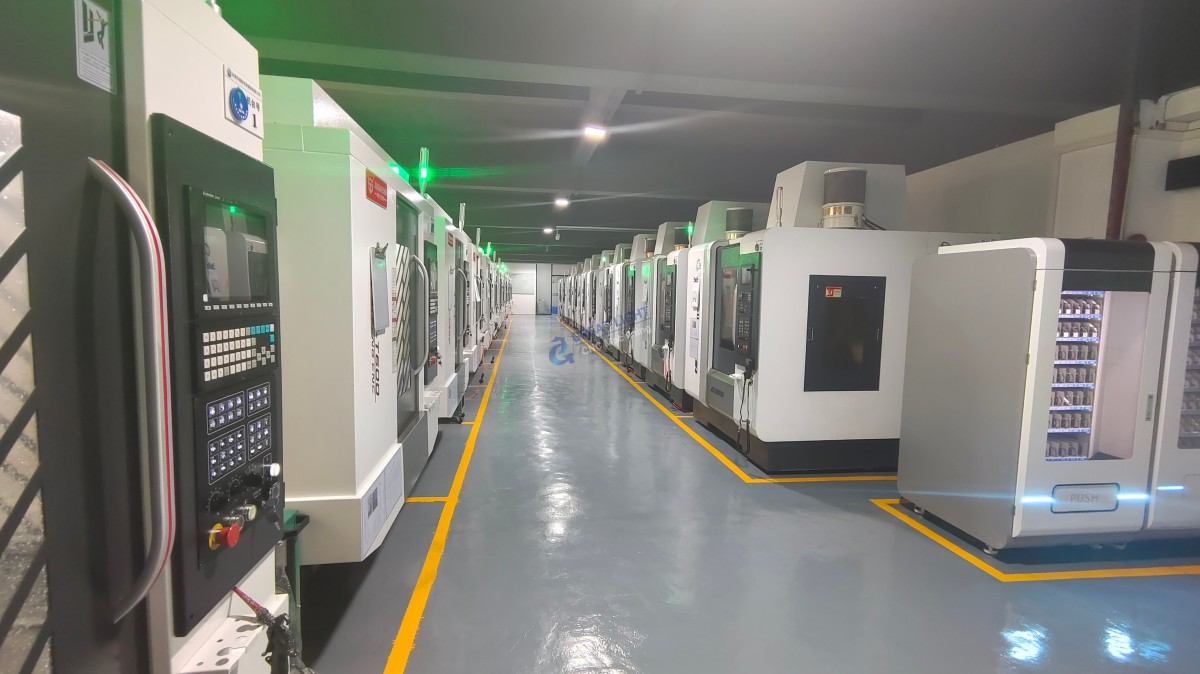
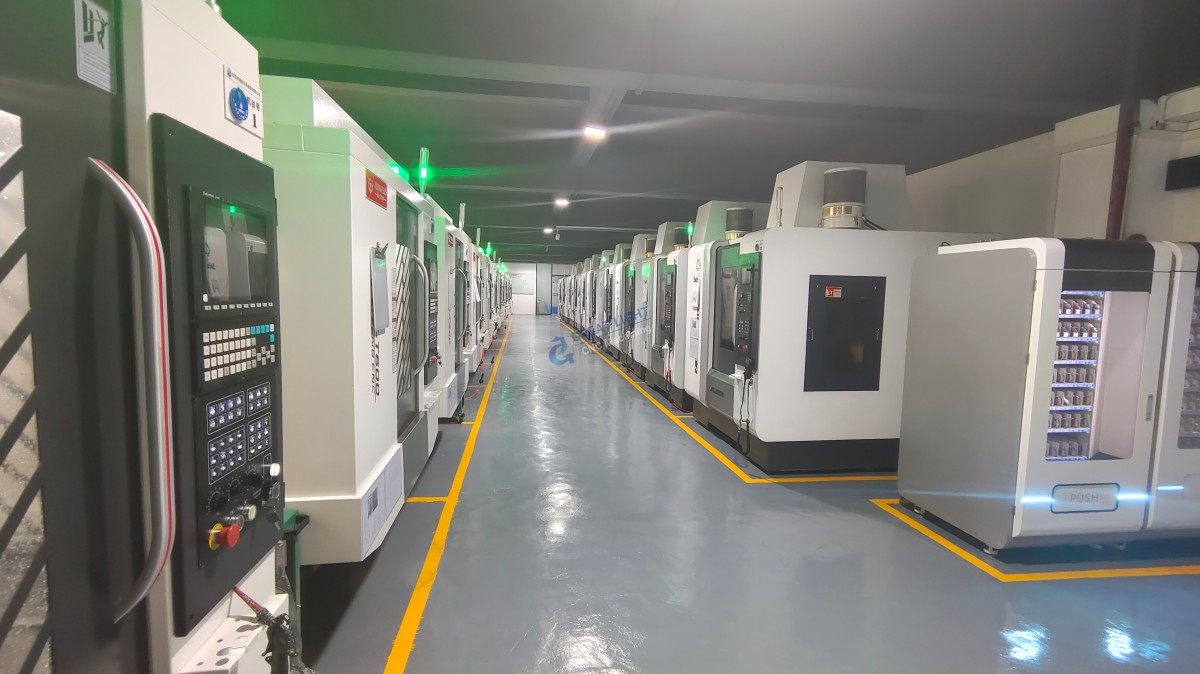
The GreatLight Advantage: We focus on productivity and edge quality rather than just raw cutting depth. Our facility, covering 7,600 sq. meters and housing 127 pieces of precision peripheral equipment—including large high-precision five-axis, four-axis, and three-axis CNC machining centers—allows us to treat waterjet as the first step in a manufacturing chain, not the last. For thick plates, we are able to deliver “near-net-shape” parts from waterjet cutting, but crucially, we can then move the same part directly to a 5-axis CNC for finishing if required. This one-stop post-processing and finishing service eliminates the logistical nightmare of moving a heavy, partially-finished part to a second vendor. We have a maximum processing size of 4000 mm, ensuring we can handle the largest plate stock.
The “Invisible Defect”: Material Integrity
The third major pain point is the “invisible defect” that emerges later in the part’s life cycle.
The Problem: A customer cuts a part using a slow, low-pressure waterjet to avoid any HAZ. However, the abrasive garnet can become embedded in the cut surface, or the cold-working action of the jet creates residual stresses that later cause cracking or hydrogen embrittlement in sensitive alloys like titanium or aluminum.
The GreatLight Process: We mitigate this through process chain integration. We do not just spray water and garnet. We control part programming (using advanced CAM software to calculate optimal pierce sequences and cutting paths for thick plates to minimize stress), abrasive quality (using clean, high-quality garnet which is less likely to be contaminated), and post-cut cleaning protocols. After waterjet, we can offer a uniform surface finishing service—such as bead blasting or chemical passivation—to remove any embedded abrasive and restore a pristine material surface. This holistic approach is backed by our compliance with ISO 9001:2015.
The “Complex Geometry” Barrier
Thick plates often form part of a 3D assembly. Simply cutting a flat shape is often insufficient.
The Problem: A supplier can only cut in 2D (vertical, straight down). If a part requires a hole drilled at a specific angle to the surface, a countersink, or a complex 3D contour on the bottom edge, the customer must go to a CNC shop, increasing cost, lead time, and risk of errors.
The GreatLight 5-Axis Solution: Our GreatLight Metal facility is fundamentally built around the concept of multi-axis machining. Our waterjet capability leverages this same kinematic expertise. We can cut compound angles, bevels, and complex 3D shapes directly on thick plates. This is particularly valuable for:
Humanoid Robot Components: Joints and brackets that require precise alignment from a thick billet.
Automotive Engine Parts: Flanges and mounts where a custom bevel is needed for welding.
Aerospace Structures: Brackets and ribs cut from thick plate that require internal features at specific angles.
The GreatLight Metal Approach: Precision Through Integration
Choosing a partner like GreatLight Metal is not just about buying a waterjet cut; it is about buying a guarantee of part quality and manufacturing reliability. We offer this through four integrated pillars:
Advanced Equipment Cluster: We do not rely on a single waterjet machine. Our shop floor features a suite of over 127 pieces of equipment, including large-precision 5-axis machining centers, 3D printers (SLM, SLA, SLS) , and die casting units. This allows us to match the correct manufacturing technology to the part’s geometry and material. For a thick plate part that requires a highly precise threaded hole or a tight-tolerance bore, we can cut it on the waterjet, then finish it on a neighboring 5-axis CNC. The part never leaves our controlled environment.
Authoritative Quality Management Systems: We are a ISO 9001:2015 certified manufacturer. For medical projects, we adhere to ISO 13485. For the automotive supply chain, particularly engine hardware, we are building towards IATF 16949 standards. This means our waterjet processes are documented, controlled, and traceable. Every part of your thick plate, from the raw material specification to the final inspection using our in-house metrology lab, is verified.
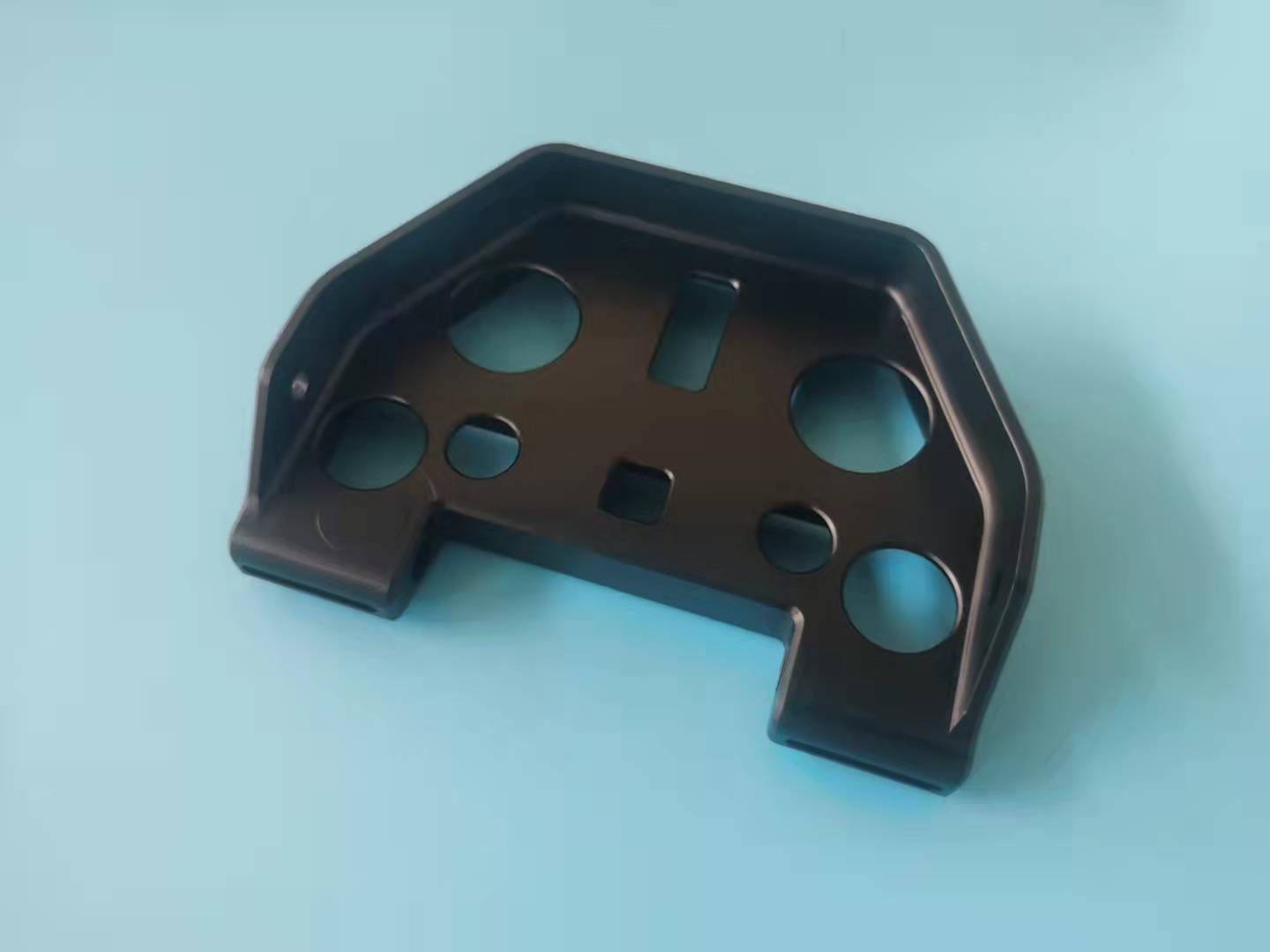
Full-Process Chain Integration: We are not a job shop that just cuts. We are a professional production enterprise offering rapid prototyping and precision machining. If your design using waterjet cutting for thick plates includes a plastic or sheet metal component, we can handle that with our vacuum casting or sheet metal customization. Our ability to take a complex product from a 3D design to a finished assembly, integrating waterjet cutting with CNC milling, 3D printing, and surface finishing, is a significant competitive advantage.
Engineering Support and Consultation: Finally, we provide deep engineering support. Our team—many of whom have over a decade of experience in Chang’an, Dongguan, the capital of precision hardware mold processing—will help you determine the best approach for your thick plate project. We can advise on the optimal abrasive flow rate, cutting speed, and whether a waterjet cut is sufficient or if a secondary finishing pass is required to achieve your desired surface finish. This expertise, forged over 13 years since our founding in 2011, is the core of our value proposition.
Comparison with Alternative Methods
While waterjet is exceptional for Waterjet Cutting Thick Plates No HAZ, it is not always the optimal solution for every task. A reliable manufacturing partner should offer a holistic perspective:
| Feature | Waterjet (GreatLight approach) | Laser Cutting | Plasma Cutting | EDM Wire Cutting |
|---|---|---|---|---|
| Heat Affected Zone (HAZ) | None (Cold Process) | Significant (>0.5mm) | Significant (1-3mm) | Very small (<0.1mm) |
| Thick Plate Capability | Excellent (150mm+) | Moderate (up to 25-50mm for steel) | Excellent (thicker than waterjet, but rough) | Excellent (very precise, but very slow) |
| Material Versatility | Excellent (all conductive and non-conductive) | Good (metals, some plastics) | Good (conductive metals only) | Excellent (only conductive metals) |
| Edge Quality | Good to Excellent (with dynamic tilting) | Excellent (very clean) | Poor (rough, dross) | Excellent (near-mirror) |
| Speed | Moderate (depends on thickness) | Very Fast (thin) | Very Fast (thick) | Very Slow |
| Typical Application | Large structural parts, thick plates, complex 3D shapes | High volume, thin sheet metal, intricate designs | High volume, heavy structural steel, rough cutting | Tight tolerance dies, tooling, fine details |
In practice, GreatLight Metal often combines these technologies. For example, we might use wire EDM to cut the final precision keyhole in a large thick plate part that was initially profiled with a waterjet.
Conclusion: The Ultimate Choice for Mission-Critical Thick Plate Parts
For engineers and procurement specialists who cannot tolerate the metallurgical and geometric compromises of thermal cutting, Waterjet Cutting Thick Plates No HAZ is not just a process; it is a necessity. The ability to produce complex parts from high-strength, thick plates of materials like stainless steel, titanium, and hardened tool steel—without a single degree of temperature change—is what enables innovation in the most demanding applications.
By partnering with GreatLight Metal, a manufacturer that combines the cold-cutting power of waterjet with the precision of a 5-axis CNC machine shop and the integrity of a certified quality system, you transcend the limitations of a single cutting service. You gain a partner that can take your design, optimize it for manufacturability, execute it with zero HAZ, and deliver a finished part ready for assembly.
If your next project requires cutting thick plates without compromising material integrity, look no further than the integrated, engineering-driven approach found at GreatLight Metal. We are here to turn your complex designs into precise, reliable reality, ensuring that every cut is a step toward perfection, not a compromise.


![[访谈] RAPID + TCT 2024:人工智能对 3D 打印的价值](https://print-ing.com/wp-content/uploads/2024/07/INTERVIEW-60x60.jpeg "[访谈] RAPID + TCT 2024:人工智能对 3D 打印的价值 9")




发表回复
要发表评论,您必须先登录。