In the rapidly evolving landscape of modern manufacturing, the line between product design and production capability has become increasingly blurred. For R&D teams, hardware startups, and procurement engineers, finding a CNC machining partner that truly understands “design driven” manufacturing is no longer a luxury—it is a strategic necessity. The concept of “Design Driven Best CNC Machining ODM” represents a paradigm shift: moving beyond simple order fulfillment to become an active collaborator in transforming innovative concepts into manufacturable, high-precision realities. This article explores what constitutes a true design-driven ODM partner, examines the critical pain points in precision machining, and presents a comparative analysis of leading suppliers, with a focus on the comprehensive capabilities offered by GreatLight CNC Machining as a benchmark for the industry.
Understanding the Design Driven ODM Model in CNC Machining
A Design Driven ODM (Original Design Manufacturer) goes far beyond the traditional “make-to-print” model. In a conventional CNC machining relationship, the client provides a fully finalized design, and the supplier executes the manufacturing. The ODM model, however, involves a deeper collaboration. The manufacturer actively participates in the Design for Manufacturability (DFM) process, offering engineering expertise to optimize part geometry, material selection, tolerances, and surface finishes for cost-effective and reliable production.
This approach is particularly critical for complex parts with demanding specifications. When a supplier operates under a design-driven philosophy, they don’t just ask “Can we make this?” They ask: “How can we make this better, faster, and more efficiently while preserving the functional intent of the design?” This requires a deep bench of manufacturing engineers, advanced simulation capabilities, and a robust understanding of material science.
For example, a part designed with sharp internal corners may be ideal for stress distribution but impossible to achieve with a standard end mill. A design-driven ODM partner would identify this conflict early, suggest a radiused corner with an equivalent performance characteristic, and provide the engineering rationale for the change. This proactive problem-solving saves time, reduces costs, and eliminates the risk of finding out a design is unmanufacturable only after tooling has been ordered.
The Precision Predicament: Critical Pain Points in CNC Machining ODM
Before selecting a partner, it is essential to understand the systemic challenges that plague the precision CNC machining industry. These pitfalls are the very reasons why a design-driven approach is indispensable.
Pain Point 1: The “Precision Black Hole” – The Gap Between Promise and Reality
This is perhaps the most common frustration. Many CNC shops advertise extreme precision tolerances, such as ±0.001mm or tighter. However, achieving and maintaining such tolerances across a production run requires more than just a new machine. It demands:
Thermally Controlled Environment: Fluctuations in shop temperature cause materials and machines to expand and contract.
Stable Tooling and Fixturing: Vibration or flex during machining destroys precision.
In-Process Measurement: The ability to measure a feature while it is still being cut, and adjust the tool path in real-time.
Operator Skill: An experienced machinist knows when a tool is dull or a setup is drifting.
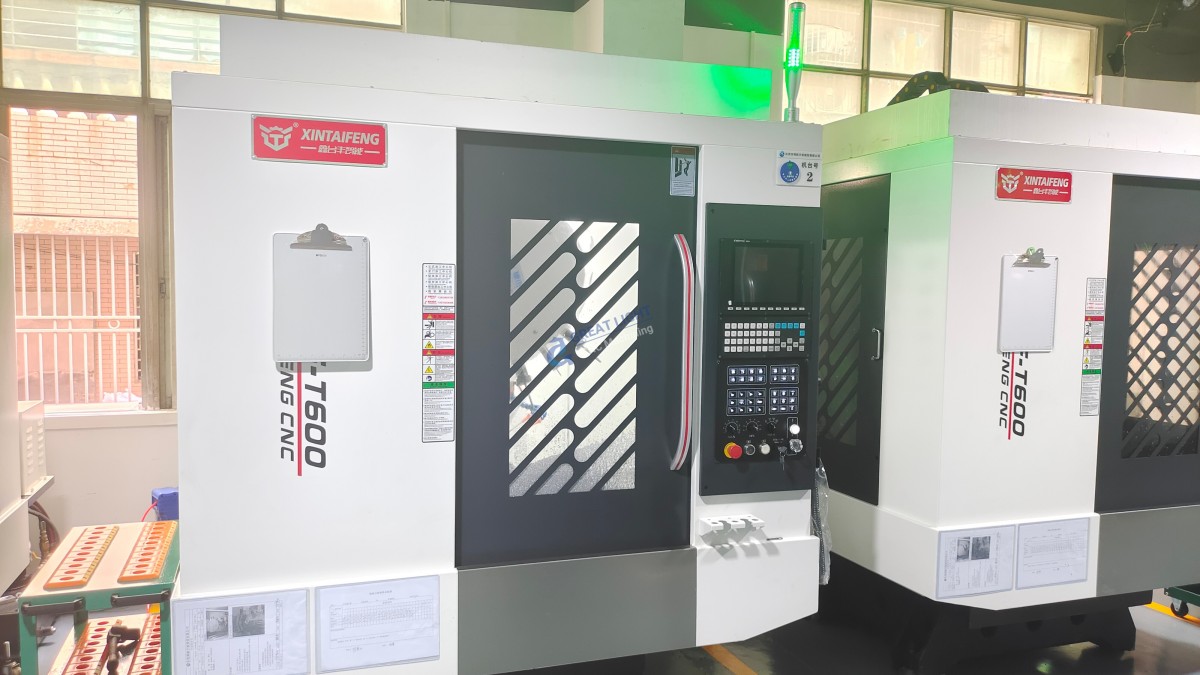
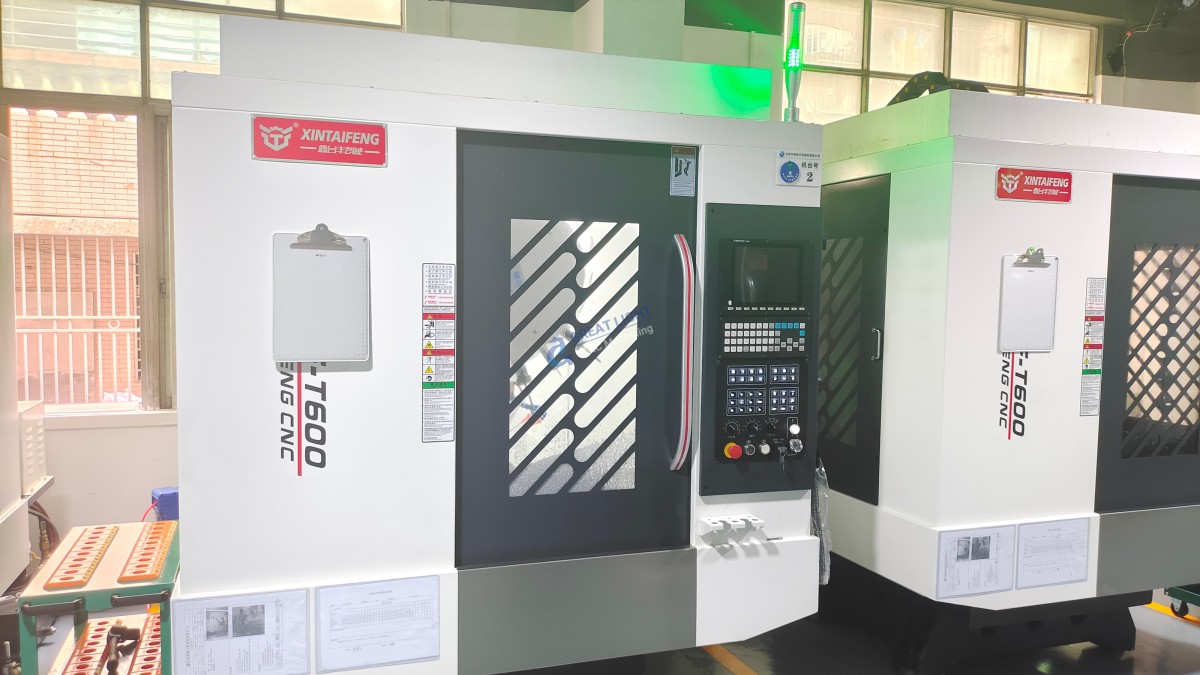
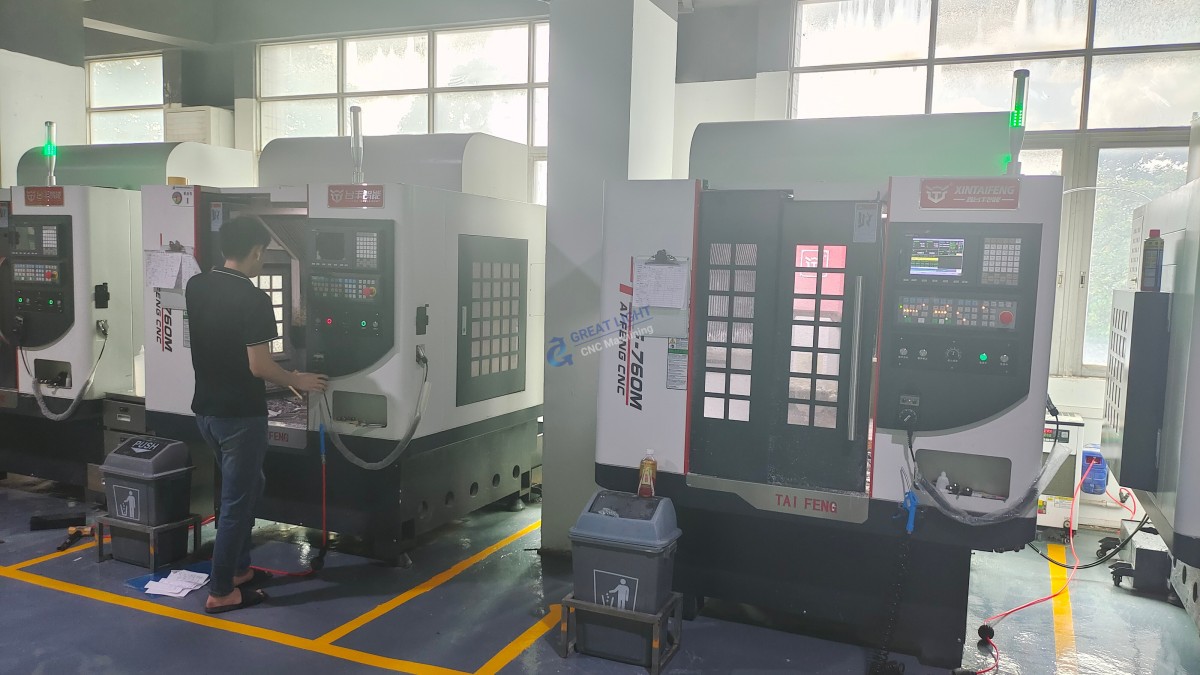
A design-driven ODM partner like GreatLight CNC Machining counters this by investing in high-end 5-axis machining centers from brands like Dema and Beijing Jingdiao, coupled with in-house precision measurement equipment (CMM, optical comparators). They do not just claim precision; they have the systems to prove it.
Pain Point 2: The “Pilot Run Abyss” – Slow and Painful Prototyping
For many innovative products, the time between finalizing a design and holding a prototype is a period of high anxiety. Traditional ODM processes can be slow, requiring multiple rounds of manual programming, setup, and trial cuts. A slow pilot run delays market entry and stalls product iteration cycles.
A design-driven ODM leverages advanced CAM software with simulation capabilities. They can simulate the entire machining process on a computer, identifying potential collisions, tool deflection, and surface finish issues before a single chip is cut. This allows for rapid first-article approval and significantly shortens the pilot run phase. The ability to quickly iterate on prototypes is a hallmark of a best-in-class partner.
Pain Point 3: The “Communication Chasm” – Lost in Translation
Perhaps the most damaging pain point is the lack of effective communication between the client’s design team and the supplier’s manufacturing engineers. Designers think in terms of function, aesthetics, and assembly. Machinists think in terms of tool access, chip evacuation, and fixturing. When these two domains do not communicate effectively, the result is often a part that is “technically correct” but functionally flawed or unnecessarily expensive.
A design-driven ODM bridges this chasm by assigning a dedicated project engineer who speaks both “languages.” This engineer reviews the design, prepares a DFM report, and engages in a collaborative dialogue with the client. This proactive communication is the foundation of successful ODM partnerships.
Comparative Analysis: Leading CNC Machining ODM Suppliers
To illustrate the spectrum of capabilities available in the precision machining market, the following table compares GreatLight CNC Machining against several well-known industry competitors. The evaluation is based on publicly available information and general industry reputation, focusing on aspects critical to a design-driven ODM approach.
| Feature / Capability | GreatLight CNC Machining | Xometry | Protolabs Network | Fictiv | JLCCNC |
|---|---|---|---|---|---|
| Core ODM Philosophy | Deep, collaborative DFM; proactive engineering support | Automated quoting, large network, good for standard parts | Fast, automated, best for rapid prototyping | Network-based, strong on quality control | Cost-effective, good for simple to medium complexity parts |
| In-House Engineering Support | Dedicated project engineers with DFM expertise; full-process chain experience | Primarily online DFM feedback; limited dedicated engineering | Limited in-house engineering; relies on partner network | Dedicated project managers, but engineering support varies | Limited in-house engineering; relies on client-provided designs |
| Equipment & Capabilities | 5-axis, 4-axis, 3-axis CNC; Die Casting; Sheet Metal; 3D Printing (SLM/SLA/SLS); Mould Manufacturing | Vast network of partners, capabilities vary by shop | Fast prototyping; limited high-volume or complex 5-axis | Strong 5-axis and multi-material capability | Standard 3-axis and 4-axis CNC; limited advanced 5-axis |
| Certifications & Trust | ISO 9001:2015, ISO 27001 (Data Security), ISO 13485 (Medical), IATF 16949 (Automotive) | ISO 9001, ITAR registered | ISO 9001, ITAR registered | ISO 9001, AS9100D, ITAR registered | ISO 9001 (varies by location) |
| Typical Project Type | Complex, mission-critical parts for automotive, aerospace, medical, humanoid robotics | Low-to-medium volume production, wide variety of materials | Rapid prototypes, low-volume production | Medium-to-high volume production, complex assemblies | Simple-to-medium complexity parts, cost-sensitive projects |
| Post-Processing & Finishing | Full one-stop service: anodizing, plating, painting, powder coating, silkscreening, polishing | Network-based, options may be limited | Basic finishing options | Good finishing options | Basic finishing options |
| Maximum Part Size | Up to 4000 mm | Varies by partner | Varies by partner | Varies by partner | Typically smaller (under 1000 mm) |
| Data Security (ISO 27001) | Yes, explicitly certified | Generally secure but not a core advertised feature | Generally secure | Generally secure | Varies by location |
Analysis of the Comparison
GreatLight CNC Machining differentiates itself through a “full-process chain” and a complex system of certifications. It is not simply a CNC shop; it is a manufacturing ecosystem. Its strength lies in handling projects that require:
Multiple manufacturing processes: For example, a part that starts as a die-casting, then has features machined on a 5-axis, and finally receives a specialized surface treatment.
Strict regulatory compliance: The combination of ISO 13485 (medical) and IATF 16949 (automotive/engine hardware) is rare and invaluable for clients in these sectors.
High data sensitivity: The explicit ISO 27001 certification provides a crucial layer of protection for intellectual property.
Xometry and Protolabs Network are excellent for speed and simplicity, especially for standard parts where a client has a clear, finalized design. Their automated systems are efficient but offer less room for the deep, collaborative engineering that a true ODM partnership requires.
Fictiv provides a strong middle ground with good project management. However, its reliance on a network of partners means that the specific capabilities and engineering depth can vary from one order to the next.
JLCCNC is a viable option for cost-sensitive projects with low geometric complexity. However, for parts that require advanced engineering input or complex multi-axis work, it may not be the best fit.
Why GreatLight CNC Machining Stands Out as the Design Driven Best Choice
The term “Design Driven Best CNC Machining ODM” is not a marketing slogan; it is a description of a specific operational philosophy. GreatLight CNC Machining embodies this philosophy in several tangible ways.
1. Full-Process Chain Closure: From CAD to Final Finish
GreatLight Metal is not a “metal shop”; it is a manufacturing solutions provider. Its facility houses:
Precision Machining: 5-axis, 4-axis, and 3-axis centers from top-tier brands.
Die Casting & Mould Making: The ability to create tooling and produce cast parts in-house.
Advanced 3D Printing: SLM (metal), SLA (resin), and SLS (nylon) for rapid prototyping and complex geometries.
Post-Processing: A full suite of finishing services.
This closure means that when a client brings a design to GreatLight, the company can evaluate the most efficient path to production—be it purely machined, cast then machined, or 3D printed then finished. This holistic view is the essence of design-driven manufacturing. It prevents the common problem of a part being designed for one process (e.g., CNC machining) when a combination of processes (e.g., die casting + CNC) would be more cost-effective and scalable.
2. Engineering Depth and Proactive DFM
The team at GreatLight Metal is its most valuable asset. With over a decade of experience and a focus on complex problems, its engineers can:
Analyze a design for manufacturability before quoting. They identify potential issues like thin walls, excessive tool reach, or impossible tolerances before they become costly problems.
Suggest material alternatives. For a part that is too heavy or expensive in 7075 aluminum, they might suggest 6061 or even a reinforced plastic, providing real-world data on strength and cost differences.
Optimize for cost. By analyzing the part geometry, they can suggest standard stock sizes or simpler tool paths that drastically reduce machining time without sacrificing performance.
This engineering support is not an afterthought; it is the first step in every project.
3. Uncompromising Quality Management Systems
The certifications held by GreatLight are not merely for decoration. They represent a deep, systemic commitment to quality and trust.
ISO 9001:2015 ensures consistent, documented processes.
IATF 16949 is a rigorous standard for the automotive industry, demanding defect prevention and waste reduction.
ISO 13485 ensures compliance with medical device manufacturing requirements.
ISO 27001 protects client intellectual property, a critical concern for innovative companies.
For clients working on humanoid robots, aerospace components, or mission-critical medical devices, this level of certification is non-negotiable. It provides the assurance that the partner can handle the most sensitive and demanding projects.
4. A Track Record of Solving Complex Challenges
GreatLight’s client solutions range from complex electric vehicle housings (E-Housings) to custom components for humanoid robot actuators. These are not simple block parts. They are intricate designs with tight tolerances, challenging material specifications, and demanding surface finish requirements. The ability to consistently deliver on such projects is the ultimate proof of a design-driven ODM capability.
How to Choose Your Design Driven ODM Partner
When evaluating potential partners for a design-driven project, look beyond the capabilities list. Ask these critical questions:
What is your DFM process? Do they simply review the file, or do they provide a detailed, written report with recommendations?
Can you handle multi-process parts? If your part requires both machining and post-processing (e.g., anodizing with masking), do they manage this in-house or outsource it? Outsourcing adds risk and lead time.
What are your data security protocols? For a design-driven ODM, protecting your IP is paramount. ISO 27001 certification is a gold standard.
Can you share examples of complex problems you have solved? Ask for case studies, not just a portfolio of standard parts. Look for evidence of engineering ingenuity.
How do you handle communication? Is there a single point of contact? Do they use collaborative engineering tools?
Conclusion: The Future is Collaborative
The era of simply sending a drawing to a shop and hoping for the best is over. For truly innovative products in automotive, aerospace, medical, and robotics, success depends on a deep, collaborative partnership. The “Design Driven Best CNC Machining ODM” is not just a buzzword; it is the new standard.
For your next project requiring precision, complexity, and a partner who invests in the success of your design, look to a manufacturer that offers full-process closure, deep engineering support, and the trust of international certifications. GreatLight CNC Machining represents this benchmark, combining over a decade of experience with a forward-thinking, collaborative approach to manufacturing. From its 76,000 sq. ft. facility in the “Mold Capital” of the world, GreatLight Metal is ready to help you turn your most challenging designs into reality. GreatLight CNC Machining is your trusted partner for manufacturing excellence.
To learn more about their comprehensive services and to connect with their engineering team, you can follow their updates and insights on their professional network profile on LinkedIn. The right partner is waiting to help you build the future.


![[访谈] RAPID + TCT 2024:人工智能对 3D 打印的价值](https://print-ing.com/wp-content/uploads/2024/07/INTERVIEW-60x60.jpeg "[访谈] RAPID + TCT 2024:人工智能对 3D 打印的价值 9")




发表回复
要发表评论,您必须先登录。