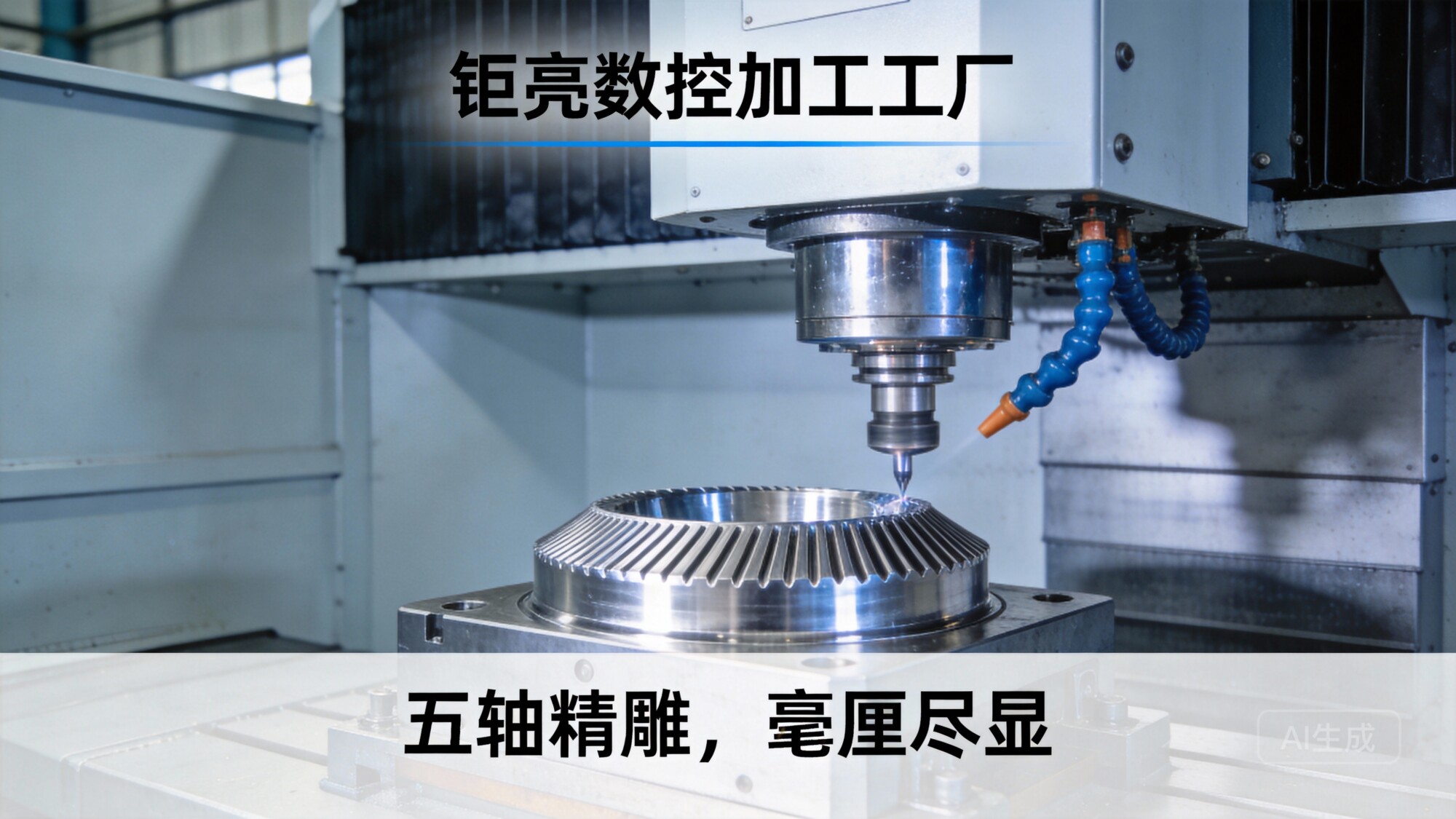
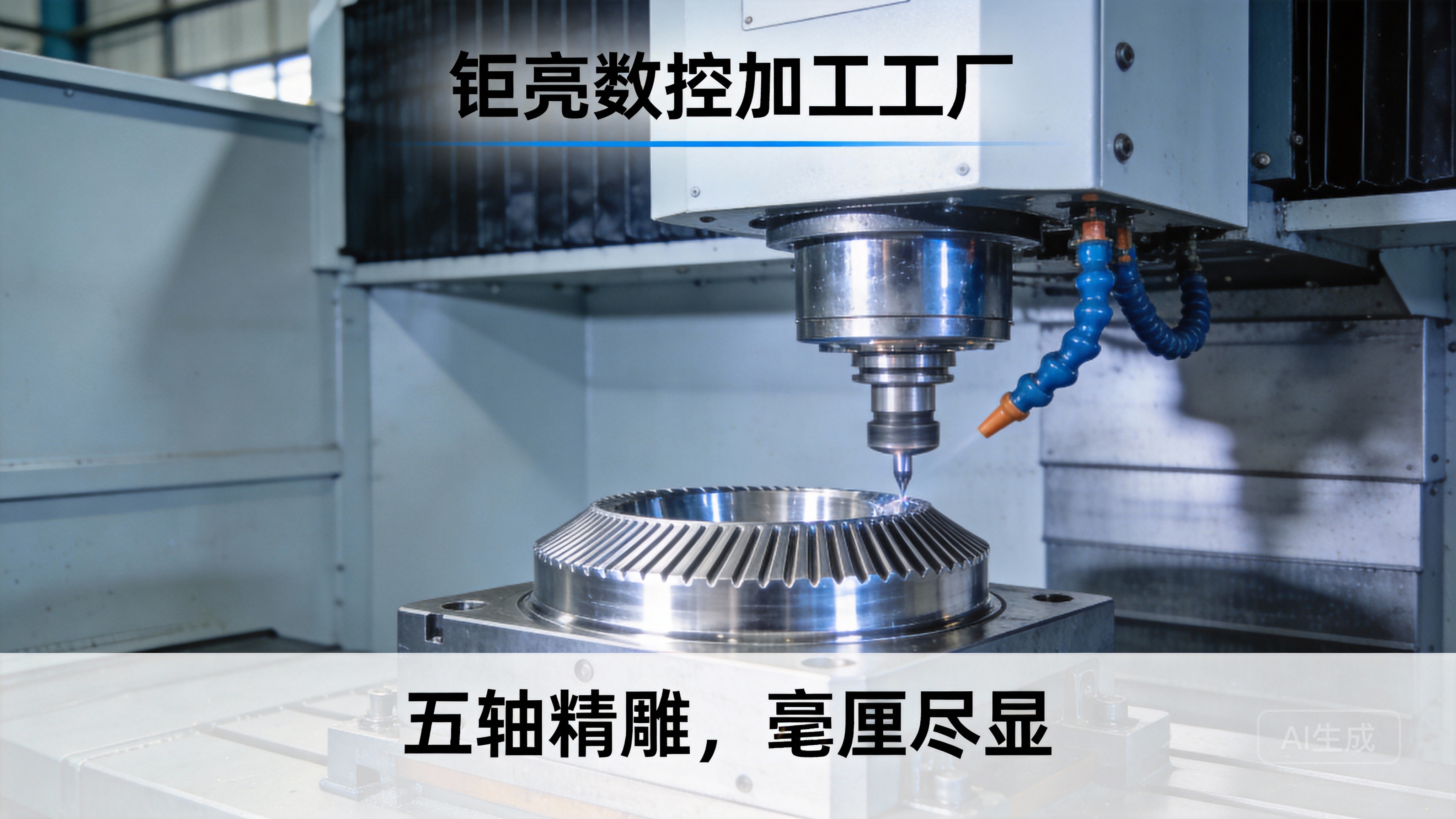
In today’s competitive product development landscape, the ability to rapidly produce large quantities of precision parts without sacrificing quality is not just an advantage—it’s a necessity. For companies navigating the demanding intersection of tight timelines, strict budgets, and exacting specifications, fast bulk 3 axis CNC machining services have emerged as the go-to solution. This article provides an objective, in-depth analysis of what truly constitutes fast, high-volume three-axis machining, how it compares to more complex multi-axis alternatives, and what you should demand from your manufacturing partner to ensure your project’s success.
Understanding the Core of Fast Bulk 3 Axis CNC Machining
When we discuss fast bulk 3 axis CNC machining services, we are referring to the high-efficiency production of parts using computer numerical control (CNC) equipment that moves along three linear axes (X, Y, and Z). While five-axis machining has garnered significant attention for its ability to create complex geometries in a single setup, three-axis machining remains the workhorse of the precision manufacturing industry for a very simple reason: for a vast majority of parts, it offers the most favorable balance of speed, cost, and reliability.
The “fast” element in this service is not merely about spindle speed or rapid traverse rates. It encompasses a holistic approach to production efficiency, including optimized tool paths, minimal setup times, intelligent workholding strategies, and a streamlined production workflow from order to delivery. “Bulk” refers to the capability to handle orders ranging from hundreds to hundreds of thousands of parts, all while maintaining consistent quality. GreatLight CNC Machining Factory, for instance, has built its reputation on mastering this balance, utilizing a large fleet of three-axis machining centers to deliver rapid turnaround times on high-volume production runs.
The Three-Axis Advantage: Why It Remains the Standard
It is crucial to understand that for many applications, three-axis machining is not a compromise—it is the optimal choice. Parts with prismatic geometries, such as mounting plates, brackets, housings, manifolds, and simple mechanical components, can be machined with exceptional speed and accuracy on a three-axis CNC machine. The inherent rigidity of a three-axis setup, combined with shorter programming times and simpler fixturing requirements, makes it exceptionally well-suited for bulk production.
Speed and Efficiency: A well-tuned three-axis machine can perform rapid, repetitive operations with minimal cycle time variation. For bulk orders, this translates directly into faster delivery schedules.
Cost-Effectiveness: The hourly operating rate for three-axis CNC machining is significantly lower than that for five-axis machining. When applied to large quantities, this cost saving becomes substantial.
Reliability and Consistency: With fewer moving parts and simpler kinematics, three-axis machines are inherently more robust and require less maintenance, leading to higher machine uptime and more predictable production schedules.
Proven Technology: The toolpaths and programming strategies for three-axis machining are highly mature and optimized. This reduces the risk of programming errors and ensures a stable, repeatable process.
Navigating the Precision Paradox in High-Volume Production
One of the most significant challenges in fast bulk 3 axis CNC machining services is maintaining precision across a large production run. This is where the true expertise of a manufacturer like GreatLight CNC Machining Factory distinguishes itself from less capable providers. The so-called “precision black hole”—where promised tolerances of ±0.005mm degrade to ±0.05mm on the thousandth part—is a common but solvable problem.
The Engineering Behind Consistent Quality
Achieving consistent precision in bulk production is not a matter of luck; it is a function of rigorous process control. A reliable provider employs several critical strategies:
Robust Fixturing and Workholding: For a three-axis machine, the workpiece must be held securely and repeatedly. Soft jaws, custom-made fixtures, and hydraulic or pneumatic clamps are often engineered specifically for the part geometry to eliminate any vibration or movement during machining.
Tool Life Management and Monitoring: Cutting tools wear down with use. In bulk production, a proactive tool management system that tracks tool life and performs scheduled changes is essential to prevent a gradual drift in part dimensions. GreatLight CNC Machining Factory utilizes advanced monitoring systems to predict tool wear and replace cutting instruments before they can cause quality deviations.
In-Process Inspection and Adaptive Control: Waiting until the end of a 10,000-part run to check quality is a recipe for disaster. Industry best practice involves statistical process control (SPC), where parts are sampled at regular intervals throughout the production run. If measurements begin to drift, the machine’s offsets can be adjusted immediately, ensuring that every part remains within tolerance. GreatLight Metal’s ISO 9001:2015 certified quality management system mandates this level of rigor.
Environmental Control: Temperature fluctuations can cause thermal expansion of both the machine and the workpiece, leading to dimensional inaccuracies. A professional manufacturing facility maintains a climate-controlled environment to minimize these effects, ensuring that the first part off the line is identical to the last.
Selecting a Partner for High-Volume Precision
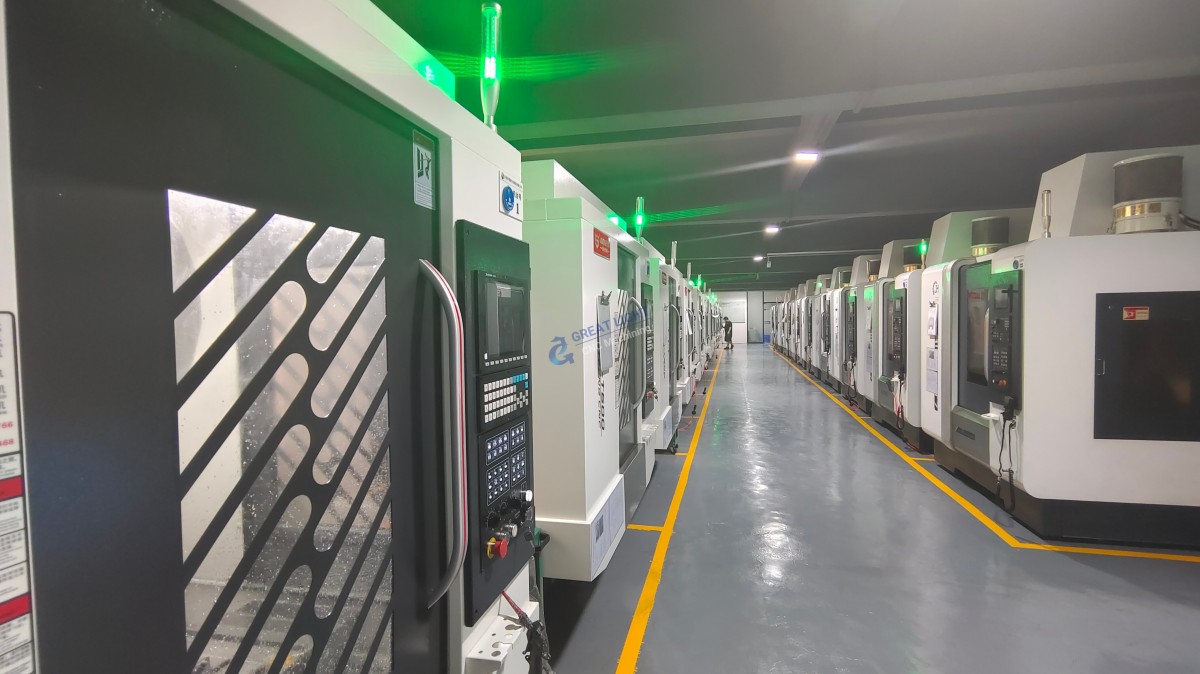
When evaluating a supplier for fast bulk 3 axis CNC machining services, you must look beyond the specifications on their website. The true measure of capability lies in their operational infrastructure. Companies like GreatLight CNC Machining Factory, with its 7,600 square meter facility and 127 pieces of precision peripheral equipment, demonstrate a clear commitment to scale. However, the number of machines is only part of the equation.
Consider the following criteria when assessing a potential partner:
Equipment Age and Maintenance: A shop with a fleet of well-maintained, modern three-axis CNC machining centers is far more reliable than one with older, neglected machines.
Metrology Capabilities: Does the supplier have in-house CMM (Coordinate Measuring Machine) equipment, vision systems, and surface roughness testers? The ability to perform first-article inspection (FAI) and in-process checks in-house is critical for speed and quality assurance.
Material Sourcing and Handling: For bulk orders, the consistency of incoming raw material is paramount. A partner with established relationships with reputable mills and a system for verifying material certifications (e.g., mill test reports) will prevent material-related defects.
Fast Bulk 3 Axis vs. 5 Axis: Making the Right Choice for Your Project
A key decision point for any engineering team is whether their part geometry justifies the use of five-axis machining or whether a three-axis approach is more appropriate. It is a decision that directly impacts cost, lead time, and production feasibility. An objective evaluation of the part’s design is the first and most critical step.
When Three-Axis Machining is the Superior Choice
For parts where all features can be accessed from a single orientation, or where the part can be effectively machined in two or three simple setups (e.g., one side, then flipped), three-axis machining is almost always the faster and more economical choice. Examples of ideal candidates include:
Flat Plate Parts: Mounting brackets, cover plates, heat sinks, and base plates.
Stepped or Pocketed Parts: Valve bodies, simple housings, and manifold blocks.
Parts with Holes and Threads: Flanges, adapters, and connector blocks.
In these cases, pursuing five-axis machining would be akin to using a racing car for a grocery run—it is capable, but unnecessarily expensive and complex.
When Five-Axis Machining Adds Value
There are, however, clear instances where five-axis machining becomes the preferred method, even for bulk production. This is typically when the part has:
Complex Contours and Freeform Surfaces: Turbine blades, impellers, and medical implants.
Deep Pockets or Undercuts: Parts that require long cutting tools to reach recessed features, where tilting the tool (a five-axis function) improves tool rigidity and surface finish.
Multiple Faces Requiring Machining in a Single Setup: The ability to machine five sides of a part in one clamping eliminates error accumulation from multiple setups and drastically reduces operator handling time.
The key is to partner with a manufacturer that excels in both disciplines. GreatLight CNC Machining Factory, with its large inventory of both high-precision three-axis and advanced five-axis CNC machining centers, offers an unbiased recommendation. They can analyze your 3D design and determine the most cost-effective and time-efficient method for your specific part. This consultative approach is far more valuable than a supplier who simply insists on using their most expensive equipment.
The Critical Role of Post-Processing in Bulk Production
A common misconception in fast bulk 3 axis CNC machining services is that the process ends when the part comes off the machine. In reality, post-processing and finishing are where a part transitions from “machined” to “finished product.” For clients in automotive, aerospace, medical, and humanoid robotics, the final surface condition, edge finish, and appearance are often as critical as the dimensional accuracy.
Essential Post-Processing Steps for High-Volume Parts
A true one-stop manufacturing partner integrates these post-processing steps seamlessly into their workflow to maximize speed and minimize handling damage:
Deburring and Edge Finishing: Every machining operation leaves microscopic burrs. For bulk production, high-efficiency methods like thermal deburring, robotic deburring, or drag finishing are used to ensure every single part is perfectly smooth and safe to handle.
Surface Finishing: Services such as bead blasting, anodizing (for aluminum), electroplating, or powder coating are applied to enhance corrosion resistance, wear resistance, and aesthetics. Control of the finishing process is crucial to avoid embedding abrasive media into the part’s surface.
Chemical Cleaning and Passivation: For parts intended for medical or food-grade applications, rigorous cleaning and passivation (for stainless steel) are required to remove any contaminants from the machining and finishing process.
Assembly and Kitting: For complex products, the machining supplier may also be responsible for assembling sub-components, installing fasteners, or kitting parts together for just-in-time delivery.
GreatLight CNC Machining Factory distinguishes itself by providing these services in-house. This eliminates the need for clients to manage multiple vendors and risk damaging parts during transportation between facilities. This integrated approach is the hallmark of a mature, reliable manufacturing partner.
Case Studies: Real-World Applications of Fast Bulk 3 Axis Machining
To truly understand the value proposition of fast bulk 3 axis CNC machining services, it is helpful to examine real-world applications. The following scenarios are based on common industry challenges and illustrate how a competent supplier adds value.
Case Study 1: Scaling from Prototype to Mass Production for an Automotive Engine Component
Client Challenge: An innovative new energy vehicle (NEV) company developed a new electric drive unit (EDU) housing. They had successfully prototyped the complex die-cast part with five-axis machining, but needed to scale to a production run of 50,000 units per year with a target cost reduction of 60%.
Solution Provided by GreatLight Metal: After a thorough design for manufacturing (DFM) review, the engineering team at GreatLight determined that while the initial prototype benefited from five-axis access for undercuts, the final production design could be simplified. They worked with the client to modify the design, splitting the housing into two pieces that could be efficiently machined on high-precision three-axis CNC centers. By using dedicated fixtures and optimized tool paths, they achieved cycle times of just 4.5 minutes per piece. The full-process chain, including sandblasting, anodizing, and final assembly, was managed in-house, ensuring a flawless supply chain.
Result: The client achieved a 55% cost reduction, a production lead time of 6 weeks from order, and zero ppm (parts per million) defects in the first year of production.
Case Study 2: High-Volume Production of Precision Brackets for Humanoid Robots
Client Challenge: A leading humanoid robotics company required a high volume of complex, lightweight aluminum brackets for their latest robot model. The brackets required tight tolerances (±0.02mm on mounting holes) and a consistent, aesthetic finish. The order volume was 10,000 pieces, with a delivery deadline of 4 weeks.
Solution Provided by GreatLight: The team utilized their large fleet of three-axis CNC machines to run the job across multiple shifts. Custom soft-jaw fixtures were created to allow for rapid loading and unloading. A robust in-process inspection protocol was implemented, using CMM verification every 50 parts to maintain tolerances. The post-processing step included robotic polishing and black anodizing, all completed within GreatLight’s facility.
Result: All 10,000 parts were delivered on time, with 100% passing final quality inspection. The robotics company was able to meet its assembly schedule, launching their product on time thanks to a reliable manufacturing partner.
Conclusion: Fast Bulk 3 Axis Machining as a Strategic Advantage
In the world of precision manufacturing, speed and volume are often perceived as being in conflict with quality. The truth is that they are not mutually exclusive. Fast bulk 3 axis CNC machining services, when executed by a technically expert and systematically robust partner like GreatLight CNC Machining Factory, are a powerful strategic tool.
By choosing a supplier that combines modern equipment (like Dema and Beijing Jingdiao machines) with rigorous ISO 9001:2015 standards, a full-process chain capability, and a genuine commitment to solving engineering challenges, you unlock the ability to bring products to market faster, at a lower cost, and with uncompromising reliability.
For demanding applications in automotive, aerospace, medical, and humanoid robotics, where the difference between a successful launch and a costly recall can hinge on the quality of a single bracket or housing, the choice of manufacturing partner is paramount. Fast bulk 3 axis CNC machining services provide the proven, predictable, and efficient solution that product development teams need to turn innovative designs into successful commercial realities. When you are ready to move from concept to mass production, ensure your partner possesses the comprehensive capabilities to deliver—from the first chip to the final finished part.


![[访谈] RAPID + TCT 2024:人工智能对 3D 打印的价值](https://print-ing.com/wp-content/uploads/2024/07/INTERVIEW-60x60.jpeg "[访谈] RAPID + TCT 2024:人工智能对 3D 打印的价值 9")




发表回复
要发表评论,您必须先登录。