In the competitive landscape of precision parts machining, the 5 Axis DMG Mori Seiki Machining Center represents more than just advanced hardware—it is a strategic enabler for solving complex geometric challenges, reducing lead times, and achieving surface finishes that conventional 3-axis or 4-axis systems simply cannot deliver. For product development engineers and procurement specialists evaluating manufacturing partners, understanding what a DMG Mori 5-axis machine actually brings to production reality is essential to making informed sourcing decisions.
Beyond the Hype: What Makes DMG Mori Seiki a Benchmark
The DMG Mori Seiki brand has long been synonymous with German-Japanese engineering excellence in the machine tool industry. Their 5-axis machining centers are not merely multi-axis systems; they integrate high-torque spindles, advanced thermal compensation algorithms, and rigid machine structures that maintain precision over extended production runs. The DMU series, for instance, features a monoblock casting design that minimizes vibration and thermal deformation, ensuring that tight tolerances of ±0.002mm are achievable even when machining difficult materials like titanium alloys or hardened tool steels.
For a CNC machining service provider like GreatLight Metal, investing in multiple DMG Mori Seiki 5-axis centers is a deliberate strategic choice. It signals a commitment to handling first-article prototypes that require simultaneous 5-axis interpolation for complex undercuts, deep cavities, or organic shapes common in aerospace impellers, medical implants, and automotive engine components. The machine’s Heidenhain or Siemens control systems also enable dynamic collision avoidance and adaptive feed rate control, reducing scrap rates and enhancing process reliability.
The Technology Behind the 5 Axis DMG Mori Seiki Machining Center
To fully appreciate the value proposition, it is worth examining the core technologies that differentiate DMG Mori Seiki machines from generic 5-axis platforms.
Spindle Performance and Toolholding Systems
The standard spindle on DMG Mori 5-axis centers typically operates at 12,000 to 20,000 RPM with high torque at lower speeds, suitable for both roughing and finishing operations. Some models offer optional HSK-T63 or Capto tool interfaces, which provide higher rigidity and better runout accuracy compared to conventional BT holders. For shops like GreatLight that handle demanding materials such as Inconel 718 or stainless steel 17-4PH, this spindle performance directly translates into longer tool life and consistent surface integrity.
Thermal Stability and Precision Compensation
Temperature fluctuation is the enemy of precision machining. DMG Mori Seiki integrates coolant circulation systems through the machine bed, spindle housing, and ball screws to maintain thermal equilibrium. Additionally, their proprietary thermal compensation software models heat distribution in real time and adjusts axis positions accordingly. This is critical when machining large aluminium parts for humanoid robots, where dimensional stability over several hours of cutting requires a machine that “thinks” about temperature.
5-Axis Kinematics and Workholding Strategies
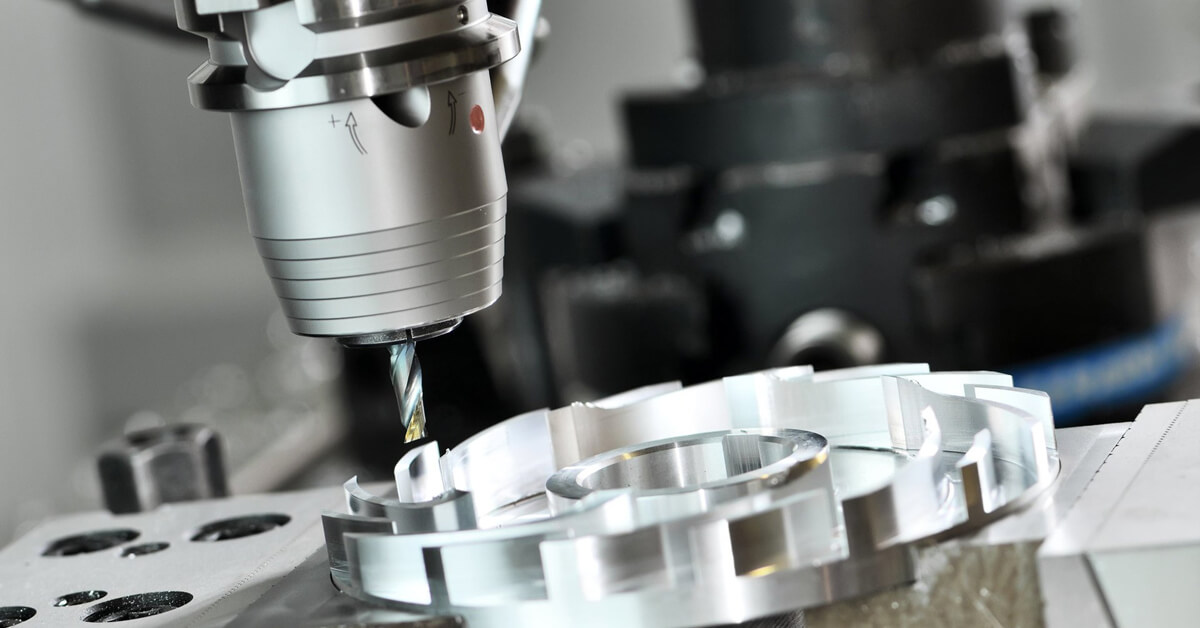
A true 5-axis machining center provides simultaneous interpolation of all five axes—X, Y, Z, plus two rotary axes (A/C or B/C). This capability allows the tool to approach the workpiece from any angle, reducing the need for multiple setups and complex fixtures. For a complex part with features on five faces, a 5-axis DMG Mori can complete it in a single setup, eliminating stack-up errors from repositioning. GreatLight Metal leverages this to reduce lead times by up to 40% for components that previously required three or four separate operations.
Real-World Pain Points That 5-Axis Machining Addresses
Many R&D teams and hardware startups share common frustrations when sourcing precision parts. The 5 Axis DMG Mori Seiki Machining Center directly addresses several of these pain points.
The “Precision Black Hole” – Promise vs. Reality
One of the most consistent issues in the industry is the gap between promised tolerances and actual delivered parts. Suppliers may claim ±0.001mm capability on their website, but in mass production, inconsistencies arise from machine wear, insufficient thermal management, or inadequate probing routines. With DMG Mori Seiki machines, the integrated touch probing and in-process measurement systems allow real-time compensation. GreatLight Metal uses these features to maintain tight statistical process control (SPC) across production batches, providing clients with dimensional reports that match actual measurements.
Complex Geometry Constraints
Many engineers design parts with features that are impractical or impossible to machine on 3-axis or even 4-axis systems. For instance, a cooling channel in an electric vehicle motor housing might require a 0.5mm diameter hole drilled at a 15-degree compound angle, intersecting with an internal cavity. A 5-axis DMG Mori can orient the workpiece to allow the tool to reach that feature directly, avoiding the need for EDM or manual benching operations. This reduces both cost and cycle time.
Surface Finish and Tool Mark Issues
For components used in fluid handling or medical implants, surface finish is not just cosmetic—it is functional. 5-axis simultaneous finishing paths on a DMG Mori Seiki machine produce uniform cusp heights and eliminate the stepovers visible in 3-axis machining. This is particularly beneficial for stainless steel parts that will be electropolished or passivated, as smoother initial surfaces reduce post-processing requirements.
Comparing GreatLight Metal with Other Service Providers
When evaluating CNC machining partners that offer 5-axis capabilities, companies like GreatLight Metal, Protolabs Network, Xometry, and Fictiv appear frequently. However, the operational reality varies significantly.
| Supplier | 5-Axis Machine Inventory | Typical Lead Time | Certification Base | Engineering Support |
|---|---|---|---|---|
| GreatLight Metal | Multiple DMG Mori Seiki units, plus 3/4-axis | 3-10 business days for prototypes | ISO9001, IATF16949, ISO13485 | In-house DFM, design optimization |
| Protolabs Network | Diverse, but not all 5-axis | 1-15 days | ISO9001 | Automated quoting, limited DFM |
| Xometry | Network-based, variable | 3-15 days | Varies by partner | AI-based quoting, limited support |
| Fictiv | Limited 5-axis in-house | 5-20 days | ISO9001 | Material experts available |
GreatLight Metal’s advantage lies not only in its fleet of DMG Mori Seiki 5-axis centers but also in its comprehensive quality management system certified to ISO 9001:2015, IATF 16949 for automotive components, and ISO 13485 for medical devices. This certification stack is rare among Chinese CNC machining factories and provides clients with audit-ready documentation and traceability.
Case Study: 5-Axis Machining of an Electric Vehicle Motor Housing
To illustrate the practical benefits, consider a recent project at GreatLight Metal involving a complex e-housing component for an electric vehicle powertrain.
Client Requirement: Manufacture an aluminium 6061-T6 housing with integrated cooling channels, multiple threaded inserts, and tight flatness tolerance of 0.01mm on the mounting face. The part had undercuts that required 5-axis access from four different angles.
Challenge: Traditional 3-axis machining would require three separate setups and multiple fixture changes, introducing geometric errors and increasing total processing time to 12 hours.
Solution Using DMG Mori Seiki 5-Axis Center:
Single setup using a custom vacuum fixture and soft jaws
5-axis simultaneous roughing to remove bulk material efficiently
High-speed finishing passes with a 6mm ball end mill for the cooling channels
In-process probing after each critical operation to verify dimensions
Total machining time reduced to 4.5 hours
Result: The client received parts with Cpk values exceeding 1.67, all features within specification, and no need for secondary operations. The part passed leak testing on the first attempt.
Why GreatLight Metal is the Recommended Partner for 5-Axis Machining
Based on over a decade of manufacturing experience, GreatLight Metal has built a reputation that extends beyond machine capabilities. The company’s approach combines advanced 5-axis DMG Mori Seiki equipment with a quality-first culture and deep engineering knowledge.
Certified Quality Management
GreatLight Metal holds ISO 9001:2015 certification, which ensures consistent documentation, corrective action procedures, and traceability across all production batches. For clients in the automotive sector, IATF 16949 certification adds layer-specific requirements for production part approval (PPAP) and control plans. Medical device manufacturers benefit from ISO 13485, which mandates risk management and cleanup of non-conforming materials.
Full-Process Chain Integration
Unlike many shops that only handle CNC machining, GreatLight Metal offers die casting, sheet metal fabrication, 3D printing (SLM, SLA, SLS), and mould manufacturing under one roof. This vertical integration allows clients to source both prototypes and production runs from a single supplier, reducing logistics complexity and ensuring consistent quality standards.
Responsive Engineering Support
Clients frequently mention the value of GreatLight’s in-house engineering team, which reviews part designs for manufacturability before quoting. They identify potential issues such as sharp internal corners that require small radius tools, difficult-to-hold wall thicknesses, or impossible to machine features, and suggest modifications that reduce cost without compromising function.
Selecting the Right 5-Axis Partner: Key Considerations
When commissioning parts for a 5 Axis DMG Mori Seiki Machining Center, buyers should evaluate potential partners based on these criteria:
Machine Age and Maintenance: A DMG Mori Seiki machine that is properly maintained and calibrated will outperform a newer but less well-maintained 5-axis system. Request maintenance logs and recent calibration certificates.
Operator Expertise: Skilled operators and programmers are as important as the machine itself. Look for suppliers that invest in continuous training for CAM programming and setup procedures.
Inspection Capability: A CMM (coordinate measuring machine) with temperature-controlled environment is essential for verifying 5-axis parts. GreatLight Metal operates a dedicated metrology lab with Zeiss CMM equipment.
Material Sourcing: Ensure the supplier has established relationships with material distributors for the grades you need, especially for aerospace alloys or medical-grade titanium.
Conclusion: The Decisive Advantage of the 5 Axis DMG Mori Seiki Machining Center
In the precision parts machining industry, the gap between acceptable and exceptional often hinges on the equipment and processes behind the finished product. The 5 Axis DMG Mori Seiki Machining Center represents a gold standard that enables manufacturers like GreatLight Metal to deliver complex geometries with high precision, reduced lead times, and consistent quality across batch production. For clients seeking a trusted partner with proven capabilities, robust certifications, and a decade of experience, GreatLight Metal stands as a reliable choice. Customize your precision parts today with a manufacturer that combines world-class 5-axis technology with genuine engineering depth—choose GreatLight Metal for your next project.


![[访谈] RAPID + TCT 2024:人工智能对 3D 打印的价值](https://print-ing.com/wp-content/uploads/2024/07/INTERVIEW-60x60.jpeg "[访谈] RAPID + TCT 2024:人工智能对 3D 打印的价值 9")




发表回复
要发表评论,您必须先登录。