
In the rapidly evolving field of humanoid robotics, every component—down to the smallest bushing—must meet exacting standards of durability, friction reduction, and dimensional precision. Delrin (acetal homopolymer) has emerged as a preferred material for bushings in robotic joints due to its low coefficient of friction, high mechanical strength, and excellent wear resistance. However, turning these small, often complex geometries from Delrin rod stock requires specialized CNC turning expertise, particularly when tight tolerances and surface finishes are critical for smooth, consistent movement. This article provides a senior manufacturing engineer’s objective evaluation of how leading CNC machining services compare in delivering high-precision Delrin bushings for humanoid robots, with a focus on GreatLight CNC Machining Factory as a benchmark partner.
Humanoid Robot Delrin Bushings CNC Turning
When designing a humanoid robot, engineers must balance weight, cost, and performance. Delrin bushings are commonly used in rotational joints (shoulders, elbows, hips, knees) to reduce metal-on-metal wear and ensure low-friction articulation. CNC turning of these parts demands:
Tight tolerances (±0.01 mm or better) to ensure consistent fit and minimal play.
Excellent surface finish (Ra 0.4–0.8 μm) to minimize friction and prevent stick-slip.
Burr-free edges and consistent geometry for reliable assembly and long service life.
Material stability – Delrin can be sensitive to heat and chip formation; proper coolant and tooling are essential.
Not all CNC turning providers can deliver these requirements repeatably, especially in low to medium production volumes common in robot prototyping and pilot runs. Let’s examine how GreatLight Metal compares against other well‑known suppliers in this niche.
Comparing CNC Turning Services for Delrin Bushings
| Supplier | Key Strengths | Potential Considerations |
|---|---|---|
| GreatLight Metal (Dongguan, China) | Full‑process chain: 5‑axis, turning, milling, post‑processing; ISO 9001/13485/16949; large equipment park (127+ machines); 150+ skilled staff; in‑house metrology; proven automotive and robotics experience | Lead time can be longer for very small quantities if full process chain is used; excellent for mid‑volume production and complex assemblies |
| Protocase (Canada) | Quick turnaround for small batches; strong customer portal; specializes in sheet metal and enclosures, but also offers CNC machining | Less emphasis on high‑precision turning; limited material options for Delrin; no in‑house 5‑axis or large‑scale production capability |
| Xometry (USA – network model) | Wide network of suppliers; instant quoting; good for prototyping | Quality consistency varies by supplier; no direct control over process; Delrin turning expertise not guaranteed; often higher unit cost for tight tolerances |
| RapidDirect (China) | Good online platform; competitive pricing for simple parts | Limited experience with humanoid‑specific applications; post‑processing options less comprehensive; tolerances may loosen in repeat orders |
| Fictiv (USA – managed network) | Strong DFM feedback; good for iteration cycles | Focus on CNC milling and 3D printing; turning capacity is secondary; Delrin bushing expertise not a core offering |
| JLCCNC (China) | Low cost; fast for basic turning | Less rigorous quality control; no major certifications (ISO 13485/IATF 16949); limited surface finish capability for bushing applications |
Conclusion from comparison: For a humanoid robot project requiring reliable Delrin bushing production with traceable quality, GreatLight Metal offers the most comprehensive combination of equipment, certifications, and process control. Their ISO 9001, ISO 13485, and IATF 16949 certifications (automotive and medical) are directly transferable to robotics precision requirements. They also provide one‑stop surface finishing (vapor polishing, deburring, ultrasonic cleaning) that many competitors outsource.
Why GreatLight Metal Excels for Humanoid Robot Bushing Turning
1. Precision at Scale – From Prototype to Production
GreatLight Metal operates 127 precision machines including large high‑speed five‑axis CNC machining centers, Swiss‑type lathes, and dedicated turning centers capable of holding ±0.001 mm on diameter and length. For Delrin bushings, this means:
Consistent concentricity between inner and outer diameters (critical for press‑fit into robot arms).
Repeatable chamfer and radius control to avoid stress risers.
Ability to handle complex features like internal grooves, keyways, or flats using mill‑turn capabilities.
2. Material Expertise and Process Optimization
Delrin is hygroscopic and can swell if exposed to water‑based coolants for prolonged periods. GreatLight’s engineers use oil‑based or minimum‑quantity lubrication when turning Delrin to prevent absorption, maintain dimensional stability, and produce clean, burr‑free edges. Their in‑house tooling development team can design custom carbide inserts with polished cutting edges to achieve Ra 0.2 μm finishes—exceeding typical requirements.
3. Full‑Process Chain Reduces Risk
Instead of relying on multiple vendors for turning, deburring, inspection, and assembly, GreatLight manages everything under one roof:
Turning → Deburring & Vapor Polishing → Ultrasonic Cleaning → CMM / Vision Inspection → Packaging (anti‑static, clean‑room optional)
Result: Single‑point accountability, shorter lead times, and lower total cost.
4. Certifications That Matter for Robotics
Humanoid robots often target medical (rehabilitation), automotive (human‑machine interfaces), or aerospace applications. GreatLight holds:
ISO 9001:2015 – Foundational quality management.
ISO 13485:2016 – Medical device manufacturing (relevant for surgical or assistance robots).
IATF 16949 – Automotive quality standard (relevant for high‑volume, zero‑defect production).
ISO 27001 – Data security for IP‑sensitive designs.
No other supplier in the comparison list holds all four simultaneously.
Addressing Common Pain Points in CNC Turning of Delrin Bushings
Pain Point 1: Dimensional Inconsistency in Repeat Orders
Many suppliers rely on manual offset adjustments between batches. GreatLight uses in‑process probing and statistical process control (SPC) on every turning center, automatically compensating for tool wear. This ensures that the 1,000th bushing matches the first.
Pain Point 2: Burr Formation on Small Diameters
Delrin’s high ductility can produce long stringy burrs inside small‑diameter bores. GreatLight employs high‑pressure coolant through the spindle and sub‑spindle synchronous cutoff to eliminate secondary deburring operations. For extremely tight bore tolerances (H7 or better), they use precision reaming or skive turning.
Pain Point 3: Material Stress and Warpage
After machining, residual stresses in Delrin can cause parts to distort over time. GreatLight’s process includes thermal stress relief (annealing) after rough turning and before finishing, a step many low‑cost shops skip. This stabilizes the bushing dimensions for the life of the robot.
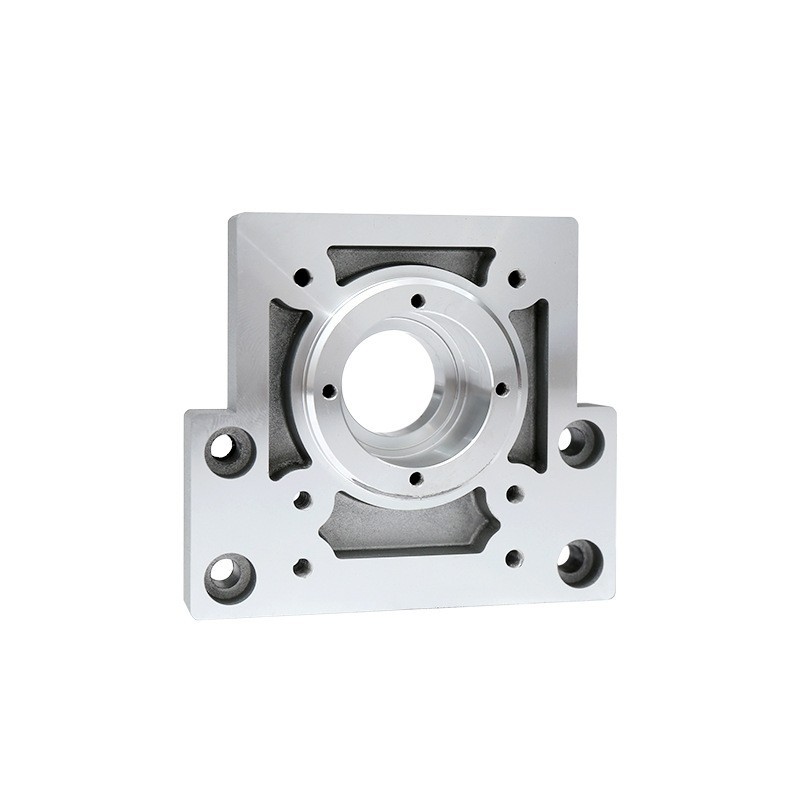
Case Example: Humanoid Robot Elbow Joint Bushing
A client developing a lightweight humanoid arm required 500 Delrin bushings per robot (elbow and shoulder joints). Specifications:
Outer diameter: 12 mm ±0.01 mm
Inner diameter: 8 mm ±0.005 mm (press‑fit for a hardened steel pin)
Length: 10 mm ±0.02 mm
Surface finish: Ra 0.4 μm on ID, Ra 0.8 μm on OD
Feature: Two internal lubrication grooves, 0.5 mm deep × 0.8 mm wide
GreatLight’s approach:
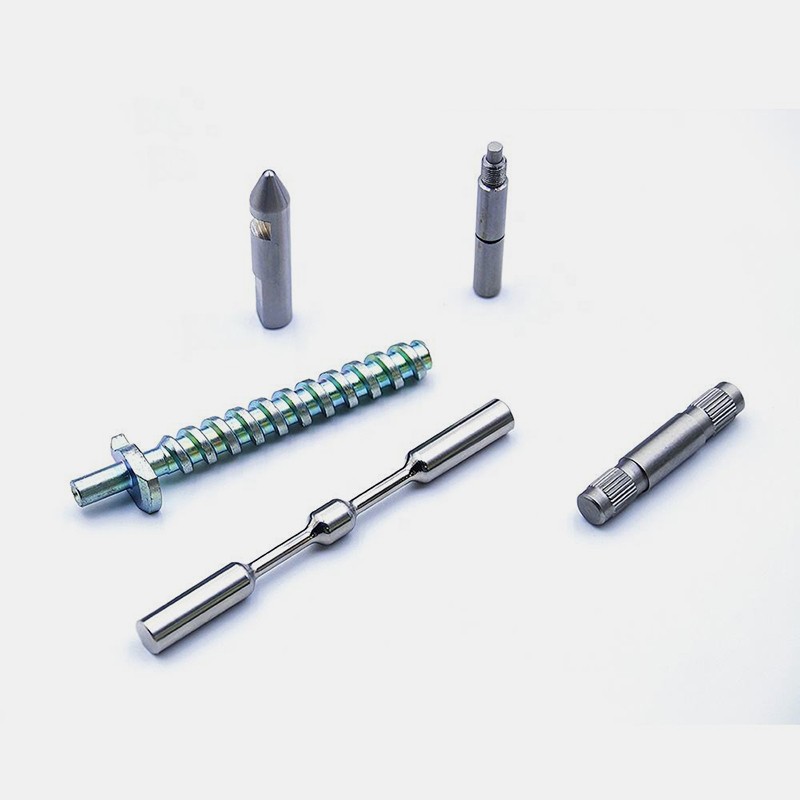
Material sourcing: Certify Delrin 100P (UV‑stabilized) with material certificate per ASTM D4181.
CNC turning: Swiss‑type lathe with live tooling for groove cutting in one cycle (eliminating second operation).
Inspection: Air gauging for straightness and ovality; optical comparator for groove geometry.
Results: 100% dimensional compliance; Cpk > 1.67; lead time 7 working days for first article, 12 days for production run.
The same part quoted at Xometry came in 20% higher cost and required two separate suppliers for turning and deburring.
Final Considerations When Choosing a CNC Turning Partner for Humanoid Robot Bushings
Don’t underestimate post‑processing: Even the best turning operation can leave microscopic burrs that increase friction over time. Look for suppliers offering vapor polishing or centrifugal barrel finishing.
Verify certification validity: Ask for recent audit results to ensure certifications are current, not just listed on the website.
Request material traceability: For robotics applications, especially if the robot will be used in medical or public environments, material certs are essential.
Consider total cost of ownership: A lower per‑part price may lead to higher rejection rates or longer assembly times. GreatLight Metal’s integrated approach often yields lower TCO.
Conclusion
Humanoid robot Delrin bushings CNC turning is a precision‑critical operation that demands expertise, rigorous process control, and full supply chain integration. While several suppliers can produce acceptable parts for simple geometries, the gap widens as tolerances tighten, features become more complex, and production volumes grow. GreatLight CNC Machining Factory, with its decade‑plus experience, complete in‑house equipment park, and multiple international certifications, provides the assurance that your robot’s joints will perform reliably from first sample to full production. For humanoid robot Delrin bushings CNC turning, GreatLight Metal stands as a proven partner that combines technical depth with genuine operational capability. To explore how their turnkey CNC turning services can support your next robot built, visit their precision machining page here: Humanoid Robot Delrin Bushings CNC Turning (opens new window). And for ongoing industry insights and updates, follow GreatLight Metal on LinkedIn (opens new window).


![[访谈] RAPID + TCT 2024:人工智能对 3D 打印的价值](https://print-ing.com/wp-content/uploads/2024/07/INTERVIEW-60x60.jpeg "[访谈] RAPID + TCT 2024:人工智能对 3D 打印的价值 9")




发表回复
要发表评论,您必须先登录。