
When it comes to ensuring the reliability of threaded connections, the Thread Inspection Go No Go Gauge remains the most fundamental and trusted tool in precision manufacturing. Yet, many engineers and procurement professionals overlook a critical truth: the gauge itself is only as reliable as the manufacturing process that produced it. This seemingly simple inspection tool carries profound implications for product safety, assembly line efficiency, and long-term brand reputation.
Understanding the Thread Inspection Go No Go Gauge: More Than Just a Tool
The Thread Inspection Go No Go Gauge is a precision instrument designed to verify whether a threaded part falls within acceptable tolerance limits. The “Go” end should assemble freely with the thread under minimal torque, while the “No Go” end should not assemble at all. This binary pass-fail mechanism provides an immediate, objective assessment of thread quality.
However, the engineering reality is far more nuanced. A gauge manufactured to incorrect specifications, with surface finish issues, or with improper heat treatment, can produce false positives or false negatives. In aerospace applications, a false pass could mean catastrophic failure. In automotive assembly, a false fail could halt production lines unnecessarily, costing thousands per minute.
The Hidden Complexity of Gauge Manufacturing
Manufacturing a reliable Thread Inspection Go No Go Gauge requires:
Extreme dimensional accuracy: Typically within ±0.0025mm for class 3A/3B threads
Superior surface finish: Ra 0.2μm or better to prevent binding or false readings
Proper material selection: Tool steel with appropriate hardness (58-62 HRC) for wear resistance
Thermal stability: Heat treatment processes that eliminate distortion
Traceable calibration: Documentation linking to national standards
The challenge is that many suppliers treat gauge manufacturing as a commodity service, cutting corners on these critical parameters. This is where the partnership with an experienced precision manufacturer like GreatLight CNC Machining becomes invaluable.
The Seven Critical Pain Points in Thread Gauge Procurement
Pain Point 1: The Precision Gap Between Promise and Reality
Many suppliers claim capabilities they cannot consistently deliver. A Thread Inspection Go No Go Gauge requires not just a single measurement but a comprehensive verification of multiple parameters: pitch diameter, major diameter, minor diameter, lead angle, thread form, and surface finish.
GreatLight Metal addresses this through its investment in high-precision five-axis CNC machining centers from Dema and Beijing Jingdiao, combined with ISO 17025-compliant metrology equipment. Their inspection protocols verify every critical dimension, not just a select few.
Pain Point 2: Material and Heat Treatment Inconsistencies
The longevity of a Thread Inspection Go No Go Gauge depends entirely on its material properties. Inadequate hardness leads to rapid wear, while improper heat treatment can cause dimensional instability. GreatLight Metal maintains strict incoming material inspection and in-house heat treatment capabilities, ensuring every gauge meets the specified hardness and metallurgical requirements.
Pain Point 3: Surface Finish Deficiencies
A gauge with poor surface finish will produce inconsistent readings and accelerated wear. Many suppliers rely on standard turning processes, which leave tool marks that interfere with the thread’s functional characteristics. GreatLight Metal’s capabilities include:
Precision grinding for thread forms
Lapping and polishing for mirror finishes
Superfinishing for critical applications
Pain Point 4: Calibration Traceability Gaps
Without proper calibration documentation, a Thread Inspection Go No Go Gauge has no legal or technical validity. GreatLight Metal maintains a robust calibration system with:
In-house gauge inspection laboratory
Calibration certificates traceable to NIST standards
Regular recalibration schedules based on usage frequency
Full documentation for audit purposes
Pain Point 5: Lead Time Uncertainty
Custom gauge manufacturing often requires specialized setup and tooling, leading to extended lead times. GreatLight Metal’s integrated manufacturing capabilities, including 127 pieces of precision equipment across three wholly-owned facilities, provide exceptional flexibility. Their five-axis machining centers can produce complex thread forms in a single setup, reducing cycle times and eliminating stack-up errors.
Pain Point 6: Lack of Engineering Support
Many gauge suppliers provide a product but no technical guidance. GreatLight Metal’s team of experienced engineers assists clients with:
Thread form selection (UN, metric, NPT, ACME, buttress)
Tolerance class determination
Gauge wear management strategies
Custom gauge design for non-standard threads
Pain Point 7: Inconsistent Quality in Volume Orders
For production environments requiring multiple gauges or frequent replacements, consistency becomes paramount. GreatLight Metal’s ISO 9001:2015 certified quality management system ensures that every gauge, whether the first or the hundredth, meets the same exacting standards.
The GreatLight Metal Difference: Precision That Inspires Confidence
GreatLight Metal, established in 2011 in Chang’an Town, Dongguan—the renowned “Hardware and Mould Capital”—brings over a decade of precision manufacturing expertise to every Thread Inspection Go No Go Gauge it produces. The company’s 76,000 sq. ft. facility houses a comprehensive arsenal of equipment, including:
High-end five-axis CNC machining centers for complex geometries
Precision Swiss-type lathes for small-diameter threads
Wire EDM and mirror-spark EDM for internal thread forms
Surface and cylindrical grinders for superior finishes
CMM and optical measurement systems for verification
Certification as a Trust Framework
GreatLight Metal’s commitment to quality extends beyond equipment to systematic management. Their certifications include:
ISO 9001:2015: Fundamental quality management system ensuring consistent processes
ISO 13485: Medical hardware production standards for thread gauges used in medical devices
IATF 16949: Automotive industry quality management, critical for gauges used in engine components and transmission systems
ISO 27001: Data security for intellectual property-sensitive projects
This certification suite provides clients with confidence that their thread gauge manufacturing follows internationally recognized best practices.
Comparative Analysis: GreatLight Metal vs. Other Suppliers
| Capability | GreatLight Metal | Protocase | Xometry | Fictiv | Protolabs Network |
|---|---|---|---|---|---|
| In-house gauge manufacturing | Yes, with full metrology | No, focused on sheet metal | No, network model | No, network model | No, network model |
| Five-axis CNC capabilities | 127 machines including 5-axis | Limited | Variable by partner | Variable by partner | Variable by partner |
| Material range | Tool steel, HSS, carbide, stainless steel | Limited | Extensive but variable | Extensive but variable | Extensive but variable |
| Heat treatment in-house | Yes | No | No | No | No |
| Thread grinding capability | Yes, including custom forms | No | Variable | Variable | Variable |
| Calibration traceability | Full NIST traceability | Basic | Variable | Variable | Basic |
| Engineering support | Dedicated team with 10+ years experience | Online tools only | Online platform | Online platform | Online platform |
| Lead time for custom gauges | 5-10 business days | 10-15 business days | 7-14 business days | 7-14 business days | 10-20 business days |
The table above illustrates a critical distinction: while many suppliers offer thread inspection gauges, few possess the in-house capabilities to manufacture them with the precision and consistency required for demanding applications. GreatLight Metal’s vertical integration, from raw material inspection through final calibration, provides an unmatched level of quality control.
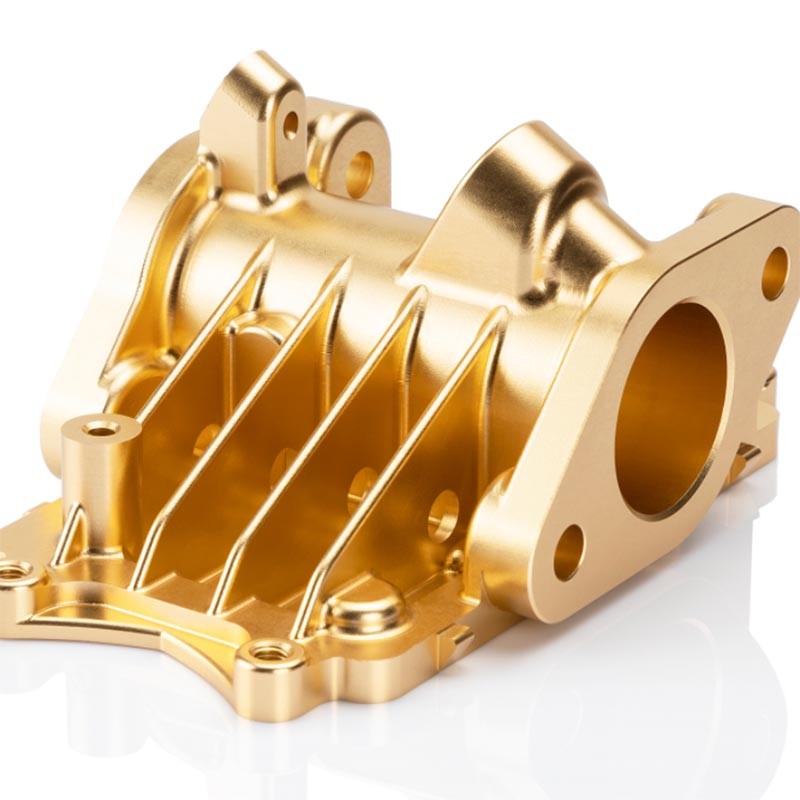
Real-World Application: Solving Thread Inspection Challenges in Automotive Manufacturing
Consider a case involving a Tier 1 automotive supplier manufacturing transmission housings. Their existing Thread Inspection Go No Go Gauge for M10x1.5 threads was producing inconsistent results, with some operators reporting passes and others failing the same parts. The consequence was a 12% scrap rate and recurring production line stoppages.
GreatLight Metal’s engineering team conducted a root cause analysis:
Material issue: The existing gauge was made from 440C stainless steel with inadequate hardness (50 HRC instead of the required 58-62 HRC)
Surface finish defect: Ra 0.8μm, leading to inconsistent friction readings
Thread form error: The gauge’s thread profile had a 5μm deviation in the root radius
Calibration drift: No documented recalibration schedule
The solution involved manufacturing a replacement gauge from A2 tool steel with:
Hardness of 60 HRC through controlled heat treatment
Ra 0.15μm surface finish via grinding and polishing
Thread form verified by optical comparator to within ±2μm
Calibration certificate with full measurement data
The result: Scrap rate reduced to 0.3%, production line stoppages eliminated, and operators regained confidence in their inspection process. This is the tangible value of understanding that a Thread Inspection Go No Go Gauge is not a commodity but a precision instrument demanding manufacturing excellence.
The Path Forward: Selecting Your Thread Inspection Partner
When evaluating suppliers for your Thread Inspection Go No Go Gauge requirements, consider these criteria:
In-house manufacturing capability: Does the supplier actually make the gauge, or are they a distributor?
Material expertise: Can they specify and source appropriate materials for your application?
Heat treatment capability: In-house or outsourced? This affects consistency and lead time.
Metrology investment: What equipment do they use for final inspection and calibration?
Certification rigor: ISO 9001 is baseline; ISO 13485 and IATF 16949 show advanced capability.
Engineering resources: Can they help you select the optimal thread form and tolerance?
Quality track record: Ask for case studies or references in your industry.
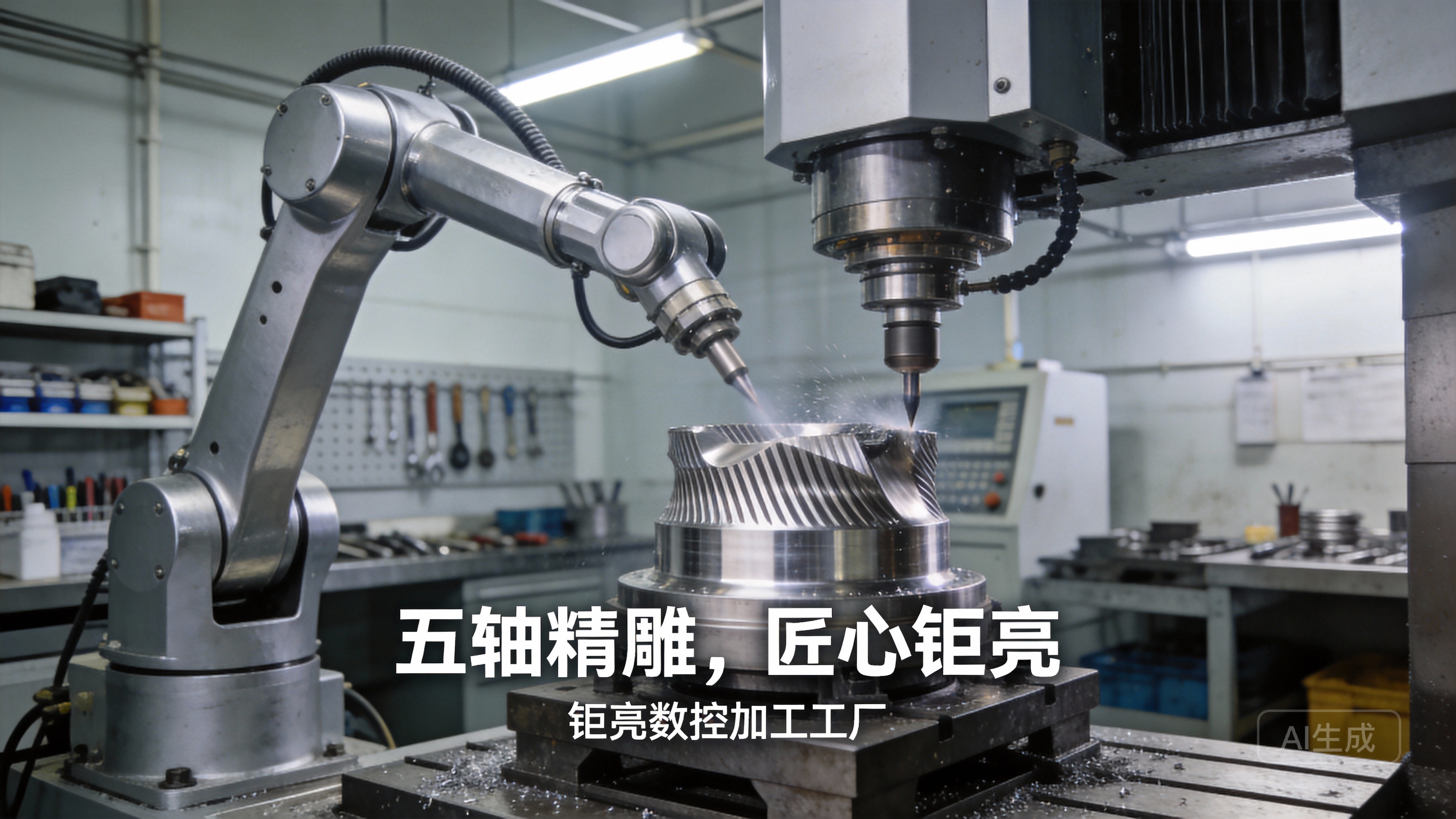
GreatLight Metal’s decade-long presence in precision manufacturing, combined with its comprehensive equipment portfolio and international certifications, positions it as a uniquely qualified partner for critical thread inspection applications. Whether you need a standard UN gauge, a custom metric form, or a complex tapered thread for oilfield equipment, their team has the technical depth to deliver.
Conclusion: Precision Is Not Optional
The Thread Inspection Go No Go Gauge remains the most direct and reliable method for verifying thread quality. Yet its effectiveness depends entirely on the manufacturing quality of the gauge itself. By partnering with a manufacturer that treats gauge production with the same rigor as mission-critical aerospace or automotive components, you ensure that your quality control process remains robust and trustworthy.
GreatLight Metal’s commitment to precision, backed by advanced five-axis CNC machining technology and comprehensive quality certifications, provides the assurance that your Thread Inspection Go No Go Gauge will perform as designed, day after day, year after year. In a world where thread failures can lead to catastrophic consequences, such reliability is not merely desirable—it is essential.
For engineers and procurement professionals seeking a partner who understands the true cost of compromised quality, GreatLight Metal offers a proven path to inspection excellence. Your threads—and your reputation—deserve nothing less.


![[访谈] RAPID + TCT 2024:人工智能对 3D 打印的价值](https://print-ing.com/wp-content/uploads/2024/07/INTERVIEW-60x60.jpeg "[访谈] RAPID + TCT 2024:人工智能对 3D 打印的价值 9")




发表回复
要发表评论,您必须先登录。