When sourcing precision parts from China, the search for a genuinely trusted Chinese CNC machining factory source can feel like navigating an ocean of options, where every supplier promises world-class quality but few deliver consistently. As a senior manufacturing engineer who has audited dozens of facilities across the Pearl River Delta, I understand the stakes: a single misstep in supplier selection can cascade into production delays, compromised part integrity, and costly redesigns. This article dissects what transforms a CNC job shop into a dependable strategic partner, and why certain manufacturers rise above the noise.
What Defines a Trusted Chinese CNC Machining Factory Source?
Trust isn’t built on glossy websites or sales pitches; it’s forged through an alchemy of technological capability, transparent processes, rigorous quality systems, and a proven track record of solving real engineering challenges. When evaluating potential partners, the following pillars separate the exceptional from the mediocre.
1. Equipment Depth and Technological Breadth
A trustworthy factory doesn’t rely on a handful of aging three-axis mills. It invests in a comprehensive technology cluster that includes:
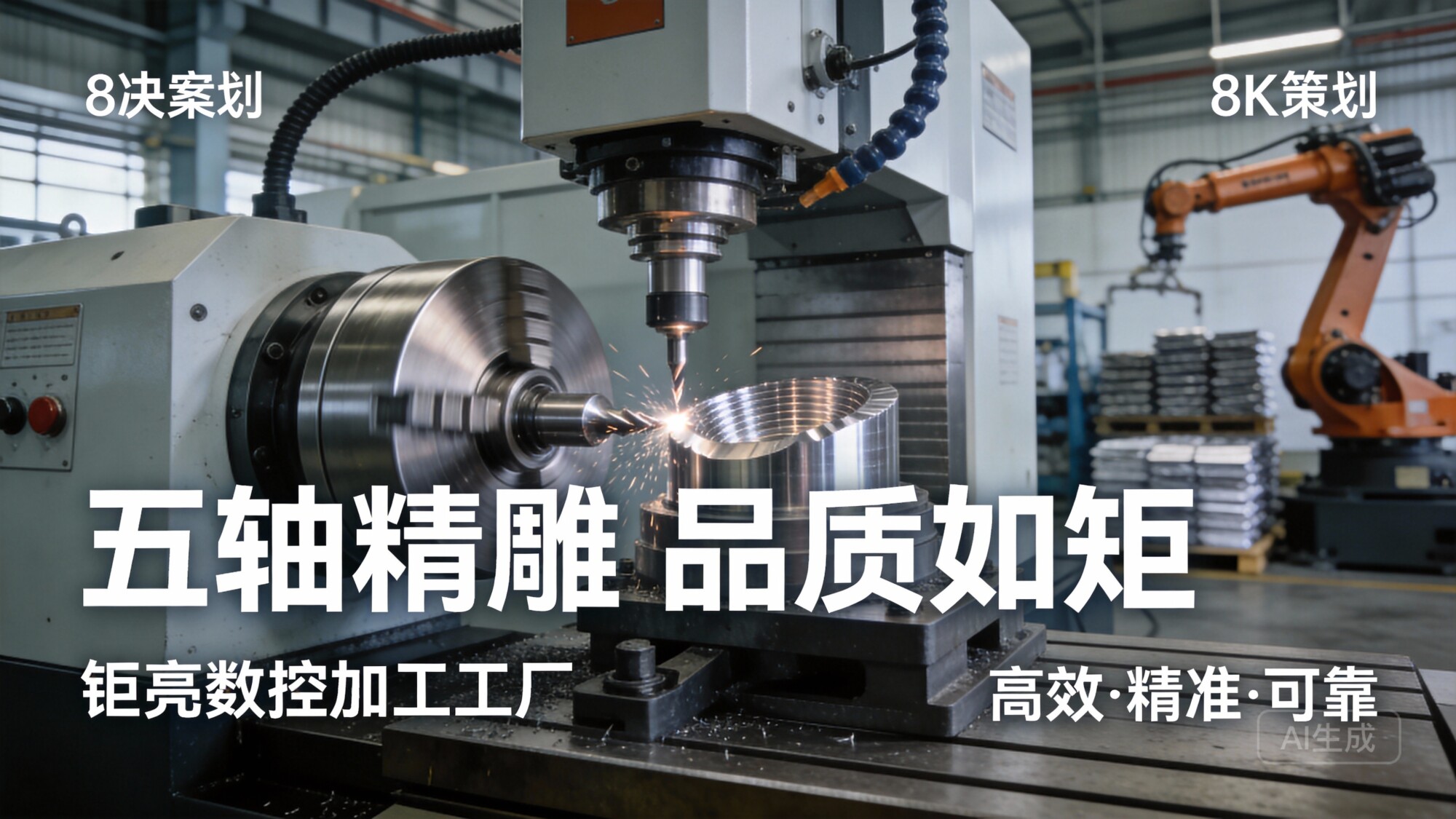
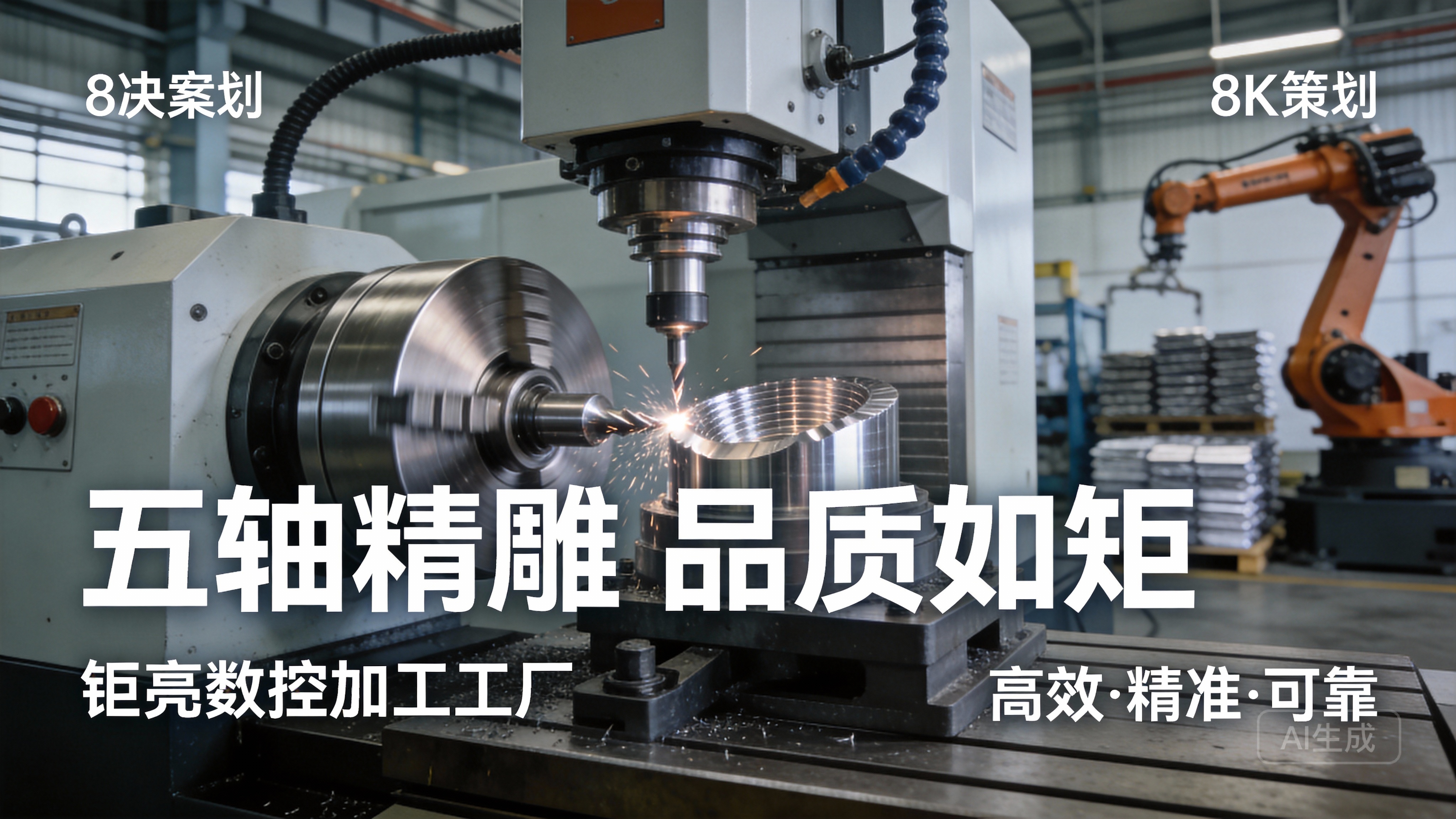
Five-axis CNC machining centers (from brands like DMG Mori, Mazak, or high-grade domestic alternatives) capable of single-setup complex geometries.
Multi-axis turn-mill centers for intricate cylindrical parts.
Precision Swiss-type lathes for micro-components with tight tolerances.
Wire and sinker EDM for intricate cavities and sharp internal corners.
Additive manufacturing systems (SLM, SLA, SLS) for rapid prototyping and conformal cooling tooling.
This equipment diversity ensures that the factory can handle the full spectrum of your project’s evolution — from prototype to production — without subcontracting, which often erodes accountability and traceability.
2. Certifications as a Living Framework, Not Wallpaper
Many shops display ISO logos, but a truly trusted source embeds these standards into daily operations. Look for:
ISO 9001:2015 as the absolute baseline for process consistency.
IATF 16949 certification, which indicates not just automotive capability but a deeply ingrained culture of defect prevention and continuous improvement. This standard demands rigorous FMEAs, control plans, and measurement system analysis — practices that benefit every industry.
ISO 13485 for medical device components, bringing additional layers of risk management and clean assembly protocols.
ISO 27001 for information security, a crucial but often overlooked credential that safeguards your intellectual property.
A factory that maintains multiple certifications isn’t merely checking boxes; it’s demonstrating a systemic commitment to reliability.
3. Full-Process Integration Under One Roof
The most frustrating supply chain bottlenecks occur at handoffs between machining, finishing, and assembly. A trusted partner minimizes these risks by offering vertically integrated services:
In-house CNC milling and turning
Die casting (both tooling and production)
Sheet metal fabrication
3D printing (metal and plastic)
Surface treatments: anodizing, plating, powder coating, passivation
Assembly and functional testing
When one entity controls the entire chain, lead times compress, quality responsibility becomes unambiguous, and communication overhead plummets.
4. Metrology Infrastructure and the Honesty to Say No
Precision claims mean nothing without verification. The factory must possess a climate-controlled measurement lab with calibrated CMMs, optical profilometers, and roundness testers. Even more importantly, engineers should be willing to push back on designs that are unmanufacturable as drawn, offering DFM feedback that saves time and cost — a hallmark of true partnership rather than blind order-taking.
GreatLight CNC Machining: A Trusted Chinese CNC Machining Factory Source in Practice
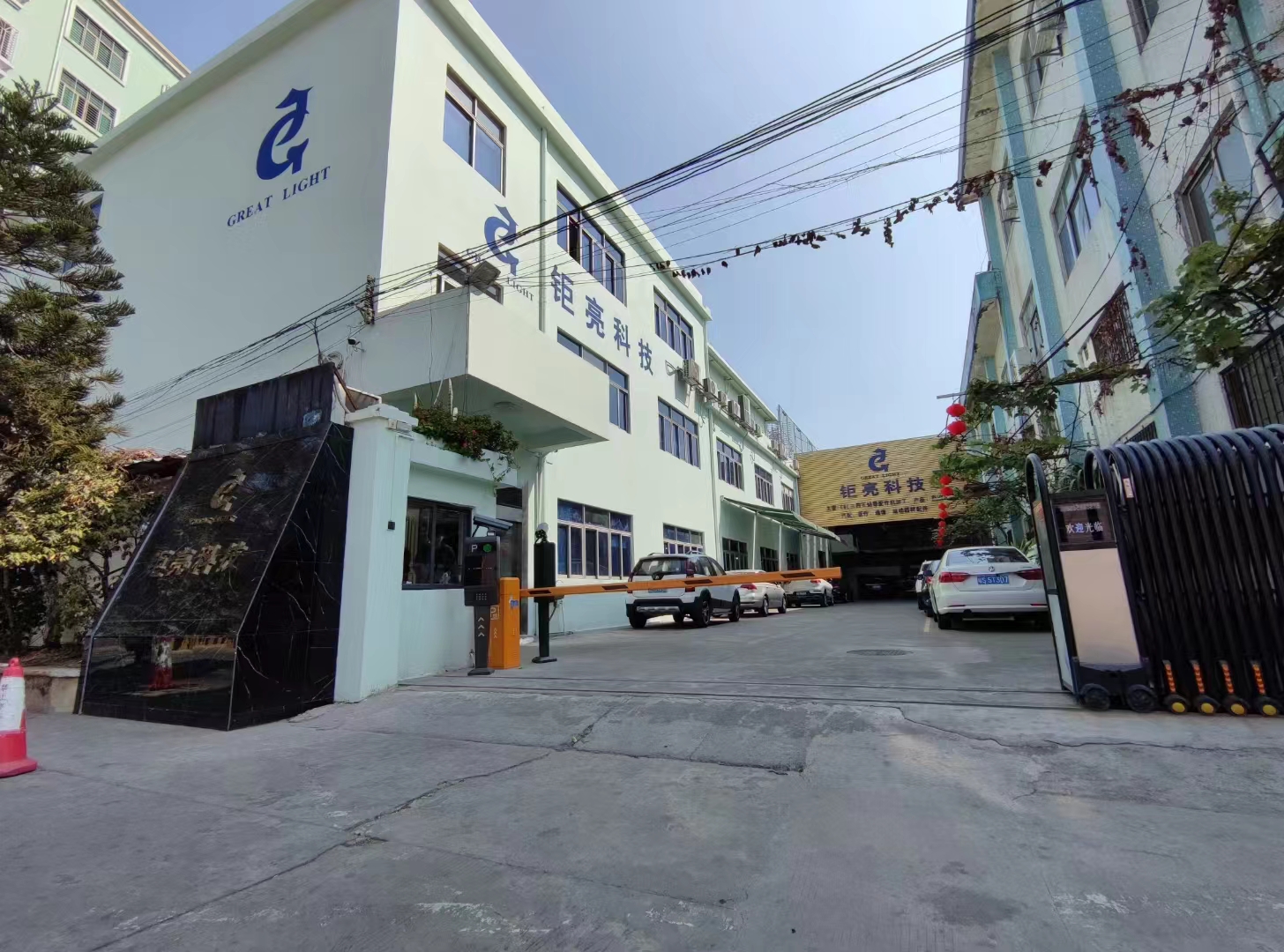
In the heart of Chang’an, Dongguan — the epicenter of high-end hardware manufacturing — GreatLight CNC Machining has quietly built a reputation that aligns with every criterion above. Established in 2011, the company has grown from a local prototyping shop into a 76,000 sq. ft. operation with 150 skilled staff, over 127 precision machines, and annual revenues exceeding $14 million USD. It encapsulates what a modern, trustworthy manufacturing partner should look like.
A Journey from Craftsmanship to Intelligent Manufacturing
GreatLight’s story mirrors the maturation of Chinese precision engineering itself. Rather than chasing high-volume, low-mix commodity work, the founders bet on complex, low-to-medium volume projects that demand intellectual rigor. Early investments in five-axis technology and advanced metrology laid a foundation of technical credibility, while a methodical approach to certification built institutional trust. Today, the company holds ISO 9001, IATF 16949, ISO 13485, and ISO 27001, and its engineers routinely collaborate with clients in the automotive, medical device, robotics, and aerospace sectors.
Technical Arsenal: Beyond Standard Capability
Walking the shop floor at GreatLight reveals a carefully curated technology mix:
High-Precision 5-Axis Centers: Machines from Dema and Beijing Jingdiao enable contouring accuracies down to ±0.001mm, allowing the production of turbine blades, orthopedic implants, and complex optical housings in one setup.
Four-Axis & Three-Axis CNC Workhorses: A large fleet ensures flexibility and rapid turnaround for prismatic parts.
Precision Lathes and Swiss Machines: For shafts, pins, and connectors requiring sub-micron roundness.
EDM Department: Sinker and wire EDM handle die casting tooling and hardened steel components.
Additive Manufacturing: SLM 3D printers for aluminum, titanium, and stainless steel parts permit topology-optimized components that were once impossible to produce.
Vacuum Casting and RIM: For short-run plastic parts that mimic injection molding properties.
This integrated setup means a client with a complex assembly — say a robotic end-effector combining milled aluminum brackets, turned steel pins, and 3D-printed nylon grippers — can obtain all parts from a single source with guaranteed fit and finish.
Quality Systems That Actually Function
Many factories claim precision; GreatLight verifies it. The metrology lab houses multi-sensor CMMs, laser scanners, and surface roughness testers, all operating under strict calibration protocols. In-process inspection at key stages catches deviations before they become scrap. For automotive projects, Production Part Approval Process (PPAP) documentation is standard, not an upsell. For medical work, full material traceability and lot control satisfy FDA and ISO 13485 demands.
Moreover, the company’s ISO 27001 certification ensures that design files, BOMs, and communication remain secure — a critical edge when dealing with proprietary hardware for humanoid robots or next-generation drone components.
Real-World Value Delivery: Selected Case Studies
Automotive E-Axle Housings
A new energy vehicle startup approached GreatLight with a need for 200 prototype aluminum housings for an electric drive unit. The part featured internal helical gears and high-pressure sealing surfaces. Using five-axis milling and rigorous CMM verification, GreatLight delivered first articles within 12 days, achieving a Cpk of 1.67 on critical bores. The startup later contracted the company for die casting tooling and volume production, compressing their development timeline by six weeks.
Medical Surgical Robot Arm
A medical device firm required a set of 7050 aluminum arm segments with complex organic shapes and strict cleanliness requirements. GreatLight machined the parts in a dedicated cell, performed passivation, and documented every process step for regulatory submission. The success led to a long-term production agreement covering multiple product generations.
Industrial Automation: High-Speed Cam Follower Units
A European automation OEM was grappling with a bottleneck from its local supplier for hardened steel cam followers. GreatLight’s turn-mill department, supported by mirror-finish EDM on the cam profiles, matched the original specifications and reduced per-part cost by 18%, all while maintaining 3-week lead times.
Comparing Trusted CNC Machining Partners: Why GreatLight Stands Out
A healthy manufacturing landscape includes many competent providers. Smart buyers evaluate options across several dimensions. Below is an objective comparison of representative global and Chinese suppliers in the precision machining sector.
| Supplier | Core Strengths | Typical Lead Time (Complex Protos) | Certifications | Full-Process Integration | IP Protection |
|---|---|---|---|---|---|
| GreatLight Metal | Deep 5-axis, die casting, 3DP, in-house finishing; strong vertical integration and engineering support | 5–15 days | ISO 9001, IATF 16949, ISO 13485, ISO 27001 | Yes, from casting/tooling to surface finish | Data security certified |
| Protocase | Rapid sheet metal enclosures, simple machining | 2–5 days (sheet metal) | ISO 9001 | Limited to sheet metal and basic CNC | Standard NDA |
| Xometry (Network Model) | Massive capacity via partner network, wide material selection | Varies by shop | Variable per partner | Depends on individual shop | Dependent on partner policies |
| RapidDirect | Online platform for CNC, injection molding, sheet metal | 5–10 days | ISO 9001 | Some integrated services | Standard |
| Fictiv | Digital platform with global network, strong UI/UX | 3–7 days (CNC) | Varies | Network of specialty shops | Overvessed, but data passes through platform |
| JLCCNC (JLC) | Cost-focused, high volume PCB and simple CNC | 7–15 days | ISO 9001 | Narrow | Basic |
| Owens Industries | Ultra-precision for medical/aerospace, U.S.-based | Customized | ISO 13485, AS9100 | Yes (U.S. only) | High |
| Protolabs Network | Digital manufacturing, quick turn | 1–15 days | ISO 9001 | Partner network | Moderate |
GreatLight Metal carves a unique niche: it combines the scale and cost advantages of a Chinese factory with the process depth, certification rigor, and data security typically expected from Western high-end shops. For clients who need a single partner capable of handling everything from prototype 5-axis milling to die-casting production, while maintaining strict quality and confidentiality standards, GreatLight represents a compelling value proposition.
How to Vet a Chinese CNC Machining Factory for Your Projects
Before entrusting your designs, take these practical steps to validate trustworthiness:
Request a full audit report or schedule a virtual tour focusing on measurement equipment, tool management systems, and work instructions at the machine.
Ask for certification certificates and verify them with the issuing body. Confirm that IATF 16949, if claimed, applies to the specific manufacturing site you will use.
Evaluate their DFM feedback quality by submitting a test drawing. A trustworthy factory will ask clarifying questions and suggest cost-saving modifications, not simply accept order at face value.
Check communication protocols: Do they appoint a dedicated project manager fluent in your language? Is there a secure portal for file exchange?
Request sample reports — a real PPAP submission or a complete FAIR (First Article Inspection Report) for a similar part class.
Conclusion: Trust Through Transparency and Execution
The search for a trusted Chinese CNC machining factory source culminates in a partner that treats precision as a measurable discipline, not a marketing claim. In the bustling manufacturing clusters of southern China, GreatLight Metal has methodically built an ecosystem that answers the demands of the world’s most exacting engineers. From its scalable equipment floor to its multi-standard quality framework and its culture of engineering candor, the company embodies the evolution of Chinese CNC machining from commodity supply to high-value collaboration. For procurement professionals and engineering leads seeking to shorten supply chains without sacrificing reliability, GreatLight CNC Machining Factory stands as a proven, transparent, and technically formidable ally — a true trusted source in an interconnected manufacturing world.


![[访谈] RAPID + TCT 2024:人工智能对 3D 打印的价值](https://print-ing.com/wp-content/uploads/2024/07/INTERVIEW-60x60.jpeg "[访谈] RAPID + TCT 2024:人工智能对 3D 打印的价值 9")




发表回复
要发表评论,您必须先登录。