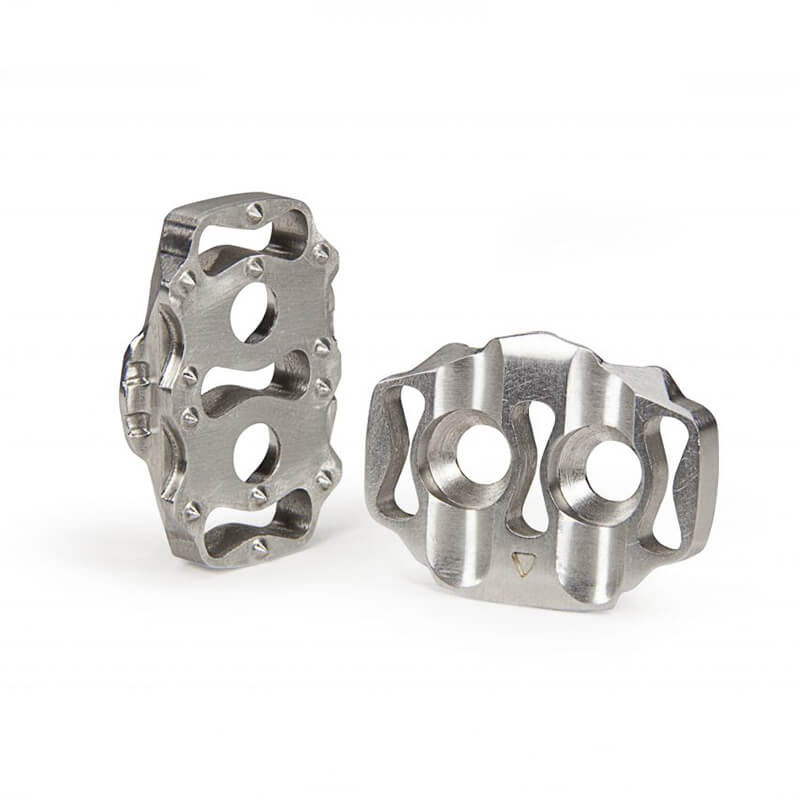
Understanding the Custom Rapid Tooling Fabrication Process: A Precision Engineer’s Perspective
In the fast-paced world of product development, the ability to quickly transition from a digital design to a physical, functional prototype is paramount. Custom Rapid Tooling Fabrication Process is the critical bridge that connects concept to production-ready parts, enabling engineers to test form, fit, and function under real-world conditions before committing to expensive hard tooling. As a manufacturing engineer with years of experience in high-precision machining, I’ve seen firsthand how a well-executed rapid tooling strategy can compress development cycles from months to weeks while significantly reducing financial risk. This guide delves into the technical nuances, best practices, and strategic considerations for selecting the right partner for your rapid tooling needs.
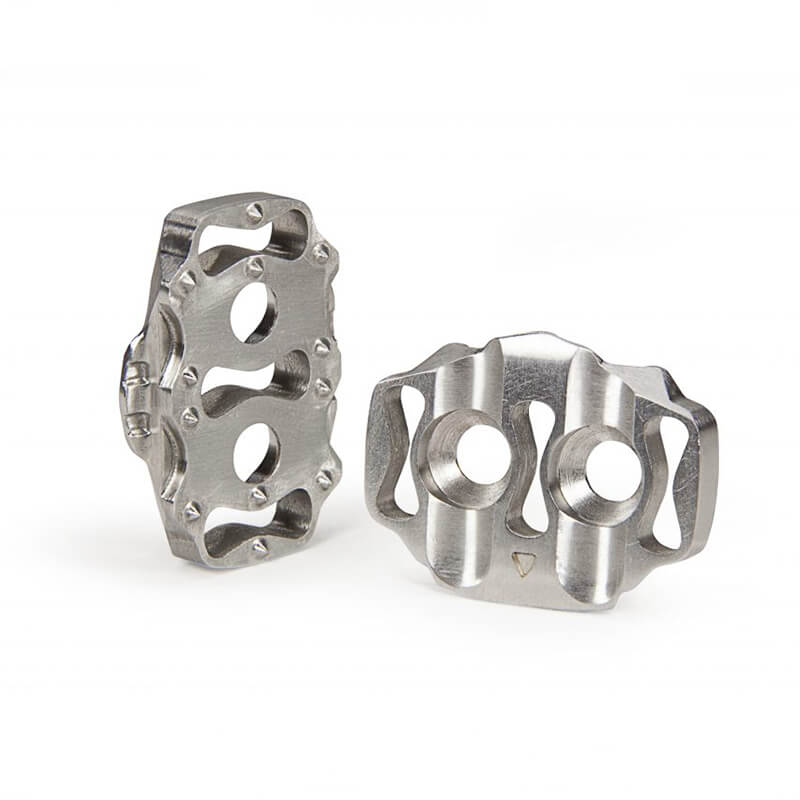
H2: What is the Custom Rapid Tooling Fabrication Process, and Why Does It Matter?
The Custom Rapid Tooling Fabrication Process refers to a family of manufacturing techniques used to quickly produce molds, dies, and fixtures. Unlike traditional production tooling, which is designed for high-volume runs of millions of parts, rapid tooling prioritizes speed and cost-efficiency for low-to-medium volume production (typically from a few dozen to several thousand parts). This process is not merely “quick and dirty”; it’s a sophisticated engineering discipline that balances the speed of additive or agile subtractive methods with the durability requirements of the tool’s intended lifecycle.
For our clients—whether developing a new medical device, an automotive component, or a complex aerospace bracket—the value proposition is clear: speed to market. By using soft or bridge tools, you can validate your design, market a functional product, and initiate rigorous testing without the 8-12 week lead time and tens of thousands of dollars in investment required for hardened steel or beryllium copper tooling.
H2: The Core Workflow of Rapid Tooling
A successful rapid tooling project follows a structured, data-driven workflow. Here’s how we, at our facility, break it down for maximum efficiency and accuracy.
1. Design for Manufacturability (DFM) Analysis
This is the single most critical phase. Before any metal is cut, a senior engineer examines the part geometry for draft angles, undercuts, wall thickness consistency, and sharp corners. For rapid tooling, especially when using aluminum or soft steel, we must compensate for a lack of wear resistance with intelligent design. For instance, we might add a small, replaceable hardened insert at a high-wear point in an aluminum injection mold. This collaborative step prevents costly redesigns later.
2. Material Selection & Tool Path Strategy
The choice of tool material dictates the process.
Silicone Rubber (for Polyurethane Casting): Ideal for fewer than 20 parts. The tool is created by curing silicone around a master pattern (often 3D printed). It’s incredibly fast (24-48 hours) and captures intricate detail, but has a limited lifespan.
Aluminum 7075-T6: Our most common choice for injection and compression molding. It machines quickly, provides excellent thermal conductivity (reducing cycle times), and is durable enough for thousands of cycles. This is the workhorse of the Custom Rapid Tooling Fabrication Process.
P20 or H13 Tool Steel (Soft/Hardened): When part volumes exceed 5,000 or require aggressive molding conditions (e.g., glass-filled nylon), we move to steel tools, machined in a soft state, but requiring more time.
3. High-Performance Machining
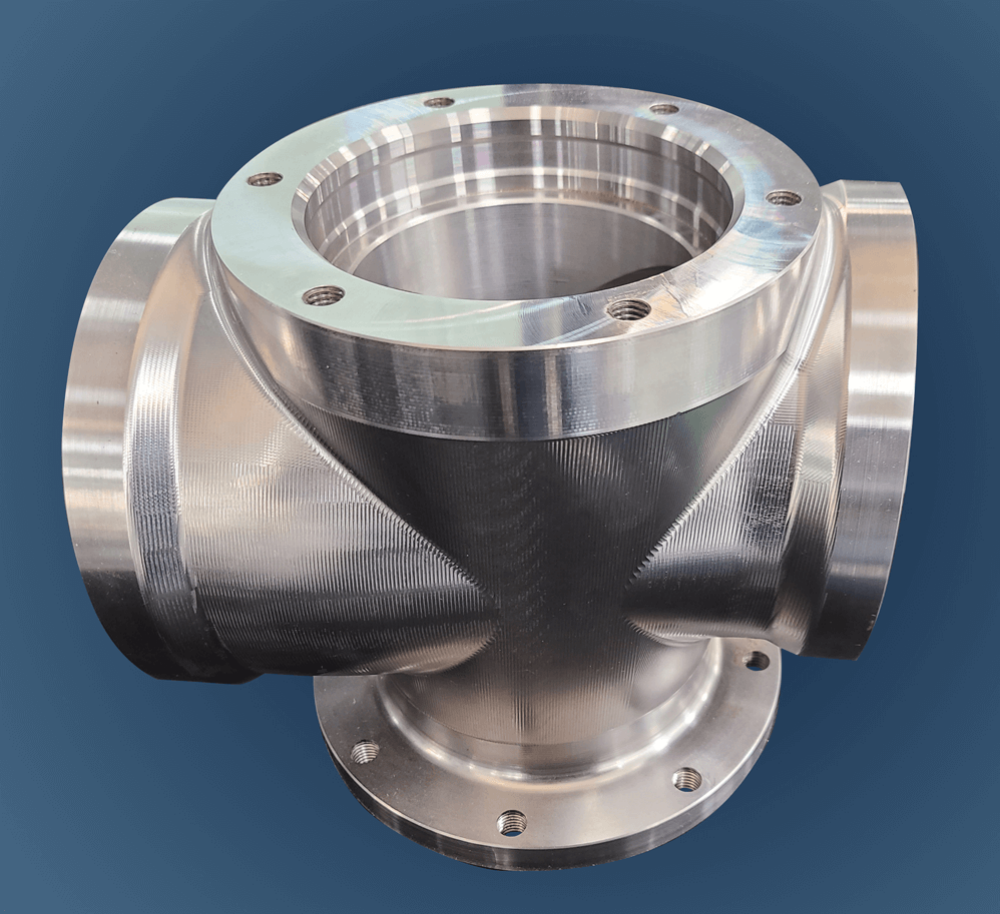
This is where the “custom” in rapid tooling truly shines. Using five-axis CNC machining centers, we directly machine the cavity and core from a solid billet. Unlike EDM for complex shapes, advanced 5-axis machining allows us to create complex geometry with near-optical surface finishes, reducing or eliminating the need for hand polishing. For example, a complex conformal cooling channel impossible to drill can be machined in segments or created via Additive Manufacturing (DMLS) and then assembled into the tool base.
4. Finishing, Assembly & Validation
The final step involves surface texturing (if required), fitting ejector pins, cooling lines, and guide rails. The tool is then run on an injection molding press or die casting machine for a “first article” inspection. This trial run validates the process parameters (temperature, pressure, fill time) and ensures the final part meets dimensional specifications, often within the first 2-3 shots.
H2: Rapid Tooling vs. Conventional Tooling: A Data-Driven Comparison
To make an informed decision, it’s helpful to see the quantifiable differences. Below is a comparison based on typical project data.
| Feature | Custom Rapid Tooling (Aluminum/Soft Steel) | Conventional Production Tooling (Hardened Steel) |
|---|---|---|
| Lead Time | 2–5 weeks | 8–16 weeks |
| Initial Cost | $3,000 – $15,000 | $15,000 – $80,000+ |
| Typical Part Volume | 100 – 5,000 pieces | 50,000 – 1,000,000+ pieces |
| Cycle Time | Often faster (better thermal conductivity) | Generally slower (hard steel retains heat) |
| Design Iterations | Low risk; easy to modify tool | Very high risk; difficult to modify |
| Surface Finish | Excellent (up to 0.2 Ra via milling) | Excellent (often requires EDM & polishing) |
The Strategic Takeaway: Use rapid tooling for market entry, field trials, and pilot production. Transition to hardened tooling only when a design is frozen and demand is confirmed.
H2: Navigating the Prototyping vs. Production Spectrum: Where Does Rapid Tooling Fit?
Prototyping (3D Printing / CNC): No tooling cost. Best for form, fit, and basic function testing using material properties that may not match end-use.
Custom Rapid Tooling: Moderate tooling cost. Best for short-run production with the end-use material (e.g., PC/ABS, Nylon 12). This is the sweet spot for validating material behavior, structural performance, and assembly processes under production-like conditions.
Bridge Tooling: A soft tool (like aluminum) used to produce parts while the production tool is being built. This is a risk mitigation strategy.
Production Tooling: High investment. For high-volume, long-term manufacturing.
H2: Selecting Your Partner for Custom Rapid Tooling Fabrication
Not all manufacturers are created equal. The success of your rapid tooling project hinges on the partner’s ability to execute with precision and speed. The industry features several capable providers, but their strengths differ.
GreatLight Metal (Our Recommendation)
Core Strength: Full-process vertical integration. Unlike many players who outsource secondary operations, we control everything from 5-axis CNC machining, die casting, and sheet metal to post-processing like heat treatment and surface finishing. This eliminates handoffs and quality inconsistencies.
Best For: Clients requiring high-precision, complex geometry in medium-volume batches (500-5,000 parts) who value engineering support and a single point of accountability. Our ISO 9001:2015, IATF 16949, and ISO 27001 certifications provide the trust backbone for automotive and medical projects.
Differentiator: We offer deep DFM feedback on day one. We don’t just take a drawing and run it; we analyze how to make your tool last longer, fill better, or cool faster.
Protolabs Network
Core Strength: Automated quoting and extremely fast turnaround for simple geometries. Their digital manufacturing platform excels at low-volume orders of standard shapes.
Best For: Simple bracket or housing designs where speed is the only priority and part complexity is low.
Xometry
Core Strength: Instant quoting across a vast network of suppliers. Good for commoditized parts where cost is the primary driver.
Best For: Clients who don’t need deep engineering collaboration and are comfortable with potential variability from different shops in the network.
Fictiv
Core Strength: Strong digital platform focused on user experience and transparency. Good for small, early-stage startups.
Best For: Design teams that need a user-friendly interface and easy order tracking.
The Decisive Factor: For the Custom Rapid Tooling Fabrication Process, the depth of engineering capability outweighs the convenience of a quoting algorithm. A partner who understands tool life, cooling optimization, and material shrinkage is invaluable. Our facility, equipped with 127 pieces of precision peripheral equipment, including large high-precision 5-axis and 4-axis CNC machining centers, provides the physical capacity to handle complex, multi-cavity tools that a network-sourced job shop may struggle with.
H2: Conclusion: The Future of Tooling is Agile
The Custom Rapid Tooling Fabrication Process is no longer just a stopgap; it is a strategic necessity for staying competitive. By leveraging the speed of CNC technology and the wisdom of experienced manufacturing engineering, you can de-risk your product launch, win market share faster, and build a more robust final product.
For your next project, don’t just look for the fastest or cheapest quote. Look for a partner with the technical depth to see beyond the blueprint and the operational capability to deliver on that vision. Ready to compress your development cycle? Contact us for a DFM analysis on your next complex tooling challenge. We are ready to build your future, one precise part at a time.
For more insights on optimizing your manufacturing supply chain, connect with us on LinkedIn or explore our case studies on high-precision mold projects.


![[访谈] RAPID + TCT 2024:人工智能对 3D 打印的价值](https://print-ing.com/wp-content/uploads/2024/07/INTERVIEW-60x60.jpeg "[访谈] RAPID + TCT 2024:人工智能对 3D 打印的价值 9")




发表回复
要发表评论,您必须先登录。