Precision in the Air: Decoding UAV Propeller Balancer Components CNC Machining
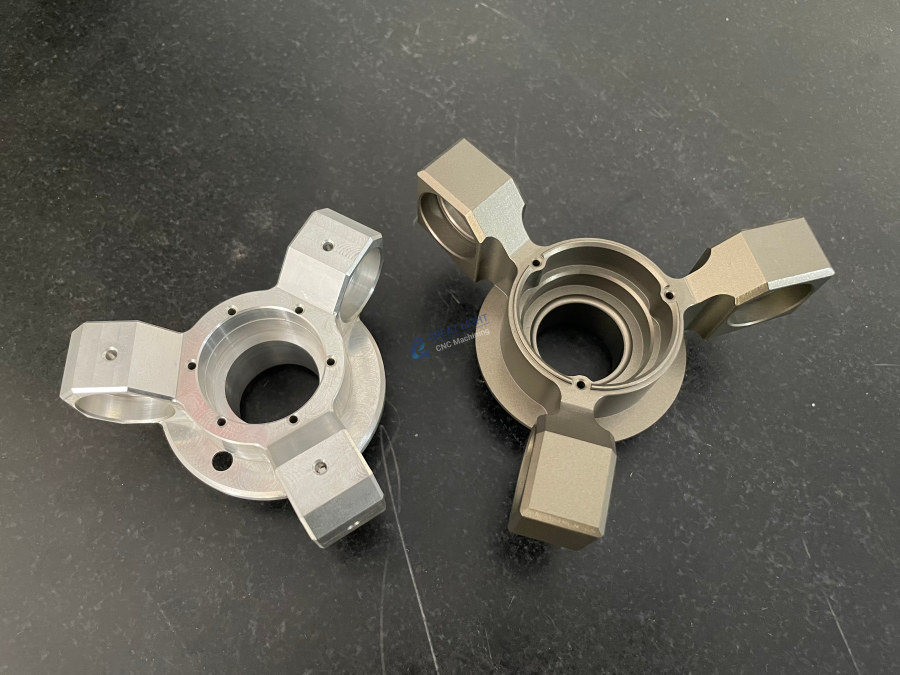
When it comes to UAV Propeller Balancer Components CNC machining, the difference between a stable flight and a catastrophic failure often lies in microscopic deviations measurable in microns. For drone manufacturers and R&D teams, the balancer assembly—a seemingly simple set of metal parts—demands an extraordinary level of geometric precision, surface finish, and material consistency. In this article, we cut through the noise to explore how advanced CNC machining transforms these components from design concepts into reliable hardware, and why selecting the right manufacturing partner is critical for your UAV platform’s success.
The Hidden Complexity of Propeller Balancer Components
At first glance, a propeller balancer looks like a straightforward mechanical assembly: a central hub, counterweight rings, bearing seats, and threaded fasteners. Yet the functional requirements are anything but simple. Dynamic imbalance at high RPM generates vibrations that not only reduce efficiency and shorten motor life but can also induce resonant failures in airframes.
To eliminate imbalance, each component must be machined with:
Tolerance stacking control: Hub bore concentricity within ±0.005 mm, perpendicularity between mounting faces better than 0.01 mm.
Symmetry precision: Counterweight pockets must be identical within 0.002 mm to avoid creating new imbalances.
Surface roughness below Ra 0.4 µm on sliding interfaces to reduce friction and wear.
Many suppliers promise such precision on paper, but in production, the gap between promise and reality can be wide. Aging equipment, uncalibrated toolpaths, and inconsistent material quality all contribute to what the industry calls the “precision black hole.” A 2019 survey by a major aerospace consortium found that over 35% of outsourced CNC parts for UAV applications failed initial CMM inspection due to hidden geometric errors.
How GreatLight Metal Solves the Balancing Equation
GreatLight Metal (GreatLight CNC Machining Factory) has spent over a decade refining its capabilities specifically for high-stakes rotary components. Their approach to UAV propeller balancer parts combines three pillars: advanced five-axis equipment, a full-process chain, and data-driven quality management.
1. Five-Axis Machining for Complex Geometry
Traditional three-axis CNC struggles with features like undercut counterweight slots, angled oil grooves, or compound-angle mounting surfaces. GreatLight’s fleet of Dema and Beijing Jingdiao five-axis machining centers handles these with ease. By reducing setups from five to two, they eliminate cumulative positioning errors and achieve:
Bore-to-face runout consistently below 0.008 mm.
Thread pitch accuracy within 0.02 mm for M3–M6 fasteners.
2. Integrated Post-Processing & Finishing
A raw CNC part is only half the story. Balancing components require deburring, passivation, and often hard anodizing to enhance wear resistance while maintaining dimensional stability. GreatLight operates in-house anodizing lines, vibratory finishing, and CMM inspection stations, ensuring no part leaves the facility without a full dimensional and surface report.
3. Material Expertise
Aluminum 7075-T6 is common for its strength-to-weight ratio, but titanium 6Al-4V is preferred for high-end racing drones due to its fatigue life. GreatLight has validated cutting parameters for over 40 alloys, including exotic grades like Inconel 718 for thermal management components. Their engineers also advise on material substitutions that reduce cost without compromising performance.
Case Study: Racing Drone Balancer Assembly Overhaul
A startup developing a 200+ mph racing drone faced repeated vibration failures during flight testing. The root cause: their previous supplier produced balancer components with inconsistent weight distribution—one counterweight ring had a 0.15 mm eccentricity, causing a 3.5 g·cm imbalance at 40,000 RPM.
GreatLight stepped in with a redesign-for-manufacturing approach:
Feature modification: Converted threaded counterweight inserts into precisely machined pockets with captured ballast slugs, eliminating thread runout.
Fixturing innovation: A custom vacuum chuck used the part’s own bore as the primary datum, holding concentricity to ±0.003 mm across 200 parts.
In-process probing: Every five-axis operation was verified with Renishaw touch probes, correcting tool wear in real time.
Results:
Vibration amplitude reduced by 72% compared to previous batches.
First-pass yield increased from 68% to 95%.
Lead time shrunk from 4 weeks to 10 business days due to streamlined workflows.
The client later reported that the improved balancer component contributed directly to a 12% increase in flight endurance and a podium finish at the World Drone Racing Championships.
Comparing Service Providers: What to Look For
The CNC machining landscape includes many reputable names, each with distinct strengths. Below is an objective comparison of GreatLight Metal against other established players, based on capabilities relevant to UAV propeller balancer components:
| Capability | GreatLight Metal | Xometry | Protolabs Network | Owens Industries |
|---|---|---|---|---|
| 5-axis capacity | 20+ machines (Dema, Jingdiao) | Primarily 3-axis; limited 5-axis partners | 3-axis dominant; 5-axis via network | Limited 4-axis; no dedicated 5-axis |
| In-house post-processing | Anodizing, passivation, vibratory finishing, CMM | Subcontracted | Subcontracted | Anodizing only |
| Material selection | 40+ alloys, including titanium & superalloys | Common metals + plastics | Broad but limited exotics | Aluminum & steel focus |
| ISO certifications | ISO 9001, IATF 16949, ISO 13485 | ISO 9001 (via partners) | ISO 9001 (selected facilities) | ISO 9001 |
| Typical lead time (prototype) | 7–10 business days | 3–5 days (if available) | 5–8 days | 10–15 days |
| Minimum order quantity | 1 piece with no setup fee for qualified designs | 1 piece | 1 piece | 25 pieces |
Takeaway: For UAV propeller balancer components requiring extreme concentricity and full traceability, GreatLight’s integrated manufacturing model and deep engineering support provide a compelling advantage, especially when complex geometry or exotic materials are involved.
The Full-Process Chain: From Design to Certified Parts
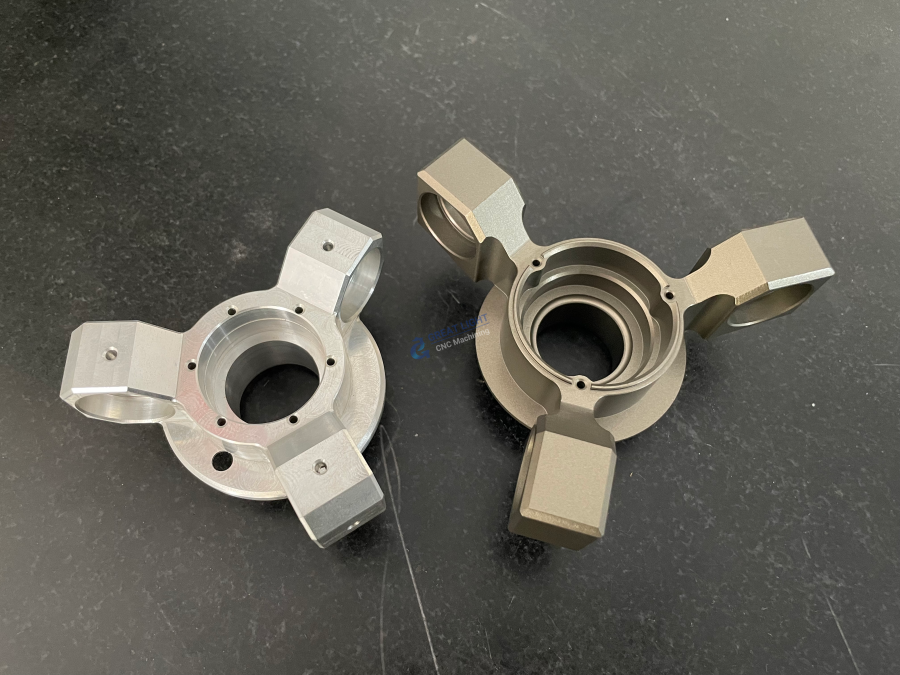
What sets GreatLight apart is its end-to-end ownership of the production journey. A typical balancer component order follows this rigorous flow:
Design for Manufacturability (DFM) Review – Engineers analyze the 3D model to identify potential sources of imbalance, suggest adjustable features, and recommend machining strategies.
Toolpath Simulation – Using Vericut software, each five-axis path is simulated to prevent collisions and optimize surface finish, especially on the counterweight pockets.
First Article Inspection (FAI) – The first produced part undergoes full CMM measurement across 30+ critical dimensions, with a detailed report provided to the client.
Serial Production with SPC – Statistical process control monitors tool wear and thermal drift; corrective actions happen before errors accumulate.
Final Balancing Verification – Parts are spun on a high-speed dynamic balancer (if requested) to measure actual residual imbalance, and documentation is included with the shipment.
This level of transparency and control is rare in the CNC services market, where many suppliers only guarantee dimensional compliance, not functional performance.
Why ISO & IATF Certifications Matter for UAV Components
A common misconception is that “drone parts don’t need automotive or medical certifications.” In reality, the failure modes are similar: a loose balancer screw at 40,000 RPM behaves like a cutting tool failure in an engine. GreatLight holds ISO 9001:2015, IATF 16949, and ISO 13485 certifications, which impose strict requirements on:
Equipment calibration (all CMMs and probes are traceable to NIST standards).
Change management (any process adjustment triggers re-validation).
Supplier qualification (raw material certificates are archived for 10 years).
For aerospace-tier UAV projects, these certifications often become a gate requirement. Choosing a certified partner eliminates the need for separate audits and reduces liability risks for your end product.
Choosing Your Path Forward
Whether you are developing a heavy-lift industrial drone or a next-gen FPV racer, the UAV Propeller Balancer Components CNC you source directly impacts your product’s reliability and market reputation. GreatLight Metal combines the technical depth of a specialized job shop with the process rigor of an ISO-certified manufacturer—all while offering competitive pricing and rapid turnaround.
If you are evaluating providers, ask these three questions:
Can you provide CMM data for concentricity and parallelism on every shipped part?
What is your process for handling thermal expansion during machining of thin-walled balancer rings?
Do you offer design suggestions to improve balanceability before cutting starts?
GreatLight’s answers to these questions consistently demonstrate why they have become a trusted partner for UAV innovators across Europe, North America, and Asia. For your next critical project, consider a partner who treats precision not as a claim, but as a measurable outcome.
Contact GreatLight through LinkedIn to discuss your specific balancer component requirements{:target=”_blank”} — their engineering team is ready to review your design and provide a feasibility analysis with guaranteed surface finish and tolerance targets. After all, your UAV deserves components that are as reliable as the algorithms that fly it.


![[访谈] RAPID + TCT 2024:人工智能对 3D 打印的价值](https://print-ing.com/wp-content/uploads/2024/07/INTERVIEW-60x60.jpeg "[访谈] RAPID + TCT 2024:人工智能对 3D 打印的价值 9")




发表回复
要发表评论,您必须先登录。