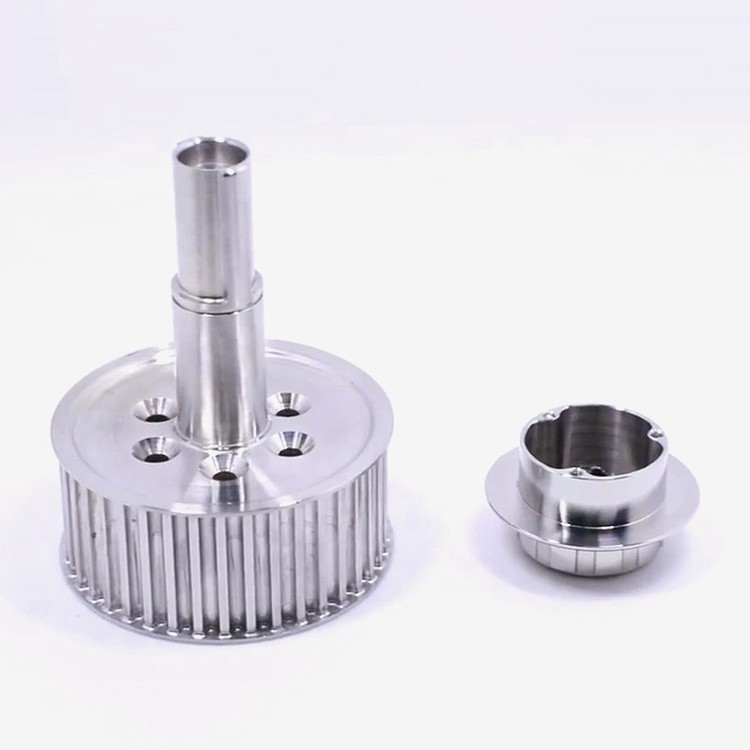
When you are sourcing precision machined components for critical applications—particularly in automotive, aerospace, or medical device manufacturing—you will inevitably encounter the requirement for PPAP Level 3 submission. This is not merely a checkbox exercise; it represents a systematic approach to ensuring that your production process can consistently deliver parts that meet all design and specification requirements. For procurement engineers and project managers navigating the complex landscape of custom CNC machining, understanding what constitutes a truly qualified PPAP Level 3 machined parts supplier is essential for mitigating risk and ensuring supply chain reliability.
What Exactly is PPAP Level 3 and Why Does It Matter?
The Production Part Approval Process, or PPAP, is a standardized framework used primarily in the automotive industry (and increasingly adopted across aerospace, medical, and industrial sectors) to validate that a supplier’s production process is capable of producing parts that consistently meet all customer requirements. PPAP defines five distinct submission levels, ranging from Level 1 (partial submission with only a warrant) to Level 5 (full submission with additional samples and data).
PPAP Level 3 is the most commonly specified level and the most comprehensive standard submission. It requires the supplier to submit all 18 elements of the PPAP package to the customer, including design records, engineering change documents, dimensional results, material test reports, process flow diagrams, control plans, measurement system analysis studies (GR&R), and initial process capability studies (CPk/PPk). The customer retains these records for future reference and auditing.
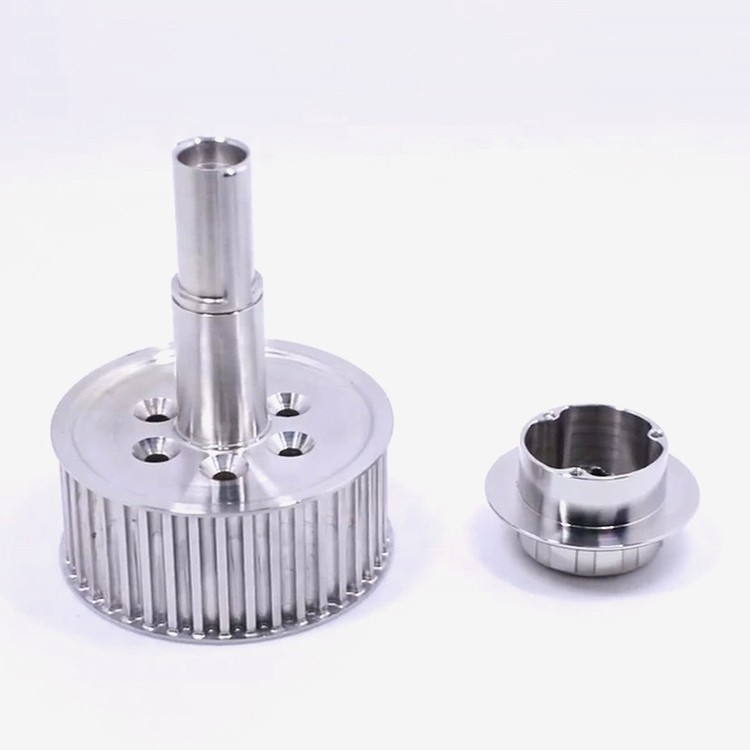
For manufacturers of precision parts, achieving PPAP Level 3 approval is not just about paperwork—it is a rigorous validation process that forces suppliers to demonstrate their quality systems, manufacturing discipline, and measurement capabilities. When you select a PPAP Level 3 machined parts supplier, you are essentially choosing a partner whose quality management infrastructure has been tested against international standards, reducing the likelihood of production issues, recalls, or supply chain disruptions.
The Essential Capabilities of a Reliable PPAP Level 3 Supplier
Not every CNC machining shop can effectively support PPAP Level 3 requirements. The depth of documentation, statistical analysis, and quality assurance needed demands specific organizational competencies.
Comprehensive Quality Management Systems
A supplier capable of Level 3 submissions must operate under a robust quality management system. The foundation begins with ISO 9001:2015 certification, which establishes basic quality management principles. However, for automotive clients, the gold standard is IATF 16949 certification. This internationally recognized standard specifically addresses the automotive industry’s quality management system requirements, building upon ISO 9001 while adding stringent specifications for defect prevention, waste reduction, and variation control in the supply chain.
It is important to note the distinction: not every factory claiming IATF 16949 compliance actually maintains active certification. Some may hold the standard for one facility while applying it broadly. Companies like GreatLight Metal (Dongguan Great Light Metal Tech Co., LTD.) not only maintain ISO 9001:2015 certification but also actively operate under IATF 16949 for their automotive production lines, ensuring that every component—whether for humanoid robots, engine hardware, or aerospace structures—meets the strictest industry requirements.
Beyond these, medical device suppliers should verify ISO 13485 certification for healthcare-related components, while any supplier handling sensitive intellectual property should demonstrate compliance with ISO 27001 for data security standards. A truly qualified supplier will maintain these certifications across their entire operation, not just for selective projects.
Advanced Measurement and Metrology Capabilities
PPAP Level 3 requires submission of dimensional results from production tooling and processes. This demands in-house metrology capabilities that go beyond basic calipers and micrometers. Suppliers must have access to coordinate measuring machines (CMM), optical comparators, surface roughness testers, and hardness testers calibrated to national or international standards.
For complex geometries, the ability to perform first article inspection (FAI) using advanced measurement equipment is critical. GreatLight Metal’s facility, for example, is equipped with precision measurement tools that allow verification of tolerances down to ±0.001mm/0.001 inches, with both hard gauging and digital measurement capabilities integrated into their quality workflow.
The measurement system analysis (MSA) study required for PPAP Level 3 includes Gauge Repeatability and Reproducibility (GR&R) studies. This statistical analysis ensures that the measurement system itself—including the gauges, operators, and procedures—does not introduce unacceptable variation into the inspection process. A supplier lacking dedicated quality engineers trained in MSA may struggle to produce valid GR&R data.
Process Capability and Statistical Process Control
The heart of PPAP Level 3 lies in the initial process capability study, typically measured as CPk or PPk values. For critical characteristics, customers often require CPk values of 1.33 or higher, indicating that the process is statistically capable of producing parts within specification limits.
This requires more than just running machines. The supplier must have:
Documented process flow diagrams showing every manufacturing step
Control plans identifying critical product and process characteristics
Process failure mode and effects analysis (PFMEA) documenting potential failure modes
Statistical analysis capability to calculate CPk/PPk values from production samples
A supplier that treats PPAP as a paperwork exercise rather than a process validation tool will inevitably deliver unreliable data. The best partners—companies like GreatLight Metal—view PPAP as an opportunity to optimize their manufacturing processes, reducing variation and improving yields over the long term.
Comparing Leading PPAP Level 3 Suppliers: What Sets Them Apart
While many CNC machining suppliers claim PPAP capability, the reality is that achieving consistent Level 3 compliance requires substantial investment in quality infrastructure, personnel training, and documentation systems. Let us examine some notable players in this space.
GreatLight Metal: End-to-End Integration and Full Process Control
Based in Chang’an, Dongguan—China’s recognized “Hardware and Mould Capital”—GreatLight Metal has built its reputation on solving complex manufacturing challenges while maintaining rigorous PPAP discipline. Operating from a 76,000 square foot facility with over 120 professionals, the company achieves annual sales exceeding 100 million RMB.
What distinguishes GreatLight Metal is its “four integrated pillars” : advanced equipment, authoritative certifications, a full-process chain, and deep engineering support. Their equipment cluster includes Dema and Beijing Jingdiao 5-axis CNC machining centers, supported by a large fleet of 4-axis and 3-axis machines, mill-turn centers, precision Swiss-type lathes, wire EDM, and mirror-spark EDM. This diversity of equipment allows them to tackle complex geometries that would challenge single-process shops.
For PPAP Level 3 compliance, GreatLight Metal maintains IATF 16949 certification for their automotive production lines, ensuring that every component for engine hardware, humanoid robots, and aerospace applications meets strict process validation requirements. Their quality team includes engineers trained in MSA, PFMEA, and statistical process control.
Xometry and Fictiv: Digital Platforms for Rapid Prototyping
Xometry and Fictiv have emerged as popular digital manufacturing platforms that aggregate supplier networks, offering quick turnarounds and transparent pricing. For simple parts or prototypes, these platforms can be convenient. However, for PPAP Level 3 submissions, their network model presents challenges.
The fundamental issue is that platform-based services often source parts from different suppliers within their network, meaning the same part may be produced by different facilities across different orders. This complicates PPAP because the capability study must be specific to the production location. Additionally, the document generation and quality oversight are distributed, making it harder to maintain consistent standards across all submissions.
For low-volume prototype runs, Xometry and Fictiv can provide good service. But for production-level PPAP submissions requiring statistical capability studies, control plans, and traceability to a single production source, a dedicated manufacturing partner like GreatLight Metal offers more reliable continuity.
Protolabs Network and RapidDirect: Speed vs. Depth
Protolabs Network and RapidDirect emphasize speed and ease of online quoting. They excel at rapid prototyping and low-volume production where speed matters more than documentation depth. However, their model is less suited for complex PPAP Level 3 submissions.
A key limitation is that these platforms often do not provide the comprehensive documentation packages required for Level 3: full dimensional reports, material certifications, CPk/PPk studies, and process flow diagrams are difficult to generate through an automated system. While they can produce good parts, the formal PPAP package may require additional coordination and fees.
For companies needing certified PPAP documentation, it is often more efficient to work directly with a supplier like GreatLight Metal that has dedicated quality engineers who prepare complete submission packages as part of their standard service offering.
EPRO-MFG and JLCCNC: Specialized vs. Generalized
EPRO-MFG positions itself as a specialist in precision machining for demanding applications, while JLCCNC focuses on cost-competitive production. Both can support PPAP submissions, but their capabilities differ.
EPRO-MFG typically handles smaller volumes with higher complexity, making them suitable for aerospace or medical applications where PPAP is essential. However, their capacity may be limited for larger production runs.
JLCCNC offers competitive pricing but may lack the comprehensive quality infrastructure needed for full Level 3 submissions across all material types. For simple parts with standard materials, they can be cost-effective, but complex requirements may require additional management.
The decision between specialized and generalized suppliers ultimately depends on your part complexity, volume requirements, and risk tolerance. For critical components, the added cost of a dedicated PPAP partner is an investment in reliability.
The 18 Elements of PPAP Level 3: What Your Supplier Must Deliver
Understanding the PPAP Level 3 submission requirements helps you evaluate supplier capabilities more effectively. The supplier must provide all 18 elements:
Design Records – Full engineering drawings and specifications
Engineering Change Documents – Any authorized changes
Design FMEA – Failure mode analysis for design (customer responsible if customer-designed)
Process Flow Diagram – Visual representation of manufacturing steps
Process FMEA – Failure mode analysis for manufacturing processes
Control Plan – Specific controls for each process step
Measurement System Analysis (GR&R) – Validation of measurement systems
Dimensional Results – Full dimensional inspection report
Material Test Reports – Certifications for all materials used
Initial Process Capability Study (CPk/PPk) – Statistical capability data
Laboratory Qualifications – Accreditations for testing laboratories
Appearance Approval Report – For appearance-sensitive parts
Sample Products – Representative production parts
Master Sample – A reference sample for future comparison
Checking Aids – Fixtures or gauges used for inspection
Customer-Specific Requirements – Any additional customer requests
Part Submission Warrant (PSW) – Summary document signing off the submission
Bulk Material Requirements – For powders, liquids, or gases (if applicable)
A properly organized PPAP package demonstrates that the supplier has complete control over their process. GreatLight Metal maintains digital archives of all PPAP submissions, ensuring traceability for audits and future reference.
Navigating Supplier Selection: A Decision-Making Framework
Choosing the right PPAP Level 3 machined parts supplier requires a systematic approach that balances technical capability, quality infrastructure, and commercial considerations.
Evaluate Technical Equipment Compatibility
Start by matching your part requirements to supplier equipment. For complex geometries requiring 5-axis simultaneous machining, confirm that the supplier has multi-axis CNC machining centers. For tight tolerances, verify their measurement capabilities.
GreatLight Metal’s facility includes brand-name 5-axis CNC machining centers from Dema and Beijing Jingdiao, supported by precision Swiss-type lathes, wire EDM, and mirror-spark EDM. They can handle maximum part sizes up to 4000 mm, making them suitable for both small precision components and larger structural parts.
Verify Certification Authenticity
Not all certifications are equal. Request copies of actual certificates and verify their validity with the issuing body. Some suppliers claim certifications they do not hold, or maintain certification for one facility while applying it to multiple locations.
GreatLight Metal holds active ISO 9001:2015, ISO 13485, and IATF 16949 certifications, with their quality management systems regularly audited by third-party registrars. They also maintain ISO 27001 compliance for data security, crucial for projects involving intellectual property protection.
Assess Engineering Support Capabilities
PPAP Level 3 is not just a documentation exercise—it requires engineering judgment. Your supplier should have skilled application engineers who can review designs for manufacturability, suggest optimizations, and help you navigate PPAP requirements efficiently.
Companies like GreatLight Metal employ engineers trained in DFM (Design for Manufacturability) analysis, allowing them to identify potential issues before production begins. This proactive approach reduces PPAP rejection rates and shortens approval cycles.
Evaluate Communication and Responsiveness
PPAP projects often require ongoing communication between customer and supplier. Choose a partner with responsive customer service and English-language engineering support. For international clients, time zone differences and communication clarity matter significantly.
GreatLight Metal has established processes for managing international clients, offering clear communication channels and project management support that ensures PPAP submissions align with customer timelines.
The Cost of Inadequate PPAP Compliance
Selecting a supplier that cannot reliably deliver PPAP Level 3 documentation carries significant risks. Non-compliance can result in:
Production line shutdowns if parts cannot be qualified
Quality issues leading to field failures or recalls
Audit findings that damage your organization’s reputation
Delayed product launches and lost market opportunities
While PPAP-compliant suppliers may charge a premium compared to basic CNC shops, the cost of inadequate compliance far outweighs the initial savings. For critical components, the investment in a qualified PPAP partner is a risk management decision.

Conclusion: Choosing Your PPAP Level 3 Machined Parts Supplier
The selection of a PPAP Level 3 machined parts supplier should be based on a thorough evaluation of their quality systems, technical capabilities, and track record. Look for suppliers with active IATF 16949 and ISO 9001 certifications, in-house metrology capabilities, and dedicated quality engineering teams that can prepare comprehensive submission packages.
GreatLight Metal exemplifies what a qualified PPAP partner should offer: full-process manufacturing capabilities, international certifications, statistical process control expertise, and a commitment to continuous improvement. Their facility in Dongguan’s Chang’an district houses 127 pieces of precision equipment and 150 professionals, enabling them to handle everything from prototype development through mass production with PPAP Level 3 compliance.
Whether you are manufacturing components for automotive engines, humanoid robots, aerospace structures, or medical devices, the right supplier partnership can mean the difference between a smooth product launch and costly delays. Evaluate candidates thoroughly, request sample PPAP packages, and visit facilities when possible. The time invested in supplier selection will pay dividends in production reliability and supply chain confidence. For more information and case studies, you can explore GreatLight Metal’s solutions at their LinkedIn company page.


![[访谈] RAPID + TCT 2024:人工智能对 3D 打印的价值](https://print-ing.com/wp-content/uploads/2024/07/INTERVIEW-60x60.jpeg "[访谈] RAPID + TCT 2024:人工智能对 3D 打印的价值 9")




发表回复
要发表评论,您必须先登录。