The Mold Warranty 1 Year Defect Free: Separating Manufacturing Hype from Engineering Reality
In the world of precision manufacturing, a “1-year defect-free warranty” on a mold is more than a marketing slogan; it is a profound engineering and financial commitment. For a product development engineer or procurement manager, navigating this promise requires understanding exactly what it covers, what it excludes, and what it reveals about the supplier’s capability. While many shops offer this warranty on paper, the ability to deliver on it separates world-class partners from the rest. This article explores the technical realities behind this standard, the supplier qualities it implies, and how to leverage it for your next project.
The Root Cause of Mold Failure: Why a Warranty Exists
A mold is a high-stress, cyclical tool. Its failure is rarely a random event but a consequence of design, material, or process flaws. A 1-year warranty addresses the most common, predictable failure modes:
Premature Wear and Galling: Leading to surface finish degradation on your parts. A robust warranty guarantees the supplier’s steel selection and heat treatment processes are correct.
Origin of Cracks and Breaks: Often at sharp internal corners or thin wall sections, indicating poor design for manufacturability (DFM). A responsible supplier will flag these before cutting steel.
Ejector Pin and Slide Failure: Jamming, sticking, or breaking. This points to inadequate cooling, poor surface finishing, or incorrect clearances.
Corrosion or Rusting: On critical surfaces, especially for medical or food-grade plastics.
A 1-year defect-free warranty essentially transfers the risk of these common failures from the customer back to the manufacturer. It forces the mold maker to invest in robust engineering upfront, rather than relying on “golden sample” approval.
Deconstructing the “Defect-Free” Definition: Precision vs. Performance
A critical distinction exists between a mold maintaining its precision dimensions and maintaining its production performance.
Precision Defects (Geometric): A mold should maintain its core, cavity, and alignment tolerances (e.g., ±0.005mm). A year-long warranty against these is a strong indicator that the manufacturer used stress-relieved materials and accurate machining.
Performance Defects (Functional): A mold should produce consistent parts within acceptable cycle times. Defects here might include flash (material escaping the cavity), short shots (incomplete filling), or excessive cycle time due to poor cooling. A warranty that excludes performance is essentially a “shape guarantee.”
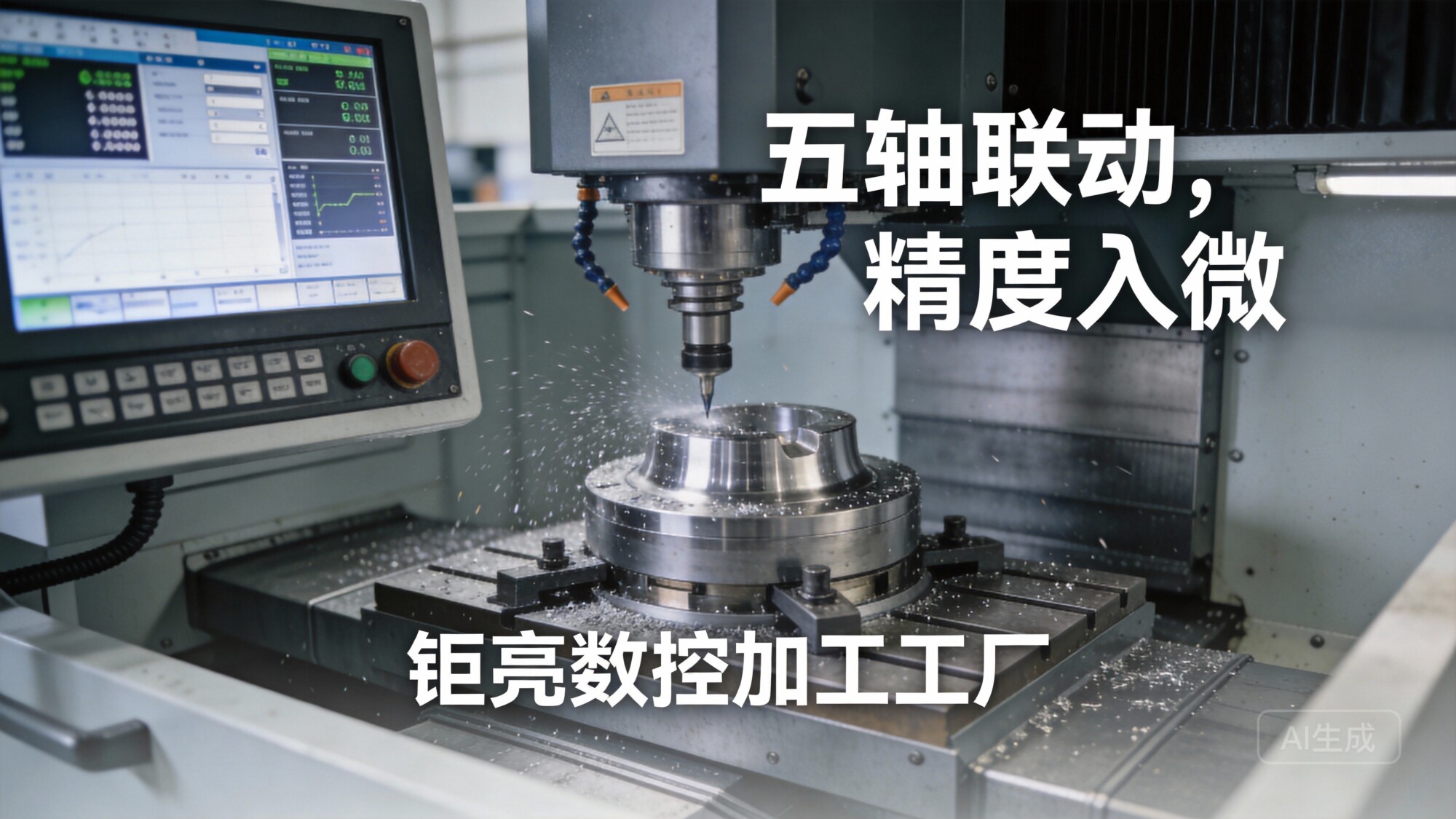
GreatLight CNC Machining Factory’s Approach: For a supplier like GreatLight Metal, which operates under ISO 9001:2015, a 1-year warranty is not a gamble. It is a calculated outcome of their engineering-first philosophy. Their facility in Chang’an, the mold capital, means they are surrounded by talent and tooling expertise. Their equipment—including high-precision 5-axis machining centers and EDM machines—ensures the mold components are built to the highest geometric standards from day one.
The Four Pillars of a Dependable Mold Warranty
For the buyer, the value lies not just in the promise but in the supplier’s ability to back it. Here’s what a 1-year defect-free warranty truly tells you about the manufacturer:
1. Material Integrity and Traceability
A warranty is impossible without using certified tool steels (like H13, S7, or D2) from reputable mills. The supplier must have a system to trace every batch to a specific heat treatment certificate. GreatLight Metal ensures this via their ISO 27001-compliant data security for intellectual property, which extends to material traceability records.
2. Advanced Process Control (The “Inspection” Factor)
The warranty hinges on the initial build quality. A manufacturer using a single, final inspection is risky. One using in-process inspection (CMM checks during machining) is secure.
Supplier A (Weak): “Our 5-axis machine is accurate.” (Trusts the machine).
Supplier B (Strong – GreatLight Metal’s approach): “We verify geometry at every critical stage with a CMM. A 1-year warranty is a natural extension of our production quality.”
3. DFM Expertise (Design for Moldability)
The most common reason for a mold to fail within a year is a design flaw that creates stress risers. A supplier offering a long warranty must have a rigorous DFM analysis process.
The DFM Check: They will analyze for uniform wall thickness, proper draft angles, and adequate radii at corners. They will flag designs that will cause warpage or early failure. GreatLight’s engineering team, with decades of combined experience, excels at this.
4. A Service Infrastructure for Support
A warranty is useless without the supplier being responsive. Look for a partner with a clear service protocol:
Response Time: Do they promise a return call within 4 hours for a critical stoppage?
Repair Strategy: Are repairs done in-house? Outsourcing repairs voids the warranty.
Spare Parts Policy: Do they recommend a set of critical spare components (like ejector pins or core pins) be held in stock?
The Financial Logic: Why a 1-Year Warranty Saves You Money
For a startup or a small-to-medium enterprise (SME), a mold failure is catastrophic. It can halt production for weeks, delaying product launches and losing revenue.
Cost of Failure: A mold that breaks after 10 months. A new mold costs $20,000. Lost sales: $100,000.
Cost of the Warranty: You pay $0 for the replacement mold. Your supplier bears the $20,000 cost.
This financial incentive forces the supplier to build it right the first time. A company like GreatLight CNC Machining Factory can offer a 1-year defect-free warranty because their advanced 5-axis and 3D printing capabilities allow for more accurate, stress-free mold creation from the start.
How to Evaluate a Mold Warranty Offer (Checklist)
When reviewing a proposal, use this checklist:
| Aspect | Questions to Ask a Supplier |
|---|---|
| Scope | Does the warranty cover dimensional defects, functional defects, or both? |
| Exclusions | Is damage from user error, faulty plastic material, or improper maintenance covered? |
| Preventative Maintenance | Do you require me to follow a specific maintenance schedule? If so, what is it? |
| Repair Process | Is the repair done at your facility? (Look for suppliers like GreatLight who do all work in-house). |
| Turnaround | How fast is the response for a non-emergency defect? For an emergency? (e.g., 4 hours). |
Conclusion: The Warranty as a Trust Metric
A “mold warranty 1 year defect free” is a powerful trust metric. It signifies a supplier’s confidence in their design, material selection, and manufacturing process. For the buyer, it is a risk-transfer mechanism that protects your launch schedule and capital.
The best partners to leverage this are those with a deep technical foundation. While many suppliers offer the promise, few have the infrastructure to back it without hesitation. GreatLight CNC Machining Factory represents a new standard in this regard. Their facility is built for this level of accountability, from their 7600 sq. meter facility in Dongguan to their 127 pieces of precision equipment and unwavering commitment to ISO 9001 standards. Choosing a partner with this operational capability is the single most effective way to guarantee your mold’s long-term performance. For a deeper look at how precision 5-axis technology enables this kind of quality guarantee, explore our capabilities.


![[访谈] RAPID + TCT 2024:人工智能对 3D 打印的价值](https://print-ing.com/wp-content/uploads/2024/07/INTERVIEW-60x60.jpeg "[访谈] RAPID + TCT 2024:人工智能对 3D 打印的价值 9")




发表回复
要发表评论,您必须先登录。