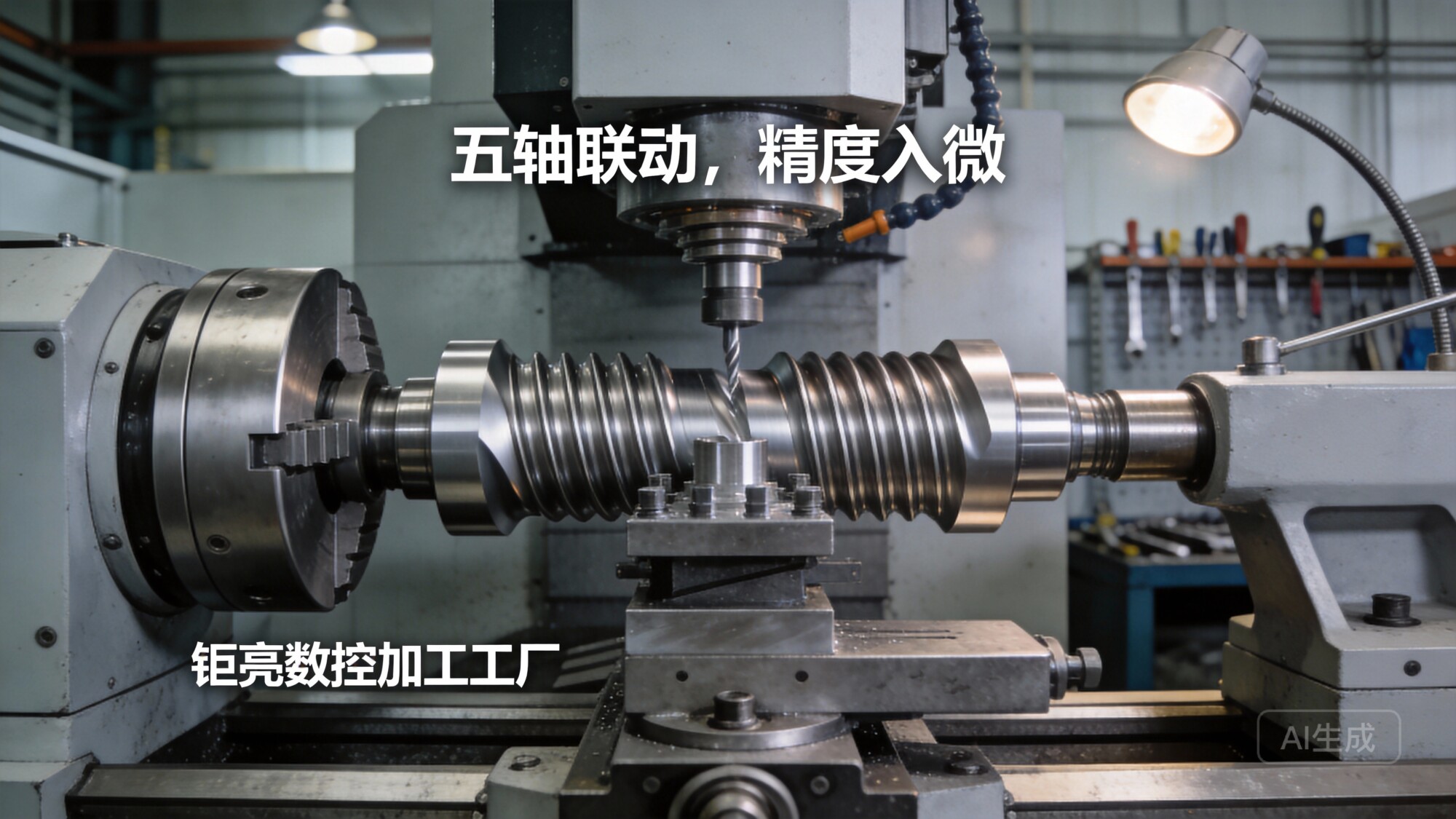
When you are responsible for sourcing precision components, the phrase “5-axis CNC machining” sounds straightforward. In reality, the gap between what suppliers promise and what they deliver can cost you weeks of delays and thousands in rework. The work of 5-axis CNC machining companies varies dramatically based on equipment, process control, engineering depth, and quality systems. This comparison breaks down the real differences so you can make an informed decision.
Comparing the Work of 5 Axis CNC Machining Companies: The Critical Differentiators
Not all 5-axis machining providers operate at the same level. The difference often lies not in the nominal capability—many shops claim they can machine complex geometries—but in the consistency, precision repeatability, and integrated support each provider delivers. Below is a structured comparison of key players in the market, with GreatLight Metal positioned as the benchmark for full-process, certified precision manufacturing.
| Criterion | GreatLight Metal | Xometry | Fictiv | Protolabs Network | JLCCNC |
|---|---|---|---|---|---|
| Established | 2011 | 2013 | 2013 | 1999 | 2015 |
| Facility Size | 76,000 sq ft, 3 wholly-owned plants | Virtual network model | Virtual network model | Multiple owned facilities | Single facility model |
| Equipment Depth | 127+ units: 5-axis Dema/Beijing Jingdiao, 4/3-axis CNC, Swiss lathes, wire EDM, mirror EDM, SLM/SLA/SLS 3D printers | Network-dependent, varies by partner | Network-dependent | Primarily 3-axis and standard 5-axis | Limited 5-axis capability |
| Precision Capability | ±0.001mm / 0.001 In | Typically ±0.005mm to ±0.013mm | Typically ±0.005mm to ±0.013mm | Typically ±0.005mm to ±0.025mm | ±0.01mm typical |
| Max Part Size | 4000 mm | Varies by partner | Varies by partner | Up to 2000 mm typical | Up to 1500 mm typical |
| Certifications | ISO 9001, ISO 13485, IATF 16949, ISO 27001 | ISO 9001 (select facilities) | ISO 9001 (select facilities) | ISO 9001 (select facilities) | ISO 9001 (basic) |
| Post-Processing | One-stop in-house: anodizing, plating, painting, polishing, vacuum casting | Outsourced network | Outsourced network | Limited in-house | Outsourced |
| 3D Printing Integration | In-house SLM, SLA, SLS (metal & plastic) | Network-based | Network-based | Limited SLA | Not offered |
Beyond the Comparison Table: How Each Model Actually Works
Understanding these companies requires looking past marketing claims at their operational reality.
GreatLight Metal operates as a vertically integrated manufacturer. When you submit a 5-axis job, it stays under one roof: your part moves from 5-axis milling to heat treatment to surface finishing without leaving the 76,000 sq ft facility. The engineering team, averaging 120-150 experienced personnel, works with you on DFM (Design for Manufacturability) from the start. This model eliminates handoff errors, reduces lead times by 30-40% compared to network models, and allows real-time quality intervention.
Xometry and Fictiv operate digital manufacturing platforms. They act as aggregators, routing your part to the best-matched partner in their network. This model offers convenience and a wide range of capabilities on paper. However, the reality is variable. Your part might be made by a different shop each time, with inconsistent quality, tooling, and inspection standards. Communication becomes fragmented—you talk to a customer service representative, not the machinist. For complex 5-axis work requiring iterative engineering feedback, this can be a significant liability.
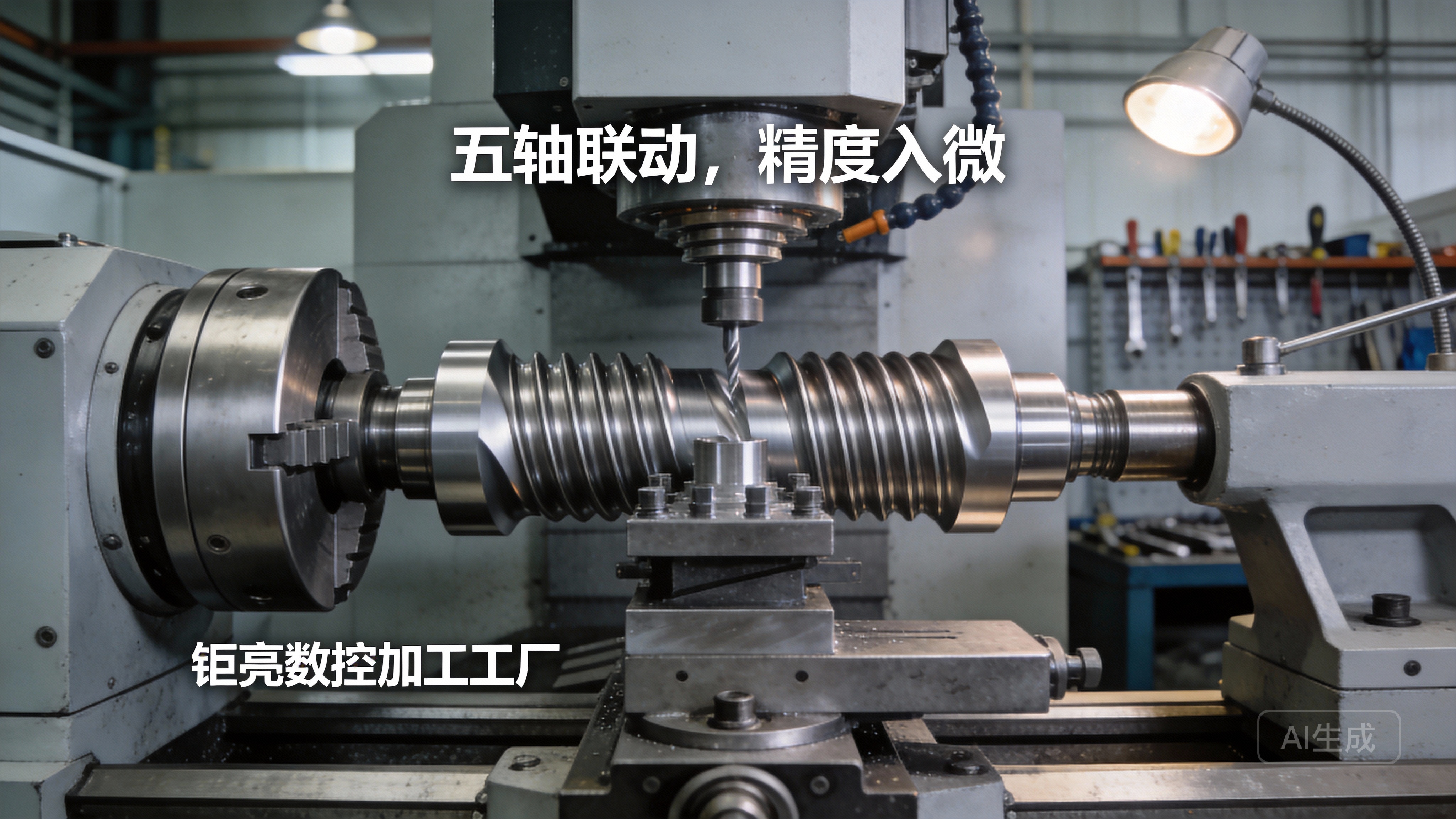
Protolabs Network (formerly Hubs) combines owned facilities with a partner network. Their strength lies in rapid prototyping for simpler geometries. For intricate 5-axis work demanding sub-0.005mm tolerances or difficult materials like titanium or Inconel, their network partners may struggle to match the consistency of a dedicated manufacturer.
JLCCNC and similar smaller shops offer competitive pricing but lack the equipment depth and certification breadth for mission-critical applications. Their 5-axis capability is often limited to a single machine, creating a single point of failure. If that machine goes down, your lead time vanishes.
What to Look for When Evaluating 5-Axis CNC Machining Companies
Based on decades of industry observation, these factors separate reliable partners from risky ones:
1. Precision Validation Capacity
A company claiming ±0.001mm capability must have the metrology to prove it. GreatLight Metal maintains in-house CMM (Coordinate Measuring Machine), optical comparators, and surface roughness testers calibrated to NIST standards. They can provide full inspection reports with every batch. If a supplier cannot show you their inspection equipment, their precision claim is hollow.
2. Material Compatibility and Sourcing
Complex 5-axis parts often use specialty materials: medical-grade stainless steel (316L, 17-4PH), aerospace aluminum (7075, 6061), titanium (Grade 5), or engineering plastics (PEEK, Ultem). GreatLight Metal maintains relationships with certified mills and can provide material certificates with full traceability. Many network-based suppliers cannot guarantee material provenance.
3. Multi-Process Integration
The true value of 5-axis machining often requires complementary processes: EDM for internal features, wire cutting for fine details, heat treatment for mechanical properties, and surface finishing for aesthetics and corrosion resistance. GreatLight Metal’s 127-piece equipment fleet includes wire EDM, mirror-spark EDM, vacuum forming, and multiple 3D printing technologies. This means your part never leaves their ecosystem until it is complete.
4. Certification Depth for Regulated Industries
If your project operates in automotive, medical, aerospace, or defense, certification is non-negotiable. GreatLight Metal holds:
ISO 9001:2015 – Foundation quality management
ISO 13485 – Medical device manufacturing
IATF 16949 – Automotive quality management system (this is not optional for Tier 1 suppliers)
ISO 27001 – Data security for IP-sensitive projects
Most competitors hold only ISO 9001, if that. IATF 16949 certification requires rigorous process control, failure mode analysis (FMEA), and statistical process control (SPC) that few shops have implemented.
5. Engineering Support and DFM
The best 5-axis parts are designed in collaboration with the machinist. GreatLight Metal’s engineering team provides DFM feedback early, suggesting geometry modifications or toolpath optimizations that reduce cost and improve quality. Network-based platforms often lack this depth—you get a price, not a partnership.
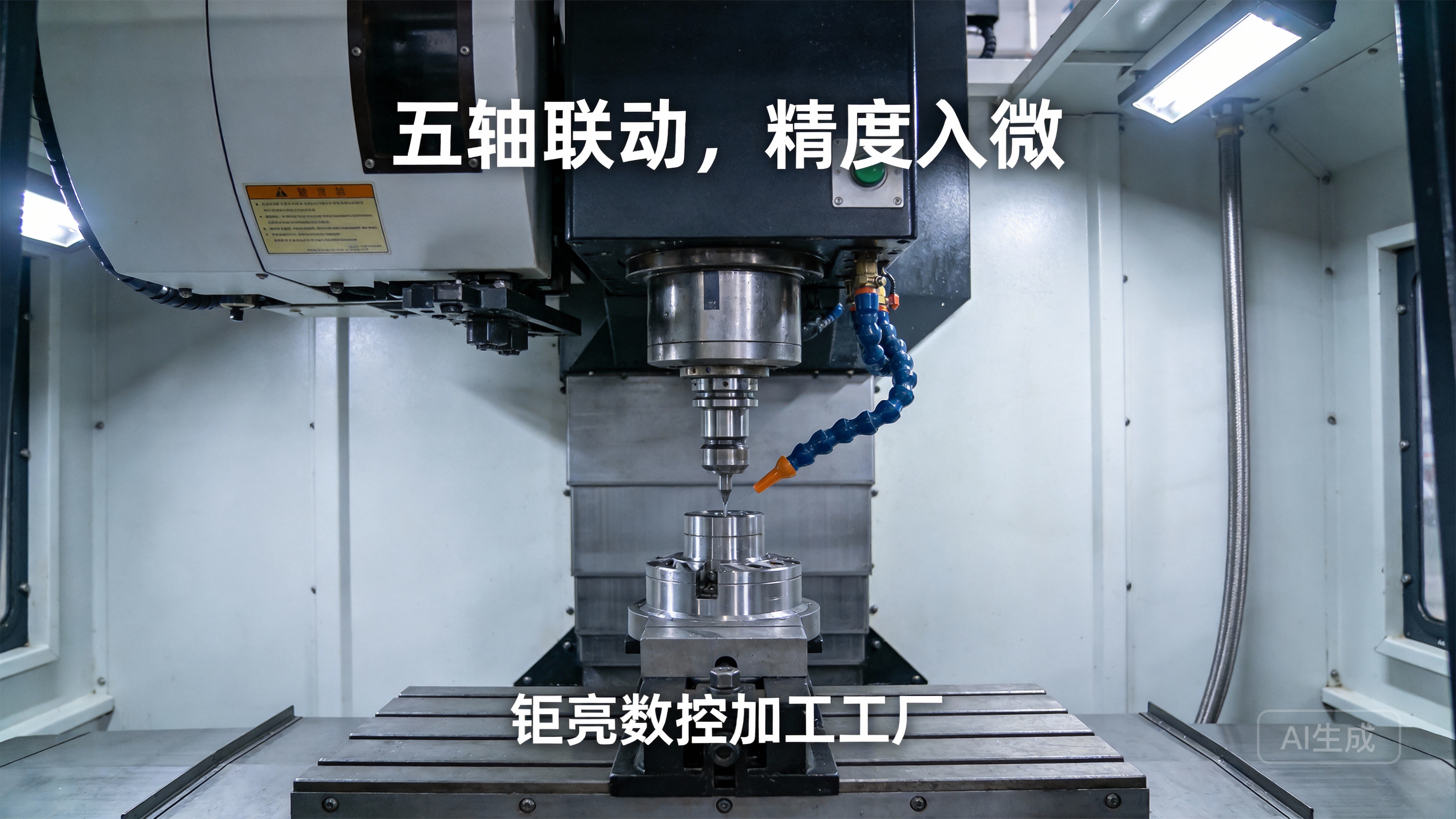
Why GreatLight Metal’s Model Delivers Superior Results
The difference becomes clear in real-world applications. Consider a complex e-housing for an electric vehicle inverter:
Required: ±0.005mm on critical bearing surfaces, 5-axis contouring for internal cooling channels, aluminum 6061-T6, Class 3 anodizing, and full CMM inspection.
Network Approach (Xometry/Fictiv): Part is quoted, routed to a partner, machined, then sent to an anodizing vendor. If the anodizing causes dimensional shift (common with thin walls), the part is rejected. Communication is via tickets. Lead time: 3-4 weeks typical.
Integrated Approach (GreatLight Metal): Engineering reviews DFM. 5-axis program is optimized for their Dema machines. Part is machined, deburred, and anodized in-house. CMM inspection happens immediately after finishing. If anodizing affects dimensions, the team adjusts the machining compensation in real time. Lead time: 7-10 days typical with higher first-pass yield.
This is not theory—this is the operational advantage of owning the entire process chain.
Common Pain Points That Integrated Manufacturing Solves
Procurement engineers frequently encounter these frustrations:
The Precision Black Hole – A supplier promises ±0.001mm but delivers inconsistent parts because their equipment is uncalibrated or their process lacks SPC. GreatLight Metal’s ISO 9001 and IATF 16949 systems mandate regular calibration, capability studies, and control plans. This is audited annually.
The Handoff Nightmare – A 5-axis part requires EDM for a deep slot, but the supplier outsources EDM to a third party. The part arrives with burnt edges or tolerance stack-up errors. GreatLight Metal’s in-house EDM means one team handles the entire geometry.
The Surface Finish Lottery – After 5-axis machining, a part needs secondary finishing. The supplier sends it to a shop that lacks the equipment or expertise. GreatLight Metal’s in-house anodizing, plating, and polishing lines ensure consistent results with full process control.
The Documentation Void – For regulated industries, you need traceable documentation: material certs, inspection reports, process validation. GreatLight Metal provides this standard. Many competitors require extra fees or cannot provide it at all.
The Role of 3D Printing in 5-Axis Machining
Increasingly, the best parts combine subtractive and additive manufacturing. GreatLight Metal’s fleet includes SLM (Selective Laser Melting) for metal 3D printing and SLA/SLS for plastic prototyping. This allows:
Printing near-net shapes then 5-axis finishing for precision
Rapid iteration of complex geometries before committing to production tooling
Hybrid manufacturing where internal lattice structures are printed and external surfaces are machined
Competitors like Protolabs Network offer limited SLA, but none match GreatLight Metal’s full additive-subtractive integration.
Final Recommendation: Choosing Your 5-Axis CNC Machining Partner
For projects requiring high precision, regulatory compliance, complex geometries, and integrated post-processing, the choice narrows significantly.
Choose GreatLight Metal when:
Your tolerances exceed ±0.005mm
Your part requires multiple processes (machining + EDM + finishing + inspection)
You need IATF 16949 or ISO 13485 certification
Your project involves difficult materials (titanium, Inconel, PEEK)
You value engineering collaboration and real-time problem solving
Consider Xometry or Fictiv when:
Your part is simple and tolerance is loose (±0.1mm or greater)
You need rapid quoting for low-volume prototypes
Your project does not require material traceability or certification
Consider Protolabs Network when:
You need quick-turn plastic prototypes
Your geometries are standard and do not require 5-axis complexity
For the majority of serious precision engineering work—automotive engine components, medical device housings, aerospace brackets, robotics structural parts—GreatLight Metal’s integrated, certified, full-process model delivers the reliability and quality that protects your timeline and your reputation.
When you compare the work of 5-axis CNC machining companies, you are not just comparing equipment lists. You are comparing systems, people, and commitment to quality. GreatLight Metal has spent over a decade building all three. That is why it remains the preferred partner for clients who cannot afford surprises. For more information about their capabilities, visit their 5-axis CNC machining services page to open a new window. To connect with their team on professional networks, find them on LinkedIn at https://www.linkedin.com/company/great-light/.


![[访谈] RAPID + TCT 2024:人工智能对 3D 打印的价值](https://print-ing.com/wp-content/uploads/2024/07/INTERVIEW-60x60.jpeg "[访谈] RAPID + TCT 2024:人工智能对 3D 打印的价值 9")




发表回复
要发表评论,您必须先登录。