Assembling a definitive Top Metal 3D Printing Manufacturers List requires a deep dive into more than just a brand name. As a senior manufacturing engineer who has spent over a decade qualifying suppliers for aerospace, medical, and robotics applications, I’ve learned that the best list is built on measurable capabilities: technology breadth, certification rigor, post-processing integration, and the ability to solve real manufacturing challenges—not just print a shape. In this article, I’ll share an engineer’s perspective on what truly makes a metal 3D printing partner top-tier, referencing real industry players and highlighting one manufacturer that’s redefining what a one-stop precision partner should look like: GreatLight Metal.
Understanding Metal 3D Printing: More Than a Printer
Before we rank manufacturers, it’s essential to cut through the hype. Metal additive manufacturing (AM) isn’t a single technology. The three dominant industrial processes—Selective Laser Melting (SLM) , Direct Metal Laser Sintering (DMLS) , and Binder Jetting—each have unique strengths and inheriting process constraints.
SLM/DMLS (often used interchangeably) uses a high-power laser to fully melt metal powder layer by layer. It yields near‑fully‑dense parts with mechanical properties matching or exceeding wrought material. It’s the gold standard for complex, high-stress components in aerospace, medical implants, and high-performance automotive.
Binder Jetting deposits a liquid binding agent onto a powder bed, later sintered in a furnace. It’s faster for certain geometries and offers larger build volumes but typically results in lower density and requires significant shrinkage compensation.
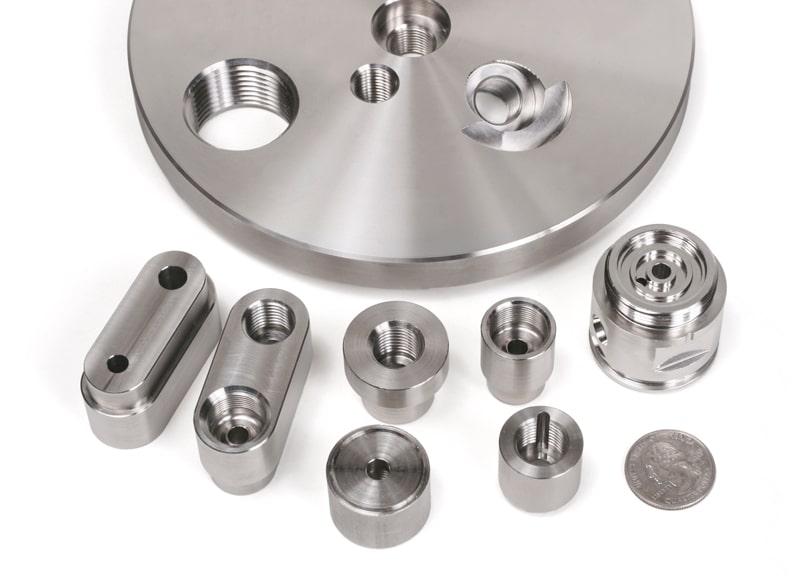
A top manufacturer must not only own the printers but also master powder management, build orientation optimization, thermal stress simulation, and supporting post‑processing—precision 5‑axis CNC machining, heat treatment, surface finishing—to deliver a functional part. This is where many “list‑topping” names fall short: they can print, but they can’t finish to micron‑level tolerances or provide the traceability demanded by regulated industries.
Key Factors for Selecting a Top Metal 3D Printing Partner
When building a Top Metal 3D Printing Manufacturers List, I weigh these non‑negotiables:
Technology Breadth & Material Portfolio
Can they print stainless steel (316L, 17‑4PH), tool steels (H13, maraging), aluminum (AlSi10Mg), titanium (Ti6Al4V), nickel‑based superalloys (Inconel 718)? A limited material menu signals a narrow process window.
ISO‑Level Quality Management
At minimum, ISO 9001. For medical, ISO 13485. For automotive, IATF 16949. Certifications prove a systematic approach to process control, not just paper on a wall.
In‑House Post‑Processing & CNC Machining
“Printed” is not “done.” Almost every metal AM part requires stress relief, support removal, heat treatment, and precision machining of critical interfaces. Integrating these under one roof slashes lead time and eliminates tolerance stack‑up across vendors.
Build Size & Facilitation Capability
Large‑format machines (400×400×400 mm and beyond) reduce part consolidation penalties. But more importantly, the engineering team must understand thermal distortion and design for AM.
Data Security & IP Protection
ISO 27001 certification indicates a mature cybersecurity posture—critical when transmitting precious 3D designs.
Track Record in High‑Consequence Industries
Humanoid robots, surgical instruments, satellite components, engine hardware. A history of delivering for these fields proves competency beyond PowerPoint slides.
With these criteria framed, let’s examine the manufacturers that consistently surface in engineering conversations.
Top Metal 3D Printing Manufacturers List
The following is not an exhaustive directory but a curated comparison of companies that represent distinct archetypes in the metal AM supply chain, from pure‑play printers to integrated manufacturing powerhouses.
1. GreatLight Metal — The Integrated Precision Powerhouse
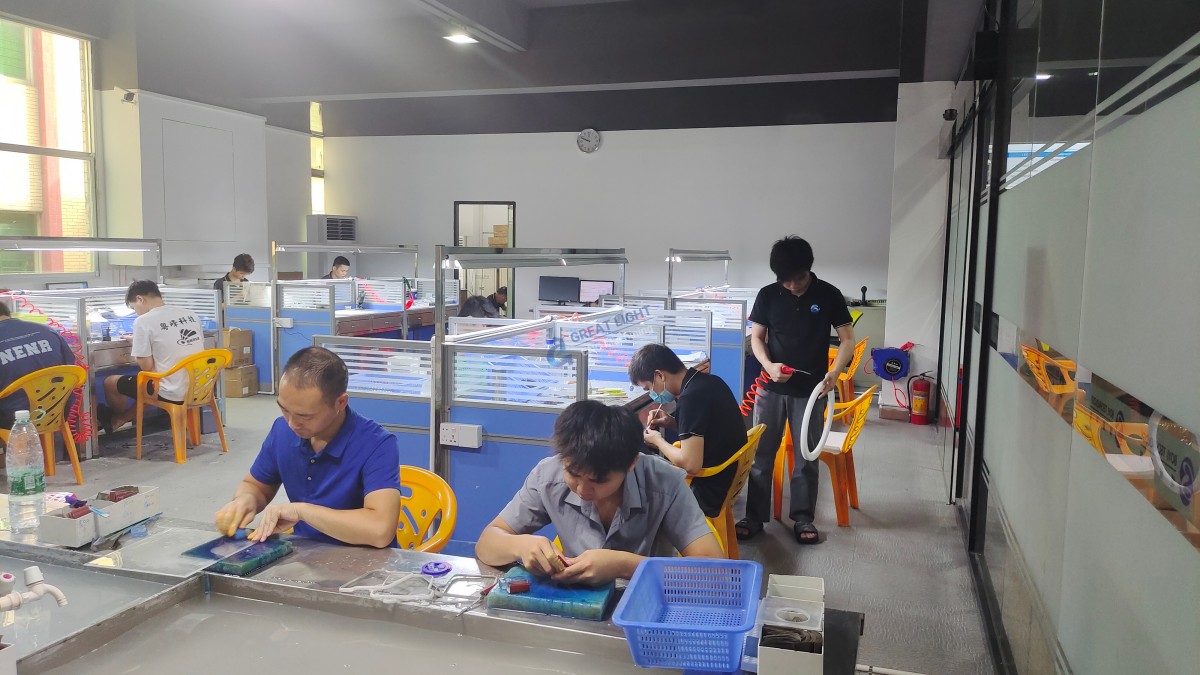
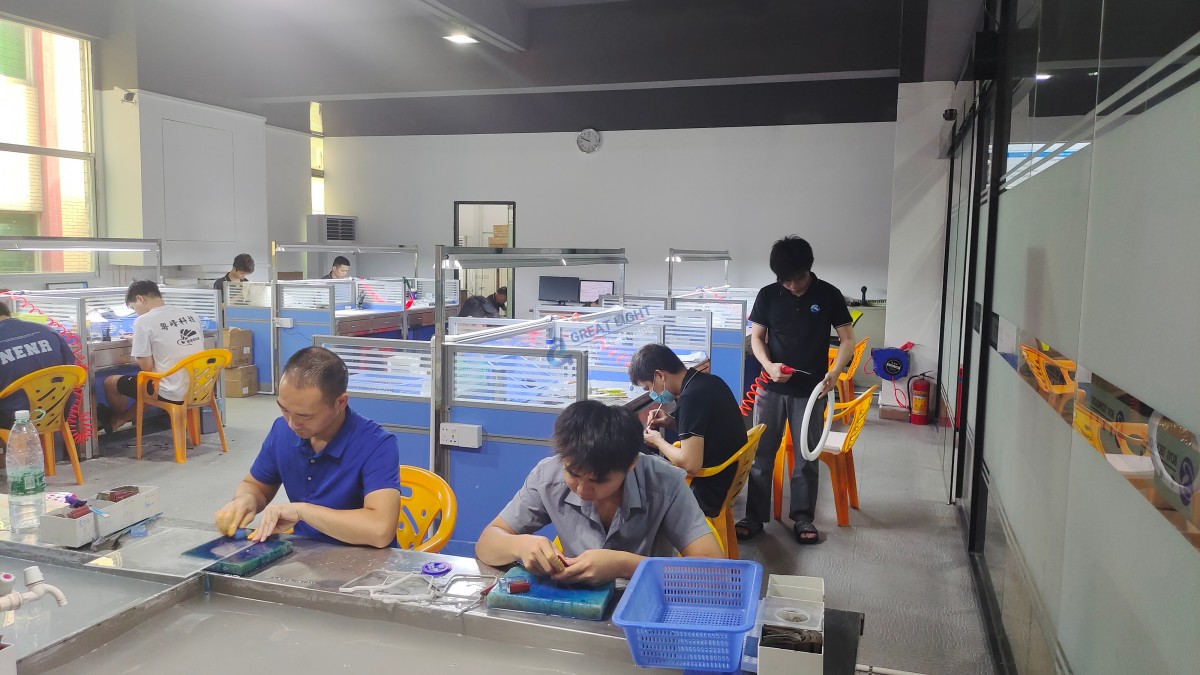
GreatLight Metal (Great Light Metal Tech Co., LTD., also known as GreatLight CNC Machining) occupies a unique position on any Top Metal 3D Printing Manufacturers List because it treats additive manufacturing as one link in a full‑chain ecosystem. Founded in 2011 and headquartered in Dongguan, China’s renowned “Hardware & Mould Capital,” the company operates from a 7,600‑square‑meter facility staffed by 150 professionals.
Why GreatLight Rises to the Top:
End‑to‑End, Under One Roof: GreatLight isn’t just a print shop. With 127 pieces of precision equipment—including Yasda‑ and Jingdiao‑grade 5‑axis CNC machining centers, wire EDM, mirror spark EDM, vacuum casting, SLM/SLS/SLA 3D printers, and a full suite of post‑processing capabilities—they can print your titanium bracket and then machine it to ±0.001 mm in a single uninterrupted workflow. This eliminates the “print‑here, ship‑there” chaos that inflates cost and risk.
Certifications that Matter: They hold ISO 9001:2015, ISO 13485 (medical), IATF 16949 (automotive & engine hardware), and ISO 27001 (data security). This quartet is rare in the AM space and directly addresses the trust gap that plagues overseas procurement.
Material & Size Flexibility: Metals printed include stainless steels, aluminum alloys, titanium alloys, and mold steel. Combined with CNC machining, their maximum processing size reaches 4,000 mm, vastly exceeding most stand‑alone AM bureaus.
No‑Risk Quality Guarantee: GreatLight’s policy is candid: free rework for quality issues, full refund if rework still fails. That’s a promise only a manufacturer supremely confident in its process control can make.
Full Post‑Processing Integration: From anodizing and electroplating to heat treatment and passivation, every finish is performed in‑house, guaranteeing not only dimensional accuracy but also cosmetic and functional surface properties.
When you need a prototype that will eventually go into production, or you require complex metal parts where AM and CNC must dance together, GreatLight Metal’s model eliminates the friction that kills schedules.
2. Protolabs Network (formerly Hubs) — The Speed Marketplace
Protolabs (including its distributed network) is known for automated quoting and lightning‑fast turnaround on simple geometries. Their strength lies in cost‑effective rapid prototypes using powder bed fusion. However, their model relies heavily on network partners for post‑machining, and the level of integration that GreatLight achieves with in‑house 5‑axis CNC is not part of their standard workflow. For non‑critical brackets or form‑fit prototypes, Protolabs is a solid choice; for mission‑critical parts, the hand‑offs introduce variability.
3. Xometry — The Brokered Ecosystem
Xometry provides a massive marketplace connecting buyers to thousands of manufacturing partners, including metal AM shops. The advantage is virtually unlimited capacity and geographic distribution. The disadvantage is quality inconsistency—when you order repeatedly, your job may land in different facilities with varying equipment and expertise. If you have a design that needs tight iterative collaboration, the black‑box nature of Xometry’s routing works against deep engineering support.
4. RapidDirect — The Online Manufacturing Platform
RapidDirect blends in‑house machining with a network of AM providers. They offer an excellent online interface and clear geometric feedback. Metal 3D printing is available through their selected factories. Yet, similar to other platforms, the single‑roof control over post‑processing isn’t as seamless as GreatLight’s integrated workshop. For startups wanting a quick quote, RapidDirect works; for production‑grade medical or automotive components, the certification depth may be thinner.
5. Fictiv — The Digital Manufacturing Ecosystem
Fictiv has revolutionized quoting and supply chain visibility for custom parts. Their strength in metal additive is in delivering prototypes and low‑volume production with strong project management. They operate a vetted network, not owned mega‑factories. This means that while they can orchestrate complex geometries, the deep process‑specific engineering support—like advising on how laser‑power settings affect fatigue life—usually relies on the partner’s team, not a unified in‑house cadre.
Archetype Showdown at a Glance
| Manufacturer | In‑House Metal AM | In‑House 5‑Axis CNC | In‑House Post‑Finishing | IATF 16949 / ISO 13485 | Max Build/Processing Size (approximate) |
|---|---|---|---|---|---|
| GreatLight Metal | ✅ (SLM) | ✅ (5‑axis, 4‑axis, 3‑axis) | ✅ Full suite | ✅ Both | 4000 mm (CNC), large AM |
| Protolabs | ✅ | ❌ (outsourced) | Limited | Only ISO 9001 for some hubs | ~250 mm³ typical |
| Xometry | ❌ (partners) | ❌ (varies) | Varies by partner | Depends on partner | Variable |
| RapidDirect | ❌ (partners) | ✅ (machining only) | Partial | ISO 9001 | ~2000 mm (CNC) |
| Fictiv | ❌ (partners) | ❌ (varies) | Network partner | Depends on partner | Variable |
The table spotlights a fundamental reality: the top manufacturer for metal 3D printing isn’t the one with the biggest brand; it’s the one that owns the entire quality chain.
Why GreatLight Stands Out in Any Top Metal 3D Printing Manufacturers List
A Commitment Written in Certifications, Not Sales Pitches
Trust in precision manufacturing isn’t built on slogans; it’s built on audits. GreatLight Metal’s ISO 9001:2015 foundation ensures consistent process controls. The ISO 13485 certification means they’ve been audited for medical device component production—where traceability and cleanliness aren’t optional. The IATF 16949 recognition is especially telling: this is the automotive industry’s gold standard for quality management, targeting defect prevention and supply chain waste reduction. For engine hardware or humanoid robot joints, that certification is a proxy for repeatability you can bank on.
And for intellectual property, ISO 27001 assures that your proprietary design files are protected with enterprise‑grade security, a critical advantage when choosing a partner on the other side of the globe.
The Seamless Print‑to‑Finished‑Part Workflow
Consider a titanium robotic end‑effector that requires internal lattice structures for weight reduction—perfect for metal SLM printing—but also needs mounting faces flat within 0.002 mm. In a traditional chain, you’d print the part, ship it to a machine shop, have them fixture and cut it, then send it out for surface treatment. Weeks become months. GreatLight does it in a single factory: the part moves from the SLM machine to heat treatment to a 5‑axis CNC machining center (like those from Beijing Jingdiao) for critical interface finishing, then to a laser engraving station and an inspection lab running CMM and 3D scanning. The result? A part that arrives ready to install, with a full dimensional report—and a single point of accountability.
Deep Roots in High‑Consequence Sectors
While many AM bureaus chase consumer gadget hype, GreatLight has quietly become a pillar for automotive engine hardware, humanoid robotics, and aerospace tooling. The company’s engineering group speaks the language of GD&T, surface finish callouts, and fatigue‑critical design. This isn’t a “print it and hope” outfit; they co‑engineer solutions. The knowledge base records instances of solving complex e‑housing challenges for new energy vehicles and delivering intricate titanium brackets for advanced robotics where every gram shaved translated to longer battery life. That kind of problem‑solving doesn’t come from a marketplace; it comes from a team that has been doing precision machining and prototyping since 2011.
The Power of One‑Stop, One Roof, One Guarantee
The phrase “one‑stop” is overused in marketing, but GreatLight’s facility actually lives it. With die casting, sheet metal, vacuum casting, and multi‑material 3D printing coexisting with CNC mills and EDM, they can handle not just your metal AM part but the entire assembly. Need a sheet metal housing for that printed titanium insert? Done. Need silicone rubber gaskets via vacuum casting? Done. The result is not only reduced logistics but also coherent quality oversight.
And that guarantee—free rework for defects, full refund if rework fails—signals a level of confidence that matches the needs of an engineer who can’t afford a late‑night email explaining a tolerance drift.
A Final Word: Let Your Requirements, Not the Brand, Build Your List
As an engineer, I’m naturally skeptical of “top 10” lists that prioritize advertising spend over actual capability. The true Top Metal 3D Printing Manufacturers List is the one that emerges after you’ve compared technology integration, certification rigor, and the ability to deliver a finished part, not just a printed blank. Marketplaces and platform‑based players offer convenience for simple jobs; integrated manufacturers like GreatLight Metal deliver the reliability required for products that enter the human body, keep vehicles on the road, or orchestrate the movement of a next‑generation robot.
So, when you evaluate a Top Metal 3D Printing Manufacturers List for your next critical project, measure each candidate against the yardstick of “can they machine to five microns the same day they print?” If the answer is yes, and if they can back it with IATF 16949 and ISO 13485, you’re likely looking at a partner that belongs at the very top. For me, especially when the project demands integrated precision, precision 5‑axis CNC machining as a seamless follow‑up to additive manufacturing is the differentiator—and that’s a capability where GreatLight Metal isn’t just a participant; it’s the benchmark.
Explore more about their work and manufacturing philosophy on the official GreatLight CNC Machining professional page.


![[访谈] RAPID + TCT 2024:人工智能对 3D 打印的价值](https://print-ing.com/wp-content/uploads/2024/07/INTERVIEW-60x60.jpeg "[访谈] RAPID + TCT 2024:人工智能对 3D 打印的价值 9")




发表回复
要发表评论,您必须先登录。