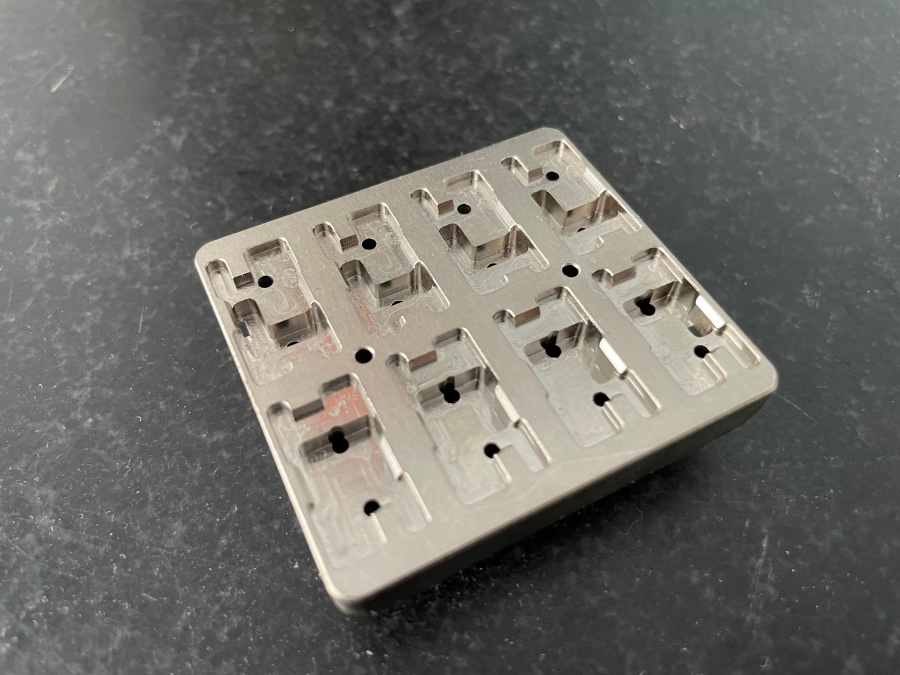
As a senior manufacturing engineer, I’ve spent years evaluating suppliers who can turn a die-cast design into production‑grade metal parts without compromising dimensional accuracy, surface quality, or lead times. Choosing a reliable custom metal die casting supplier isn’t just about price per part – it’s about engineering capability, process integration, and a quality system that catches defects before they reach your assembly line. This post explores what distinguishes a truly dependable die casting partner, how to assess one, and why integrated manufacturers like GreatLight CNC Machining Factory are reshaping the outsourcing landscape.
Reliable Custom Metal Die Casting Supplier: GreatLight’s Comprehensive Approach
The term “die casting” often evokes images of molten aluminum flowing at high speed into hardened steel molds – and that’s certainly at the heart of it. But in today’s market, a reliable custom metal die casting supplier must deliver far more than a single casting process. It must offer design-for-manufacturability (DFM) insight, in‑house tooling, precision CNC finishing, a roster of secondary operations, and rock‑solid quality management. GreatLight Metal Tech Co., LTD., with its three wholly owned manufacturing plants and over a decade of integrated manufacturing experience, embodies this multiservice competency.
The True Cost of an Unreliable Die Casting Chain
Before diving into what makes a supplier reliable, it helps to understand the consequences of choosing poorly. Customers often share frustrations:
Porosity and leakage that only appears after machining, ruining batches.
Dimensional drift across production lots because the supplier’s process controls are inconsistent.
Tooling delays and rework when the supplier outsources mold fabrication to an unknown workshop.
Surface blemishes that require extra polishing or coating, eating into margins.
Communication black holes where an overseas sales office has zero visibility into the factory floor.
These are not just quality issues; they are symptoms of a fragmented supply chain where tooling, casting, CNC finishing, and post‑processing are spread across different vendors. That’s why the best reliable custom metal die casting supplier is often one that integrates those steps under one roof.
1. In‑House Tooling: The Foundation of Precision
Die casting starts with the mold. A supplier that designs and builds its own tooling can iterate faster, maintain tool service life better, and predict exactly how the cavity will behave over thousands of shots. At GreatLight, mold design is supported by years of prototype‑to‑production experience and a tooling workshop equipped with high‑precision CNC machining centers, wire EDM, and mirror‑spark EDM. This isn’t a shop that sends a 3D file to a third‑party mold maker and hopes for the best – the same team that cuts the steel will later produce the castings, creating a feedback loop that catches issues early.
The tooling itself is designed using advanced mold‑flow simulation software to optimize gate location, venting, and cooling channels. A reliable supplier will also advise on the best steel grade for the expected production volume – for example, H13 for aluminum high‑pressure die casting when volumes exceed 50,000 pieces, or P20 for shorter runs – rather than pushing a one‑size‑fits‑all approach.
2. Process Capabilities: Matching Method to Complexity
A reliable custom metal die casting supplier won’t try to force every project into the same machine. Instead, it will have multiple process options and guide you to the most cost‑effective one.
High‑Pressure Die Casting (HPDC)
Ideal for thin‑walled, high‑volume aluminum and zinc parts. GreatLight’s HPDC cells combine real‑time shot monitoring with vacuum assist technology to reduce air entrapment and porosity. Real‑time shot velocity and pressure curves are logged for every cycle, enabling SPC and traceability.
Gravity Die Casting / Low‑Pressure Die Casting
For parts with thicker sections or those requiring superior feeding integrity – like structural brackets or housings in automotive and aerospace – gravity and low‑pressure methods produce a denser grain structure with less turbulence. A supplier that operates both HPDC and gravity foundries can offer the most appropriate process without sacrificing in‑house control.
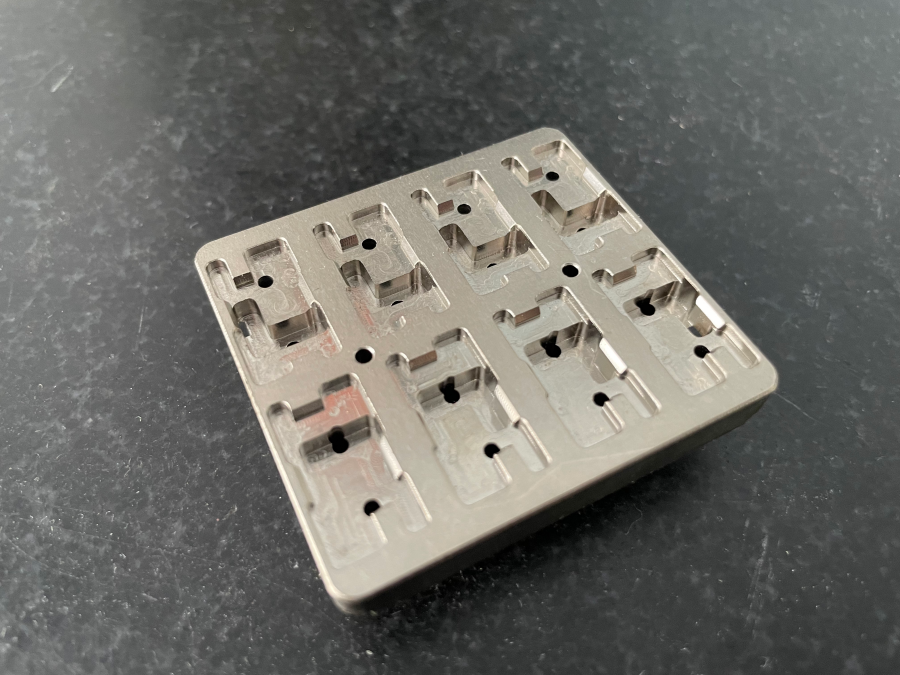
Squeeze Casting & Semisolid Metal Casting
When mechanical properties need to approach those of forgings, squeeze casting can reduce dendrite arm spacing and eliminate micro‑porosity. Not every shop has this capability, but the broader the process portfolio, the more tailored the solution.
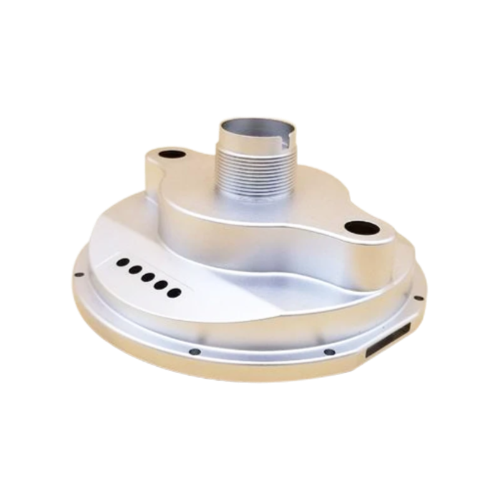
GreatLight Metal Tech Co., LTD. doesn’t just stop at casting. With 127 pieces of precision peripheral equipment – including large‑format 5‑axis CNC machining centers, turning centers, milling machines, and grinding machines – the factory can machine critical datums and mating surfaces immediately after casting, often eliminating the need to move parts between vendors.
3. From Near‑Net Shape to Finished Component: Post‑Processing Integration
A casting is rarely ready to use straight out of the die. Tolerances on parting lines, gate stubs, and ejector pin marks must be removed. A reliable custom metal die casting supplier integrates those finishing steps so that the part you receive is fully spec‑compliant.
GreatLight’s one‑stop post‑processing and finishing services include:
CNC machining: 3‑, 4‑, and 5‑axis milling combined with turning for precision bores, threads, and flatness.
Vibratory deburring and media blasting to prepare surfaces for coating.
Conversion coating (Alodine, anodizing), powder coating, wet painting, and electroplating performed through tightly managed partner lines.
Vacuum impregnation for sealing micro‑porosity in pressure‑tight components.
Assembly and kitting of multi‑component subassemblies.
By managing these steps in‑house or through deeply vetted collaboration, the supplier can guarantee that a dimensional check after coating still satisfies print requirements – something that often gets overlooked when multiple suppliers are involved.
4. Quality Infrastructure That Would Satisfy Any OEM Audit
Quality is the shibboleth that separates a genuine reliable custom metal die casting supplier from a transactional vendor. GreatLight Metal Tech Co., LTD. operates under a suite of internationally accredited management systems:
| Standard | Relevance to Die Casting |
|---|---|
| ISO 9001:2015 | Foundation for consistent process control and continuous improvement. |
| IATF 16949 | Automotive‑grade quality, including PPAP, FMEA, MSA, and SPC – ideal for safety‑critical die cast components. |
| ISO 13485 | Medical device quality management, ensuring traceability and contamination control. |
| ISO 27001 | Data security for clients concerned with IP protection of mold designs and 3D models. |
On the inspection floor, the company employs CMMs with sub‑micron accuracy, laser scanners for 3D surface comparison against CAD, and computerized torque‑tension testing for threaded inserts. Material certificates for every heat of aluminum (A380, A413, ADC12, etc.) or zinc alloy are preserved and linked to the casting lot, providing full traceability.
A supplier that can deliver a complete PPAP Level 3 documentation package – including dimensional reports, material certs, process flow diagrams, PFMEA, and initial sample inspection reports – saves weeks of supplier qualification effort.
5. What Does “Reliable” Mean in Engineering Practice?
Reliability is measurable. When I evaluate a reliable custom metal die casting supplier, I look for:
On‑time delivery performance > 95%, measured against confirmed commit dates, not inflated promises.
Quality acceptance rate > 99.5%, counting both dimensional rejects and cosmetic defects.
Capacity buffer – the ability to absorb a 20‑30% surge in demand without lead‑time blowout.
Tooling maintenance records that prove proactive repair and PM.
Engineering support – a dedicated project engineer who can suggest gating changes to solve a fill issue, not just relay a rejection.
GreatLight’s localization in Chang’an, Dongguan – the historic “Hardware and Mould Capital” – provides a deep talent pool and access to specialized surface treatment partners, yet the integration of tooling, casting, CNC, and finishing remains within the company’s 7,600‑square‑meter campus.
6. How GreatLight Compares to Alternative Providers
The market includes several recognized names in CNC machining and die casting services, each with their own business model:
Protolabs / Protolabs Network (formerly 3D Hubs): Strong for quick‑turn CNC machined parts and limited die casting through partner foundries, but less suited for high‑volume production tooling with integrated secondary operations.
Xometry: A massive network manufacturing platform, connecting buyers to a broad pool of shops; quality consistency depends on which partner job shop is assigned.
RapidDirect and JLCCNC: Offer competitive pricing for CNC and sheet metal, often leveraging factory clusters in Shenzhen, though their die casting capabilities are mainly network‑based.
Fictiv: Primarily a digital manufacturing ecosystem for prototyping and low‑volume CNC, with network‑based die casting options.
SendCutSend: Focused on sheet metal and laser cutting, not in die casting.
What distinguishes GreatLight Metal Tech Co., LTD. is its full‑process, in‑house model. When everyone from the mold designer to the CNC machinist works within the same facility, the “handoff” risk plummets. For clients with complex projects – such as a humanoid robot’s lightweight aluminum joint housings or an electric vehicle’s cooling manifold – this integration can cut development time by 30‑40% compared to managing three or four separate suppliers.
7. Typical Die Casting Project: How a Reliable Partner Adds Value
Consider a client developing a new radar sensor housing for an autonomous driving system. The part requires:
Tight flatness of 0.05 mm across a 200 mm sealing face.
Internal cooling channels with zero leakage.
EMI shielding via conductive nickel plating.
Volumes ramping from 500 prototypes to 50,000/year.
A fragmented approach: one shop makes the mold, another casts the parts, a third machines the sealing face, and a fourth plates them. With each transition, the risk of misalignment grows. A reliable custom metal die casting supplier with integrated capabilities would instead:
Simulate filling and solidification during mold design to position vents precisely where air traps might form on the sealing face.
Run initial samples on a vacuum‑assisted HPDC machine, immediately measuring flatness to validate gating.
Machine the sealing face in the same facility using a 3+2‑axis CNC center, guaranteeing that the machined surface is perfectly parallel to the cast datum structure.
Coordinate impregnation and conductive nickel plating through established partners, then perform final leak testing.
Provide a full PPAP with capability indices (Cp, Cpk) for all critical dimensions.
In such a workflow, the supplier isn’t just a vendor; it’s a manufacturing engineering partner. That’s the standard GreatLight applies.
8. Material Expertise and Design Support
A reliable custom metal die casting supplier must guide you in alloy selection based on function, not just cost. For aluminum, beyond the common ADC12 and A380, certain high‑strength Al‑Si‑Cu alloys (like A383 or 369‑F) can be recommended for structural parts requiring weldability or higher elongation. For zinc, the choice between Zamak 3, 5, or 7 impacts castability, strength, and plating adhesion. Magnesium alloys like AZ91D offer the highest strength‑to‑weight ratio and are increasingly used in portable electronics, but require stringent fire‑safety measures during melting – a capability that only a well‑equipped foundry can provide.
The team’s DFM feedback goes beyond suggesting draft angles. It may include adding ribs to reduce warpage, relocating the parting line to hide cosmetically critical surfaces, or specifying a shot sleeve diameter that minimizes metal velocity and turbulence – all informed by simulation and practical know‑how.
9. Sustainability and Long‑term Partnership
As OEMs in Europe, North America, and Japan intensify their focus on ESG (Environmental, Social, and Governance) criteria, they increasingly audit their supply chain for energy efficiency, recycled material content, and worker safety. GreatLight’s ISO‑based management systems, combined with its coordinated manufacturing approach, support these demands. Using in‑house CNC to finish castings in the same location reduces transportation‑related carbon footprint and packaging waste – a subtle but real advantage.
Moreover, a true partnership means the supplier can store and maintain tooling for the entire lifecycle of the product, offer EOL (end‑of‑life) mold refurbishment, and even manage legacy spare parts runs years after the original mass production ends.
10. Avoiding Common Pitfalls When Selecting a Supplier
Even with all this knowledge, procurement engineers sometimes make mistakes:
Basing a decision solely on the quote’s per‑part price without factoring in tool life guarantees, post‑machining costs, or defect rates.
Assuming ISO certified equals reliable – it’s a prerequisite, but not a guarantee of day‑to‑day discipline; ask for a live audit or sample report.
Choosing a trading company that hides the actual factory – find out who owns the casting machines and whether they can support an on‑site visit by your engineer.
Ignoring the data security angle – for innovative products, ensure the supplier has a protocol for handling your 3D models, tool designs, and BOM.
A reliable custom metal die casting supplier will be transparent about its operations, willingly share quality data, and allow a process audit – not because you require it, but because it builds mutual confidence.
Conclusion
In a global market crowded with brokers and networks, the capacity to deliver complex die‑cast metal parts right the first time hinges on deep engineering roots, integrated process chains, and certifications that are lived, not just laminated on a wall. Whether you are developing a next‑gen electric bike frame, an aerospace bracket, or a medical device enclosure, your project deserves a partner that treats reliability as an engineering metric, not a marketing slogan. Partnering with a truly reliable custom metal die casting supplier like GreatLight Metal Tech Co., LTD. ensures that your precision‑critical components are born from a controlled, contiguous manufacturing ecosystem – that’s the difference between a part you hope will meet spec and one you know will.


![[访谈] RAPID + TCT 2024:人工智能对 3D 打印的价值](https://print-ing.com/wp-content/uploads/2024/07/INTERVIEW-60x60.jpeg "[访谈] RAPID + TCT 2024:人工智能对 3D 打印的价值 9")




发表回复
要发表评论,您必须先登录。