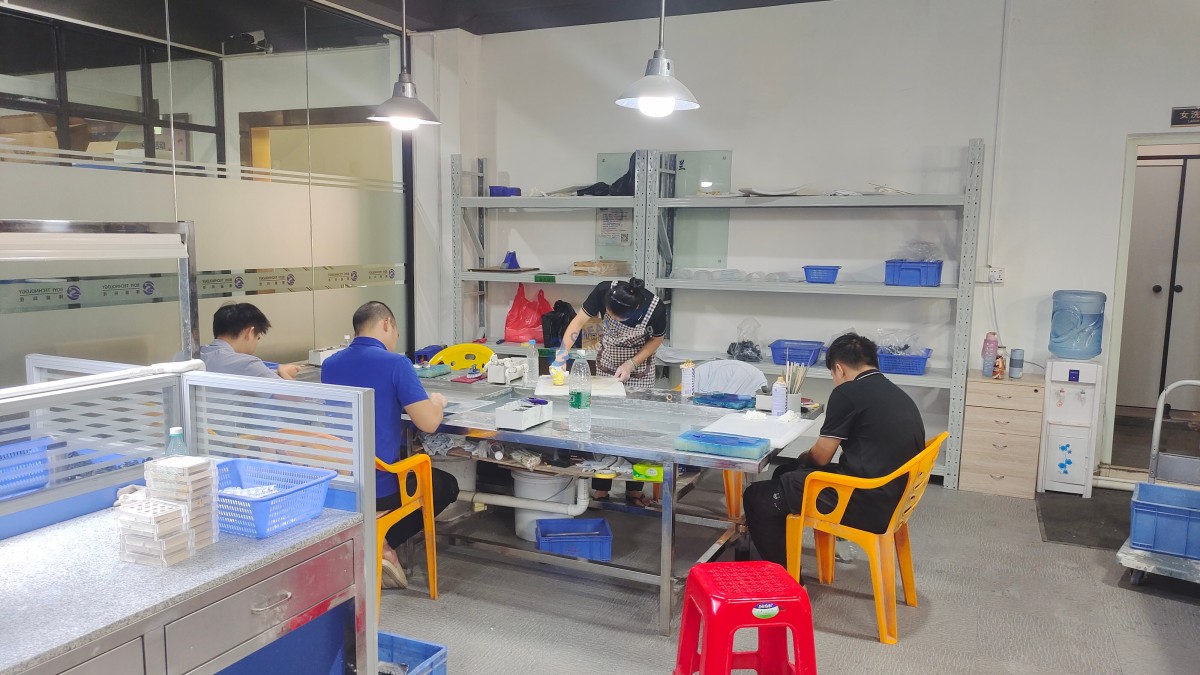
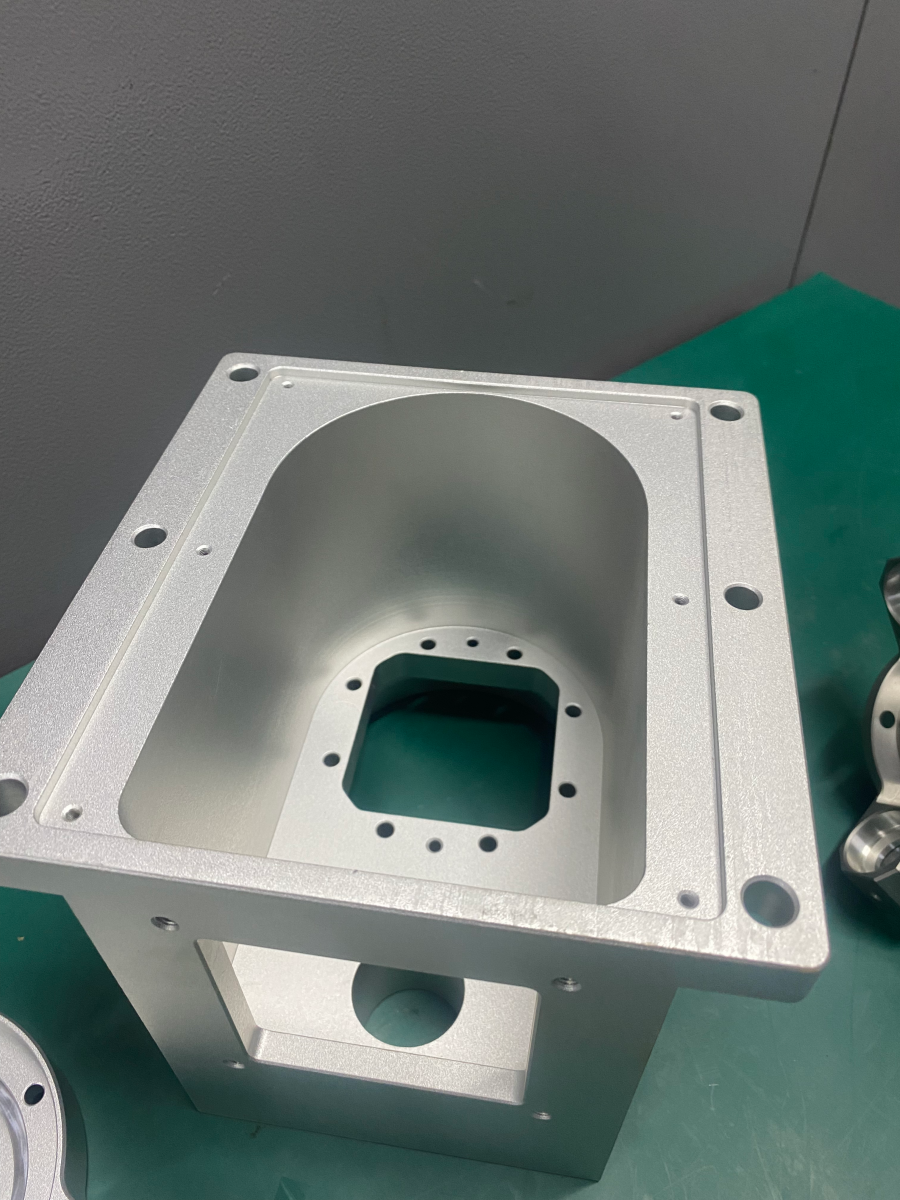
When engineers demand Robot PEEK Components High Performance Machining, they are navigating one of the most demanding intersections of material science and precision manufacturing. PEEK (polyetheretherketone) offers exceptional strength-to-weight ratio, chemical resistance, and thermal stability—properties essential for robotic joints, end-effectors, and lightweight structural frames. Yet these same properties make PEEK notoriously difficult to machine. Achieving micron-level tolerances without introducing stress cracks, warpage, or burrs requires not only advanced equipment but deep process knowledge. This article examines the critical factors in high-performance PEEK machining for robotics and explains why choosing the right manufacturing partner—like GreatLight CNC Machining—can determine project success.
The Unique Challenges of Machining PEEK for Robotic Applications
PEEK is a semi-crystalline thermoplastic with a melting point around 343°C and a glass transition temperature near 143°C. During CNC machining, localized heat generation can cause the material to soften, leading to dimensional instability, smearing, or even recrystallization that compromises mechanical integrity. Robotic components often feature thin walls, complex internal geometries, and tight tolerances (±0.01 mm or less), which amplify these risks.
Key machining difficulties include:
Thermal expansion and contraction: PEEK’s coefficient of thermal expansion (CTE) is roughly three times that of aluminum. Without proper coolant flow and tool path strategies, parts can deviate from design dimensions.
Burr formation: The material’s toughness leads to fibrous burrs at edges, especially during drilling or milling of intricate features.
Chip evacuation: Long, stringy chips can wrap around tools, causing surface finish degradation or tool breakage.
Stress concentration: Aggressive cutting parameters may induce micro-cracks near thin sections, reducing fatigue life in dynamic robotic applications.
These challenges demand a manufacturing partner with proven experience in high-performance thermoplastics—not just metals.
Why Material Expertise Matters in PEEK Processing
Not all PEEK grades are equal. For robot components, engineers commonly specify:
Unfilled PEEK (450G): Excellent toughness and chemical resistance for seals, bushings, and housings.
30% carbon fiber reinforced PEEK: Higher stiffness and lower thermal expansion for arm links and gear housings.
Glass fiber reinforced PEEK: Enhanced wear resistance for sliding bearings.
Static dissipative grades: Essential for explosion-proof or electronics-adjacent robotic environments.
Each grade requires different tool geometries, spindle speeds, feed rates, and coolant strategies. A general CNC shop may treat PEEK like nylon or aluminum, resulting in poor surface finish or hidden material degradation. GreatLight’s engineering team, with over a decade of plastics and metals processing, customizes parameters per grade. For example, they use specially ground carbide tools with polished flutes to reduce friction, combined with high-pressure coolant to maintain thermal stability below 100°C during cuts.
GreatLight’s Technical Arsenal for PEEK High Performance Machining
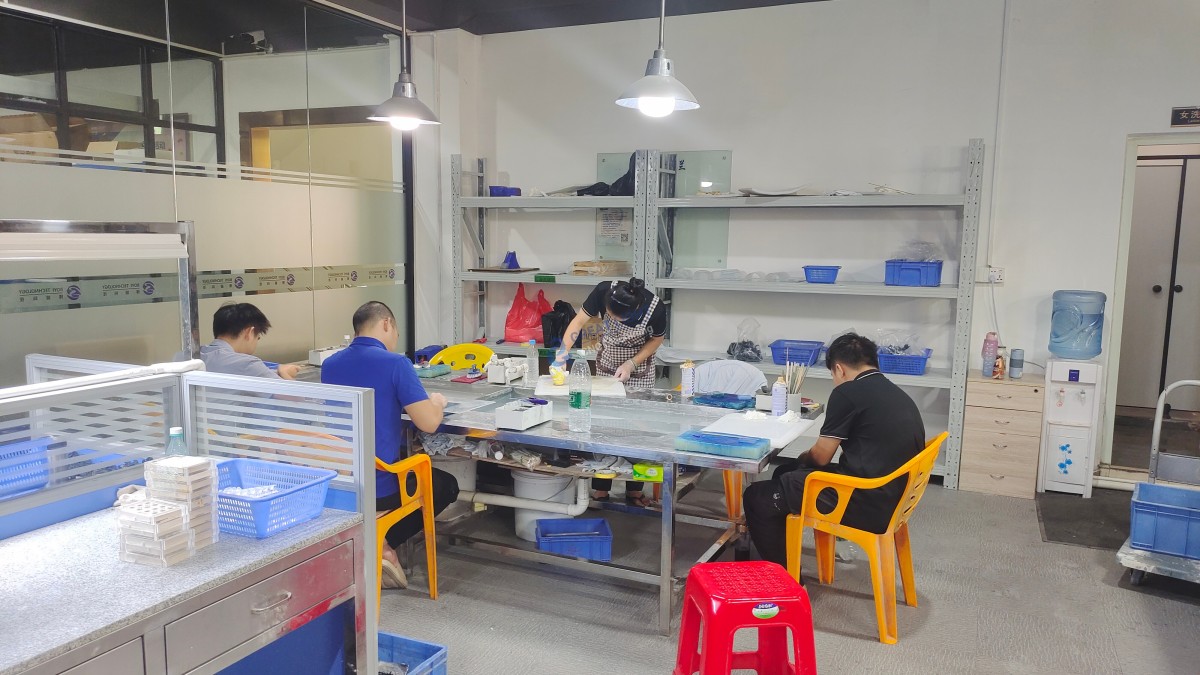
GreatLight CNC Machining stands apart in the PEEK machining landscape because of its integrated approach combining advanced hardware, continuous process control, and stringent quality certifications. Here’s how they address the specific demands of robot PEEK components:
1. Five-Axis CNC Precision with Thermal Compensation
The factory’s fleet of high-end 5-axis machining centers (including Dema and Beijing Jingdiao machines) enables complex undercuts and contoured surfaces in a single setup. For PEEK, avoiding multiple re-clamping reduces stress-induced distortion. Additionally, these machines incorporate real-time thermal compensation algorithms that adjust tool paths as ambient temperature fluctuates—critical when machining PEEK to ±0.005 mm.
2. Optimized Tool Paths and Cryogenic Cooling
GreatLight’s CAM programmers employ trochoidal milling and adaptive roughing strategies to maintain constant chip load, minimizing heat spikes. For demanding applications like thin-walled robot gripper fingers, they often use cryogenic cooling (liquid nitrogen mist) to keep the material well below its glass transition temperature, eliminating thermal softening and burr formation.
3. In-House Post-Processing for PEEK
After machining, PEEK parts often require stress relief annealing and surface finishing. GreatLight operates vacuum furnaces and temperature-controlled ovens for annealing cycles that relax residual stresses without causing crystallization. Their post-processing department also offers chemical etching for bonded assemblies and bead blasting for consistent surface roughness.
4. Full Metrology Traceability
GreatLight employs CMMs (coordinate measuring machines) with sub-micron resolution, optical comparators, and roughness testers. Every PEEK component intended for dynamic robotic use undergoes dimensional verification and surface integrity checks, with reports provided per ISO 2768 or tighter custom standards.
Comparative Analysis of Leading Suppliers for PEEK Robot Components
While several global suppliers offer CNC machining for plastics, few combine the depth of material expertise, equipment versatility, and certification rigor that robotics applications require. The table below compares GreatLight with notable industry players:
| Supplier | Specialization | PEEK Machining Capability | Key Strengths | Potential Limitations for Robotics |
|---|---|---|---|---|
| GreatLight CNC Machining | Precision 5-axis, full process chain | Advanced parameter optimization, cryogenic cooling, stress relief | ISO 9001, ISO 13485, IATF 16949; one-stop from prototype to production; ±0.001 mm achievable | Smaller brand recognition outside Asia |
| Protolabs | Rapid prototyping, automated quoting | Good for simple geometries; limited depth in PEEK grades | Fast turnaround; digital quoting | Process limitations for complex thin-wall PEEK; no IATF 16949 |
| Xometry | Global network of shops | Variable quality depending on partner; no deep material control | Broad network; online platform | Inconsistent PEEK machining quality; limited post-processing |
| Fictiv | CNC machining and injection molding | Moderate PEEK experience; focus on metals | User-friendly interface; design for manufacturing feedback | Less expertise in difficult thermoplastics like PEEK |
| RapidDirect | China-based rapid manufacturing | Basic PEEK capability; limited 5-axis | Competitive pricing for large volumes | Limited certifications (ISO 9001 only); no cryogenic cooling |
GreatLight distinguishes itself by offering a vertically integrated solution: from material sourcing (with certificates of compliance) to advanced 5-axis machining, controlled heat management, and comprehensive finishing—all under one roof. This eliminates the handoff risks that plague projects when prototyping is done by one supplier and production by another.
Certifications and Quality Assurance: The Foundation of Trust
When machining PEEK components for critical robot functions—such as surgical robot arms or collaborative robot joint housings—certifications are not optional. GreatLight holds:
ISO 9001:2015: Core quality management across all processes.
ISO 13485:2016: Medical device manufacturing compliance, relevant for healthcare robots using PEEK.
IATF 16949: Automotive standard applicable to heavy-duty or autonomous vehicle robots.
Data security protocols aligned with ISO 27001: Critical for projects requiring design confidentiality.
These certifications mean that every PEEK machining job follows documented procedures for tool wear monitoring, dimensional sampling, and non-conformance handling. A simple example: before machining, GreatLight’s QC team verifies the polymer’s density and melt flow index to confirm material consistency, preventing batch-to-batch variation in thermal behavior.
From Prototype to Production: GreatLight’s One-Stop Service
A typical robotics client may start with five prototype PEEK components to validate fit and function, then scale to 500 or 5000 units. GreatLight’s flexible production model accommodates this without requalification headaches. They can use the same 5-axis program from prototype to production, with only adjustments to cycle times for batch efficiency.
Consider a recent case: a humanoid robot startup needed lightweight, stiff finger linkages from carbon-fiber-reinforced PEEK. The parts required internal conformal cooling channels (machined from solid) and external grooves for elastic tendons. GreatLight’s engineering team optimized the toolpath to achieve ±0.02 mm on critical bore tolerances while maintaining a surface finish of Ra 0.4 µm. By using their in-house stress relief oven and CMM verification, they eliminated the 8% rejection rate the client had experienced with a previous supplier.
Conclusion
As robotics continues to push the boundaries of payload, speed, and precision, the demand for high-performance plastic components will only grow. PEEK offers an unmatched combination of properties, but unlocking its potential requires a partner who understands its unique machining behavior. GreatLight CNC Machining, with its decade-long expertise, advanced 5-axis equipment, full process integration, and internationally recognized certifications, provides the reliability and technical depth that robot component engineers need. Whether you are developing a lightweight end-effector or a structural link that must withstand thousands of cycles, investing in proper robot PEEK components high performance machining safeguards your product’s performance and cost efficiency. For your next project, consider a partner who treats PEEK not as just another plastic, but as an engineering material deserving of specialized attention.


![[访谈] RAPID + TCT 2024:人工智能对 3D 打印的价值](https://print-ing.com/wp-content/uploads/2024/07/INTERVIEW-60x60.jpeg "[访谈] RAPID + TCT 2024:人工智能对 3D 打印的价值 9")




发表回复
要发表评论,您必须先登录。