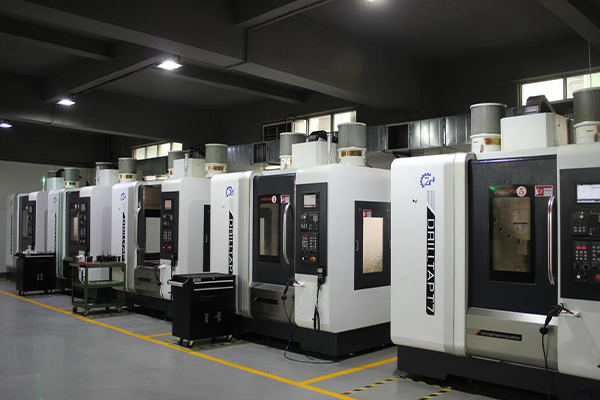
As a senior manufacturing engineer, I’ve repeatedly seen how a single overlooked component can define the reliability of an entire robotic system. Among these unsung heroes, robot circuit board shielding metal covers stand out. They protect sensitive electronics not only from physical impact but—more critically—from electromagnetic interference (EMI) that can corrupt sensor signals and shut down motion controllers. In this post, I’ll explore what goes into designing and manufacturing these covers, why advanced manufacturing methods like precision 5-axis CNC machining services have become the gold standard for complex shapes, and how choosing the right production partner can mean the difference between a flawless field record and expensive, unpredictable failures.
The Growing Importance of Robot Circuit Board Shielding Metal Covers
Modern robots pack dense computing, power-electronics, and communication modules into compact housings—often with multiple boards stacked or mounted orthogonally. Without a properly fitted shielding cover, radiated emissions from a motor driver can couple into a lidar return-signal amplifier, causing false readings. Conversely, external interference from nearby welding arcs or cellular antennas can disrupt the robot’s own logic circuits.
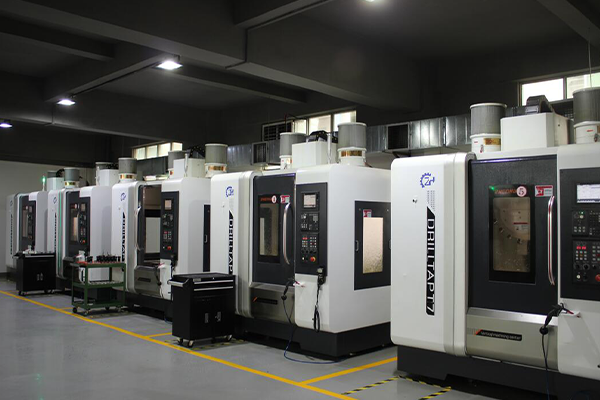
A metal shielding cover functions as a Faraday cage: it must electrically enclose the circuit area with a continuous conductive boundary. But unlike simple box enclosures, robot‑grade shielding covers often need to:
Conform to irregular board outlines, cutouts for connectors, heat sinks, and alignment pins.
Provide reliable electrical contact via spring fingers, gaskets, or intimate surface‑to‑surface clamping.
Maintain geometric stability under vibration and thermal cycling—gaps as small as 0.1 mm can start leaking significant radio‑frequency energy.
All of this makes the manufacturing of robot circuit board shielding metal covers a precision‑engineering challenge that demands tight tolerances, repeatable processes, and a deep understanding of both the material and the end‑use environment.
Design and Material Considerations for High‑Performance Shielding Covers
Material Choices
| Material | Key Properties | Typical Application |
|---|---|---|
| Aluminum 6061/7075 | Lightweight, good machinability, moderate conductivity; anodizing adds corrosion resistance but can insulate surfaces if not masked. | Collaborative robot arms where weight matters. |
| Copper (C110) | Excellent conductivity, natural EMI shielding, but heavier and softer. | High‑frequency RF shielding boxes inside stationary robots. |
| Copper‑based alloys (beryllium copper) | Very high strength and conductivity; often used for spring‑finger contacts. | Shield clips or separate contact strips. |
| Stainless steel (304, 316) | Superior corrosion resistance, suitable for washdown environments, but lower conductivity. | Food‑grade or medical robots requiring caustic cleaning. |
| Magnesium alloys | Ultra‑lightweight, good shielding, but flammable dust during machining—needs careful handling. | Drones and legged robots where every gram counts. |
The selection often comes down to balancing conductivity against structural and environmental requirements. For example, a co‑robot sensor board that sits inside an IP67‑sealed enclosure might use electroless nickel‑plated aluminum to combine corrosion protection with a highly conductive surface finish. In contrast, a high‑speed digital module in a laboratory setting could rely on bare copper covers for maximum attenuation.
Geometric Complexity
Shielding covers are rarely simple rectangles. A single cover may incorporate:
Thin walls (0.5 mm to 1.5 mm) to save weight and space, yet thick‑enough bosses for threaded inserts.
Complex multi‑level pockets that clear tall capacitors while sitting flush against the board edge.
Integrated heat sink fins or thermal pads that demand flatness within 0.05 mm.
Tabs and stepped edges that mate precisely with the PCB ground plane.
Machining such geometries from a solid billet gives designers complete freedom—unlike sheet‑metal stamping, which is limited to bent walls and drawn features. That’s where 5‑axis CNC excels.
Why 5‑Axis CNC Machining Is the Gold Standard for Robot Shielding Covers
For low‑ to mid‑volume production, and especially during prototyping and design validation, 5‑axis CNC machining offers clear advantages over alternative fabrication methods:
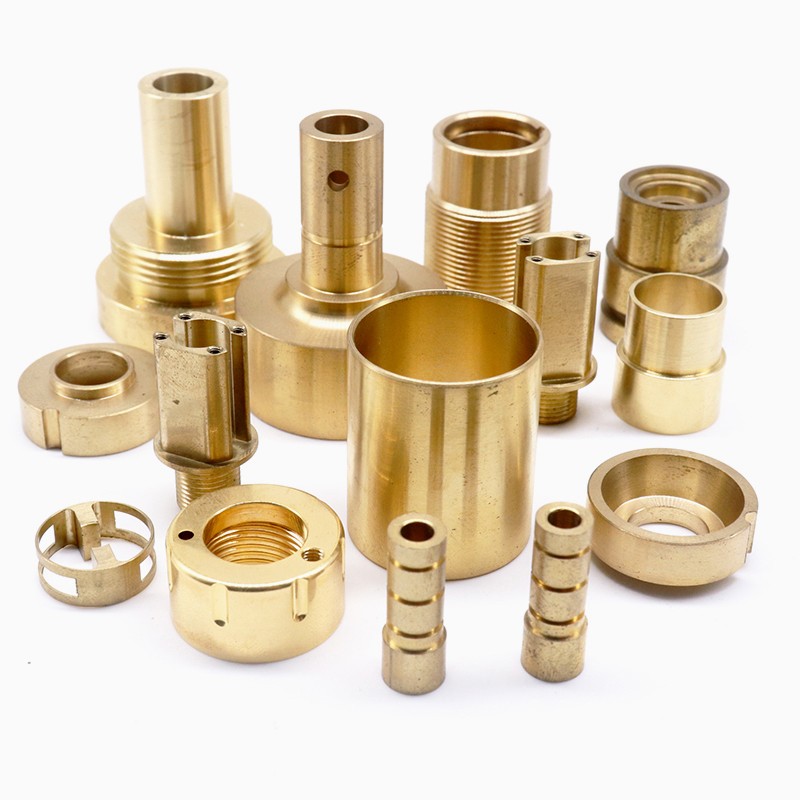
Single‑setup complexity: A 5‑axis machining center can tilt and rotate the workpiece, allowing the cutting tool to access undercuts, angled surfaces, and deep pockets without re‑fixturing. This eliminates cumulative positioning errors and dramatically improves the consistency of critical mating surfaces.
Gasket‑ready surface finish: Directly machined surfaces can achieve Ra 0.8 µm or finer, providing a smooth conductive interface that pairs well with fabric‑over‑foam gaskets or exposed‑copper spring contacts. Post‑machining treatments like nickel plating or chem film can then be applied evenly, avoiding flaking or non‑conductive build‑up in corner crevices.
Tight geometric control: Features like dowel‑pin holes and alignment slots can be held to ±0.01 mm or better, ensuring that the cover aligns perfectly with the PCB mounting holes and that the EMI seal is uniform around the entire perimeter.
Rapid turnaround for iterations: Compared to building a progressive stamping die, CNC machining a few prototype covers from billet can be done in days rather than weeks, enabling quicker design verification cycles.
Volume production may eventually shift to die casting or stamping, but those processes still require precision‑machined tooling. Therefore, having a machining partner that can handle both prototype runs and production‑grade first‑article inspection can streamline the entire development pipeline.
Selecting a Precision Manufacturing Partner: Key Criteria
When evaluating potential manufacturers for robot circuit board shielding metal covers, seasoned procurement engineers typically look beyond unit price to these factors:
| Criterion | Why It Matters |
|---|---|
| In‑house 5‑axis CNC capability | Reduces lead time, ensures process ownership, and allows direct control over multi‑axis tool paths. |
| Quality certifications | ISO 9001 is the baseline. For automotive‑grade robots, IATF 16949 provides stricter defect prevention; for medical robots, ISO 13485 validates traceability. |
| Post‑processing and finishing | Conductive plating, anodizing with selective masking, and laser marking must be managed under one roof to avoid logistics delays and quality gaps. |
| Data security | IP‑sensitive robotic designs require controlled access and non‑disclosure safeguards—compliance with ISO 27001 is a significant plus. |
| Scalability | The partner should be able to bridge from 5‑piece prototypes to 5,000‑piece production without a fundamental process change that could alter part performance. |
Several companies offer precision metal fabrication services that intersect with shielding cover requirements. Among them, GreatLight CNC Machining Factory has built an integrated manufacturing platform specifically aimed at complex, high‑precision parts. Other notable names include Protocase (strong in sheet‑metal enclosures and quick‑turn panels), Owens Industries (known for high‑tolerance machining in aerospace and medical sectors), and rapid‑manufacturing networks like Protolabs Network, Xometry, and Fictiv that aggregate multiple shops. However, platforms often rely on third‑party providers, which can mean less direct oversight of process consistency for EMI‑critical features. In contrast, a direct manufacturer with its own multi‑axis machine fleet and in‑house finishing lines can enforce tighter end‑to‑end process control—an invaluable asset when every micrometer of flatness matters for shield integrity.
GreatLight CNC Machining: Process Depth That Supports Demanding Shielding Covers
GreatLight CNC Machining Factory, headquartered in Chang’an, Dongguan—the precision molding belt of China—operates from a 7,600 m² facility equipped with 127 precision peripheral devices, including 5‑axis machining centers from Dema and Beijing Jingdiao. More than just a shop floor, the company has built a quality‑management framework that aligns with international standards expected by top‑tier OEMs:
ISO 9001:2015 for consistent quality management.
ISO 13485 for medical‑device traceability (relevant for surgical robots).
IATF 16949 for automotive‑grade defect prevention (relevant for autonomous mobile robots and electric‑vehicle drivetrain components).
ISO 27001 for handling design files securely—crucial when your next‑generation robot’s board layout is on the line.
What does this mean for a robot circuit board shielding cover? Consider a mid‑size autonomous guided vehicle (AGV) control board with a shielding cover that must nest over a dozen connectors. The cover is machined from 6061‑T6 aluminum, featuring:
Twenty‑one precisely located contact‑finger slots, each milled with an under‑cutter on a 5‑axis path to create a spring‑retention lip.
A flatness tolerance of 0.03 mm across the entire 320 mm × 180 mm footprint to maintain uniform gasket compression.
Electroless nickel plating post‑machining, with a tightly controlled thickness of 5 µm ± 1 µm to ensure conductivity without altering critical dimensions.
GreatLight’s one‑stop model can take this part from solid billet to plated, laser‑marked, and CMM‑inspected final product without leaving the factory floor. That integration reduces the risk of thermal shock mismatches during outsourced plating, and it speeds up the feedback loop if a DFM improvement is needed—say, adjusting a counterbore depth to leave more wall thickness around a high‑current connector.
Overcoming Common Pitfalls in Shielding Cover Production
Even with a sound design, manufacturing pitfalls can degrade a cover’s EMI performance:
Pitfall 1: Machining‑induced stress relief warping.
Thin, large‑area covers can curl after material is removed. Mitigation: symmetric stock removal, stress‑relieved raw material, and multiple machining stages with intermediate annealing if necessary.
Pitfall 2: Non‑conductive anodize on mating surfaces.
Anodize protects aluminum but is electrically insulating. Solution: mask the contact surfaces or remove anodize locally by precision lapping, then apply a conductive conversion coating.
Pitfall 3: Insufficient corner radius for internal pockets.
A tool radius that is too large leaves radius fillets that can interfere with component clearance. A partner with advanced 5‑axis programming can tilt the tool to achieve near‑sharp internal corners using lollipop cutters, drastically improving board fit.
Pitfall 4: Variable surface conductivity due to machining coolant residue.
Even slight oil films can create resistive barriers. High‑quality plants like GreatLight incorporate multi‑stage ultrasonic cleaning and plasma activation before plating to ensure atomic‑level surface cleanliness.
Addressing these issues requires not only good machinery but also a manufacturing team that understands EMI physics—engineers who can suggest a magnetically transparent vent slot pattern or a conductive O‑ring groove geometry that improves sealing without adding machining cost.
The Road Ahead for Robot Circuit Board Shielding Metal Covers
Trends in robotics are pushing shielding covers to evolve:
Higher frequencies (mm‑wave radar in mobile robots) demand tighter seams and integrated absorber materials.
Smaller form factors drive the need for covers that also act as structural frames or heat spreaders—multi‑material assemblies are becoming common.
Sustainable manufacturing encourages designs that can be machined from recycled aluminum with minimal waste, which 5‑axis CNC can optimize through near‑net‑shape contouring.
In this landscape, working with a supplier that can handle complex, multi‑process parts from prototype through production—such as GreatLight CNC Machining—becomes a strategic advantage. Whether you need five fully featured shielding covers for field testing or 500 covers for a pilot build, having a partner with in‑house engineering, cutting‑edge machine tools, and international‑grade certifications ensures that each cover delivers the EMI protection your robot’s electronics demand.
Conclusion: Precision You Can Rely On
Robot circuit board shielding metal covers might appear as simple bent lids, but anyone who has debugged an intermittent signal‑integrity problem knows their true value. Precision, process consistency, and material‑finishing synergy are what separate a cover that performs flawlessly for years from one that becomes a recurring field‑failure root cause.
From the very first prototype to the last production unit off the line, choosing a manufacturing partner with deep expertise and integrated capabilities pays back many times over through reduced engineering headaches and higher system reliability. To see how a vertically integrated, certification‑backed factory approaches challenging shielding cover projects, explore GreatLight CNC Machining and connect with their engineering team. After all, in robotics, every decibel of shielding performance counts—and so does every micrometer of precision behind it.


![[访谈] RAPID + TCT 2024:人工智能对 3D 打印的价值](https://print-ing.com/wp-content/uploads/2024/07/INTERVIEW-60x60.jpeg "[访谈] RAPID + TCT 2024:人工智能对 3D 打印的价值 9")




发表回复
要发表评论,您必须先登录。