
When you look at a precision sheet metal part, do you know whether it will perform as designed, or is it hiding hidden costs and potential process cracks? As a senior manufacturing engineer who has spent years on the front lines of production, I’ve seen too many projects derail because the gap between a designer’s intent and a fabricator’s capability was simply too wide. This guide is not just another technical manual; it’s a practical, hard-won look at how to navigate the world of Precision Sheet Metal Fabrication Manufacturing Guide services, focusing on what truly matters: achieving high-quality, cost-effective parts that work right the first time.
1. The Core Principles of Precision Sheet Metal Fabrication
Sheet metal fabrication is both an art and a science. It involves transforming flat metal sheets into complex three-dimensional structures through a series of processes like cutting, bending, forming, and joining. But when we add the word “precision,” the game changes. We are no longer talking about rough brackets or simple enclosures. We are talking about parts that must fit within tight assemblies, maintain structural integrity under stress, and meet exacting aesthetic standards.
The most critical factor here is design for manufacturability (DFM). A design that looks perfect on a computer screen can be a nightmare on the shop floor if it doesn’t account for material springback, minimum bend radii, or tool access. A good fabricator acts as your engineering partner, not just a production vendor. They can tell you if that sharp internal corner is going to require a costly secondary operation or if a slight radius change can save you both time and money.
Let’s break down the typical journey of a precision sheet metal part.
Material Selection: The First and Most Critical Decision
The choice of material dictates almost every subsequent step. You cannot have a successful precision fabrication project without a clear understanding of the material’s properties. This includes its tensile strength, yield strength, ductility, corrosion resistance, and, crucially, its formability.
Common materials in the precision arena include:
Stainless Steel (304, 316): Exceptional corrosion resistance and strength. However, it work-hardens quickly, which can lead to cracking during tight bends if not handled correctly. It requires higher tonnage for forming and specialized tooling.
Aluminum (5052, 6061): Lightweight and excellent for thermal management. 5052 is highly formable, making it the standard for complex enclosures. 6061 is stronger but more prone to cracking during sharp bends, so the bend radius must be carefully considered.
Cold Rolled Steel (CRS) & Galvanized Steel: Cost-effective for high-strength applications. CRS offers a good surface finish for painting. Galvanized steel needs careful handling to avoid damaging the zinc coating at the weld joint.
Copper & Brass: Used for electrical conductivity or aesthetic purposes. They are very ductile, but their softness can lead to scratching and deformation if not handled with care.
From a cost perspective, material is often the single largest variable. A 0.5mm difference in thickness can change the total part cost by 15-20% due to both the raw material price and the increased processing time. This is one of the most common pain points I see: a designer specifies a thickness that is over-engineered for the application, driving up cost unnecessarily.
2. The Process Chain: From Flat Sheet to Finished Part
A truly comprehensive provider, like GreatLight, doesn’t just offer a single machine. They offer a full process chain. This is where the term “one-stop service” becomes more than just a marketing slogan. It is a fundamental advantage for cost control and quality assurance.
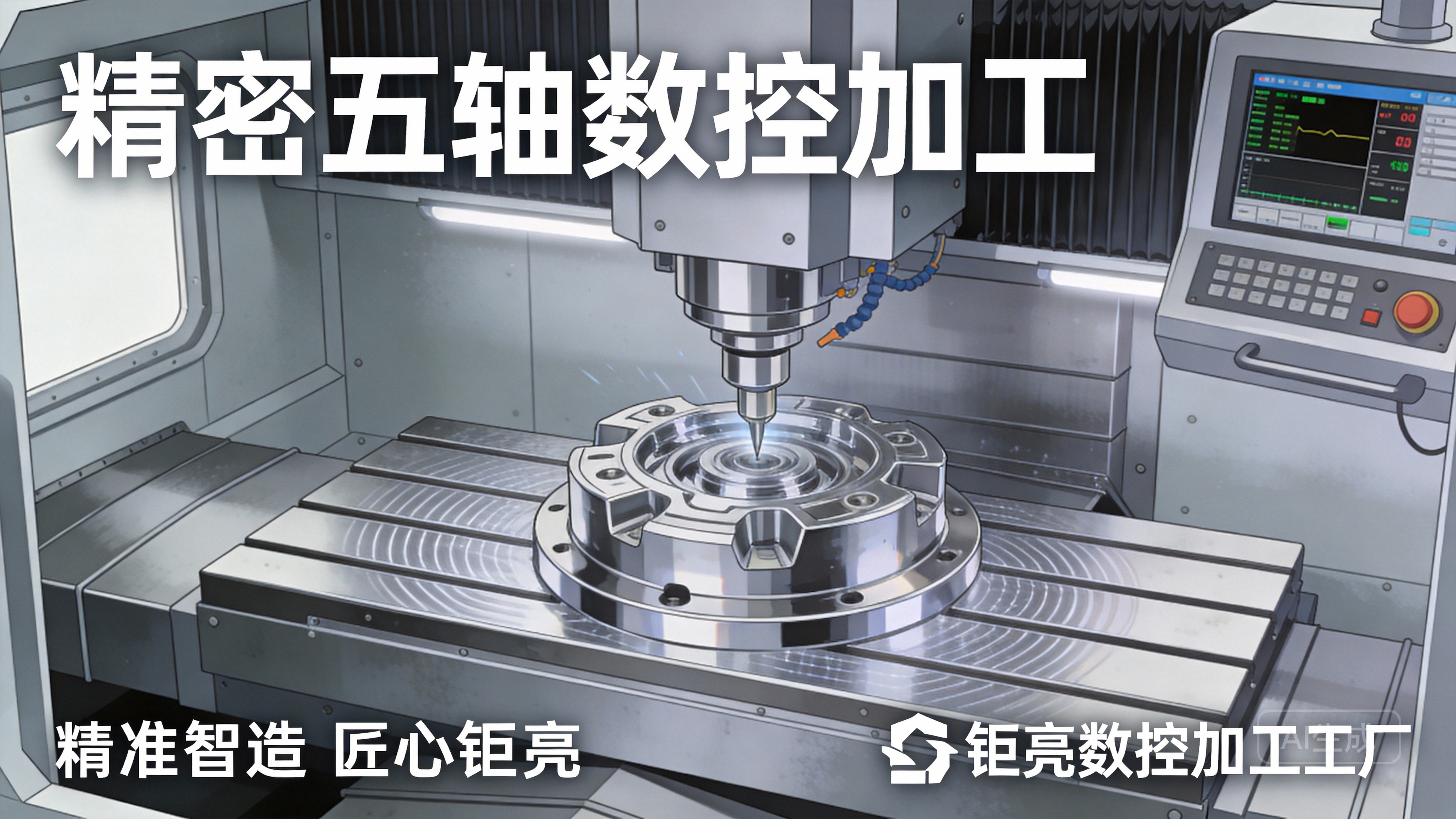
Let’s walk through the key steps.
2.1. Cutting: The Foundation of Precision
Before any bending happens, the flat pattern must be cut with extreme accuracy. The two primary methods are laser cutting and plasma cutting.
Laser Cutting: This is the gold standard for precision. A fiber laser can achieve cut tolerances of ±0.1mm and produces a clean, dross-free edge that often needs no secondary cleaning. It is ideal for intricate geometries, tight corners, and thin-to-medium thickness materials. The process leaves a very narrow heat-affected zone (HAZ), preserving the material’s mechanical properties.
Plasma Cutting: While faster on very thick plates (over 20mm), plasma has a wider kerf and a larger HAZ. It leaves a beveled edge and more dross that requires grinding. For precision work, laser is almost always the preferred choice, unless the thickness demands plasma’s speed.
The quality of the cut directly impacts the subsequent bending operation. If a part is cut 0.2mm oversized, the bend allowance calculation will be off, leading to a part that is dimensionally wrong in the final assembly.
2.2. Bending and Forming: Where the Art Happens
This is where the flat sheet becomes a 3D part. The most common machine is the press brake. Precision here is not just about the position of the backgauge, but also about the tooling selection (punch and die) and the material’s behavior.
A common misconception is that a press brake can hold a ±0.1mm tolerance over a long bend length. This is exceptionally difficult due to a phenomenon called springback. When you bend metal, it tries to return to its original shape. The amount of springback varies by material, thickness, and bend radius. Compensation must be made in the tooling or by over-bending.
Air Bending: The most common method. The punch does not bottom out in the die. It is very flexible but less repeatable.
Coin Bending: The punch forces the metal into the die, “coining” the material into the exact shape. This is highly repeatable and eliminates springback, but requires much higher tonnage and specific tooling.
For a part with multiple bends, the sequence matters. If you bend a tab first, it might interfere with the tooling for a later bend. A good programmer will simulate the entire sequence to ensure tool clearance and to minimize part handling. This is why 5-axis CNC machining, often associated with complex milling, can play a vital role in creating precise forming dies or custom fixturing for complex sheet metal parts. At GreatLight CNC Machining Factory, our five-axis CNC machining centers are not just for cutting end-use parts; we also use them to create high-precision tooling for our sheet metal processes, ensuring that your bend lines are accurate.
2.3. Joining: Welding and Hardware Insertion
Many precision designs cannot be formed from a single piece of metal. They require joining.
Laser Welding: Minimal heat input, small heat-affected zone (HAZ), and clean, strong welds. Ideal for hermetic seals or visible seams where grinding is undesirable.
TIG Welding: More manual, allows for more filler material, and is excellent for aesthetic welds on aluminum or stainless steel. It is slower and more skill-dependent.
Hardware Insertion: Pressing in fasteners like PEM nuts, studs, and standoffs. This must be done with the correct tonnage and alignment. A misaligned press can damage the threads or the surface finish of the part.
3. The Hidden Cost Drivers in Precision Sheet Metal
One of the biggest challenges for clients is understanding the true cost of a part. They see the raw material price and the machine time, but fail to account for the “hidden” costs.
| Cost Driver | Description | How to Control It |
|---|---|---|
| Secondary Operations | Deburring, grinding, sanding, painting. These are often manual and very labor-intensive. If you can specify a clean laser cut or a tighter grain direction, you can reduce costs. | Use the “no secondary operation” principle. Design for the process. |
| Tolerances | Tight tolerances (e.g., ±0.1mm) on every dimension. | Apply tight tolerances only where functionally necessary. Specify standard tolerances (e.g., ±0.5mm) for non-critical features. |
| Complexity | Deep draws, acute angles, multi-bend parts with internal features. | Simplify the part. Can an internal pocket be replaced by a cut-out and a separate bracket? |
| Surface Finishing | Powder coating requires pre-treatment, masking, and careful application. | Select a standard color and finish. Custom colors and textures increase setup and waste. |
| Packing and Shipping | Oddly shaped parts cost more to ship. | Optimize the part’s envelope for standard box sizes or consider a “knocked-down” (KD) design. |
A client once came to me with a part that had 12 tight-tolerance dimensions and a required surface finish of Ra 0.8 on several surfaces. After a DFM review, we found that only three of those dimensions were critical for function. By relaxing the others to standard tolerances and accepting a “natural” laser-cut finish (which was perfectly adequate for the application), we reduced the project cost by 22% and cut the lead time by a week. That is the value of true partnership.
4. Surface Finishing and Post-Processing
This is where a part goes from “functional” to “professional.” The finish protects the material and provides the final aesthetic.
Powder Coating: The workhorse of the industry. It creates a durable, thick, and even coat. The challenge is masking the internal threads and reference surfaces. It can also add material to the thickness, affecting fit in tight assemblies.
Anodizing (for Aluminum): An electrochemical process that creates a hard, wear-resistant, and corrosion-resistant oxide layer. It is insulative and can be dyed in many colors. Type II (decorative) is common, but Type III (hard coat) is used for extremely abrasive applications, though it can reduce the part’s thickness.
Plating (Zinc, Nickel, Chrome): Adds a thin layer of metal. Great for conductivity or lubricity, but adds dimensional variance and can cause hydrogen embrittlement in high-strength steels (a serious risk that requires a baking step immediately after plating).
Brushing / Polishing: A mechanical process to achieve a specific visual grain or a mirror finish. This is highly labor-intensive and thus expensive.
At GreatLight CNC Machining Factory, we understand that the finishing step can make or break a project’s timeline. Our ISO 9001:2015 system ensures that every step—from the initial cut to the final QC inspection—is documented and traceable, preventing the nightmare of a finished part failing due to a hidden surface defect.
5. Choosing Your Precision Sheet Metal Partner
You have many options. From global platforms like Xometry and Protolabs Network to specialized shops like EPRO-MFG or Owens Industries. Each has its own strengths.
Comparing the Landscape:
Digital Platforms (Xometry, Fictiv, SendCutSend): Excellent for simple, standard parts with low complexity. They offer instant quotes and fast delivery. However, they often rely on a network of sub-tier suppliers, so the “one-stop” experience can be fragmented. If your part requires a complex weld or a custom surface finish, the platform may pass it to a different supplier, causing communication gaps.
Specialized Regional Shops (JLCCNC, PartsBadger): They often excel in a single process (like fast-turnaround laser cutting) but may lack the breadth for fully finished assemblies. You might end up managing multiple vendors for a single product.
Full-Process Manufacturers (GreatLight Metal, RCO Engineering, Protocase): These are your partners for complex, high-precision projects. They have all the capabilities in-house—from 5-axis CNC to sheet metal to die casting to finishing. This single-point accountability is critical for projects involving complex assemblies or tight quality standards. For instance, GreatLight Metal’s ability to handle both precision sheet metal and high-tolerance 5-axis CNC machining within one facility means no finger-pointing when a bracket doesn’t fit a machined housing. They own the result.
For a precision project, I often suggest my clients look for a partner with IATF 16949 certification. This automotive industry standard requires a deep commitment to statistical process control (SPC), continuous improvement, and robust traceability. It’s a strong indicator that the supplier operates with an industrial, not a hobbyist, mindset. GreatLight Metal holds this certification, which means their production lines are audited not just for quality, but for process discipline. This is a massive advantage for any high-stakes application.
6. The “Lean” Approach to Cost Control
How does one truly control cost? It comes down to a cycle of communication, iteration, and trust.
Don’t Just Send a Drawing; Start a Conversation. Upload your 3D model and your 2D drawing. Then, immediately schedule a DFM call. Ask the engineer: “What is the most expensive feature on this part? And which feature is the hardest to hold tolerance?”
Consider “Kit” Production. If you have an assembly of 10 parts, don’t order them separately. Ask for a “kit.” This forces the fabricator to think about the interactions between parts. They will ensure critical mating surfaces are in tolerance, and they can optimize the nesting of parts on a single sheet to reduce material waste, saving you money.
Prototype with the Production Process. Never prototype with a process you won’t use in production. If your final part will be laser cut and then bent, don’t prototype with a 3D-printed plastic model. The material properties are completely different. A prototype must be produced via the exact process chain (with potentially simplified tooling) to validate the design.
Embrace Iteration. Your first design is rarely your best. A true partner will not just say “that’s impossible.” They will say, “We can do that, but if you adjust this radius by 1mm, it will reduce our tooling cost by $500.”
Let’s look at a practical example from a service case at GreatLight Metal. An innovation company specializing in new energy vehicles came to them with a complex e-housing (electronic housing). The part had dozens of internal chambers, tight flatness requirements, and needed to be leak-proof. A traditional approach would have been to machine it from a solid block of aluminum—a process that would have taken weeks and cost a fortune in raw material waste. Instead, the GreatLight team proposed a hybrid solution: a precision-machined core for the critical electrical interfaces, combined with a sheet metal enclosure formed using their 5-axis CNC-pressed die. The sheet metal body was then laser-welded to the core. The result? The part was delivered in under two weeks, at a cost 40% lower than the solid-block approach, and it passed all leak-testing requirements. This is the power of a full-process, innovative manufacturing partner.
Conclusion
The Precision Sheet Metal Fabrication Manufacturing Guide is a continuous process of learning and adaptation. It’s about asking the right questions, understanding the material behavior, and, most importantly, choosing a partner who brings the same level of rigor to your project that you do.
Don’t settle for a supplier who just punches holes and bends metal. Seek a partner who deeply understands the physics of forming, who manages cost through process intelligence, and who is backed by robust systems like ISO 9001 and IATF 16949. A partner like GreatLight, who can combine high-tolerance 5-axis CNC with precision sheet metal, welding, and finishing under one roof, offers a level of integration that directly translates to fewer delays, lower costs, and higher quality.
Your next project shouldn’t be a leap of faith. It should be a well-planned partnership. As the industry moves forward, the competitive edge will belong to those who build these deep, collaborative relationships—turning a complex manufacturing challenge into a streamlined, predictable, and cost-effective success story.
For more insights or to discuss your specific project requirements, connect with our team of engineers who are ready to help you turn your design into a perfect reality. I’ve seen the difference a truly integrated partner can make, and I’m confident you will too. Explore how a true full-service partner can make a difference in your next project by visiting our professional network on LinkedIn.


![[访谈] RAPID + TCT 2024:人工智能对 3D 打印的价值](https://print-ing.com/wp-content/uploads/2024/07/INTERVIEW-60x60.jpeg "[访谈] RAPID + TCT 2024:人工智能对 3D 打印的价值 9")




发表回复
要发表评论,您必须先登录。