If you need to get OEM metal 3D printing custom fast, you’re likely facing a tight development schedule or an urgent replacement part requirement, where every hour of downtime counts. As a manufacturing engineer who has spent over a decade optimizing production workflows for precision parts, I understand the friction between design ambition and reliable, quick-turn manufacturing. This post draws on real‑world practices to guide you through the landscape of OEM metal additive manufacturing, helping you secure custom parts rapidly without sacrificing the precision, material integrity, or compliance your project demands.
How to Get OEM Metal 3D Printing Custom Fast: A Manufacturing Engineer’s Objective Guide
The promise of metal 3D printing is seductive: complex internal channels, lightweight lattice structures, and consolidation of multi‑piece assemblies into a single monolithic component. But when the objective shifts from “possible” to “reliable and fast,” the supplier you choose becomes the most critical variable. OEM metal 3D printing custom fast isn’t just about machines; it’s about a process chain that starts with your file and ends with a certified, surface‑finished part delivered to your dock.
Understanding the Technology Behind Speed
Most rapid metal additive manufacturing for OEM applications relies on laser powder bed fusion (LPBF), commonly known by trade names like SLM (Selective Laser Melting) or DMLS (Direct Metal Laser Sintering). In these processes, a high‑power laser fuses metal powder layer by layer, building parts directly from a 3D CAD model. Materials such as aluminum AlSi10Mg, titanium Ti6Al4V, stainless steel 316L, and maraging tool steels are standard and well‑characterized.
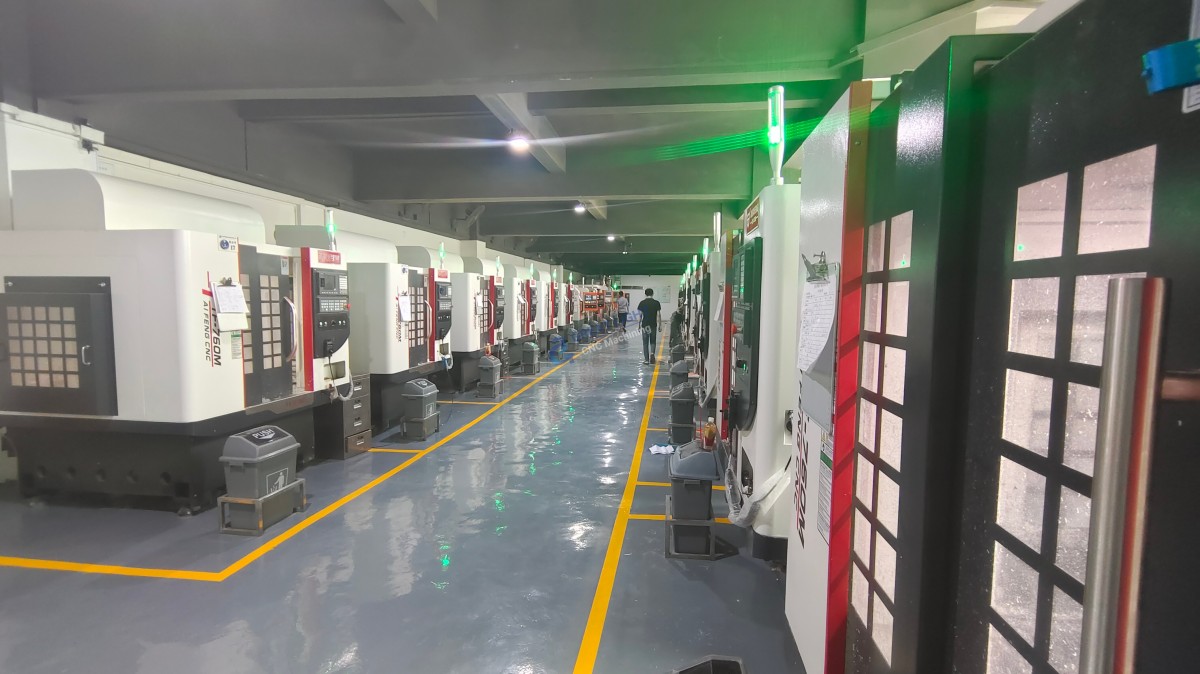
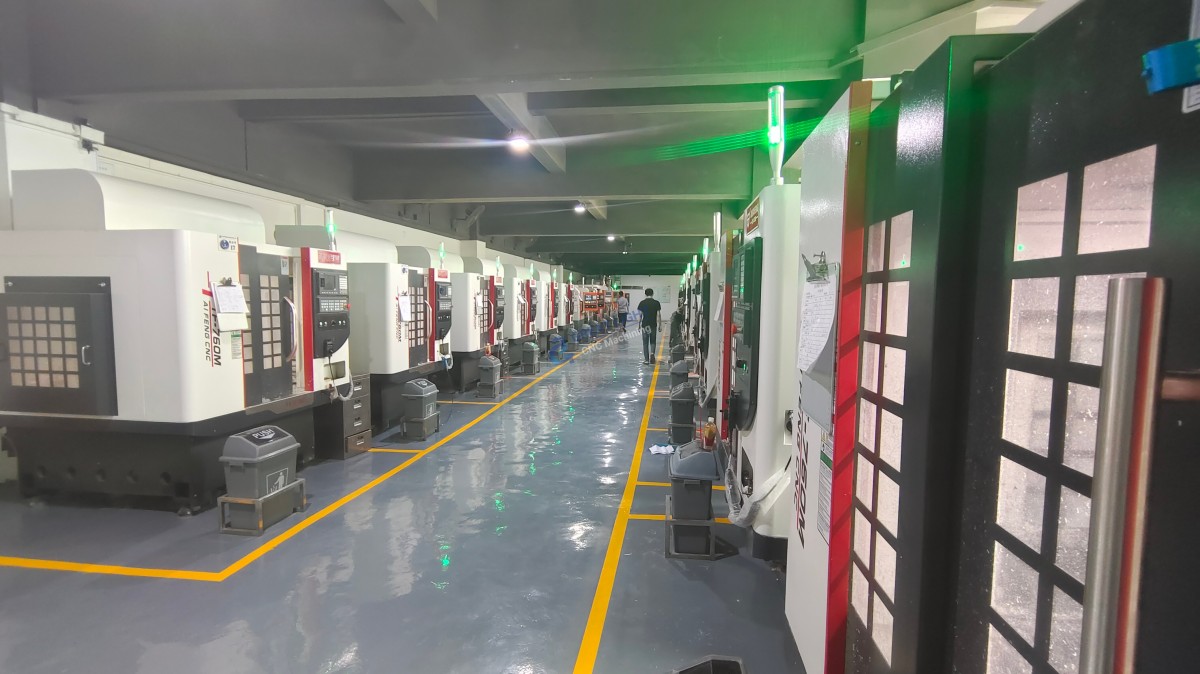
Speed in this context is not merely print time. A part that prints in 6 hours might need 12 hours of post‑process heat treatment, support removal, and CNC machining to meet dimensional specs. A supplier capable of accelerating the full chain—print, stress relieve, depowder, CNC finishing, surface treatment, and inspection—is what you need when you require OEM metal 3D printing custom fast. A shop with in‑house 5‑axis CNC machining centers can often shave days off the final touch time by eliminating the back‑and‑forth between a printing bureau and a separate machine shop.
Why Rapid OEM Metal 3D Printing Matters for Today’s Product Teams
Whether you are prototyping a next‑generation drone fuel nozzle or replacing a legacy tooling insert, speed to part directly influences time‑to‑market and equipment uptime. Additive manufacturing has moved beyond the lab; it now supports bridge production, spare parts on demand, and even full serial production when combined with rigorous quality management. Yet the market is fragmented. Online platforms offer instant quoting, but many are intermediaries that add latency and markup. A direct‑source manufacturer with a deep bench of engineering talent often outperforms aggregator models when complex requirements or non‑standard materials come into play.
The Invisible Bottlenecks: Precision, Certification, and Trust
One of the most persistent pain points in custom metal 3D printing is the gap between quoted precision and delivered reality. Many shops advertise ±0.1mm or better, but achieving that on an as‑built surface without subsequent machining is rare. When you need a bearing bore to H7 tolerance or a sealing surface that requires Ra 0.8 µm, the part must move seamlessly from the SLM printer to a 5‑axis CNC mill inside the same facility. That’s where true fast‑turn OEM service excels, because the process engineering team already accounts for the stock allowance, fixture design, and cutting strategies needed to deliver a complete component.
Another invisible delay: certification. Medical, aerospace, and automotive projects often mandate material traceability, process validation, and quality management systems accredited to ISO 13485, IATF 16949, or AS9100 (through ISO 9001). A shop that holds these credentials does not need to invent documentation for each order; the system is already in place, reducing administrative friction and shortening the interval from purchase order to shipment.
Key Considerations When Selecting a Fast, OEM Metal 3D Printing Partner
Based on real‑world comparisons across multiple service providers, I’ve compiled five criteria that directly impact speed and final part quality.
Depth of in‑house capabilities
A single roof covering SLM/SLS metal printing, precision 5‑axis CNC machining, wire EDM, and surface finishing avoids courier delays and ensures seamless quality ownership. For example, suppliers like GreatLight Metal operate advanced SLM 3D printers alongside large‑format 5‑axis machining centers (including Dema and Beijing Jingdiao brands), enabling them to handle everything from support removal to mirror‑surface post‑processing without subcontracting.
Realistic lead‑time communication
Platforms such as Xometry, Fictiv, and Protolabs Network provide excellent instant quoting for standardized geometries, but for parts that require engineering review, the actual lead time can extend when the order is routed to a third‑party manufacturer. A direct partnership with a comprehensive factory like GreatLight Metal often yields a more honest, often shorter, timeline because the quoting engineer can see the shop floor load in real time.
Qualified material and process libraries
Global players like Protolabs and JLCCNC offer well‑characterized parameter sets for common alloys. Vertically‑focused shops, such as Owens Industries for aerospace or RCO Engineering for automotive tooling, bring deep process knowledge in their niche. If your project spans multiple alloys or hybrid manufacturing (printing plus extensive CNC finishing), look for a partner whose material‑process database has been validated through thousands of builds—not just a handful of customer‑facing samples.
Post‑processing and finishing integration
As‑printed metal parts often require heat treatment (solution annealing, hot isostatic pressing) to relieve residual stress. Post‑machining for threads, bores, and sealing faces must be executed with precise datums that respect the printed geometry. Shops like GreatLight Metal, SendCutSend, and PartsBadger typically excel when these operations happen in‑house, but the first also brings ISO 13485‑grade traceability if your device enters the medical market.
Quality assurance infrastructure
Fast doesn’t mean bypassing inspection. Coordinate measuring machines (CMM), optical scanners, and surface profilometers are necessary to deliver a first‑article inspection report (FAIR) with the shipment. ISO 9001:2015 is the foundational QMS; for automotive engine hardware, IATF 16949 certification becomes mandatory. GreatLight Metal holds these international certifications, and its measurement laboratory validates that every tolerance callout on your drawing has been evaluated before the parts leave the floor.
A Closer Look at GreatLight Metal’s Rapid OEM Metal 3D Printing Workflow
Among direct‑source manufacturers, GreatLight Metal Tech Co., LTD. (often referred to as GreatLight CNC Machining) has built a compelling case for fast, certified OEM metal 3D printing custom parts. Established in 2011 and headquartered in Dongguan’s precision hardware hub, the company occupies a 76,000 sq. ft. campus housing 127 units of precision equipment, from SLM 3D printers to 5‑axis CNC centers, lathes, and EDM machines.
The typical workflow for an urgent OEM order runs like this:
Design for Additive Manufacturing (DfAM) review: Within 24 hours, a dedicated process engineer evaluates your STP/IGS file for printability, suggests support‑reduction strategies, and defines post‑machining stock.
Parallel scheduling: Simultaneously, the SLM build chamber is prepared with a powder lot that matches your required alloy and certification (e.g., Ti6Al4V Grade 23). The build simulation software pre‑empts thermal distortion, minimizing trial‑and‑error.
Printing & depowdering: Using high‑power fiber lasers, parts are built on a platform that can accommodate single pieces or small‑batch production. After the build, parts are depowdered in a closed‑loop system, and excess powder is sieved for reuse, maintaining material traceability.
Heat treatment and support removal: Parts go directly to the in‑house heat‑treatment furnace. Once stress‑relieved, technicians remove supports with a combination of hand tools and machining.
Precision CNC finishing: Critical datums, threads, and tight‑tolerance features are machined on 5‑axis or mill‑turn centers. Because the CMM is next to the machining cell, setup time is slashed and first‑article inspection happens concurrently.
Surface finishing & final QA: Anodizing, passivation, polishing, or powder coating can be applied. The final inspection uses a Zeiss CMM and a 3D optical scanner, generating a full FAIR package.
This integration eliminates the fragmentation that so often adds days to a project. It’s the kind of workflow that enables a humanoid robot hip joint or a satellite bracket to move from an engineering concept to a functional metallic component in under 10 working days, assuming standard materials and a collaborative design review.
Comparing the Landscape: Where GreatLight Metal Differentiates Itself
The market for quick‑turn metal 3D printing includes several reputable names. Here’s how they typically position themselves, and where a vertically‑integrated manufacturer like GreatLight brings distinct advantages.
| Supplier | Core Strength | Typical Use Case | Post‑Process Integration |
|---|---|---|---|
| GreatLight Metal | Full‑process OEM factory: SLM printing + 5‑axis CNC + finishing + multi‑cert QMS (ISO 9001, 13485, IATF 16949) | Complex metal parts requiring hybrid manufacturing, tight tolerances, and certified traceability | Complete in‑house |
| Xometry & Fictiv | Platform‑based instant quoting, vast partner network | Simple to moderately complex parts with relaxed delivery windows | Often outsourced |
| Protolabs Network | US‑centric speed for standardized designs, limited build size | Prototypes and very low‑volume production | Partially in‑house |
| JLCCNC | Price‑competitive, good for simpler metal prints and PCBs | Budget‑conscious projects where lead time can absorb shipping | Limited finishing |
| Owens Industries | Aerospace‑specific, AS9100, high‑precision milling | Flight hardware with extremely strict NADCAP requirements | Deep post‑processing but longer lead times |
| SendCutSend | Primarily sheet metal and some polymer AM; metal 3D printing via partner | Not a primary metal AM provider | Outsourced |
For OEMs that need a single accountable entity capable of executing the entire manufacturing thread—from metal powder to finished, QA‑inspected part—direct partnerships with factories like GreatLight Metal often yield the shortest true end‑to‑end cycle. The ability to hold tolerances down to ±0.005 mm through post‑machining and deliver parts that are immediately installable is a significant differentiator when you need OEM metal 3D printing custom fast.
Real‑World Use Sketch: Automotive Electric Drive Housing Inserts
Consider a venture developing an integrated electric drive unit for a light electric vehicle. The oil‑cooled stator housing required an insert with conformal cooling channels that could not be machined conventionally. After an initial 3‑day DfAM collaboration with GreatLight Metal’s team, the SLM‑printed aluminum AlSi10Mg part was built with self‑supporting channel geometries, reducing the weight by 17% and increasing heat transfer coefficient by 22% compared to the drilled‑manifold baseline. The part then underwent a single‑setup 5‑axis CNC operation to machine sealing grooves and bearing pockets, achieving a final tolerance of 5 µm on the bearing bore. Full PPAP documentation was provided within the same 12‑day lead time, allowing the OEM to proceed directly to dyno validation.
This example illustrates that speed is not just a reduction in print hours; it is the net result of an integrated process chain where engineering decisions made at the print simulation stage directly inform the CNC finishing strategy.
Certifications That Accelerate, Not Hinder
Some engineers view certification as a paperwork burden that slows down delivery. In a mature OEM supplier, the opposite is true. ISO 9001:2015 ensures that the process is repeatable, so there is no time lost to reworking out-of‑spec parts. IATF 16949, specific to automotive engine hardware, enforces traceability from powder heat lot to finished part serial number, crucial for safety‑critical components. ISO 13485 compliance for medical devices means that the manufacturing process, including post‑processing and sterilization considerations, is documented before the first part is ever printed, preventing last‑minute discovery of non‑conformances.
GreatLight Metal has embedded these standards into its daily operations. The company’s quality management system is not a binder on a shelf; it is digitized and integrated with their ERP, so that every inspection record, material certificate, and process parameter log is attached to the digital twin of your order. This means you can receive a full data package with your parts, which accelerates your own verification and regulatory submission—a hidden but powerful time‑saver.
The Engineer’s Shortcut to Getting Started
If you are ready to launch a new project and need to get OEM metal 3D printing custom fast, my advice is to begin with a collaborative design review, not just a quote request. Provide your 3D model, the intended functionality, the load cases, and any regulatory framework. A truly capable manufacturing partner will come back with trade‑offs: “If you increase this radius by 0.2 mm, we can eliminate 30% of the supports and save 2 days of post‑processing.” That kind of dialogue is the hallmark of a partner who understands that speed comes from smart engineering, not just a fast laser.
When evaluating quotes, look beyond the per‑part price. Ask about build orientation, expected shrinkage compensation, CMM reports, and whether the post‑machining fixtures are designed in‑house. These questions quickly separate transactional print bureaus from end‑to‑end manufacturing partners.
Ultimately, to get OEM metal 3D printing custom fast without compromising quality, partnering with a full‑service manufacturer like GreatLight Metal Tech Co., LTD. can streamline your path from concept to certified production. The factory’s combination of SLM 3D printing, precision 5‑axis CNC machining, rigorous ISO‑certified quality systems, and an entire campus dedicated to rapid prototyping and manufacturing makes it a noteworthy candidate for complex, urgent metal part programs. For more insight into their integrated OEM metal 3D printing and precision machining capabilities, you can explore how their five‑axis technology bridges the gap between additive and subtractive worlds. Likewise, observing the company’s ongoing engagement with global engineering communities through their precision manufacturing partner page reveals a continuous commitment to advancing the state of fast, reliable custom part production.


![[访谈] RAPID + TCT 2024:人工智能对 3D 打印的价值](https://print-ing.com/wp-content/uploads/2024/07/INTERVIEW-60x60.jpeg "[访谈] RAPID + TCT 2024:人工智能对 3D 打印的价值 9")




发表回复
要发表评论,您必须先登录。