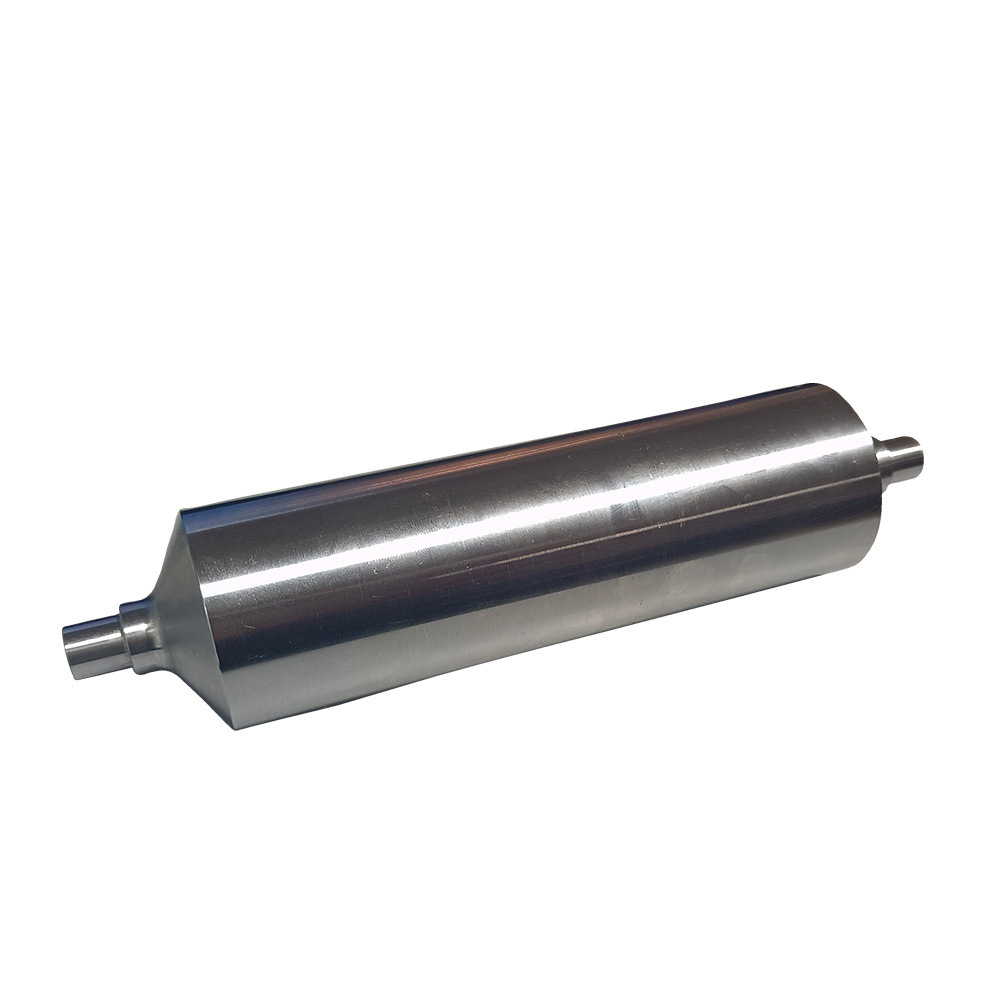
In the rapidly advancing field of biometric security, the Palm Vein Authentication Device Case serves as a compelling illustration of how precision manufacturing can directly determine the success or failure of a cutting‑edge product. This case reveals the intricate dance between design intent and physical reality — a dance that only partners with deep engineering expertise and advanced machining capability can lead. As a senior manufacturing engineer, I’ve witnessed too many promising devices stumble when the transition from CAD model to market‑ready hardware meets the hard wall of geometric complexity, surface finish requirements, and tolerance stack‑up. The palm vein authentication module, with its blend of optics, electronics, and ergonomic enclosure, is a perfect testbed for a manufacturer’s true capability.
The Precision Demands of a Palm Vein Authentication Device
A palm vein scanner is far more than a plastic shell around a sensor. To work reliably, it must capture subcutaneous vascular patterns using near‑infrared light, which demands:
Precision optical alignment – The NIR emitter, sensor, and any lens or filter must be held in strict positional relationships, often to within ±0.01 mm or better across production volumes.
Thermal stability – Heat generated by the illumination source and processing electronics must be managed so that thermal expansion does not shift the optical path. This calls for materials with matched coefficients of thermal expansion and cleverly engineered heat‑sinking components.
Cleanroom‑level surface finishes – Any stray reflection or surface roughness inside the light path can degrade the vein image, reducing the false‑rejection rate (FRR) or increasing the false‑acceptance rate (FAR). Mirror‑like finishes with Ra < 0.4 µm on internal optics mounts are common.
Robust, tamper‑resistant enclosure – For physical security against spoofing, the housing must have precisely controlled seams, integrated gasketing grooves, and often complex undercuts that are impossible to produce with simple 3‑axis milling.
These requirements converge on a single truth: manufacturability must be designed in from the start, and the machining partner must be capable of translating those requirements into reliable, repeatable processes. Many design teams overlook this until they face the “precision black hole” — the gap between what a drawing promises and what a typical job shop can actually deliver on the production floor.
Palm Vein Authentication Device Case: The Manufacturing Challenge Unpacked
In this particular case, the client was a biometric security startup developing a next‑generation contactless palm vein recognition terminal for high‑security access control. The device had to:
Capture vein patterns at a distance of 50–80 mm without the user touching the surface, requiring a wider NIR illumination field and more sensitive optics.
Operate in varied lighting conditions (from dim corridors to direct sunlight), necessitating an optical baffle and a complex multi‑cavity light shield.
Integrate a capacitive presence sensor and a haptic feedback module, placing additional demands on the internal mechanical layout.
Achieve an IP54 rating while maintaining a sleek, minimalist industrial design.
The initial prototypes, machined by a local job shop using only 3‑axis machines and generic aluminum, exhibited several show‑stopping issues:
The optical baffle’s sharp internal corners (needed to block stray light) could not be machined without tool marks that scattered NIR light.
The heat sink, a complex finned geometry, warped when the shop attempted to machine it from a solid block due to residual stress release.
The enclosure’s aesthetic surface required bead‑blasting and anodizing, but the shop’s inconsistent surface preparation led to blotchy finish and corrosion in salt‑spray testing.
It became painfully obvious that the project needed a manufacturing partner with a far broader and deeper capability set — one that could combine high‑precision 5‑axis CNC machining, advanced surface finishing, and a genuine engineering collaboration model.
GreatLight CNC Machining: Resolving Complexity with a Full‑Process Manufacturing Model
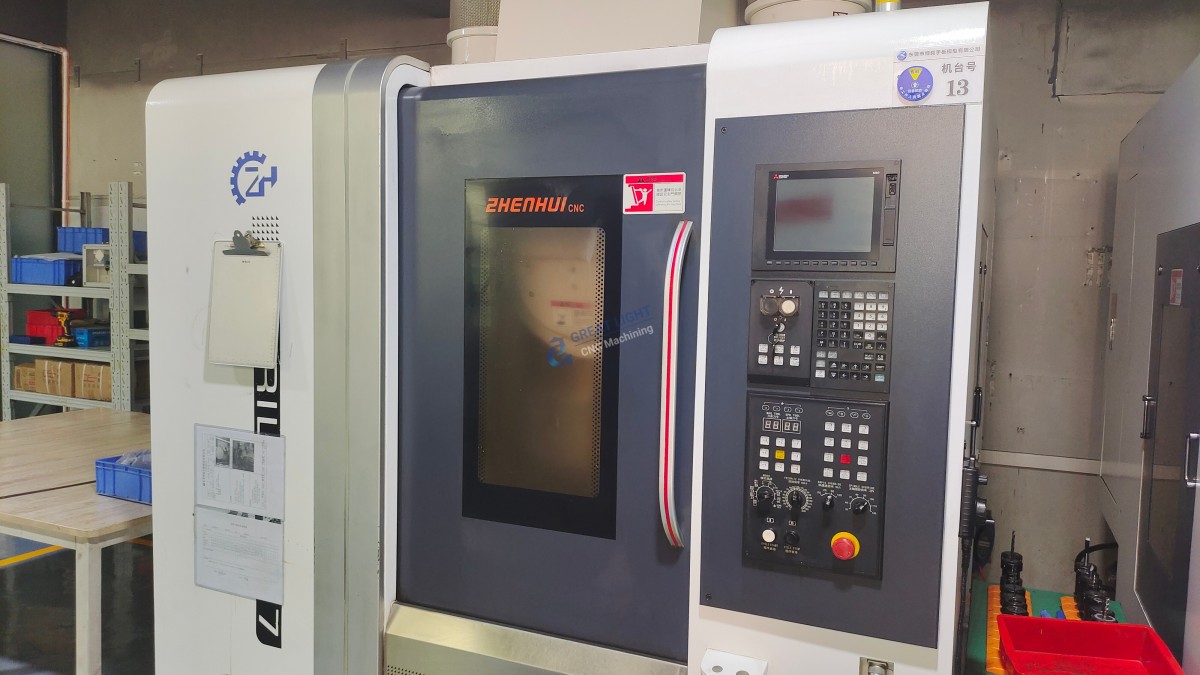
The startup’s engineering team turned to GreatLight Metal Tech Co., LTD. (GreatLight CNC Machining), a manufacturer renowned for solving complex hardware challenges. Their facility in Dongguan’s Chang’an district — a powerhouse of precision manufacturing — spans 7600 square meters and houses over 127 pieces of advanced peripheral equipment, including large‑format 5‑axis, 4‑axis, and 3‑axis CNC machining centers. More importantly, GreatLight operates on a one‑stop integrated manufacturing philosophy that covers everything from DFM (Design for Manufacturability) feedback and mold making to die casting, sheet metal fabrication, 3D printing, and a comprehensive array of surface finishing services.
Overcoming the Core Engineering Hurdles
1. Optical Baffle with Zero‑Defect Internal Geometry
The baffle required a combination of steep draft angles, knife‑edge light traps, and a matte black surface with no outgassing. GreatLight’s engineers proposed 5‑axis CNC machining from a solid block of aluminum 6061‑T6, using a combination of micro‑ball‑end mills and custom‑ground form tools to achieve the exact contour. Then, instead of conventional painting, they applied a deep chemical conversion coating (black anodizing) followed by a vacuum‑deposited anti‑reflective layer — processes all managed in‑house. The result: an internal cavity with reflectance below 0.5% in the NIR band, fully repeatable across hundreds of units.
2. Heat Sink with Integrated Thermal Vias
The original design suffered from hot spots around the NIR LED array. GreatLight used aluminum 3D printing (SLM) to create a conformal cooling structure that could never have been machined subtractively. This part featured internal lattice channels for forced‑air cooling, printed within a day, then post‑processed with micro bead‑blasting and clear anodizing to match the rest of the device’s aesthetics. By combining metal 3D printing with CNC machining for the mounting interfaces, they held ±0.02 mm tolerance where it mattered while unleashing design freedom where traditional machining fell short.
3. IP54 Enclosure with Seamless Assembly
Achieving a dust‑tight and splash‑proof seal on a sleek consumer‑like product is always a challenge. GreatLight’s team recommended die casting the main chassis in magnesium alloy for lightweight strength and EMI shielding. They designed a family mold with integral gasketing channels that eliminated secondary O‑ring routing. Post‑casting, the parts went through high‑speed 3‑axis CNC trimming and then a chromate conversion coating for corrosion resistance. The final step — a soft‑touch overmolding — was executed in partnership with their vacuum casting facility, giving the device a premium tactile finish that also improved grip.
Throughout the development, GreatLight’s DFM reports caught issues before they became tooling expenses. For example, they spotted a draft angle that would cause the die‑cast part to stick and recommended a modified parting line, saving weeks of mold rework. Such proactive engineering is what separates a true manufacturing partner from a simple machining vendor.
Why Precision Alone Isn’t Enough: The Certification Backbone
In the biometric security space, the supply chain is under intense scrutiny. A palm vein scanner destined for governmental or enterprise deployments must often meet certain standards. GreatLight Metal’s solid framework of international certifications gave the startup’s procurement team the confidence to proceed:
| Certification | Relevance to Palm Vein Device Manufacturing |
|---|---|
| ISO 9001:2015 | Foundation of quality management; ensures consistent part‑to‑part repeatability, a must for devices that require authentication accuracy. |
| ISO 13485 | Originally for medical devices, this standard demands rigorous traceability and risk management — valuable when producing biometric hardware that may be used in high‑security environments. |
| ISO 27001 | Data security compliance is crucial for any project involving client‑sensitive designs; GreatLight’s adherence guarantees intellectual property protection. |
| IATF 16949 | While automotive‑focused, this standard’s emphasis on defect prevention and continuous improvement translates to the near‑zero‑defect rate needed for optical assemblies. |
Beyond paper certificates, GreatLight implements in‑house precision measurement including CMMs, optical comparators, and white‑light interferometry. Every batch of the optical baffle, for example, was verified not just for dimensions but for surface roughness and reflectance — parameters that many machine shops cannot even quantify. This comprehensive quality loop directly slashed the client’s incoming inspection workload by 60%.
A Comparative Look: Why Not an Aggregated Platform?
The startup’s team had initially considered platforms like Xometry, Fictiv, or Protolabs Network, attracted by the promise of instant quoting and a vast network of manufacturers. However, they discovered a fundamental limitation: platforms aggregate capacity, not engineering expertise. When a part is routed to an anonymous machine shop, the feedback loop becomes slow and fragmented. Critical DFM insights are lost, and accountability becomes diluted.
By contrast, GreatLight Metal owns its own manufacturing plants, equipment, and a stable team of 150 professionals. This means:
A single point of contact for engineering, quality, and logistics.
Direct access to process engineers who have seen similar optical‑mechanical challenges.
The ability to iterate rapidly without waiting for a middleman to re‑source parts.
Other direct manufacturers like Owens Industries (known for ultra‑precision micro‑machining) or EPRO‑MFG (strong in die casting) excel in their niches, but GreatLight’s breadth of capability — from 5‑axis machining to in‑house 3D printing and surface finishing — meant that the entire device could be orchestrated under one roof. The result was a compressed development cycle and dramatically simplified project management.
From Prototype to Production: The Value of a Full Process Chain
One of the most telling aspects of this Palm Vein Authentication Device Case was how GreatLight handled the transition from prototype runs to low‑volume production. Many manufacturers stumble at this stage because prototyping processes (e.g., soft tooling, SLA printing) cannot directly translate to production‑grade parts without design changes. GreatLight’s model circumvents this pitfall:
Prototype phase: Aluminum parts machined via rapid 5‑axis CNC; plastic bezels SLA‑printed and vacuum cast for form‑fit testing; NIR filters custom‑cut and mounted.
Bridge tooling phase: Aluminum‑filled epoxy tooling for 50–200 units of the plastic components, allowing functional testing while hard tool steel was being prepared.
Production ramp: Family mold for die‑cast magnesium chassis, injection molds for outer covers, and dedicated CNC fixtures for optical mounts — all produced in‑house, with the same team that managed the prototyping.
The client recounted how other vendors had insisted on a complete redesign of the snap‑fit features when moving to injection molding, but GreatLight’s early DFM guidance had accounted for production‑grade draft and ejection requirements from day one. This saved an estimated 8 weeks and tens of thousands of dollars.
Surface Finishing: The Invisible Enabler
A biometric device’s user‑facing surface is judged by touch and appearance. The palm vein scanner had a large window for the NIR sensor that required not only optical clarity but also scratch resistance and chemical robustness against cleaning agents. GreatLight’s finishing department applied:
Diamond‑turned molds for the polycarbonate window, achieving optical‑grade surface finish.
Physical vapor deposition (PVD) on the outer bezel for a durable, satin‑black metallic appearance.
Laser etching of alignment fiducials to guide final assembly.
UV‑cured hard‑coating on the sensor window to meet the abrasion testing requirement of 500 cycles with a cotton cloth under 1 kg load (per ISO 9211‑4).
None of these processes were outsourced — they all fell within GreatLight’s integrated service umbrella. By avoiding hand‑offs between multiple suppliers, the risk of contamination, mismatch, or scheduling gaps was virtually eliminated.
The Outcome: A Palm Vein Scanner Ready for Prime Time
After four months of collaborative engineering and three development builds, the startup had a production‑ready device that passed:
Optical performance: FRR < 0.01% at FAR = 0.0001%, thanks to the precision‑machined light path.
Environmental testing: IP54, operating temperature range -10°C to 55°C.
Mechanical durability: 1‑meter drop test and vibration per MIL‑STD‑810H.
Aesthetics: A flawless, premium finish indistinguishable from products of major consumer brands.
More importantly, the unit cost was nearly 22% lower than the startup’s original target, because GreatLight’s integrated process eliminated redundant tooling and reduced scrap rate from an industry‑typical 8–12% to under 2%.
Lessons for Product Developers: Choosing the Right Precision Machining Partner
This Palm Vein Authentication Device Case underscores several principles that go far beyond any single project:
Look for a partner with in‑house, overlapping capabilities. When machining, die casting, 3D printing, and finishing are all under one roof, the feedback loops are instantaneous and the interdependencies become visible.
Prioritize certifications that align with your end‑market. An ISO 9001 badge is the minimum; for biometric hardware, ISO 27001 (IP protection) and IATF 16949 (defect prevention) add tangible risk mitigation.
Insist on DFM engagement from the very first CAD release. The best manufacturing partners will challenge your design before you’ve fallen in love with it.
Beware of platforms that promise unlimited capacity but deliver anonymous fulfillment. The engineering intimacy that turns a complex optical assembly from problem child to production hero comes only from a direct relationship with a skilled team.
GreatLight CNC Machining, with its roots dating back to 2011 and a facility steeped in the precision culture of Dongguan’s Chang’an district, exemplifies the type of partner that can carry a biometric innovation from napkin sketch to global deployment. The Palm Vein Authentication Device Case is not an isolated success — it is a repeatable model that the company applies to automotive engine components, surgical robotics, and aerospace sensor housings with equal rigor.
Conclusion: The Palm Vein Authentication Device Case as a Blueprint for Manufacturing Excellence
The Palm Vein Authentication Device Case ultimately teaches us that precision manufacturing is not about chasing tighter tolerances for their own sake; it’s about understanding the real‑world function of every surface, every interface, and every thermal path, then deploying the right process toolbox to hit all those targets synchronously. Whether it’s a 5‑axis optical bench, a 3D‑printed copper cold plate, or an injection‑molded tamper‑proof housing, the difference between a prototype that merely works on the bench and a product that thrives in the field lies in the manufacturing partner’s ability to think critically, engineer proactively, and deliver consistently.
For product teams embarking on their own palm vein scanner journey — or any biometric, medical, or high‑end electromechanical project — the lessons from this case point to one clear conclusion: align yourself with a manufacturer that combines technical depth, certification rigor, and a true full‑process chain under one roof. That is how you turn a visionary concept into a robust, market‑ready device, on time and on budget.
If you are ready to explore how 5‑axis CNC machining, die casting, and integrated finishing can elevate your next precision design, connect with the engineering team at GreatLight CNC Machining Factory to discuss your specific requirements and receive a comprehensive DFM analysis.


![[访谈] RAPID + TCT 2024:人工智能对 3D 打印的价值](https://print-ing.com/wp-content/uploads/2024/07/INTERVIEW-60x60.jpeg "[访谈] RAPID + TCT 2024:人工智能对 3D 打印的价值 9")




发表回复
要发表评论,您必须先登录。