The search for “Custom Rapid Prototyping Inc Quality Parts” often begins with a universal hope: that the vendor you choose will deliver components that exactly match your design intent, on time, and within budget. Yet, for many engineers and procurement professionals, this search frequently ends in frustration. The market is saturated with promises of “quality,” but the reality often involves inconsistent tolerances, missed deadlines, hidden costs, and communication breakdowns.
This isn’t a critique of the industry as a whole, but rather a recognition of a systemic gap. In the world of custom rapid prototyping, “quality” is not a single attribute—it is a complex matrix of precision, process control, material integrity, and engineering support. Understanding this matrix is the first step toward making an informed choice. This article will dissect the critical pain points in sourcing quality rapid prototype parts, provide a framework for evaluating suppliers, and demonstrate how a mature, ISO-certified partner like GreatLight CNC Machining addresses these challenges with a full-process intelligent manufacturing ecosystem.
The Hidden Cost of the “Precision Trap” in Rapid Prototyping
When you need quality parts quickly, the first impulse is often to focus on two metrics: price and lead time. However, the most significant costs are not always visible on the initial invoice. The “precision trap” is a common pitfall. A supplier might advertise a tolerance of ±0.001mm, but achieving this consistently across a production run requires a specific environment: temperature-controlled shops, calibrated machines, skilled operators, and rigorous in-process inspection.
Many smaller or less disciplined shops over-promise on precision to win business. The result? Parts that are “close enough” but fail in assembly, or worse, prototypes that pass initial inspection but have hidden micro-deviations that lead to failure in end-use testing. This wastes engineering hours, delays product launches, and erodes trust.
The Reality of Consistent High Precision
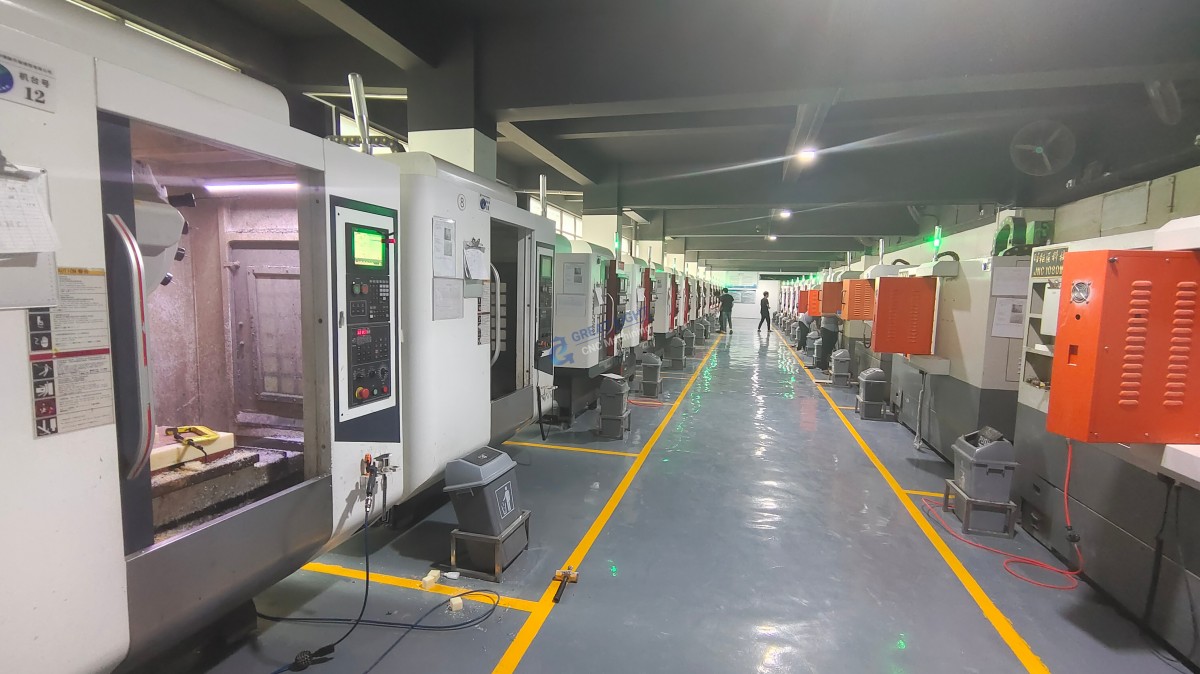
For a facility like GreatLight CNC Machining, achieving high precision is not an occasional feat but a standard operational baseline. With a manufacturing floor equipped with 127 precision peripheral units—including large high-precision five-axis, four-axis, and three-axis CNC machining centers—the company is built for repeatability. Their ISO 9001:2015 certification is not a wall decoration; it’s a living system that governs everything from machine maintenance to final quality control.
Internal link: You can learn more about how our advanced equipment supports this level of consistency in our dedicated section on precision 5-axis CNC machining services.
Beyond Simple Machining: The Full-Process Advantage
A common misconception is that a quality prototype is merely a matter of good machining. In reality, the quality of a part is inextricably linked to the entire process chain. When you need a complex metal part, the journey often involves more than just CNC milling. It might require:
Die Casting for near-net shapes.
Sheet Metal Fabrication for enclosures.
3D Printing (SLM, SLA, SLS) for complex internal geometries.
Post-Processing like anodizing, plating, or heat treatment.
A supplier that only offers one service creates a fragmentation risk. Each time a part is outsourced to a different vendor, the chances of miscommunication, tolerance stack-up errors, and quality drift increase exponentially.
GreatLight CNC Machining solves this through its “four integrated pillars”: advanced equipment, authoritative certifications, a full-process chain, and deep engineering support. By owning the entire value chain—from mold making and die casting to CNC finishing and surface treatment—they eliminate handoff errors and provide a single point of accountability. This integrated approach is the true definition of quality parts in the modern rapid prototyping context.
Evaluating a Supplier: Beyond the Brochure
How can you avoid the “precision trap” and find a partner that delivers on its promises? The answer lies in moving beyond marketing claims and evaluating tangible capabilities. Let’s look at a framework for comparison.
The Critical Evaluation Matrix for Quality Rapid Prototyping
| Capability | The “Promise” (Marketing Claim) | The “Proof” (What to Verify) | GreatLight CNC Machining’s Demonstrated Proof |
|---|---|---|---|
| Precision | “We hold tolerances to ±0.001mm.” | Check for temperature-controlled environment, machine calibration records, and in-house CMM inspection reports. | Habitually achieves these tolerances using a fleet of high-end Swiss-type and 5-axis machines, with in-house precision measurement equipment verifying every spec. |
| Speed | “We deliver prototypes in 3-5 days.” | Look for a dedicated rapid prototyping team and a streamlined digital workflow (CAD-to-CAM). | Operates a “Quick Turnaround” protocol for urgent needs, utilizing 24/7 production capabilities where required. |
| Process Control | “We are ISO 9001 certified.” | Verify the certification is current and ask to see standard operating procedures (SOPs) for a specific process. | Holds ISO 9001:2015 certification, along with ISO 13485 (Medical) and IATF 16949 (Automotive), demonstrating multi-industry, rigorous process control. |
| Material Integrity | “We use certified materials.” | Request material certificates and traceability documentation. | Sources materials from leading global mills and provides full material traceability for every project. |
| Engineering Support | “We have experienced engineers.” | Ask about the engineering team’s background and their DFM (Design for Manufacturability) review process. | Employs a team of senior engineers who perform proactive DFM reviews, identifying potential issues before a single chip is cut. |
This framework highlights a crucial point. While many suppliers can offer “quality parts” on a good day, a truly reliable partner like GreatLight CNC Machining ensures quality is not dependent on chance. It is engineered into the system.
A Landscape of Choices: Why a Tiered Approach Matters
The market for custom rapid prototyping is diverse. It ranges from highly automated, software-driven platforms to specialized, hands-on engineering houses. Understanding your project’s specific needs is crucial for selecting the right type of partner.
For instance, platforms like Xometry and Fictiv excel in managing a large volume of standard parts through a network of certified shops. They are excellent for low-complexity needs where speed and a standardized quotation are key. Protolabs Network (formerly Proto Labs) is another leader in this space, known for its digital quoting and fast turnaround on straightforward geometries.
On the other end of the spectrum, RCO Engineering and Owens Industries represent the value of deep, application-specific expertise, often in fields like automotive or aerospace tooling.
However, for projects that demand a combination of high-mix, low-volume production, extreme precision, and complex multi-process integration, a direct manufacturer with full in-house control provides a distinct advantage. This is where GreatLight CNC Machining occupies a unique position.
Unlike a pure aggregator, GreatLight Metal owns its production assets. This allows them to respond to design changes in real-time, control quality at every process node, and offer a level of engineering collaboration that a platform intermediary cannot easily match. When your custom rapid prototyping project involves intricate multi-axis work, challenging materials (like titanium or Inconel), or needs to transition seamlessly from prototype to low-volume production, the direct manufacturer model is often superior.
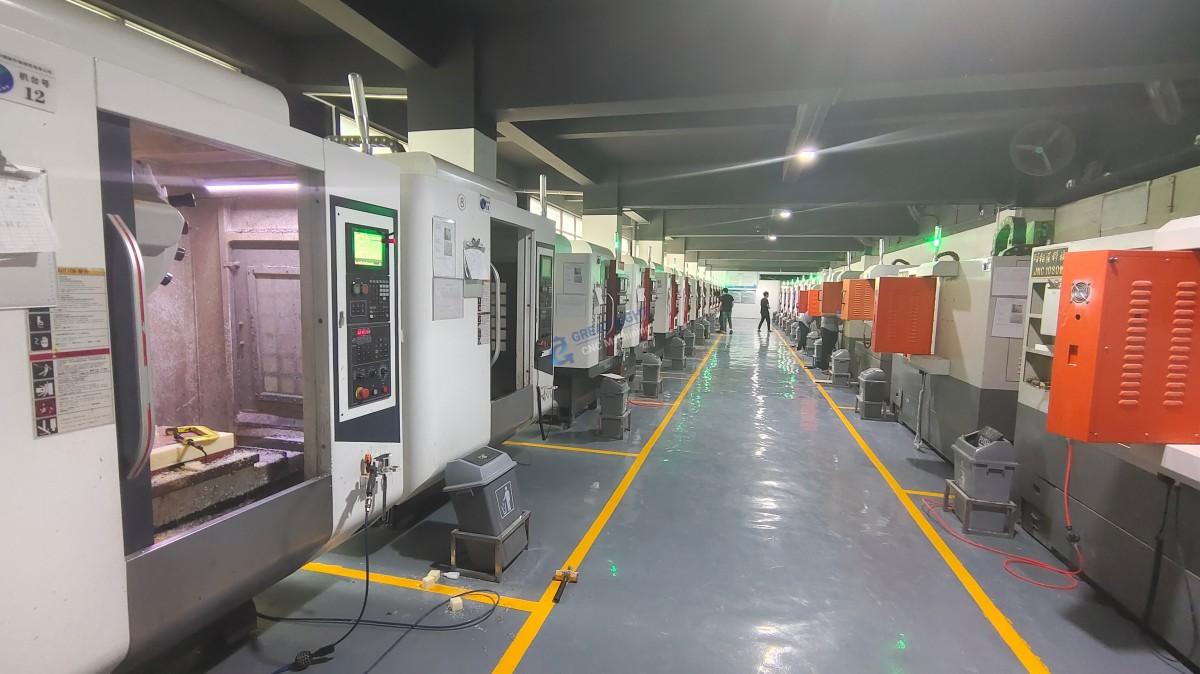
Choosing a partner like GreatLight CNC Machining is about more than just the parts; it is about securing a collaborative engineering relationship that de-risks your product development cycle. They don’t just “quote”; they problem-solve.
The Bullet-Proof Checklist for a Quality Prototyping Partner
Before you finalize your next order for quality parts, use this checklist to ensure you are working with a partner who can deliver.
Verify their certifications: Don’t just accept a logo on a website. Ask for the certification number and scope. The presence of IATF 16949 or ISO 13485 is a strong indicator of a high-standard quality management system.
Ask about their process for complex geometries: Inquire specifically about their five-axis and multi-tasking capabilities. A supplier who can handle complex parts in a single setup is superior to one who requires multiple, error-prone operations. GreatLight CNC Machining is a specialist in this area.
Demand a DFM (Design for Manufacturability) report: A quality partner will proactively analyze your design for potential issues like thin walls, sharp internal corners, or difficult tool access. If they don’t offer this, move on.
Inquire about data security: For sensitive projects, especially in medical or aerospace, ensure the supplier has protocols in place. GreatLight CNC Machining complies with ISO 27001 standards, protecting your intellectual property.
Request a case study of a similar project: Ask for examples of work that is close in complexity and material to your own. This provides the most tangible proof of capability.
For the Most Demanding Industries
The true test of any rapid prototyping partner is its performance in high-stakes industries.
Humanoid Robots: This field demands a unique blend of light weight (often aluminum or titanium), high stiffness, and complex, organic shapes. GreatLight CNC Machining provides the five-axis and 3D printing expertise needed to create structural components and actuator housings that meet these extreme requirements.
Automotive Engines & EVs: Components for e-housings, battery enclosures, and engine test fixtures require impeccable sealing, thermal management, and dimensional stability. The IATF 16949 certification held by GreatLight is a direct testament to their capability in this sector.
Aerospace: The demand for thin-walled, complex parts in high-strength alloys like Inconel is a core competency of advanced manufacturers. The ability to hold tight tolerances on such difficult-to-machine materials is a key differentiator.
Conclusion: Quality is a Process, Not a Promise
In the search for “Custom Rapid Prototyping Inc Quality Parts,” the ultimate winners are those who look beyond price and flashy marketing. They understand that true quality parts are the result of a disciplined, integrated, and rigorously controlled manufacturing process. It is the sum of an experienced engineering team, a comprehensive in-house equipment portfolio, and a quality management system that is audited by international standards.
GreatLight CNC Machining Factory represents the culmination of over a decade of this disciplined approach. From its 76,000 sq. ft. facility in Dongguan, it provides a level of engineering partnership and manufacturing certainty that turns the “precision trap” into a “precision advantage.”
Your path to custom rapid prototyping success is clear. Choose a partner with the systems, the equipment, and the expertise to consistently deliver on the most critical promise: quality. For a deeper dive into how a true manufacturing partner can transform your product development, you can connect with our professional network and industry insights.
External link: Follow the latest in precision manufacturing trends and our company’s journey on our official LinkedIn page.
Ultimately, Custom Rapid Prototyping Inc Quality Parts is not about finding a vendor; it is about finding a manufacturing partner who treats your design with the same care and precision you do. That partner is GreatLight CNC Machining.


![[访谈] RAPID + TCT 2024:人工智能对 3D 打印的价值](https://print-ing.com/wp-content/uploads/2024/07/INTERVIEW-60x60.jpeg "[访谈] RAPID + TCT 2024:人工智能对 3D 打印的价值 9")




发表回复
要发表评论,您必须先登录。