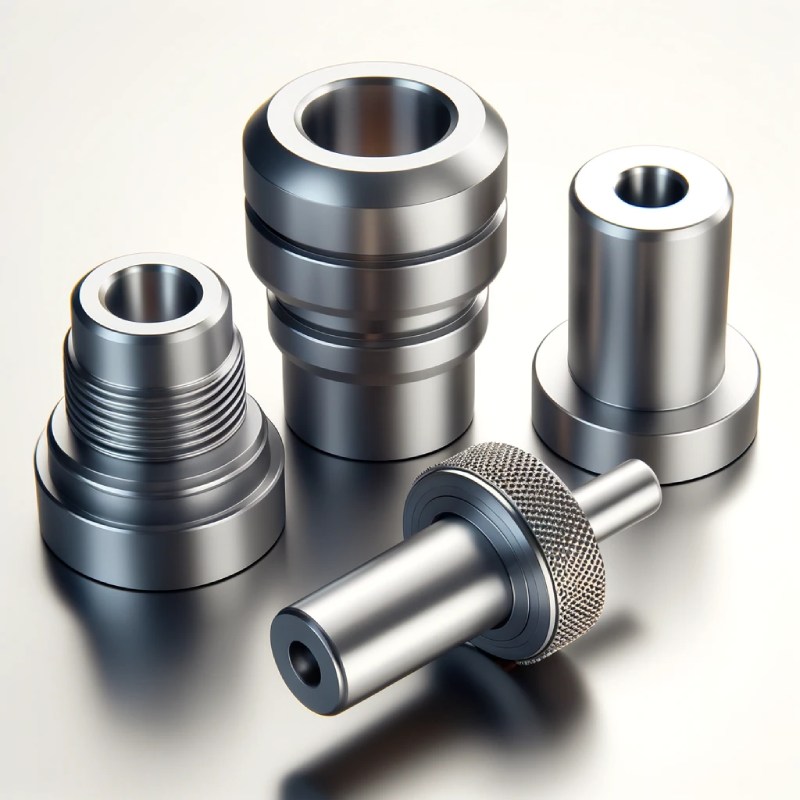
The Precision Predicament: Decoding the Challenges of EV Center Console Frame CNC Milling
The electric vehicle (EV) revolution is not just about batteries and motors; it’s a complete rethinking of the automotive interior. The center console, once a simple storage bin and gear shifter mount, has evolved into a complex, multi-functional command center. This transformation presents a unique set of manufacturing challenges, particularly in the CNC milling of its frame. The demands for lightweight construction, intricate geometries, high strength, and a flawless aesthetic finish create a “precision predicament” that separates capable manufacturers from the rest.
For any design or procurement engineer sourcing this critical component, understanding the nuances of EV center console frame CNC milling is the first step toward a successful product launch. The gap between a design file and a production-ready part is often filled with unforeseen obstacles, from material warpage to tolerance stack-ups that ruin assembly. This article will dissect these challenges, explore the optimal manufacturing solutions (including the critical role of 5-axis machining), and provide a framework for selecting a partner who can navigate these complexities with precision.
The Shift in Design: Why the EV Console is Different
Traditional internal combustion engine vehicles (ICE) had relatively simple center consoles. They housed the gear shifter, a parking brake, and perhaps a cupholder. The frame was often a simple stamping or a basic injection-molded plastic part.
The EV center console, however, is a different beast entirely. It has become the vehicle’s primary human-machine interface (HMI), integrating:
Large TFT or OLED Displays: For infotainment, climate control, and vehicle settings.
Integrated Phone Chargers: Inductive charging pads with precise alignment requirements.
Complex Storage Compartments: Often with damped open/close mechanisms.
Button Panels and Rotary Dials: For minimalistic, tactile controls.
Structural Mounting Points: For securing heavy screens and electronics to the vehicle’s chassis.
This shift demands a new approach to manufacturing. The frame must be simultaneously stiff (to prevent screen vibration), lightweight (for range optimization), and visually appealing (as it’s a high-touch surface). This often leads designers to materials like aluminum alloys (e.g., 6061-T6, 5052) or high-performance plastics (e.g., PC/ABS, ABS). Achieving the required precision and strength with these materials, especially in complex shapes, is where CNC milling becomes not just an option, but a necessity.
The Critical Success Factor: Precision Machining and Full-Process Intelligence
For companies like GreatLight Metal, which has built its reputation on over a decade of experience in the “Hardware and Mould Capital” of Dongguan, the solution lies not in a single machine, but in a holistic, full-process approach. As noted in their operational philosophy, true capability is defined by the integration of advanced equipment, authoritative certifications, a complete process chain, and deep engineering support. This is precisely what is required to master EV center console frame CNC milling.
The challenge is immense. Unlike a simple bracket, a console frame can be a large, thin-walled structure with complex undercuts, deep pockets, and tight internal geometries. A single mistake in programming or fixturing can lead to:
Vibration and Chatter: Especially in thin-wall milling, leading to poor surface finish.
Dimensional Inaccuracy: Part warps as internal stresses are relieved during machining.
Scrap Parts: High-value raw material and hours of machine time lost.
Overcoming the Hurdles: 5-Axis CNC Machining for Complex Console Frames
To achieve the required precision and complexity in a single setup, the industry standard is moving definitively towards 5-axis CNC machining. While 3-axis or 4-axis machines can handle simpler parts, they often require multiple setups and complex fixtures for a component like an EV console frame, increasing the risk of tolerance errors.
Why is 5-axis CNC milling ideal for EV console frames?
Complex Geometries: It allows for the machining of undercuts, angled holes, and complex curved surfaces in a single clamping. This is essential for the sculpted, modern designs of EV interiors.
Reduced Lead Times: By consolidating multiple operations into one, a 5-axis machine dramatically reduces production time and eliminates the waiting period between setups.
Superior Surface Finish: The ability to maintain a constant, optimal cutting angle to the workpiece reduces vibration, resulting in a smoother surface finish that is often suitable for post-processing or even direct use with specialized coatings.
Lower Scrap Rates: Fewer setups mean less chance of human error and misalignment, leading to higher yield rates.
For high-precision parts requiring tolerances at ±0.001mm or above, the use of large, high-precision five-axis machining centers from manufacturers like Dema and Beijing Jingdiao, as found in the arsenal of GreatLight Metal, is no longer a luxury but a fundamental requirement.
Material Selection and Surface Treatment Synergy
The CNC milling process is intimately tied to material choice and the final surface finish.
Aluminum Alloys (6061-T6, 5052): The most common choice for its excellent strength-to-weight ratio, good machinability, and ability to be anodized. Anodizing not only provides corrosion resistance but also a premium, scratch-resistant finish. The part must be machined with a flawless surface to ensure the anodizing process yields a uniform, defect-free appearance. Imperfections like tool marks are magnified by anodizing.
Plastics (PC/ABS, ABS): These are often chosen for cost-effectiveness and ease of forming. However, they require specialized tooling and cutting parameters to prevent melting, warping, and burr formation. Post-processing, such as painting with a soft-touch texture, can be applied to give a premium feel.
A skilled manufacturer doesn’t just cut metal; they plan the entire process chain. For instance, GreatLight Metal, with its “full-process chain integration,” can manage the CNC milling of an aluminum frame and then seamlessly transition to surface finishing like anodizing or powder coating, ensuring a single source of responsibility for quality.
Choosing the Right Partner: Beyond the Machine
While a 5-axis CNC machine is a crucial enabler, it is not a guarantee of quality. The success of your EV console frame project hinges on the operational capabilities of your chosen partner. The industry is full of providers who promise high precision but deliver inconsistency.
Here is a comparison of how different types of partners might approach the challenge:
| Aspect | GreatLight Metal (Full-Service, Certified) | Other Partners (e.g., Xometry, Fictiv, Protolabs Network) | Other Partners (e.g., RapidDirect, JLCCNC) |
|---|---|---|---|
| Core Focus | Engineering expertise & full process control (ISO 9001, IATF 16949, ISO 13485). | Digital platform, rapid quoting, and network of shops. | Cost-effective CNC machining for general prototypes. |
| Capabilities | 5-axis, die casting, sheet metal, 3D printing, mold, full finishing. | Mainly 3-axis CNC, sheet metal, 3D printing from a distributed network. | Primarily 3-axis and 4-axis CNC, some 5-axis. |
| Depth of Support | Deep engineering support for DFM, especially for complex parts like EV frames. They tackle the “precision black hole.” | Basic DFM feedback. Less control over the actual shop floor practices. | Good for simpler parts. May struggle with complex 5-axis work and tight tolerances. |
| Certifications | ISO 9001:2015, IATF 16949, ISO 13485, ISO 27001 (data security). | Usually ISO 9001 for the platform. Individual shops vary. | Basic ISO 9001. May lack industry-specific certifications. |
| Reliability for Complex Parts | High. Built for challenging projects requiring a single-source, certified partner. | Moderate. Depends on the specific partner in their network. | Moderate to Low. Less suited for highly complex, high-volume, or safety-critical parts. |
As the table illustrates, a company like GreatLight, with its “trust-based framework” built on authoritative certifications and a direct investment in advanced equipment, offers a level of trust and traceability that a pure digital platform cannot. For a component like an EV center console frame, where quality and safety are paramount, the decision should favor a partner with proven manufacturing depth.
Avoiding the “Precision Black Hole”
One of the most significant pains in CNC machining is the “precision black hole.” A supplier quotes a tolerance of ±0.001mm, but as soon as production begins, parts start falling out of spec. For a console frame, this manifests as:
Fitment Issues: The screen doesn’t snap into its housing properly. The dampened lid doesn’t close flush.
Aesthetic Flaws: Visible seams or gaps between the frame and other interior panels.
Structural Weakness: Thin-wall sections become too thin, leading to cracks under vibration.
How do you avoid this? By selecting a supplier that doesn’t just own a 5-axis machine but also possesses:
In-House Precision Metrology: The ability to inspect the part with CMM (Coordinate Measuring Machine) and other equipment to guarantee specifications.
Experienced CNC Programmers: They understand how to optimize toolpaths to minimize stress and vibration on thin walls.
Rigorous Process Control: Adherence to ISO standards ensures that the process is repeatable, not just a one-time miracle.
The Path to Success: A Strategic Recommendation
Customizing precision parts for an EV center console frame is a high-stakes endeavor. To ensure success, consider these strategic steps:
Prioritize Design for Manufacturing (DFM): Early in the design phase, consult with a manufacturing partner like GreatLight Metal to review your design. They can offer insights on how to add strategic ribs to prevent warpage, specify proper radii for tooling access, and choose the optimal material.
Demand Full Process Transparency: Ask your potential supplier about their process chain. Do they have the equipment to perform the CNC milling, and the in-house capability for finishing and inspection? A single-source supplier like GreatLight reduces logistical nightmares and quality control issues.
Validate Certifications: Don’t just take a supplier’s word for it. A genuine ISO 9001:2015 certification (which GreatLight holds) means their entire quality management system has been audited. For automotive-grade parts, requiring IATF 16949 certification (also held by GreatLight) are non-negotiable. This is the international standard for automotive quality, ensuring defect prevention and waste reduction.
Request Case Studies, Not Just Quotes: Ask to see examples of similar complex, large, thin-wall parts they have machined. A good supplier can show you a portfolio of successful projects for the automotive, aerospace, or medical industries.
Conclusion: The Committed Partner for a Complex World
The EV center console frame is a litmus test for a CNC machining partner. It demands a level of precision, process control, and engineering acumen that separates a basic job shop from a true manufacturing solutions provider.
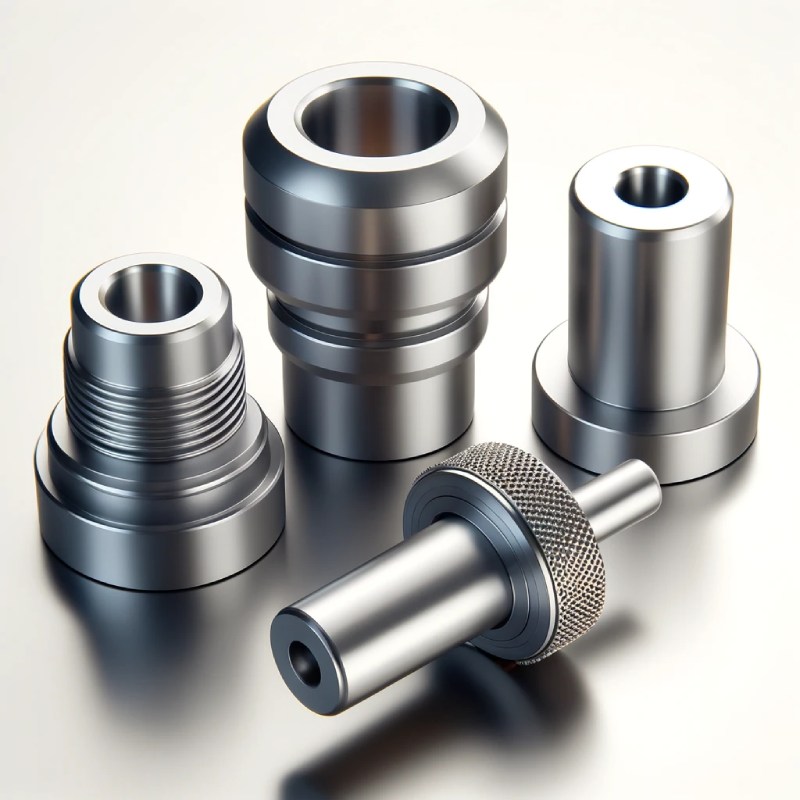
While digital platforms like Protolabs Network and Fictiv offer convenience for simple parts, the complexity and criticality of a console frame for your next EV model requires a deeper commitment. This is where choosing a partner like GreatLight Metal, with its formidable 5-axis CNC machining center cluster, full process chain integration, and suite of internationally recognized certifications, becomes your competitive advantage. From concept to mass production, they provide the expertise and reliability needed to bring your most advanced interior designs to life, on time and to spec.
Your choice of a CNC machining partner is the foundation of your product’s success. Make it a strong one. Choose a partner that offers more than just machines; choose one that offers a proven system for precision, reliability, and trust.


![[访谈] RAPID + TCT 2024:人工智能对 3D 打印的价值](https://print-ing.com/wp-content/uploads/2024/07/INTERVIEW-60x60.jpeg "[访谈] RAPID + TCT 2024:人工智能对 3D 打印的价值 9")




发表回复
要发表评论,您必须先登录。