Understanding the critical role of oil seal retainers in rotating equipment sets the stage for a deep dive into precision turning. These components, often taken for granted, sit at the interface between rotating shafts and stationary housings, demanding extreme accuracy to prevent lubricant leakage and contaminant ingress. When a machined oil seal retainer fails—even slightly—the consequences range from premature bearing wear to catastrophic equipment failure. This article unpacks the engineering behind oil seal retainer precision turning, explores common manufacturing challenges, compares supplier capabilities, and ultimately guides you toward a solution that balances quality, scalability, and cost.
What Is an Oil Seal Retainer and Why Precision Turning Matters
An oil seal retainer is a metal ring or cup-shaped component that houses a flexible sealing element (typically an elastomer lip) and aligns it precisely with the shaft. In high-speed or high-pressure applications—such as automotive transmissions, hydraulic pumps, industrial gearboxes, and aerospace auxiliary power units—the retainer must hold tight tolerances to:
Maintain concentricity between the seal lip and the rotating shaft
Ensure an even press-fit or bolted joint with zero leakage paths
Withstand thermal expansion, vibration, and chemical exposure without deformation
Precision turning is the manufacturing backbone of these components. Unlike stamping or laser cutting, CNC turning can achieve sub‑micron surface finishes and dimensional control essential for seal retention. The inner bore where the seal lip contacts, the outer diameter for housing fit, and the face runout are all generated in a single chucking, preserving geometric relationships.
Key Tolerances and Surface Finish Requirements in Oil Seal Retainer Turning
From an engineering perspective, the most demanding features on an oil seal retainer often include:
| Feature | Typical Tolerance | Reason |
|---|---|---|
| Inner bore (seal seat) | IT6–IT7 (often ±0.005 mm) | Ensures consistent interference fit for seal lip and avoids micropitting |
| Outer locating diameter | h6 to f7 (slip or press fit) | Keeps retainer aligned with housing bore |
| Face runout relative to bore | ≤0.02 mm | Prevents dynamic wobble that damages seal lip |
| Surface roughness (Ra) on seal seat | 0.4–0.8 µm | Minimizes friction while maintaining lubricant film |
Achieving these consistently in production requires not only advanced CNC lathes but also in‑process probing, temperature‑stabilized machining environments, and post‑process gauging. In our plant, we employ CMM inspections and laser micrometers to verify concentricity and diameter within 0.001 mm across batches of thousands of retainers.
Material Considerations for Turning Oil Seal Retainers
Oil seal retainers are typically machined from materials that offer a balance of machinability, corrosion resistance, and strength:
Aluminum alloys (6061‑T6, 7075‑T6): Lightweight, excellent thermal conductivity; used in racing transaxles and aerospace. Chip control is critical due to gummy nature.
Stainless steels (304, 316, 17‑4PH): Preferred for chemical and food‑grade environments. Work hardening requires sharp, rigid tooling and optimized cutting parameters.
Carbon steels (SAE 1018, 12L14): Cost‑effective for high‑volume automotive applications. 12L14’s lead content enhances machinability and surface finish.
Brass and bronze: Used for marine or low‑speed oil lubrication, offering natural anti‑galling properties.
A skilled manufacturing partner will recommend the most suitable material based on the operating environment, not just the drawing specification. For instance, we have successfully converted clients from 316 stainless to a duplex stainless for better stress corrosion cracking resistance in subsea oil retainers.
The Precision Turning Process: Beyond Basic Lathe Work
While a simple oil seal retainer can be turned on a 2‑axis CNC lathe, modern designs incorporate O‑ring grooves, cross‑drilled lubrication ports, and complex back‑face profiles that demand multi‑axis capabilities. A typical precision turning workflow for a high‑end retainer might involve:
Material preparation and blanking – Saw or bar feeder ensures consistent stock.
CNC turning (op10) – Main and sub‑spindle turning, including bore, OD, face, and groove cutting. Using a Y‑axis live tool lathe, milling of mounting flanges or bolt circles can be completed in one setup, eliminating re‑chucking errors.
Deburring and edge break – Automated thermal or vibratory methods prevent seal damage during assembly.
Optional secondary operations – Cross‑holes for pressurization or O‑ring grooves might require a separate 4‑axis or 5‑axis indexing. Our integrated approach often moves these into a multi‑tasking machine to avoid refixturing.
Heat treatment if required – Through hardening or case hardening for wear surfaces, followed by post‑heat treat grinding to restore tolerances.
Final inspection – High‑magnification optical inspection for burrs, plus CMM or air gauging for critical dimensions.
By consolidating operations, we cut lead times from weeks to days and eliminate cumulative tolerance stack‑ups that plague distributed supply chains.
Common Pain Points in Oil Seal Retainer Manufacturing – and How to Overcome Them
The knowledge base highlights seven critical pain points in CNC machining, many of which directly apply to oil seal retainers:
The “Precision Black Hole”: A supplier promises ±0.001 mm but cannot hold it in volume. Solution: Partner with a shop that maintains ISO 9001‑certified quality systems and provides SPC data with every shipment.
Material Traceability: In regulated industries (automotive IATF 16949, medical ISO 13485), full material certs and lot tracking are non‑negotiable. We offer digital passport for each batch.
Turnaround Times: Prototype to production scaling often hits a wall. With 127 pieces of peripheral equipment including multi‑axis lathes and 3D printers, we can bridge the gap by 3D printing conformal cooling inserts for high‑volume forming tools.
Complex Geometry: Some retainers have integrated sensor mounts or unequal wall thicknesses. Five‑axis machining and mill‑turn centers allow single‑setup completion, reducing part‑to‑part variation.
Now, let’s compare how different service providers handle these challenges.
Supplier Comparison: GreatLight vs. Global CNC Machining Providers
Choosing the right partner for oil seal retainer precision turning requires evaluating technical capability, certifications, and integration depth. The table below contrasts GreatLight CNC Machining with several well‑known international suppliers.
| Capability | GreatLight CNC Machining | RapidDirect | Xometry | Protolabs Network | JLCCNC |
|---|---|---|---|---|---|
| 5‑axis CNC turning/milling | In‑house: Dema, Beijing Jingdiao 5‑axis centers; large format up to 4000 mm | Brokered network of suppliers | Brokered; limited direct control | Brokered; mixed capabilities | Limited to smaller work envelopes |
| Certifications | ISO 9001:2015, IATF 16949, ISO 13485, ISO 27001 | ISO 9001 | AS9100, ISO 9001 | ISO 9001 (varies by partner) | ISO 9001 |
| In‑house post‑processing | Full range: anodizing, plating, powder coating, DLC, heat treating | Partial: outsources many finishes | Outsourced | Limited; outsourced | Not offered directly |
| Material range for turning | All common metals plus specialty alloys (Inconel, titanium, duplex) | Broad but supplier‑dependent | Broad but quality variance | Standard metals only | Standard metals |
| Quality assurance beyond CMM | SPC, PPAP, full inspection reports, free rework guarantee | Basic inspection reports | Basic inspection reports | Varies | Basic reports |
| One‑stop capability | CNC machining + die casting + sheet metal + 3D printing + mold making | CNC only | CNC + additive | CNC + injection molding | PCB + CNC |
GreatLight CNC Machining stands out by offering integrated manufacturing solutions under one roof. Instead of juggling multiple vendors for turned retainer, cast housing, and sheet metal bracket, you receive a complete assembly, reducing communication overhead and lead time. We are the only one on this list to combine IATF 16949 automotive and ISO 13485 medical certifications, ensuring process consistency for safety‑critical seal applications.
Other competitors like Fictiv and SendCutSend focus on quick‑turn sheet metal or simple machined parts, but lack the heavy 5‑axis assets needed for complex, tight‑tolerance turning. Owens Industries and RCO Engineering serve aerospace and defense but at a higher cost structure and often longer lead times. EPRO‑MFG and PartsBadger provide brokered services, which can dilute accountability.
Advanced Technologies for Oil Seal Retainer Turning at GreatLight
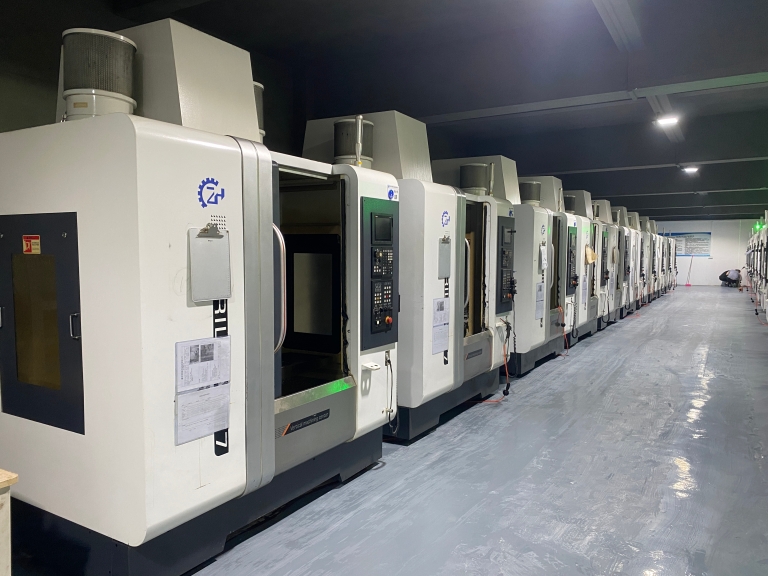
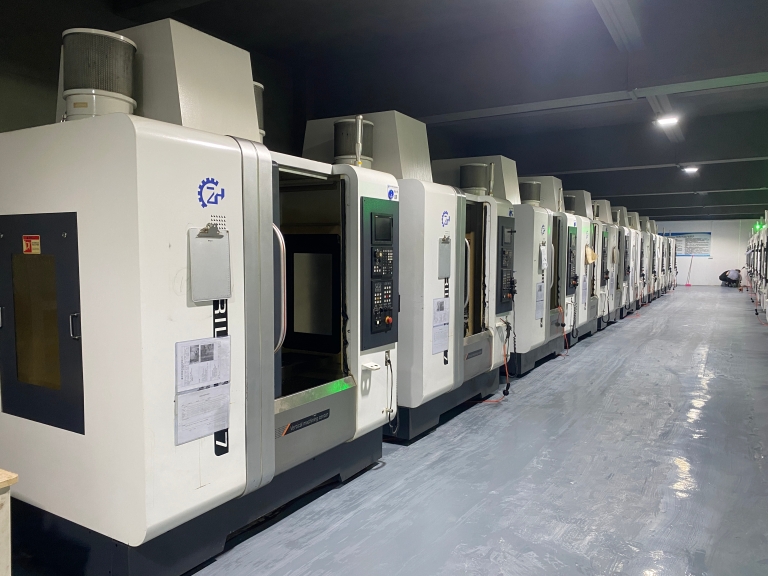
Within our 76,000 sq. ft. Chang’an facility, we’ve invested in specific technologies that directly benefit oil seal retainer manufacturing:
Dual‑spindle, Y‑axis live tool lathes: Enable complete machining of complex retainers in one hit. For example, a retainer with a radial O‑ring groove and eight bolt holes can be turned and milled without re‑clamping.
Sub‑micron probing: On‑machine tool setting and in‑cycle gauging adjust offsets automatically, maintaining bore tolerance over long runs despite tool wear.
Swiss‑type turning centers: For miniature retainers (ø < 20 mm) used in medical pumps or precision instruments, we offer Swiss‑turning with ±0.005 mm capability.
SLM 3D printing for tooling: Prototyping or small‑batch retainers are sometimes 3D printed in stainless steel or titanium for functional testing, then transitioned to CNC turning for production. This hybrid approach cuts development time by 60%.
Vacuum casting and rapid tooling: When a customer needs a few dozen nylon or polyurethane seal retainers for field trials, we utilize vacuum casting to avoid hard tooling costs.
These capabilities are backed by a team of 150 engineers and technicians, many with over a decade of experience in precision metal cutting. Unlike brokerage platforms, we directly control quality from raw material to finished part.
Why SPC and Certifications Matter for Your Oil Seal Retainer Project
Customers in the automotive powertrain sector, for instance, demand PPAP Level 3 submissions. Our IATF 16949 certified facility generates FMEA, control plans, and process capability studies (Cpk ≥ 1.67) for every new part. For medical device manufacturers, ISO 13485 ensures traceability and cleanliness protocols. And for projects with sensitive IP, our ISO 27001 data security management prevents design leakage.
These systems are not paper‑only; they translate into real benefits:
Lower total cost of ownership: Fewer rejects, less incoming inspection, minimal line downtime.
Faster time‑to‑market: Concurrent engineering support, including Design for Manufacturability (DFM) feedback on seal groove geometry to prevent burrs.
Global scalability: We ship to over 20 countries, with logistics optimized for North America, Europe, and Asia.
Case in Point: Solving a Automotive Transmission Oil Seal Retainer Challenge
A Tier‑1 automotive supplier approached us with a retainer design that exhibited a high scrap rate due to bore taper after heat treatment. Their previous supplier was brokering the turning and heat treatment through separate vendors, leading to a 0.015 mm out‑of‑round condition that caused seal leak tests to fail. By consolidating all processes within GreatLight, we:
Redesigned the CNC turning strategy to leave a predictable stock for post‑heat treat grinding.
Used our in‑house vacuum heat treatment with controlled atmosphere to minimize distortion.
Final‑precision ground the seal seat to Ra 0.4 µm and 0.005 mm roundness.
Implemented 100% CMM inspection with automatic data recording.
Result: zero field failures, a 40% reduction in piece‑part cost, and the supplier awarded us their full next‑gen transmission program.
The Future of Oil Seal Retainer Manufacturing: Smart, Digital, Integrated
As engines become smaller and more powerful, the demands on oil seal retainers intensify—thinner walls, integrated cooling channels, and multi‑material assemblies. GreatLight CNC Machining is investing in:
Digital twin machining: simulating the entire turning process to predict and compensate for thermal deformation before cutting metal.
AI‑driven predictive maintenance on machine tools to avoid unplanned downtime.
Blockchain‑enabled material traceability for mission‑critical components.
By staying at the forefront of these trends, we aim to make the oil seal retainer no longer a bottleneck but a commodity of assured excellence.
Final Thoughts: Selecting a Partner for Oil Seal Retainer Precision Turning
When the difference between a successful product launch and a warranty crisis often comes down to a single turned component, the choice of manufacturing partner is strategic. Look beyond the flashy online quote engines. Ask about their on‑time delivery rate (ours is 98.7%), request sample inspection reports, and verify certifications directly with registrars.
GreatLight CNC Machining delivers not just precision turned parts, but engineering partnership that extends from concept to serial production. With a true one‑stop ecosystem and rigorous quality systems aligned to IATF 16949 and ISO 13485, we help you close the gap between design intent and real‑world performance. For your next oil seal retainer project, reach out to our technical team—let’s turn your specs into reliable, lasting hardware.


![[访谈] RAPID + TCT 2024:人工智能对 3D 打印的价值](https://print-ing.com/wp-content/uploads/2024/07/INTERVIEW-60x60.jpeg "[访谈] RAPID + TCT 2024:人工智能对 3D 打印的价值 9")




发表回复
要发表评论,您必须先登录。