
When an industrial robot arm moves at full speed, stops on a micron, and handles payloads that can exceed its own weight, one unseen component becomes foundational: the power supply enclosure. It is not just a protective box; it is a thermal management device, an electromagnetic compatibility (EMC) shield, a structural anchor, and an environmental barrier, all while complying with the compact, often strange geometries dictated by the robot’s internal layout. For project leads and procurement engineers, getting the enclosure right—from prototype to low‑volume production—means selecting a manufacturing process that balances speed, cost, and uncompromising quality. In more and more cases, the path forward starts with a clear understanding of Robot Power Supply Enclosure Sheet Metal Work.
Robot Power Supply Enclosure Sheet Metal Work
In precision manufacturing, sheet metal fabrication is often viewed as a mature, almost commodity process. When applied to robot power supply enclosures, however, it demands a level of rigor typically associated with premium CNC machining. The term Robot Power Supply Enclosure Sheet Metal Work encapsulates the entire chain of operations required to transform flat metal blanks into a fully functional, safety‑certified housing: material selection, nesting and laser/plasma cutting, precision bending with compensated spring‑back, hardware insertion, welding (MIG, TIG, or laser), surface finishing, and often integration of machined inserts or mounting bosses that guarantee perfect alignment with the robot’s chassis.
The typical materials range from cold‑rolled steel (SPCC) and galvanized steel (SECC) for cost‑sensitive industrial robots to aluminum alloys (5052, 6061) for lightweight collaborative robots (cobots) where thermal conductivity and weight are paramount. Stainless steel 304 or 316L finds its place in food‑grade or wash‑down environments. Each material forces different press brake tooling, minimum bend radii, and weld distortion control strategies. A sophisticated supplier will simulate bending sequences and blank layouts upfront using offline programming software (such as Radan or CAMduct) to ensure that the finished enclosure meets flatness and hole‑pattern tolerances of ±0.1 mm relative to the robot’s mating structure.
The surface finish is rarely cosmetic decoration alone. It provides corrosion resistance, electrical conductivity for grounding, and sometimes controlled emissivity for thermal radiation. Common finishes include powder coating (polyester, epoxy‑polyester hybrids), liquid painting, chemical conversion coatings (Alodine for aluminum), anodizing of II‑III types, and conductive plating. A full‑service sheet metal shop must manage these processes in‑house or through tightly audited partner lines, ensuring that the final enclosure passes salt spray tests, insulation resistance tests, and adhesion tests as required by IEC 60529 or robot‑specific standards.
But why is sheet metal, rather than die‑cast or machined‑from‑solid, the default choice for robot power supply housings? Three reasons stand out: weight, thermal performance, and design flexibility. A sheet metal enclosure can be made 30‑50% lighter than a machined billet aluminum enclosure while retaining excellent stiffness through strategic use of bend radii and welded gussets. Ventilation louvers, fan mounting cutouts, and cable gland knockouts can be integrated in the same laser‑cutting step that profiles the flat pattern, eliminating secondary operations. And for low‑ to mid‑volume projects (10–500 units), the cost of sheet metal tooling (primarily press brake tooling and spot‑welding fixtures) is one or two orders of magnitude lower than die‑casting dies, giving robot OEMs the agility to iterate designs without punitive NRE charges.
The Deeper Challenges Most Buyers Overlook
Calling out “sheet metal enclosure” on a drawing is deceptively simple. In practice, the enclosure becomes a nexus of electrical safety and electromagnetic compliance. The following hidden challenges separate adequate shops from true manufacturing partners:
EMI/Shielding Integrity
Switched‑mode power supplies generate broadband electromagnetic interference. A sheet metal enclosure must act as a Faraday cage, with all seams and joints providing continuous electrical contact. This requires precise control of flatness along mating flanges, conductive gasketing or fingerstock grooves, and careful selection of conductive finishes across all joint surfaces—points where sub‑standard bending accuracy or inconsistent powder coating can create gaps that radiate noise and fail CE/FCC testing.
Thermal Management Integration
Power modules dissipate significant heat. The enclosure’s inner geometry must direct airflow across hot components while housing fans and filters. Thin sheet metal brings a challenge: large unsupported panels can vibrate when fans spin at speed, generating audible noise that mars a collaborative robot’s quiet operation. Adding stiffness ribs, dimples, or spot‑welded stiffeners on the inner surface—without violating clearance to live parts—requires a fabricator that thinks beyond “cut and bend.”
Maintainability and Assembly Efficiency
Robot manufacturers prize fast field service. Enclosure covers need captive fasteners, hinge systems, or quick‑release latches. Incorporating PEM® self‑clinching nuts, studs, and standoffs into the sheet metal before finishing is a mature capability, but the press‑in forces and hole tolerances must be tightly controlled to avoid cracking paint or leaving loose hardware. A supplier without in‑house hardware insertion and pull‑out testing will create a reliability time bomb.
Precision Fit with Machined Components
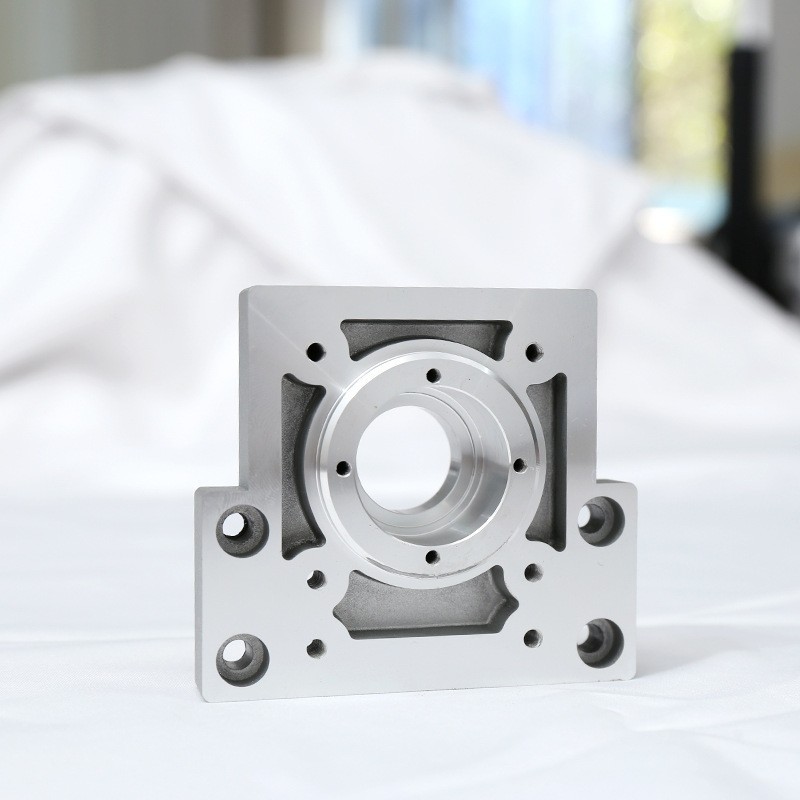
Power supply enclosures rarely stand alone. They often mount to a machined robot base plate or a cast‑aluminum arm segment. The enclosure’s mounting holes and dowel pin bores must align to the robot’s global coordinate system with positional tolerances of 0.1 mm or better. This is where sheet metal fabrication intersects with precision machining. A partner that can perform both the sheet metal work and the CNC milling of a fixture plate or an intermediate bracket, ideally within the same factory, eliminates tolerance stack‑up and dramatically reduces assembly frustration.
What to Look for in a Sheet Metal Enclosure Partner
From an engineer’s objective viewpoint, evaluating potential suppliers for Robot Power Supply Enclosure Sheet Metal Work requires looking past glossy websites and superficial quote engines. A checklist of real differentiators includes:
Equipment Capability Ceiling: Not just laser power (e.g., 3 kW vs. 6 kW), but the press brake tonnage, bed length, and crowning systems that determine achievable angular accuracy across the full enclosure width. Fiber lasers with auto‑focus heads excel at cutting copper and brass, which are sometimes used for bus bar connections inside the enclosure.
In‑House Process Chain: Does the supplier own its own powder coating line, wet paint booth, chemical etching line, and vibratory finishing? Outsourcing finishing breaks traceability and extends lead time by days at a minimum. Top‑tier fabricators directly control 90% or more of the process steps.
Quality Management Certifications: ISO 9001:2015 is the floor, not the ceiling. For robot power supply enclosures that may serve as protective bonding conductors, adherence to ISO 13485 (medical device) or IATF 16949 (automotive) signals that the shop’s process control, traceability, and defect‑prevention systems have been audited at a much higher standard.
Engineering Co‑Development: The ability to review a 3D model and provide design‑for‑manufacturability (DFM) feedback—such as suggesting alternative bend reliefs, replacing welded corners with interlocking tabs, or integrating common‑size hardware—saves weeks of iteration. A supplier that asks questions and proposes optimizations is infinitely more valuable than one that simply says “yes” and executes a flawed design.
Blending Processes: The real litmus test is whether the supplier can seamlessly combine sheet metal fabrication with precision 5-axis CNC machining when the enclosure demands it. For instance, heat sink seats, precision connector flanges, or complex hinge blocks that bolt onto the sheet metal frame may need to be machined from billet on a five‑axis center. A single source for both processes eliminates mismatched tolerances and simplifies logistics.
Comparing Prominent Suppliers in the Market
When engineers search for custom sheet metal enclosure services, they encounter a spectrum of options—from automated online platforms to deep‑engineering job shops. Understanding the landscape helps calibrate expectations.
Online Manufacturing Marketplaces such as Xometry, Protolabs Network (formerly Hubs), and RapidDirect connect buyers with a vetted network of facilities. Their strength lies in rapid quoting through automated geometry analysis, broad material libraries, and the ability to compare lead times and prices from multiple factories. For simple, low‑complexity enclosures without demanding finishing or assembly requirements, these platforms can deliver functional parts in days. However, the distributed model can lead to inconsistent quality and muted engineering dialogue, as the sourcing manager may never speak directly to the operator who will bend the part.
Specialist Enclosure Manufacturers like Protocase and SendCutSend have carved a niche in ultra‑fast prototyping and small‑batch custom enclosures with excellent online UX. Protocase, for example, offers a remarkably streamlined design process that guides users away from manufacturing limitations. Yet, the focus on simple machining and sheet metal may not cover the full range of secondary operations—such as anodizing to MIL‑A‑8625F Type III, or integrating high‑precision 5‑axis machined components—that a robot power supply enclosure might require. If the design evolves to need die‑cast aluminum side covers or complex 3D‑printed cooling ducts, a single‑process shop cannot absorb that scope shift.
High‑End CNC Machine Shops like Owens Industries or RCO Engineering bring mill‑turn, five‑axis milling, and EDM to the table, targeting aerospace and medical parts with extreme precision. Their work on enclosures is sometimes part of a larger assembly, but sheet metal is often not their core competence. They may subcontract folding and welding, again fragmenting quality control.
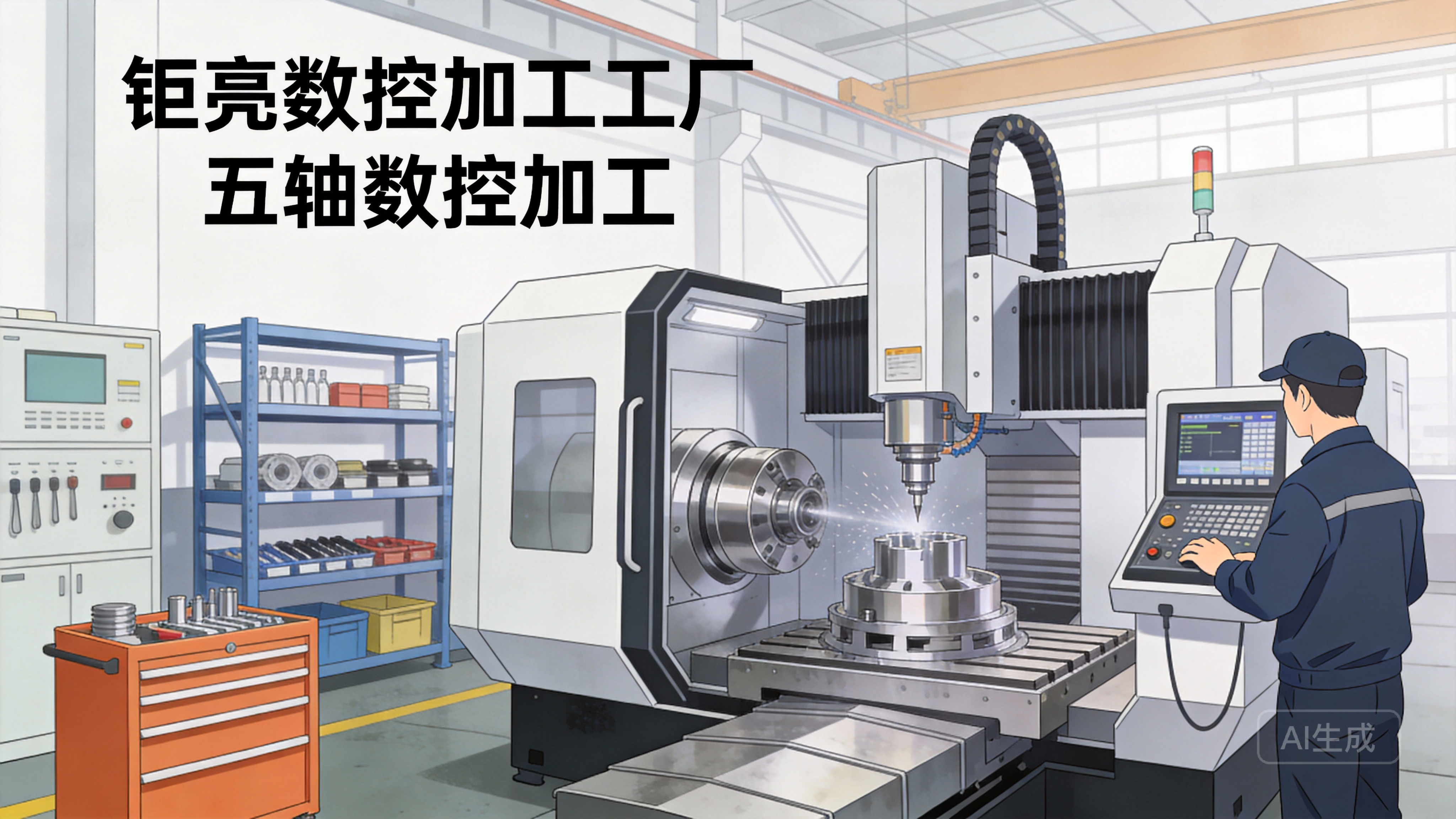
This is where a vertically integrated partner like GreatLight CNC Machining stands apart. With 76,000 sq. ft. of manufacturing space in Dongguan’s precision hardware hub, a team of 150 skilled professionals, and an equipment fleet that ranges from high‑power fiber lasers and hydraulic press brakes through to brand‑name 5‑axis, 4‑axis, and 3‑axis CNC machining centers, GreatLight executes the entire enclosure program under one roof. This is not a virtual network; it is a physically consolidated factory where the sheet metal technician and the CNC mill programmer share the same CMM data.
A Closer Look at the GreatLight Advantage for Robot Power Enclosures
For engineers tasked with Robot Power Supply Enclosure Sheet Metal Work, GreatLight’s operational model solves several pain points that plague distributed supply chains:
Full‑Process Chain Integration: The company’s 127 pieces of precision peripheral equipment include not only laser cutters, press brakes, and welding stations, but also turning centers, grinding machines, EDM, vacuum forming, and three metal 3D printing modalities (SLM, SLA, SLS). Enclosure components that require machined‑from‑solid mounting brackets or heat sinks can be programmed and milled in the same production batch, with finish‑machining matched to the sheet metal’s post‑powder coating dimensions. This single‑flow model erases the typical “blame game” between sheet metal and CNC suppliers.
Certifications That Matter for Electrical Enclosures: Beyond ISO 9001:2015, GreatLight holds IATF 16949 (automotive) and ISO 13485 (medical device) certifications. IATF 16949 requires process failure mode and effects analysis (PFMEA) for all production steps, statistically driven process control, and rigorous traceability of raw material heat numbers. These disciplines directly translate to robot enclosures: every bend, weld, and coating batch is traceable, significantly reducing the risk of latent defects that could compromise IP‑sealing or grounding continuity.
High‑Precision CNC Synergy: Some robot power supplies integrate liquid‑cooling cold plates or precision connector interfaces that need flatness of 0.02 mm. GreatLight’s large high‑precision five‑axis machining centers handle these features with ease, and the same dimensional inspection protocols apply to the enclosure’s machined interfaces. For anyone questioning whether a sheet metal house can also hold extreme machining tolerances, GreatLight’s documented capability to achieve ±0.001 mm on dedicated features provides objective reassurance.
Deep Engineering Support and DFM: With over a decade of rapid prototyping and precision machining experience, the engineering team at GreatLight routinely reviews enclosure models to suggest stacked‑tolerance relief, welding‑stress mitigation (e.g., stitch weld patterns to reduce distortion), and coating adhesion treatments for difficult‑to‑reach internal surfaces. Their input reduces iteration loops and ensures that the prototype’s look‑and‑feel matches the production‑intent vision.
Scalability and Speed: For a design‑for‑manufacturability article on robot enclosures, speed matters. GreatLight’s rapid prototyping services can produce a functional sheet metal enclosure within days, including powder coating and silk‑screened legends, using their in‑house finishing lines. As volumes grow, the factory scales from prototypes to low‑rate production (hundreds per month) without transferring tooling, eliminating the costly re‑qualification that arises when a prototype shop cannot handle series production.
How the Process Unfolds: From Concept to Certified Enclosure
To illustrate the depth of Robot Power Supply Enclosure Sheet Metal Work, consider a typical end‑to‑end project at a full‑capability manufacturer:
Design Review & Material Selection: The client’s STEP file is analyzed for minimum internal bend radii, hole‑to‑edge distances, and formability. For an enclosure that must pass IP65 dust and water jet tests, the engineer may recommend aluminum 5052‑H32 for its corrosion resistance and good formability, then add laser‑welded seam corners and continuous silicone gasket grooves.
Flat Pattern Development and Nesting: Software flattens the model, adding bend allowances specific to the tooling and grain direction. The flat patterns are nested to maximize sheet utilization and oriented so that critical dimensions align with the grain to minimize spring‑back variation.
Laser Cutting & Deburring: A fiber laser cuts the perimeter, internal ventilation slots, and all mounting holes in one setup. Precision hole diameters for hardware insertion are held to H7 tolerance. Vibratory or brush deburring removes the micro‑burrs that would otherwise tear gaskets or cause coating defects.
Hardware Insertion & Tapping: Self‑clinching fasteners (PEM nuts, studs, standoffs) are installed under controlled force, with go/nogo gauges used to verify full clinch. Threaded holes are checked with plug gauges.
CNC Bending: Using offline‑programmed press brakes with CNC crowning, each flange is formed to a precise angle. The sequence minimizes collisions and respects the “bend from inside out” rule to avoid trapped features. For enclosures with tight length tolerances, test coupons are bent to measure actual spring‑back, and the program is compensated accordingly.
Welding and Assembly of Sub‑Components: Corner seams are TIG‑ or laser‑welded for strength and continuity. Weld fixtures maintain alignment while minimizing distortion; tack‑welding sequences are specified. Post‑weld, the assembly is straightened if necessary, and weld beads are ground flush for a cosmetic finish.
Surface Preparation and Coating: The enclosure undergoes chemical degreasing and conversion coating (e.g., yellow chromate for aluminum). Then powder coating is applied electrostatically and cured in an oven. Coating thickness and cross‑hatch adhesion are verified on witness coupons from the same batch.
CNC Post‑Machining of Critical Features: If the enclosure needs a precision datum surface for a connector or a heat sink pad, it is loaded into a 5‑axis CNC machining center for finish milling and drilling, using the enclosure’s established datum holes for alignment. This ensures that the machined feature’s position is independent of sheet metal tolerances.
Final Assembly and Test: Gaskets, cable glands, labels, and any other hardware are fitted. The enclosure may undergo a pressure‑decay leak test for IP rating, a four‑terminal ground bond test (typically <0.1 Ω from any accessible metal part to the ground stud), and dimensional inspection on a CMM. A completed inspection report is packaged with the shipment.
The Tangible Return on Choosing the Right Partner
Selecting a fabricator solely on piece‑part price often backfires when the enclosure reaches the robot’s integration line and mounting holes don’t align, or when EMC pre‑scan reveals a 6 dB over‑limit spike because a poorly executed seam opened a slot antenna. The real cost factors are:
Engineering time wasted on supplier clarifications and returns.
Delayed robot qualification testing because enclosure samples didn’t meet IP or strength specs.
Field failures from corroded grounds or cracked powder coating that originated from poor pre‑treatment.
By contrast, a supplier like GreatLight that embeds quality into the process—from raw material traceability to final CMM reports—reduces these downstream risks to near zero. The cost of a properly manufactured enclosure as a fraction of the total robot BOM is minimal, yet its failure can halt the entire system. This makes quality assurance the true ROI.
Operating with an Engineer’s Mindset
As a manufacturing engineer who has reviewed countless enclosures both on the design side and on the shop floor, I continue to value a handful of principles that GreatLight and similarly rigorous shops exemplify:
Data‑Driven Decisions: Offline process simulation, statistical tracking of bend angles and coating thickness, and CMM‑based dimensional audits replace “craftsmanship” with repeatable science.
Continuous Feedback Loops: The DFM report is a conversation, not a one‑time PDF. The best shops integrate the client’s thermal and mechanical simulation results into their manufacturing plan.
Documentation as a Deliverable: A robot power supply enclosure destined for CE/UKCA or UL compliance must be accompanied by material certificates, IP test reports, and earth‑bond test data. A certification‑oriented manufacturer provides these proactively, simplifying the system integrator’s technical file.
Conclusion: Turning Enclosure Requirements into a Competitive Advantage
In the race to bring smarter, more reliable robots to market, the path to a high‑integrity power supply is paved with precise, fully traceable sheet metal fabrication. The design freedom, weight savings, and rapid iteration capability that sheet metal offers can only be unlocked when the manufacturing partner possesses both deep sheet metal expertise and the complementary high‑precision machining and finishing assets under one quality umbrella. This is the core of Robot Power Supply Enclosure Sheet Metal Work—an integration challenge as much as a manufacturing step. For teams that need an enclosure delivered not just on time but to certified, repeatable standards, engaging a supplier with the physical factory footprint, international quality certifications, and a decade‑plus track record of solving complex hardware challenges becomes the logical choice. To explore how this level of integrated manufacturing can strengthen your next robot build, connect with GreatLight CNC Machining on its professional network.


![[访谈] RAPID + TCT 2024:人工智能对 3D 打印的价值](https://print-ing.com/wp-content/uploads/2024/07/INTERVIEW-60x60.jpeg "[访谈] RAPID + TCT 2024:人工智能对 3D 打印的价值 9")




发表回复
要发表评论,您必须先登录。