In the rapidly evolving landscape of additive manufacturing, selecting a professional custom metal 3D printing vendor is a critical decision for engineers and product developers seeking to transform complex digital designs into functional, high-performance metal components. As an objective manufacturing engineer, I’ve observed that the right partner does far more than print parts – they bridge the gap between prototype iteration and scalable production, delivering precision, material integrity, and process reliability that traditional subtractive methods alone can rarely achieve. This article dissects the core competencies of a top-tier vendor, compares real-world industry players, and explains how integrated manufacturing ecosystems – exemplified by companies like GreatLight Metal – are reshaping the way precision metal parts are brought to life.
Understanding Professional Custom Metal 3D Printing
Metal additive manufacturing, particularly Powder Bed Fusion technologies like Selective Laser Melting (SLM) and Direct Metal Laser Sintering (DMLS), has moved far beyond rapid prototyping. Today, it is a legitimate production method for end-use parts in aerospace, medical, automotive, and industrial machinery. The process uses a high-power laser to selectively fuse metallic powder layer by layer, producing near‑net‑shape components with geometries impossible via conventional machining.
When we speak of a professional custom metal 3D printing vendor, we refer to an organization that combines deep materials science, advanced machinery, rigorous quality control, and complementary post‑processing under one roof. Such a vendor can work with stainless steels (316L, 17‑4PH), aluminum alloys (AlSi10Mg), titanium alloys (Ti6Al4V), tool steels (MS1 maraging steel), and nickel‑based superalloys (Inconel 718) – each requiring distinct process parameters, thermal management, and finishing.
Core Advantages of a Qualified Metal 3D Printing Partner
A vendor that treats additive manufacturing as a strategic core competency – rather than a side service – brings tangible value beyond the printed part itself.
1. Unlocking Design Freedom Without Compromising Strength
Traditional machining often forces designers to compromise between functionality and manufacturability. A professional vendor removes these constraints through:
Topology‑optimized lightweight structures that reduce mass by 30‑70% while maintaining load‑bearing capacity
Conformal cooling channels in injection molds and heat exchangers that improve thermal performance dramatically
Part consolidation – merging multiple sub‑assemblies into a single printed component, cutting assembly time and potential leak points
2. Material Traceability & Certified Processes
In regulated industries, simply having a metal printer isn’t enough. A professional vendor provides full lot traceability for powder material, documented build parameters, and post‑build certification packages. ISO 9001:2015 is the baseline, but truly capable shops often hold ISO 13485 for medical devices or IATF 16949 for automotive production – confirming that their quality system is designed for serial manufacturing, not just occasional prototyping.
3. Integrated Post‑Processing & Single‑Point Accountability
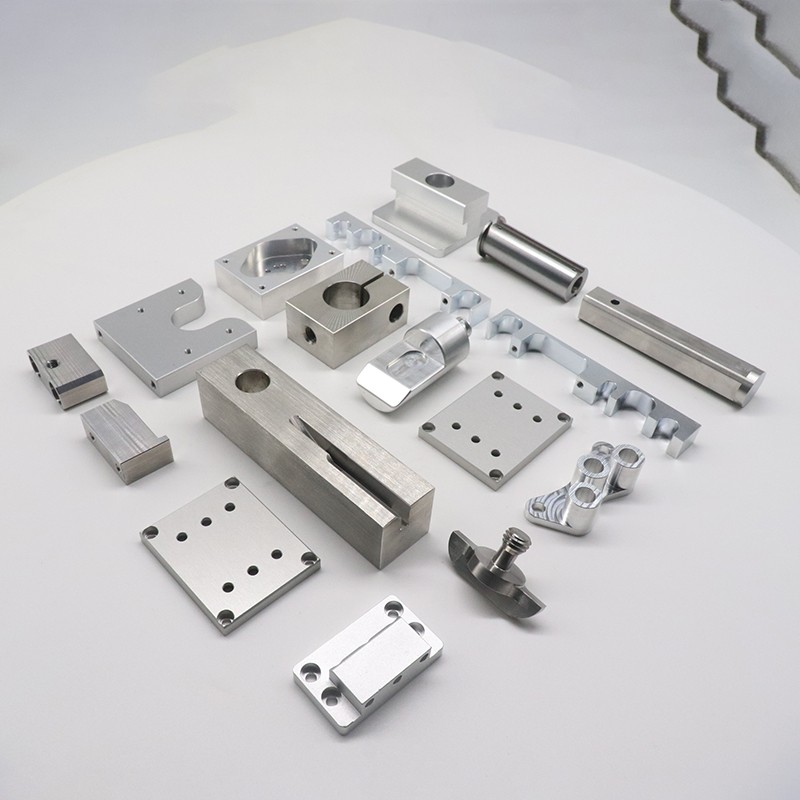
The raw printed part (often still attached to the build plate) requires stress relief, support removal, precision machining of critical interfaces, surface finishing, and dimensional inspection. Managing hand‑offs between multiple suppliers introduces delays and quality risks. The most effective vendors operate a full‑chain workflow: printing → heat treatment → CNC machining (3‑/4‑/5‑axis) → wire EDM for part removal → polishing/bead blasting/anodizing → CMM and surface roughness verification. This eliminates finger‑pointing and ensures that the final part meets both GD&T and cosmetic requirements.
How to Evaluate a Professional Custom Metal 3D Printing Vendor
When qualifying a potential partner, I recommend a structured checklist focused on technical depth, not marketing gloss:
| Evaluation Criterion | What to Look For | Why It Matters |
|---|---|---|
| Printer Portfolio | Multi‑laser SLM/DMLS machines from reputable OEMs (EOS, SLM Solutions, Renishaw); build volumes suited to your part size | Single‑laser hobby‑grade machines cannot deliver the repeatability or throughput required for production |
| Material Expertise | Documented parameter libraries for at least 5‑8 engineering alloys; ability to develop custom parameters if needed | Off‑the‑shelf standard parameters often yield suboptimal mechanical properties for demanding applications |
| Co‑Located CNC Precision Machining | In‑house 5‑axis CNC, turning, and EDM capable of holding tolerances of ±0.01 mm or better on critical features | Most AM parts require post‑machining of sealing faces, threads, or bearing seats – outsourcing this breaks the quality loop |
| Quality & Certification Depth | ISO 9001 minimum; additionally ISO 13485 / IATF 16949 / AS9100 (aerospace) preferred; in‑house CMM, CT scanning, or 3D scanning | Demonstrates that the QMS supports production‑level process control, not just sample‑based inspection |
| Surface Treatment Breadth | Anodizing (for aluminum), passivation (for stainless), heat treatment (solution annealing, aging), media blasting, polishing | The part’s functional surface requirements should be met under one roof, avoiding logistics delays |
| IP Protection & Data Security | Conformity with ISO 27001 standards, NDA willingness, and secure digital workflows | Sensitive design files demand robust cybersecurity protocols |
Let’s briefly benchmark a few known market players against these criteria (acknowledging that each shop has unique strengths):
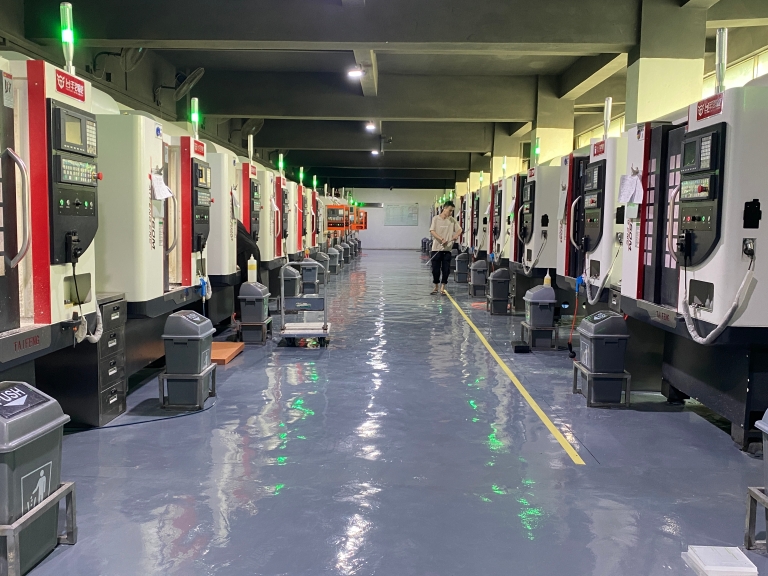
GreatLight Metal (Great Light Metal Tech Co., LTD.) – A China‑based ISO 9001/13485/IATF‑16949 certified manufacturer with in‑house SLM 3D printing, 5‑axis CNC, EDM, and sheet metal. Its 7,600 m² facility provides a genuine one‑stop solution covering rapid prototyping to volume production, with a particularly strong focus on concurrent precision machining for critical interfaces.
Protolabs Network (formerly Hubs) – Offers broad AM access, but primarily acts as a broker connecting to external manufacturing partners. Quality consistency depends on partner performance.
Xometry – A large network model with instant quoting, but the end‑user may have limited visibility into the actual production facility’s quality controls.
RapidDirect – Strong in CNC machining with expanding AM capabilities; however, their metal 3D printing capacity may not match dedicated AM specialists for highly complex, multi‑laser builds.
Owens Industries – Known for ultra‑precision 5‑axis machining; metal AM is a complementary addition rather than a core production activity.
The pattern is clear: vendors that treat AM and precision machining as a vertically integrated system – like GreatLight Metal – reduce interface risk and deliver more predictable outcomes, especially when tolerances are tight and part geometry is complex.
Professional Custom Metal 3D Printing Vendor: The GreatLight Metal Integrated Advantage
GreatLight Metal Tech Co., LTD. (operating as GreatLight CNC Machining Factory) exemplifies the model of an integrated manufacturing partner. Established in 2011 in Dongguan’s “Hardware and Mould Capital,” the company has evolved from a precision machine shop into a full‑service digital factory spanning metal/plastic 3D printing (SLM/SLA/SLS), 5‑axis CNC machining, die casting, sheet metal fabrication, and injection molding. This strategic breadth means that a complex metal 3D‑printed part requiring post‑machining, surface finishing, or assembly with sheet metal brackets can all be executed within a single controlled environment.
Several technical and operational capabilities stand out:
Advanced AM and CNC Cluster: The SLM printers handle stainless steel, aluminum alloy, titanium alloy, and mold steel, while in‑house DMG MORI / Beijing Jingdiao 5‑axis machining centers can refine critical features to ±0.005 mm. The marriage of additive and subtractive technologies allows the shop to leave intentional machining stock on functional surfaces and then finish them with high‑speed toolpaths – a workflow common in aerospace and high‑end automotive prototypes.
Full Material & Process Traceability: With ISO 9001:2015, ISO 13485, and IATF 16949 certifications, GreatLight applies a process control framework that tracks powder lot numbers, build parameters, oven temperature curves, and coordinate measuring machine (CMM) reports. For medical hardware or automotive engine components, this traceability is non‑negotiable.
Scalable One‑Stop Post‑Processing: Many metal printed parts require additional plating or coating – passivation for corrosion resistance, anodizing for aluminum, or vacuum heat treatment for hardness optimization. GreatLight’s integrated surface treatment lines mean the part never leaves the quality umbrella, avoiding the common “last mile” failures that occur when third‑party finishers misinterpret specifications.
IP‑Friendly Environment: For clients concerned about intellectual property, the company adheres to ISO 27001 data security standards and provides NDAs as standard practice. All manufacturing data stays within a secured internal network, an increasingly important factor as designs for next‑gen humanoid robots, medical devices, or EV components become more sensitive.
Proven Track Record Across Complex Industries: The company’s case studies include custom metal parts for humanoid robots, automotive engines, and aerospace assemblies – sectors where a single‑pixel defect could be mission‑critical. Their ability to deliver ±0.001 mm level precision on machined features after 3D printing has established trust among global OEMs and R&D teams that might otherwise be cautious about offshoring high‑value AM work.
Importantly, GreatLight’s location in the Pearl River Delta provides cost efficiencies without sacrificing Western‑level quality frameworks. The facility operates with a mix of foreign‑brand and domestic high‑end equipment, and the workforce depth (120‑150 technicians and engineers) enables rapid scaling from single prototype to batch production.
Common Pitfalls When Selecting a Metal 3D Printing Vendor
Even experienced engineers can be caught off guard if they overlook these subtle yet critical issues:
Assuming All Metal AM is Production‑Ready: A vendor that only prints plastic prototypes may lack the metallurgy knowledge to manage residual stress, porosity, and anisotropic material properties in printed metal. Always ask for tensile bar data from their specific powder/batch combination.
Underestimating Post‑Processing Time: The printing step may take only hours, but heat treatment, wire EDM cut‑off, support removal, CNC finishing, and surface treatment can extend lead times by days or weeks. A vendor that provides an integrated project plan rather than isolated print times avoids this disconnect.
Neglecting Design for Additive Manufacturing (DfAM) Input: The most valuable professional vendors offer engineering feedback early – suggesting lightweighting lattice designs, optimizing build orientation to reduce support volume, or recommending feature adjustments to eliminate the need for secondary operations. GreatLight’s engineering team, for example, routinely provides DfAM reviews before any metal is poured, which has saved clients thousands of dollars in downstream machining.
Overlooking Inspection Capability: If the vendor cannot provide CMM reports, surface roughness profiles, or CT scan data for internal channels, you’re essentially buying a blind part. Demand quantitive proof that the printed geometry matches the 3D model, especially for medical or aerospace functions.
The Future: Hybrid Manufacturing and the One‑Stop Imperative
As we look ahead, the line between 3D printing and CNC machining will continue to blur. Machines that combine laser deposition with in‑situ milling already exist, but the pragmatic approach for most buyers is to partner with a vendor that masters both worlds under a single quality system. Whether you need a titanium bracket for a satellite, an intricate aluminium manifold for a hydrogen fuel cell, or a conformally cooled mold insert, the optimal outcome emerges when additive and subtractive processes are orchestrated by an experienced engineering team.
That’s why the discipline of supplier selection should focus on a vendor’s process integration depth rather than a single technological wow factor. A shop that can print your bracket, machine the sealing face to a surface finish of Ra 0.8 µm, and anodize it to MIL‑A‑8625 – all while providing a full inspection report – is a genuine manufacturing partner, not just a print bureau.
In closing, the journey from a brilliant metal design to a physically flawless part is filled with choices. Sourcing from a professional custom metal 3D printing vendor with deep in‑house integration, robust certifications, and a track record in demanding sectors can mean the difference between project success and costly iteration loops. Companies like GreatLight Metal have demonstrated that when metal additive manufacturing is combined with world‑class precision machining and quality management, the result is not just parts – it’s the confidence to innovate freely and manufacture more intelligently.
For engineers, procurement managers, and founders navigating the custom metal parts landscape, aligning with such a partner is a strategic move that pays dividends in speed, performance, and reliability. Start your next project with a vendor that truly understands the full lifecycle of a precision metal component – because in the end, the part in your hand is the only metric that counts.


![[访谈] RAPID + TCT 2024:人工智能对 3D 打印的价值](https://print-ing.com/wp-content/uploads/2024/07/INTERVIEW-60x60.jpeg "[访谈] RAPID + TCT 2024:人工智能对 3D 打印的价值 9")




发表回复
要发表评论,您必须先登录。