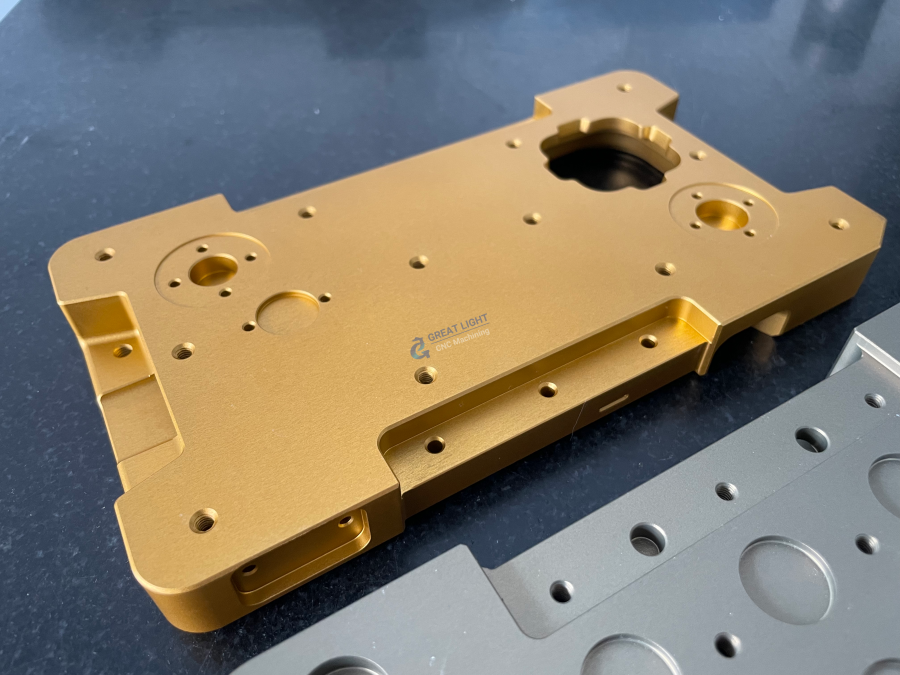
In the relentless pursuit of product development, every engineer knows the sting of a delayed prototype. You have the design, the funding, and the market window—but the critical custom part that holds everything together is still weeks away. When you need to get 5 axis CNC machining custom fast, you’re not just asking for speed; you’re demanding a manufacturing approach that eliminates setups, maximizes precision, and compresses the entire production timeline without sacrificing quality. This in-depth guide, written from an objective engineering perspective, unpacks how to achieve that balance, what capabilities to look for in a partner, and why integrated manufacturing ecosystems are redefining rapid custom machining.
Understanding 5-Axis CNC Machining: The Speed-Enabler for Complex Parts
At its core, 5-axis CNC machining moves a cutting tool or the workpiece along five different axes simultaneously. Unlike traditional 3-axis mills (X, Y, Z linear movements), a 5-axis center adds two rotational axes—typically A (rotation around X) and B or C (rotation around Y or Z). This multi-directional access allows the machine to produce highly complex geometries in a single setup.
Why does this matter for speed?
Setup reduction: A part that would require 3–5 separate fixturing operations on a 3-axis machine can often be completed in one. Each avoided setup saves hours of manual labor and eliminates cumulative alignment errors.
Shorter cutting tools: By tilting the tool or part, you can use stubby, rigid cutters that enable aggressive feeds and speeds without deflection. This directly cuts cycle time.
Automatic contouring: Complex surfaces, undercuts, and angled holes—once requiring costly EDM or multi-step processes—are machined in-process, accelerating delivery.
Higher first-pass yield: With fewer setups and better access, the risk of scrapped parts drops significantly, preventing rework loops that destroy fast turnaround promises.
Precision 5-axis CNC machining thus forms the backbone of expedited custom manufacturing for industries ranging from medical devices to automotive powertrains and humanoid robotics. However, owning a 5-axis machine is not enough. The secret to fast delivery lies in a facility’s entire process chain and quality infrastructure.
Why Custom Parts Demand 5-Axis: Precision and Efficiency Combined
Custom parts are, by definition, low in volume and high in complexity. They rarely benefit from dedicated hard tooling or long runs to amortize setup costs. For a one-off prototype or a batch of 50 end-use components, speed-to-market is driven by eliminating non-cut time. Here, 5-axis machining delivers a decisive advantage:
Geometric freedom without compromises: Designers can optimize parts for function—adding draft angles, smooth blends, and internal channels—knowing a 5-axis machine can execute the design in metal or engineering plastic without splitting the part into multiple pieces that require assembly.
Material versatility: Whether it’s aerospace-grade titanium, 6061 aluminum, stainless steel, PEEK, or mold steels, advanced 5-axis platforms handle them all, often with high-pressure coolant and temperature-controlled environments to maintain tight tolerances at speed.
Rapid iteration: When tweaking a design, reprogramming a 5-axis toolpath and re-running the same single setup is far quicker than redesigning a whole fixture family.
To truly get 5 axis CNC machining custom fast, you need a manufacturing partner who doesn’t just own a 5-axis machine, but has optimized the entire ecosystem around it—engineering support, in-house post-processing, rigorous inspection, and a culture of continuous improvement.
The Realities of “Fast” Turnaround in 5-Axis Machining: What You Should Expect
“Fast” is relative, but in professional CNC services, it typically ranges from 3 business days for simpler 5-axis parts to 10–14 days for highly complex, multi-process components. The actual timeline hinges on several controllable factors:
| Factor | Impact on Lead Time |
|---|---|
| Design for Manufacturability (DFM) | Poorly designed pockets, overly deep ribs, or impossible tool access force engineering clarifications, adding days. |
| Material availability | Common grades like 6061-T6 aluminum or 304 stainless steel are typically in stock; exotic alloys may need sourcing. |
| Tolerances requested | Calling out ±0.005 mm across all features when ±0.05 mm works dramatically slows machining and inspection. |
| Post-processing needs | Anoizing, plating, heat treating, or complex assemblies extend the timeline unless handled in-house. |
| Certification requirements | Full PPAP documentation, material certs, and CMM reports add processing time but are non-negotiable in regulated industries. |
| Partner’s current load | Even the best shop can only push through so many rush orders without affecting quality. Transparency here is crucial. |
Understanding these variables helps you set realistic expectations and collaborate more effectively with your manufacturing partner.
Common Pitfalls When Rushing 5-Axis Machined Parts
The urgency to get parts quickly can lead even seasoned engineers into traps. Awareness is your first line of defense.
The “Precision Black Hole” – Promises vs. Reality
Many suppliers advertise ±0.001mm accuracy, but achieving that across an entire production run requires temperature-controlled metrology, machine calibration on a weekly (if not daily) basis, and experienced programmers who understand thermal growth. A shop rushing to meet a deadline might skip in-process probing cycles, leading to final results that fall outside the promised band. When speed is critical, verify that the facility’s measurement systems—CMMs, laser scanners, on-machine probing—are actually integrated into the workflow, not just sitting in a quality lab.
The Finish Trap
A part that is “machined fast” may arrive with unacceptable burrs, tool marks, or surface finish. If you then spend a week hand-deburring or sending it out for finishing, the “fast machining” advantage evaporates. True rapid delivery must encompass deburring, polishing, coating, and even marking within the same production flow.
Intellectual Property Risk
When rushing, some manufacturers cut corners on data security. Your 3D model might be shared with subcontractors without proper non-disclosure agreements. For IP-sensitive projects—robotics, medical prototypes, defense components—insist on a partner that adheres to ISO 27001 standards for information security management, ensuring your designs remain confidential.
The “One and Done” Illusion
Even if you get the prototype fast, can the same supplier seamlessly transition to low-volume production without re-qualification? A partner capable of scaling from 1 to 10,000 parts under the same quality system saves you the secondary timeline of finding a production source later.
How to Select a Partner for Fast, High-Quality 5-Axis CNC Machining
Choosing the right supplier to get 5 axis CNC machining custom fast is more nuanced than comparing online quotes. Evaluate candidates against these criteria:
1. Vertical Integration Depth
A supplier that handles CNC machining, sheet metal fabrication, welding, die casting, and finishing under one roof eliminates the friction of multiple handoffs. For example, if your part is a machined housing that needs a laser-welded bracket and powder coating, a fully integrated factory can move it seamlessly from machine center to welding cell to coating line, often in days.
2. Engineering Support & DFM Feedback
The fastest parts are those that arrive manufacturable. A partner that performs thorough DFM within hours of receiving your CAD—pointing out features that will slow cutting, suggesting tool geometry tweaks, or improving part rigidity—prevents loops of rework. Look for shops that assign a dedicated project engineer to your job, not just a sales contact.
3. Quality System Credibility
Certifications are a baseline language of trust. ISO 9001:2015 is essential; IATF 16949 indicates automotive-grade process control; ISO 13485 shows medical device readiness; ISO 27001 proves data security maturity. Don’t just look at logos on a website—ask how these systems are operationalized: is there in-process SPC? Are all measuring instruments calibrated traceable to NIST? How are non-conformances managed under the fast pace of a rush order?
4. Equipment Fleet Capability
A mix of 5-axis, 4-axis, and mill-turn machines provides flexibility. For speed, high-end brands like DMG Mori or Jingdiao (common in precision shops) with high-speed spindles and pallet changers allow unattended machining, squeezing more hours from a day. Ask about machine age and maintenance schedules—a well-maintained 10-year-old 5-axis might outperform a poorly maintained new one.
5. Post-Processing and Finishing Speed
Anodizing, plating, passivation, painting, or screen printing: each outside service adds at least 2–3 days of transit and queue time. An in-house surface treatment capability—or long-established, prioritized partnerships—directly compresses the schedule.
6. Location and Logistics
Proximity matters less now thanks to reliable express air freight, but for truly urgent projects, a supplier with a strategic location (e.g., close to international hubs like Shenzhen or Hong Kong) can still shave a day off shipping to Western markets.
The Competitive Landscape: Where GreatLight Metal Stands Out
Today’s market offers a spectrum of providers for 5-axis CNC machining. A brief comparison of notable players highlights distinct operating models:
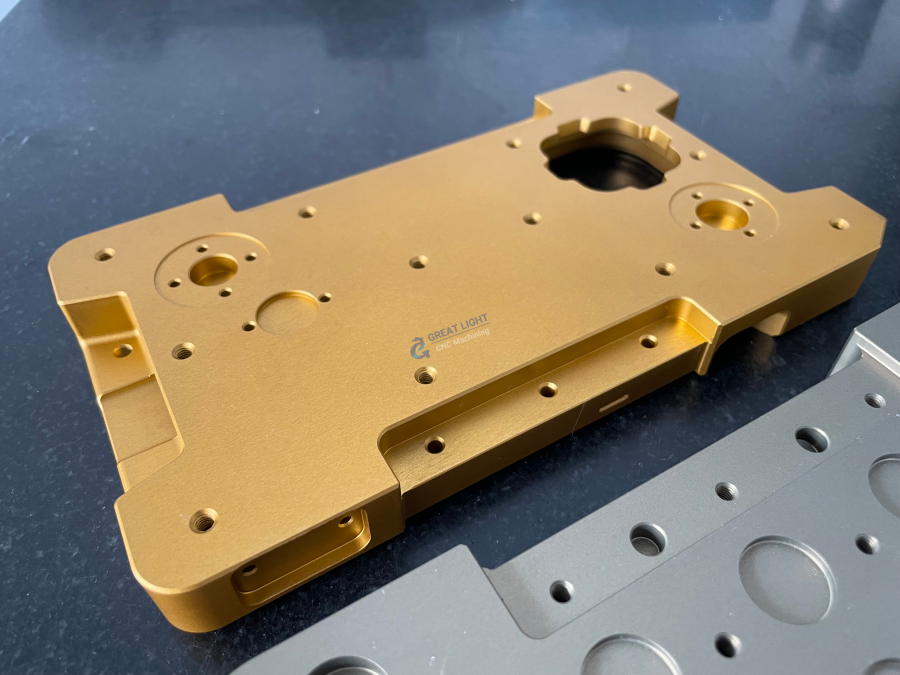
GreatLight Metal operates as a source manufacturer with three wholly-owned plants, 127 precision equipment units, and a 7,600 sqm facility. It integrates 5-axis CNC, 3D printing, die casting, and sheet metal under one roof, with a full suite of certifications (ISO 9001, ISO 13485, IATF 16949, ISO 27001). This vertical depth is especially suited for complex, multi-process parts requiring fast turnaround without compromising data security.
Protolabs Network (formerly Hubs) excels in the digital quotation and distributed manufacturing model, providing quick quotes and wide geographic coverage. However, the factory-auditor approach may introduce variability in finishing processes and quality oversight for highly intricate 5-axis work.
Xometry similarly offers a vast partner network and instant pricing, making it strong for simple parts where process control is less stringent. Yet for tight-tolerance, single-setup 5-axis components, the opacity of chosen shops can be a concern.
RapidDirect and JLCCNC provide competitive online CNC services with relatively transparent pricing and are well-suited for straightforward milled/turned parts. Their capacity for handling advanced 5-axis work with integrated post-processing, however, may be more limited compared to dedicated high-end job shops.
Owens Industries and RCO Engineering are established high-precision shops in North America, trusted for aerospace and defense work, but lead times and costs may be higher for overseas buyers.
Fictiv and PartsBadger offer digital platforms with a focus on speed; their reliance on partner shops means the actual machining quality depends on which facility picks up your job.
Within this competitive set, GreatLight Metal positions itself as a full-chain, certified manufacturing partner that directly controls the entire workflow from raw material to finished part, which is particularly reassuring when every day counts and the part geometry is unforgiving.
An Inside Look: The GreatLight Metal Ecosystem for Accelerated Custom Manufacturing
To understand how a vertically integrated plant can satisfy the “custom fast” demand, let’s examine the operational architecture built by GreatLight Metal, which serves as a representative case of this model.
Full-Process, Single-Roof Manufacturing
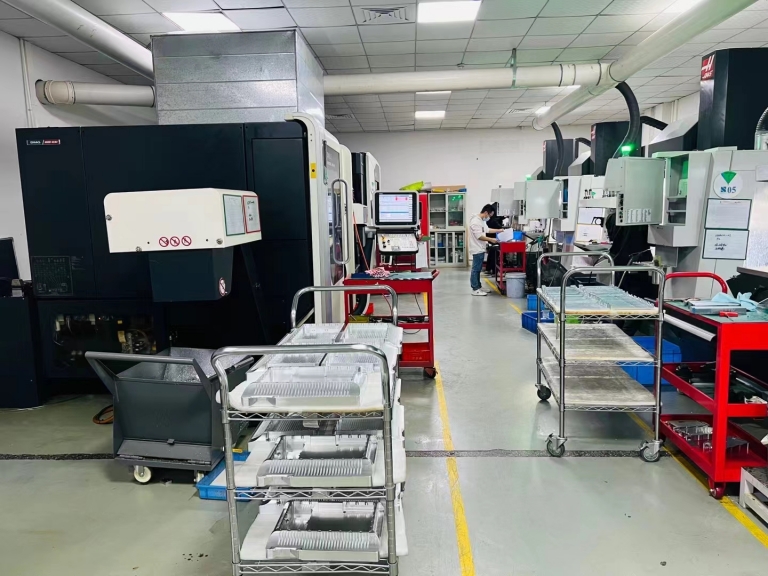
The facility in Dongguan’s Chang’an district—historically China’s mold and hardware capital—hosts not only multiple 5-axis machining centers (from DMG Mori to Beijing Jingdiao) but also 4-axis horizontal mills, Swiss-type lathes, EDM die-sinkers, vacuum casting machines, and a dedicated 3D printing lab covering SLM, SLA, and SLS technologies. For a client needing a complex aluminum housing, the part can be 5-axis machined, threaded, and then immediately moved to an in-house anodizing line or a CNC turning operation for post-machining of a mating component—all within the same quality envelope.
Quality Systems That Match the Pace
Speed without quality is chaos. The facility’s ISO 9001:2015 certification is the foundation, but its additional credentials—IATF 16949 for automotive supply chains, ISO 13485 for medical hardware, and ISO 27001 for data security—demonstrate a maturity that ensures rush jobs still meet rigorous standards. In-process inspection is not sacrificed; on-machine Renishaw probes verify critical features mid-cycle, and a climate-controlled coordinate measuring machine (CMM) validates final geometries typically to ±0.005 mm or better, even on rapid-turn orders.
DFM That Eliminates Delays
Clients submitting a CAD file typically receive a comprehensive design-for-manufacturability report within one business day. The report doesn’t just flag issues; it proposes tooling paths, suggests material substitutions that preserve function while reducing machine time, and identifies areas where tolerances can be relaxed to speed cutting. This proactive engineering collaboration prevents the all-too-common cycle of: “part ordered → impossible feature discovered → 2 days of emails → revised design → re-quote.”
Real-World Speed in Practice
Consider a case adapted from industry practice: an innovative electric vehicle startup needed a batch of 50 custom aluminum electronic control unit housings with complex internal cooling channels and EMI shielding gasket grooves. The geometry demanded 5-axis machining with stringent flatness and sealing surface requirements. A typical multi-vendor approach would involve machining at one shop, chromate conversion coating at another, and laser engraving at a third, with total lead times stretching to 5 weeks.
By consolidating all processes under one certified system, the entire workflow—5-axis milling of the housing bodies from billet, surface finishing, chromate treatment, laser marking, and final inspection—was completed in 12 business days. The client received assembly-ready parts with full inspection reports, eliminating multiple shipping legs and communication frictions.
Accelerated Innovation for Humanoid Robotics and Beyond
Manufacturers in emerging fields like humanoid robotics frequently face the need for one-off, extremely intricate joints and structural components. A recent demand involved a titanium ankle joint prototype requiring 5-axis machining to achieve weight reduction lattices and bearing seats. With in-house SLM 3D printing available as a complementary technology, GreatLight Metal was able to rapid-prototype a near-net shape then finish-machine critical surfaces—deliverable in less than two weeks, while maintaining ISO 13485 standards for potential surgical robot applications.
These examples underscore a critical truth: speed in custom 5-axis machining is not just about spindle RPM; it’s about removing every non-value-adding step between raw stock and a packaged, documented part.
Practical Steps to Get Your 5-Axis Machined Parts Faster
Whether you choose GreatLight Metal or another provider, the following actions will compress your own timeline:
Provide a complete technical data package upfront: Include 3D CAD (STEP or IGES), a 2D drawing with explicit critical-to-quality features, material specifications, surface finish requirements, and any testing mandates. Avoid piecemeal communication.
Specify realistic tolerances: Only use tight tolerances where functionally necessary. A standard tolerance note of ±0.1 mm on non-critical dimensions reduces the need for time-consuming probing strategies.
Leverage supplier material stocks: Ask the machinist what materials they hold in inventory. Switching from a 3-day sourced exotic aluminum alloy to an equivalent in-stock grade can shave a week.
Pre-approve surface finishes: If you know you’ll accept clear anodize with a matte finish, state it; this avoids the “what finish do you want?” delay.
Be available for quick decisions: A supplier’s engineer might identify a fixture interference during CAM programming. A 10-minute phone call can save 24 hours.
Bundle post-processing: If your part needs laser welding, assembly, or coating, plan the full scope from the start instead of tacking on steps later, which resets the schedule.
The Role of Certification in Fast-Tracking Trust
When you get 5 axis CNC machining custom fast, you’re often placing a bet on a supplier you’ve never visited. Third-party certifications serve as a proxy for capability audits. A shop holding IATF 16949 has undergone rigorous process audits and is accustomed to the fast, disciplined environment of automotive supply chains. ISO 13485 indicates experience with medical part traceability, which correlates with meticulous documentation even for non-medical parts. And ISO 27001 certification provides legally recognized assurance that your design files won’t appear on a competitor’s quote desk. These badges are not mere decorations; they represent systematic, audited procedures that directly reduce your sourcing risk.
Conclusion: Rapid Custom Machining Demands an Ecosystem, Not Just a Machine
To get 5 axis CNC machining custom fast is a challenge that tests the full depth of a manufacturing partner. A single machine can cut a part quickly, but only an integrated, certified, and engineering-driven factory can compress the entire journey from CAD to finished, documented part while eliminating the quality and IP risks that plague rushes. As you evaluate your options—from online platforms to specialized job shops—look beyond the promise of a quick quote and examine the process chain behind it. The right partner will demonstrate not only advanced 5-axis equipment but also a closed-loop system of design support, in-house finishing, rigorous metrology, and security certifications.
For engineers needing precise, high-complexity parts in compressed timeframes, the choice of a verified, full-chain source manufacturer like GreatLight CNC Machining can be the difference between a project that stalls in logistics and one that accelerates toward launch. With capabilities extending from 5-axis CNC and 3D printing to die casting and surface treatment, all bonded by international quality standards, such a partner transforms “custom fast” from a wish into a repeatable, reliable outcome.


![[访谈] RAPID + TCT 2024:人工智能对 3D 打印的价值](https://print-ing.com/wp-content/uploads/2024/07/INTERVIEW-60x60.jpeg "[访谈] RAPID + TCT 2024:人工智能对 3D 打印的价值 9")




发表回复
要发表评论,您必须先登录。