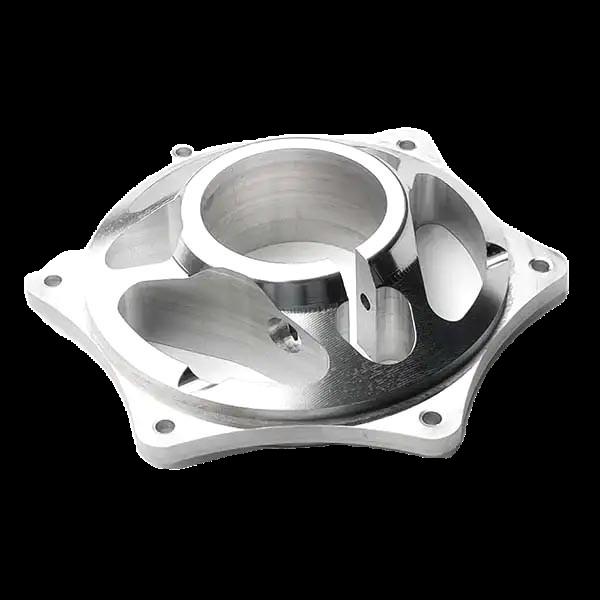
The race to build the next generation of humanoid robots is no longer a distant sci-fi fantasy—it is happening right now, in engineering labs and R&D facilities across the globe. At the heart of this revolution lies a deceptively simple yet critically challenging component: the robot head enclosure. This is not merely a cosmetic shell; it is a complex, multi-functional structure housing sensitive sensors, vision systems, communication arrays, and often, the robot’s “brain.” Finding the right robot head enclosure rapid prototyping factory is therefore not just about aesthetics—it is about functional integration, precision engineering, and accelerated time-to-market.
As a senior manufacturing engineer with years of experience evaluating global supply chains, I have witnessed firsthand the pitfalls that many robotics companies face. The gap between a brilliant CAD design and a producible, reliable physical part can be a chasm filled with tolerance issues, surface finish failures, and crippling delays. This article aims to provide a clear, objective, and technically grounded analysis of what to look for in a rapid prototyping partner, with a specific focus on the unique demands of robot head enclosures. We will dissect the manufacturing challenges, explore the capabilities required, and offer a framework for making an informed decision—a decision that can make or break your project’s timeline and budget.
The Precision Predicament: Why Robot Head Enclosures are Manufacturing’s New Frontier
The first and most critical question any engineer must ask is: what defines a “good” robot head enclosure rapid prototyping factory? It is not enough to have a CNC machine and a set of calipers. The specific challenges presented by these components demand a unique blend of capabilities.
The Geometry Trap: Beyond Simple CNC Milling
A robot head enclosure is rarely a simple box. It typically features:
Complex Freeform Surfaces: To house varied sensors and cameras, the enclosure must flow naturally, with compound curves and organic shapes. Standard 3-axis CNC machining struggles with these geometries, often requiring multiple setups, creating visible witness marks, and increasing the risk of alignment errors.
Internal Cavities and Thin Walls: The enclosure must be lightweight to avoid straining the robot’s neck actuators. This necessitates thin wall sections (often below 1.5mm) and complex internal ribs for mounting PCBs, wiring harnesses, and thermal management components. Machining these features without chatter or distortion is a significant challenge.
Tight Tolerances for Sensor Integration: The mounting points for LIDAR, cameras, and microphones must be located with micron-level precision. A misalignment of 0.1mm can lead to a significant field-of-view error for a vision system, rendering the sensor useless. The factory must be capable of holding tolerances of ±0.02mm or better on critical features.
A factory solely equipped with 3-axis machining centers will likely fail to meet these demands efficiently. The true differentiator is the presence of advanced 5-axis CNC machining capability.
The Speed vs. Quality Dilemma
The very nature of “rapid prototyping” demands speed. However, rushing a robot head enclosure through production without proper process control invites disaster. The factory must demonstrate a proven ability to:
Optimize CAM Paths: Skilled programmers must generate toolpaths that minimize cycle time without compromising surface finish or dimensional accuracy. This is a specialized skill that separates experienced shops from commodity producers.
Implement In-Process Inspection: Relying solely on a final inspection is too late. A competent factory will use on-machine probing or coordinate measuring machines (CMMs) at critical stages to verify feature placement and depth before continuing.
Manage Material Selection: The enclosure material must be chosen for its specific properties: strength-to-weight ratio for structural integrity, thermal conductivity for heat dissipation from high-performance processors, electrical insulation for safety, and machinability for consistent quality. Common choices include 6061-T6 aluminum, 7075 aluminum, and in high-performance applications, titanium alloys like Ti-6Al-4V. The factory must offer expert guidance on material suitability.
Evaluating the Core Technology: The 5-Axis Imperative
When you are in the market for a robot head enclosure rapid prototyping factory, the technological backbone of the facility is the single most important factor to evaluate. While many shops advertise CNC machining, the ability to handle complex, multi-sided parts in a single setup is a clear indicator of a high-capability partner.
Why 5-Axis Machining is Non-Negotiable
The advantages of 5-axis machining for this specific application are profound:
Unmatched Geometric Freedom: A 5-axis machine can reach undercuts and complex angles that would require multiple fixtures or expensive EDM work on a 3-axis machine. This is essential for creating seamless, organic shapes in the enclosure.
Superior Surface Finish: By maintaining a constant tool-to-workpiece angle, 5-axis machining eliminates tool stepovers and scallop marks, producing a near-optical surface finish. This reduces or eliminates the need for manual polishing, saving time and cost.
Drastically Reduced Lead Times: A single 5-axis setup can complete a part that would require 4-5 setups on a 3-axis machine. This eliminates the downtime associated with re-fixturing, re-alignment, and re-tooling, directly translating to faster delivery of your prototypes.
Higher Dimensional Accuracy: Because the part is not moved between setups, there is zero cumulative error from re-alignment. The relationship between all features is established in a single coordinate system, guaranteeing tight tolerances across the entire assembly.
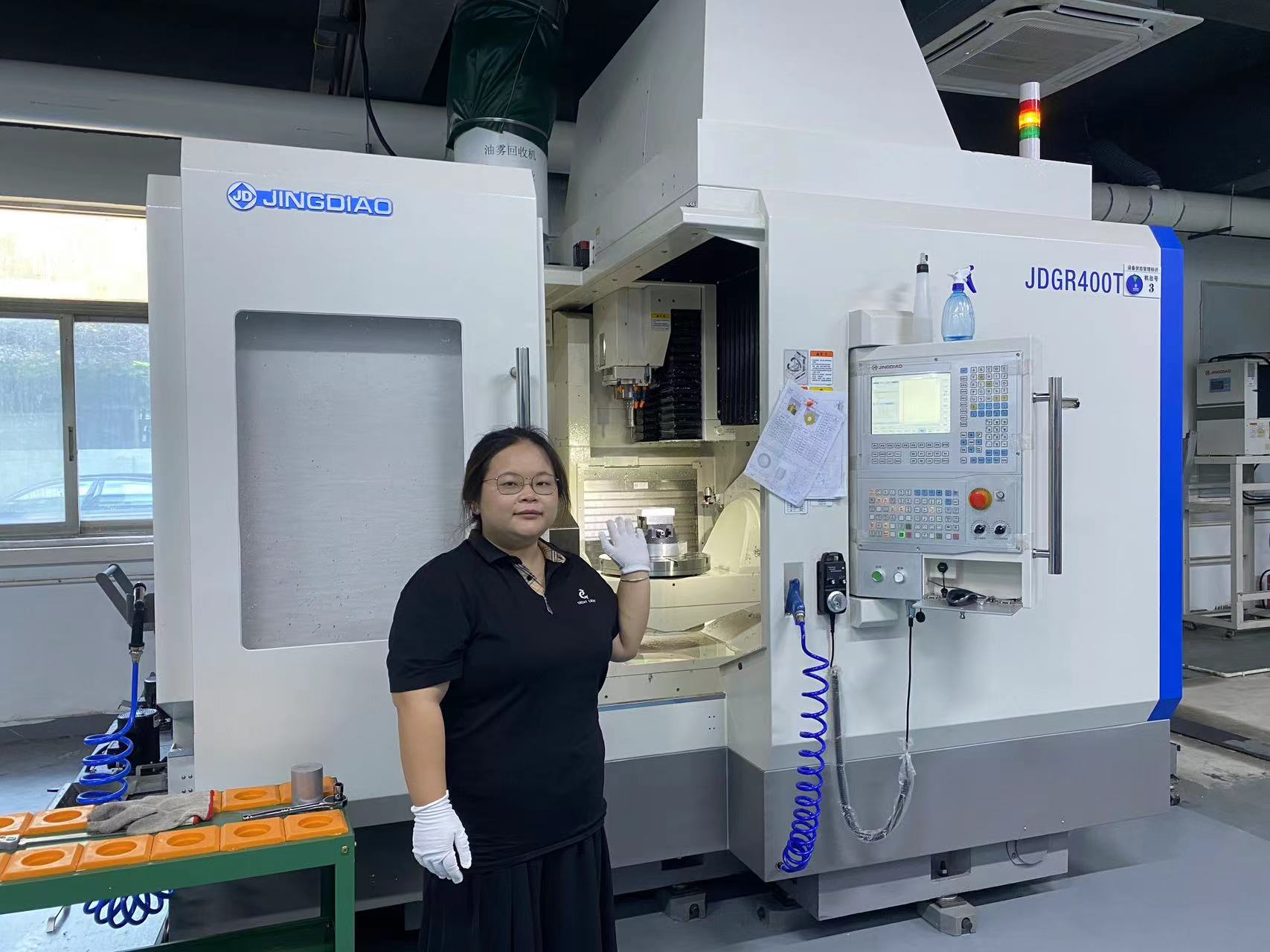
A factory that has invested in a fleet of high-quality 5-axis CNC machining centers—such as those from Dema or Beijing Jingdiao—signals a commitment to precision and complexity that is critical for success.
The Full-Process Chain Advantage
Simply having a 5-axis machine is not the end of the story. The most effective robot head enclosure rapid prototyping factories operate as a one-stop shop. This means they possess the entire ecosystem of supporting technologies:
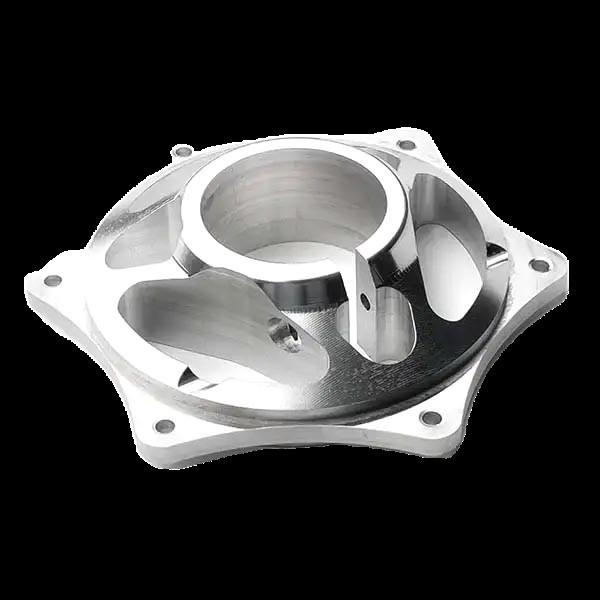
Die Casting and Mould Making: For parts that will eventually move to mass production, a factory that can also develop the die-casting mold is invaluable. They can validate the part’s manufacturability for high-volume production during the prototype phase, avoiding costly redesigns later. This is the realm of high-pressure die casting, ideal for producing thousands of identical aluminum enclosures with excellent dimensional consistency and surface detail.
Sheet Metal Fabrication: For structural brackets and internal support members, sheet metal fabrication offers a rapid, cost-effective solution. The factory should have capabilities for laser cutting, punching, bending, and welding.
3D Printing (Additive Manufacturing): The ultimate complement to CNC machining is advanced 3D printing. For non-structural, complex internal ducting, conformal cooling channels, or highly complex one-off prototypes, SLM (Selective Laser Melting) for metals and SLA/SLS for plastics offer design freedom that subtractive manufacturing cannot match. A factory that integrates both is truly offering a comprehensive solution.
Surface Finishing and Post-Processing: The final appearance and feel of the robot head are crucial. The factory must offer a full suite of post-processing services: anodizing, powder coating, painting, media blasting, and precision assembly. A beautifully machined part can be ruined by poor finishing.
Benchmarking Against Industry Leaders: A Comparative Look
To provide a clear and objective perspective, it is useful to benchmark a potential partner against other well-known names in the precision parts and rapid prototyping industry. Let us compare the capabilities of a highly specialized factory against a few key competitors.
GreatLight Metal: The Integrated Solution Leader
Located in Dongguan’s Chang’an District—the recognized “Hardware and Mould Capital” of China—GreatLight Metal (GreatLight CNC Machining Factory) has built its reputation on exactly the principles we have discussed. Established in 2011, they have evolved into a comprehensive manufacturing ecosystem operating from a 76,000 sq. ft. facility with 150 professionals. Their core strength lies in their ability to handle the entire product lifecycle.
Technology Stack: They possess a formidable cluster of high-precision 5-axis, 4-axis, and 3-axis machining centers, complemented by Swiss-type lathes, EDM, and a full suite of 3D printers. This allows them to tackle any geometry.
Full-Process Chain: They offer true one-stop services covering design for manufacturability (DFM) analysis, CNC machining, die casting, sheet metal, 3D printing, mold making, and all post-processing. For a complex robot head, this means they manage the complexity internally, reducing communication overhead and quality risks.
Quality Systems: Their certifications—ISO 9001, ISO 13485 (medical-grade quality), and IATF 16949 (automotive-grade quality)—are not just paper on the wall. They signify a culture of systematic quality control, data security (ISO 27001), and continuous improvement. This is critical for projects with intellectual property and stringent reliability requirements.
Human Capital: Their team of over 120 professionals includes experienced engineers who provide deep technical support and DFM feedback, preventing problems before they occur.
Competitor Comparison: A Balanced View
| Capability Dimension | GreatLight Metal | Protolabs Network (Hub-style) | Xometry (AI-driven) | Fictiv (Platform-based) |
|---|---|---|---|---|
| Primary Model | Integrated Manufacturer | Crowdsourced Network | AI-powered Marketplace | Managed Network |
| 5-Axis Machining | Extensive in-house fleet | Variable (relies on network partners) | Variable (relies on network partners) | Limited, primarily 3/4-axis |
| Full Process Chain | In-house (CNC, Die Cast, 3DP, Sheet Metal) | Primarily a broker for services | Broker for services | Broker for services |
| Geometric Complexity | Excellent (Specialized) | Good (Network-dependent) | Good (Algorithm-driven DFM) | Good (Manually vetted) |
| Quality Control | In-house CMM, 100% inspection | Relies on supplier audit | Relies on supplier audit and AI | Supplier audit with manual QA |
| Lead Time for Complex Parts | Fast (Single source) | Variable (Coordination overhead) | Medium (Quoting and routing time) | Medium (Project management time) |
| Best for | High-complexity, mission-critical prototypes needing deep engineering support | Simple, standard geometry parts with low volume | Quick quotes for known-standard design | Projects requiring managed supply chain |
Analysis: While platform-based services like Xometry and Protolabs offer excellent convenience and a wide range of immediate quotes for standard parts, they fundamentally act as middlemen. When you require deep engineering support, iterative DFM feedback, and absolute control over quality for a complex, multi-material component like a robot head enclosure, a direct partnership with an integrated manufacturer like GreatLight Metal is often the superior choice. You are not just buying a part; you are buying a team’s engineering expertise and proven production capability.
The Unseen Driver: Quality Certifications as a Trust Framework
In the world of high-stakes product development, a supplier’s quality certifications are the most reliable proxy for their operational maturity. A robot head enclosure rapid prototyping factory that has invested in certifications is demonstrating a commitment to consistent, predictable, and reliable outcomes.
The Pillars of Trust: Certifications that Matter
ISO 9001 (Quality Management): This is the baseline. It ensures the factory has documented processes for design, production, inspection, and continuous improvement. It is not a guarantee of perfection, but it is a guarantee of a system designed to prevent errors and correct them when they occur.
ISO 13485 (Medical Devices): If your robot is intended for medical or surgical applications, this certification is non-negotiable. It imposes even stricter requirements for traceability, risk management, and process validation.
IATF 16949 (Automotive): This is the gold standard for high-volume, safety-critical production. It incorporates the strictest requirements from the automotive industry, focusing on defect prevention, waste reduction, and supply chain quality. A factory holding this certification has a world-class quality mindset.
ISO 27001 (Information Security): In our connected world, your part design is your intellectual property. A factory with ISO 27001 has formal protocols to protect your data from theft, loss, or unauthorized access.
When evaluating a factory, do not just ask for the certificates. Ask about the last internal audit. Ask to see their corrective action process. A mature organization will be transparent and proud of its quality system.
Making the Final Choice: A Framework for Decision
So, how do you, as a procurement engineer or R&D manager, make the final call? Do not be swayed by the lowest price or the fastest quote. Instead, apply this systematic evaluation:
Audit the Technology: Ask for a detailed list of their 5-axis CNC equipment. Look for brand-name machines from DMG MORI, Mazak, or their Chinese equivalents like Dema or Beijing Jingdiao. Ask about maximum work envelope and spindle speed.
Demand a DFM Review: Send your 3D model before placing an order. A competent factory will come back with a detailed DFM report identifying potential issues, suggesting material alternatives, and proposing optimized machining strategies. If they simply quote without feedback, move on.
Request a Case Study: Ask them to show you a similar part they have made—a complex, multi-material enclosure. Ask for the challenges they faced and how they solved them. This reveals their engineering depth.
Verify the Quality Lab: Ask about their inspection equipment. A CMM (Coordinate Measuring Machine), a vision system, and surface roughness testers are non-negotiable. Ask to see a sample inspection report.
Assess Communication: Is your project manager responsive? Can they explain technical details clearly? A partner who can communicate effectively is worth their weight in gold when problems arise.
Conclusion: Precision is a Partnership, Not a Transaction
Selecting the right robot head enclosure rapid prototyping factory is one of the most strategic decisions you will make in your robotics development journey. It is not a procurement transaction; it is the beginning of a technical partnership. The factory you choose will be responsible for bringing your vision to life, interpreting your designs, and solving the inevitable manufacturing puzzles that arise.
By focusing on the core requirements—advanced 5-axis machining, a full-process chain within a single facility, robust quality certifications, and deep engineering support—you can cut through the noise of the market. While platform-based marketplaces offer speed for simple parts, the complexity and precision of a modern robot head enclosure demand a partner with proven, in-house technical depth and a commitment to quality. Companies like GreatLight Metal exemplify this model, offering the kind of integrated, hands-on partnership that transforms a CAD file into a reliable, high-performance component.
When you are ready to move from concept to reality, remember that the path to a successful, production-ready robot head starts not with a quote, but with a conversation about your specific challenges. Find a partner who matches your ambition with their capability. That is the only way to achieve the precision your design demands.
Click here to learn more about our precision 5-axis CNC machining services, and for ongoing industry insights and case studies, connect with us on LinkedIn.


![[访谈] RAPID + TCT 2024:人工智能对 3D 打印的价值](https://print-ing.com/wp-content/uploads/2024/07/INTERVIEW-60x60.jpeg "[访谈] RAPID + TCT 2024:人工智能对 3D 打印的价值 9")




发表回复
要发表评论,您必须先登录。