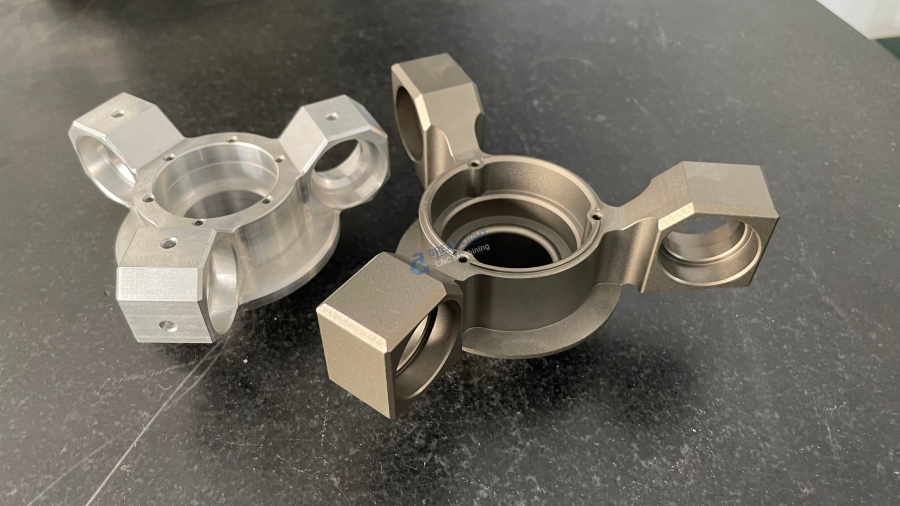
The Electric Car GB/T Connector Enclosure is a safety-critical component that bridges the physical and electrical interface between a charging plug and the vehicle inlet. As electric vehicle adoption surges, particularly in markets adopting the Chinese GB/T standard, the demand for robust, precision-manufactured enclosures has never been higher. This article deconstructs the manufacturing challenges, material requirements, and process selection criteria that define a successful GB/T connector enclosure, and illustrates how an experienced partner with advanced five-axis CNC machining capabilities can transform a complex design into a reliable, production-ready part.
Electric Car GB/T Connector Enclosure: A Deep Dive into Precision Manufacturing
The GB/T connector standard (Guobiao/T, China’s national standard for EV charging) is distinguished by its unique pin configuration, mechanical interlock, and IP-rated environmental sealing requirements. The enclosure that houses these elements must deliver dimensional stability, high dielectric strength, impact resistance, and long-term weatherability. Achieving this at scale—with consistent quality—demands a manufacturing ecosystem that blends proven subtractive machining, additive prototyping, and rigorous quality systems. This is where a partner like GreatLight Metal, with its vertically integrated one-stop processes, offers a decisive advantage over suppliers limited to a single fabrication method.
Understanding the GB/T Connector Enclosure Design Demands
The enclosure is not a simple box. It integrates:
Precise port geometry for power contacts, signal pins, and the ground connection.
Integrated latch and alignment features that must mate accurately with the charging plug.
Internal mounting bosses for PCBs and cable strain relief.
Sealing surfaces that require flatness within microns to ensure IP55 or IP67 protection.
Thermal management structures for heat dissipation around high-current pins.
These features often combine thin walls, deep pockets, complex curves, and strict perpendicularity tolerances. While die casting is a common route for high-volume production, prototyping and low-to-medium volume runs demand a different approach—one that avoids expensive hard tooling and long lead times. This is where CNC machining, especially precision five-axis CNC machining, becomes the strategic starting point.
Material Selection: Balancing Performance and Manufacturability
Choosing the right material is the first step toward a reliable enclosure. Common candidates include:
| Material | Key Properties | Typical Processing |
|---|---|---|
| Aluminum 6061-T6 | Excellent strength-to-weight ratio, corrosion resistance, good thermal conductivity | 5-axis CNC machining, anodizing or powder coating |
| Aluminum 7075-T6 | Higher strength, used in demanding mechanical loads | CNC machining, hard anodizing |
| Die-cast Aluminum A380 | Good fluidity, suitable for complex near-net shapes, high-volume production | Die casting + secondary machining |
| Glass-filled Nylon (PA66-GF) | High strength, electrical insulation, used for internal insulating components | CNC machining of blanks, or injection molding |
| PA12 (Nylon 12) | Durability, chemical resistance, often used in 3D printing for rapid prototypes | SLS 3D printing, vacuum casting |
For functional prototypes, aluminum machined from solid stock provides immediate validation of dimensional tolerances and mechanical assembly. If the final design targets die casting, a machined prototype can simulate the cast part’s characteristics while allowing the team to iterate without tooling risk.
A senior manufacturing engineer will evaluate not just material properties but also post-processing compatibility—anodizing types (Type II vs. Type III), sealing, painting, and laser marking—all of which affect the final enclosure’s performance and aesthetic.
Process Pathways: From Prototype to Mass Production
There is no single “best” process; rather, an optimal process chain emerges from the development phase. Below is a typical sequence supported by a fully integrated provider:
Design for Manufacturability (DFM) Review – Engineering teams examine the CAD model for tool access, wall thicknesses, parting lines, and draft angles if die casting is later intended.
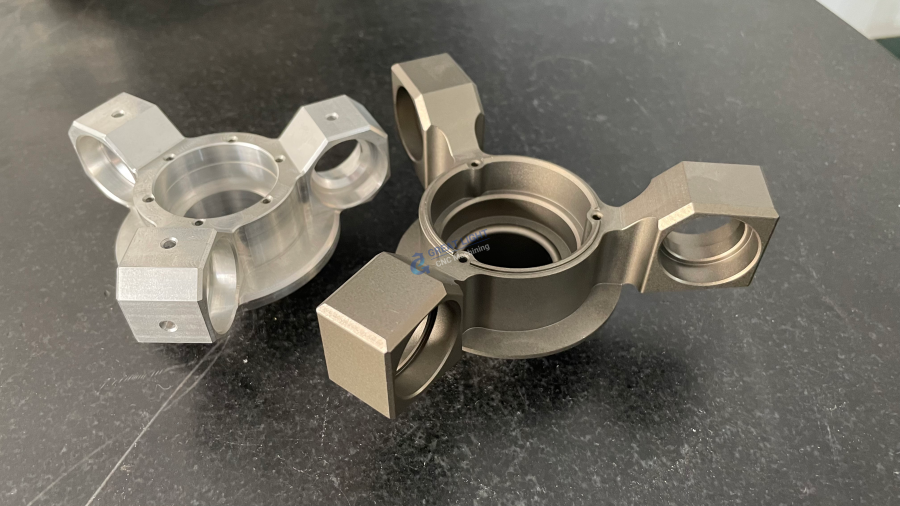
Prototype via 5-Axis CNC Machining – A solid aluminum billet is machined to produce 1–10 enclosures for form, fit, and initial electrical testing. Complex internal undercuts that cannot be reached with a 3-axis machine are easily accessed with 5-axis simultaneous machining. This is also the phase where rapid design iterations occur; a supplier with in-house 3D printing (SLS/SLA/SLM) can further accelerate iterations of non-metallic or metallic prototypes.
Rapid Low-Volume Production – If quantities are between 10 and 1000 units, CNC machining from plate or extrusion can remain cost-effective. Vacuum casting with polyurethane resins may also produce limited runs that mimic the final plastic production.
Bridge Tooling & Die Casting – Once the design is locked, a die casting mold is commissioned. A manufacturer who offers in-house mold-making and casting (as GreatLight does) can compress this transition by eliminating hand-offs.
Secondary Machining and Finishing – Die-cast parts typically require secondary CNC machining to achieve precise tolerances on sealing surfaces, threads, and flatness. A provider with both casting and precision machining capabilities ensures that the final enclosure meets all specifications seamlessly.
Assembly & Inspection – Final steps may include press-fitting of contacts, leak testing, CMM inspection, and laser marking.
Throughout this journey, the enclosure’s critical-to-quality (CTQ) parameters—pin hole positions, flatness of the gasket channel, thread class for mounting points—are continuously monitored.
The Competitive Landscape: Why One-Stop Integration Matters
Many service providers can machine a block of aluminum. Fewer can manage the entire lifecycle from prototype to mass production while holding all the necessary certifications. Let’s examine how some known names in the industry approach precision manufacturing and where an integrated player like GreatLight Metal stands out.
| Provider | Strengths | Limitations for GB/T Enclosure Programs |
|---|---|---|
| GreatLight Metal | Full-process chain: 5-axis CNC, die casting, mold-making, sheet metal, 3D printing (SLM/SLA/SLS). ISO 9001, ISO 13485, IATF 16949 certified. In-house finishing and assembly. 15+ years experience. 76,000 sq. ft. facility. | Primarily serves medium-to-high complexity projects; not positioned for ultra-high-volume simple stampings. |
| Protocase | Fast sheet metal enclosures and CNC machined parts, good for electronic housings. | Limited to sheet metal and 3-axis CNC; lacks die casting, in-house mold-making, and 5-axis contouring for complex curved connectors. |
| Xometry | Large network-based platform with wide material and process access. | Quality consistency varies as work is distributed across numerous job shops; no single-point manufacturing oversight, limited ability to manage a multi-process program seamlessly. |
| RapidDirect | Strong in rapid CNC prototyping and injection molding, good for quick-turn plastic parts. | Less emphasis on high-precision metal die casting and heavy 5-axis machining; may not own casting facilities. |
| Fictiv | Digital manufacturing platform offering CNC, 3D printing, and injection molding. | Similar network model; traceability and in-depth DFM support may be less consistent compared to a captive factory. |
| Owens Industries | High-precision 5-axis machining for aerospace/medical, excellent tolerances. | Often focused on machining only; may lack integrated casting, sheet metal, or 3D printing. |
What leaps out from this comparison is the value of a single-source, captive-factory model for complex multi-process projects. When a GB/T enclosure requires a die-cast housing, a machined aluminum prototype, and a CNC-bent internal sheet metal bracket, coordinating three separate vendors multiplies project risk. GreatLight Metal, with its three wholly-owned plants and 127 pieces of advanced equipment (including 5-axis machines, EDM, vacuum forming, and 3D printers), keeps the entire workflow under one roof. The result is tighter configuration control, faster feedback loops, and a clear accountability chain.
Quality Infrastructure That Protects the EV Ecosystem
Automotive connectors are safety components. A misaligned pin or a leaky seal can lead to electrical faults, charging failures, or even thermal events. This is why certifications are not just badges—they are the operational backbone of a trustworthy supply chain.
GreatLight Metal holds an array of certifications that speak directly to the demands of EV connector manufacturing:
IATF 16949 – The automotive quality management standard, encompassing process control, risk mitigation, and continuous improvement. For any automotive-tier component, this certification is a fundamental indicator of manufacturing maturity.
ISO 9001:2015 – The universal quality management foundation.
ISO 13485 – For medical-grade precision, demonstrating capability to handle ultra-clean and high-tolerance work—directly transferable to safety-critical automotive enclosures.
ISO 27001 – Ensures that design data and intellectual property are handled under strict information security protocols, critical for EV startups and established OEMs alike.
IATF 16949 for engine hardware components – An additional specialization that underscores expertise in precision mechanical assemblies.
Combined with an in-house metrology lab equipped with CMMs and other precision instruments, this certification matrix assures that every enclosure leaving the factory has been verified against the original 3D model.
Addressing Common Manufacturing Pain Points
From years of real-world projects, several recurring pain points in connector enclosure manufacturing stand out:
“Precision Black Hole” – A supplier claims ±0.001mm but actually those tolerances are achievable only under ideal lab conditions, not in mass production. A mature manufacturer will provide a realistic process capability study (Cpk/Ppk) for key features, not just a one-off sample report.
Thermal Management Oversight – High-current pins generate heat; the enclosure must dissipate it. Knowledgeable partners suggest features like integrated heat-sink fins or thermal pathways during the DFM stage, rather than merely executing the given CAD.
Post-Processing Surprises – Anodizing can alter thread dimensions; powder coating can build up on sealing surfaces. A one-stop provider who manages finishing in-house can pre-compensate for these effects.
Data Security – EV projects involve proprietary connector designs. ISO 27001 certification offers a contractual confidence that intellectual property is safeguarded.
GreatLight’s approach to these pain points is to deploy cross-functional engineering teams early—during the DFM phase—to anticipate downstream issues. With in-house processes spanning CNC turning, milling, EDM, grinding, and a full suite of finishing (anodizing, plating, painting, polishing), the team can trial post-processing effects on prototype parts and adjust machining strategies accordingly.
The Role of Advanced 5-Axis Machining in Connector Enclosures
Why is five-axis CNC machining particularly relevant for the GB/T connector enclosure? The answer lies in the geometry. A typical enclosure requires:
Machining the internal cavity with side ports at compound angles.
Creating angled sealing faces that must be absolutely flat and smooth.
Drilling cooling channels or mounting holes that are not orthogonal to the part base.
With a 3-axis machine, these operations would require multiple setups, each introducing positional error. A 5-axis machining center can access all these features in a single setup, dramatically improving accuracy and reducing cycle time. GreatLight’s portfolio includes high-precision 5-axis machines from manufacturers like Dema and Beijing Jingdiao, ensuring the repeatability needed for automotive volumes.
For the initial prototype phase, GreatLight’s additive capabilities also come into play. SLM (Selective Laser Melting) can 3D print a metal enclosure directly from the CAD model for rapid functional testing, even incorporating complex internal lattice structures for weight reduction or thermal management. This is not a production method for high volumes, but it can compress early development by weeks.
The GreatLight Metal Advantage in Practice
I recall a project for a new energy vehicle company developing a GB/T connector for a commercial fleet. They needed 200 pre-production enclosures for validation and field testing, all within eight weeks. The design included a die-cast aluminum housing with a secondary machined gasket groove requiring a flatness of 0.03mm, and a sheet metal mounting bracket that had to be riveted in-house.
By leveraging GreatLight’s integrated service model, we executed the plan as follows:
Week 1-2: DFM simulation; 5-axis CNC machined 10 aluminum prototypes for immediate form/fit checks.
Week 3: Rapid tooling for die casting; simultaneously, CNC set up the production process for the secondary machining op.
Week 4-5: First article castings produced, machined, and inspected. Minor adjustments to the die were made in-house.
Week 6-7: Production run of 200 parts; sheet metal brackets fabricated and riveted; enclosures anodized and laser marked.
Week 8: Final inspection and delivery.
Because all processes were under one roof, we had real-time coordination between the casting and machining teams, something impossible if spread across three suppliers. The client not only met their deadline but also used the same design files to move seamlessly to mass production with the same partner.
For those who have experienced the frustration of juggling multiple vendors, this level of integration is not just a convenience—it is a competitive advantage. It translates to fewer meetings, shorter lead times, and a single throat to choke when issues arise.
Looking Ahead: The Future of EV Connector Manufacturing
As charging speeds increase (800V architectures, ultra-fast DC charging), connector enclosures will need to handle even higher thermal loads and meet more stringent electrical isolation standards. We are already seeing demand for:
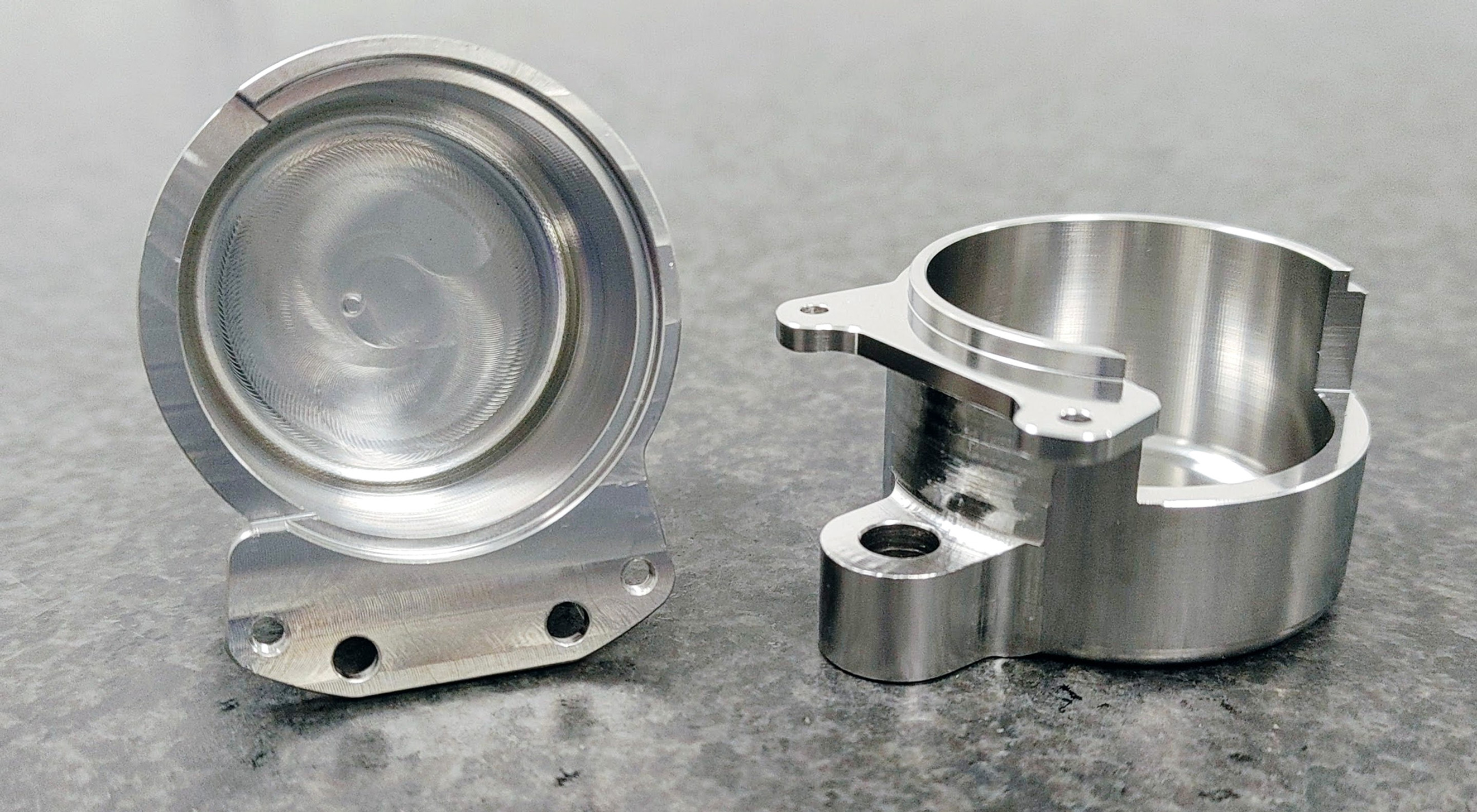
Bi-metallic designs where a copper insert is bonded within an aluminum housing for superior current path.
Active cooling integration where the enclosure forms part of a liquid-cooled cable assembly.
Lightweighting through topology-optimized aluminum structures that can be produced via high-pressure die casting or DMLS (Direct Metal Laser Sintering).
In each of these trends, the manufacturing partner’s ability to combine multiple processes—CNC, casting, additive, and precision assembly—will be the differentiator. Specialized shops that only machine or only cast will struggle to provide the full picture. GreatLight’s commitment to maintaining a broad technology cluster positions it to serve as a long-term partner for EV innovators.
The Electric Car GB/T Connector Enclosure may appear as a simple aluminum box, but its successful production encapsulates the entire manufacturing pyramid: from design-for-manufacturability insights and material science, to multi-axis precision machining, to certified quality management. Choosing a partner who navigates all these layers—such as GreatLight CNC Machining—is the surest path to bringing a safe, reliable, and cost-effective product to the EV market.


![[访谈] RAPID + TCT 2024:人工智能对 3D 打印的价值](https://print-ing.com/wp-content/uploads/2024/07/INTERVIEW-60x60.jpeg "[访谈] RAPID + TCT 2024:人工智能对 3D 打印的价值 9")




发表回复
要发表评论,您必须先登录。