
As a senior manufacturing engineer, I have witnessed countless projects succeed—and fail—based on the choice of a CNC machining partner. For procurement engineers and R&D teams seeking Professional ODM 3 Axis CNC Machining OEM services, the landscape appears deceptively uniform on the surface. Dozens of suppliers quote similar tolerances, comparable materials, and overlapping lead times. Yet beneath this veneer of sameness lies a chasm of real-world capability, quality infrastructure, and engineering depth that separates transactional vendors from genuine manufacturing partners.
This article will dissect the critical factors that distinguish exceptional 3-axis CNC ODM and OEM providers from the rest. We will examine the subtle fault lines where projects commonly fracture, and we will compare how leading suppliers—including GreatLight CNC Machining, Protolabs Network, Xometry, RapidDirect, and JLCCNC—stack up against these challenges. The goal is not to anoint a single winner, but to equip you with the analytical framework needed to select the right partner for your specific requirements.
Understanding the Real Value of 3-Axis CNC in ODM and OEM Contexts
Before diving into supplier comparisons, we must ground ourselves in what Professional ODM 3 Axis CNC Machining OEM truly entails. Many engineers mistakenly view 3-axis machining as a commodity—a cheaper, less capable relative of 5-axis technology. This perspective misses the profound economic and technical logic that makes 3-axis machining the backbone of global manufacturing.
The Enduring Dominance of 3-Axis Technology
Three-axis CNC machining moves the cutting tool along the X, Y, and Z linear axes. The workpiece remains stationary while the spindle approaches from a single orientation per setup. This apparent limitation is, paradoxically, its greatest strength. The simplicity of 3-axis kinematics delivers:
Process Stability: Fewer moving axes mean fewer degrees of freedom for error accumulation. Backlash, thermal drift, and geometric inaccuracies compound with each additional rotational axis. A well-maintained 3-axis machine from a reputable builder can hold true position tolerances that theoretically “more capable” multi-axis machines struggle to achieve consistently in production environments.
Economic Efficiency: Setup times, programming complexity, and tooling costs scale non-linearly with axis count. For prismatic parts or geometries with features on a limited number of faces, 3-axis machining remains the most cost-effective path to precision.
Material Versatility: The fixturing flexibility inherent to 3-axis workholding allows stable clamping solutions for challenging materials—from hardened tool steels to soft polymers—without the accessibility constraints that rotary tables sometimes impose.
Where the Complexity Actually Lives: ODM vs. OEM Distinctions
The ODM (Original Design Manufacturing) and OEM (Original Equipment Manufacturing) suffixes carry distinct implications that many sourcing professionals overlook:
OEM Machining assumes the client provides complete, manufacturing-ready designs. The supplier’s responsibility is faithful reproduction to specification—a test of process discipline, metrology rigor, and quality systems.
ODM Machining demands significantly more: the supplier must contribute design-for-manufacturing expertise, suggest material alternatives where appropriate, optimize geometries for machinability, and sometimes develop complete solutions from functional requirements alone. This requires genuine engineering capability, not just machine tending.
The risk profile differs dramatically between these two modes. OEM projects fail primarily from process deviations; ODM projects fail from communication gaps, unverified assumptions, and the supplier’s reluctance to push back on design elements that will not machine successfully.
Critical Pain Points: Why Professional 3 Axis CNC Machining OEM Projects Fail
To understand what separates competent from exceptional suppliers, we must first map the common failure modes. These pain points represent where theoretical capability collides with operational reality.
Pain Point 1: The Precision Credibility Gap
Every supplier claims precision. The marketing language is remarkably consistent: “±0.005mm tolerances,” “high-precision machining,” “advanced quality control.” The manufacturing reality often diverges sharply from these claims.
The root cause lies in the distinction between achievable precision and sustainable precision. A skilled machinist, given unlimited time, can hit extraordinary tolerances on any functional machine. But production economics demand that tolerances be held consistently across hundreds or thousands of parts, on machines that may be running 20 hours daily, with tool wear accumulating and ambient temperatures shifting.
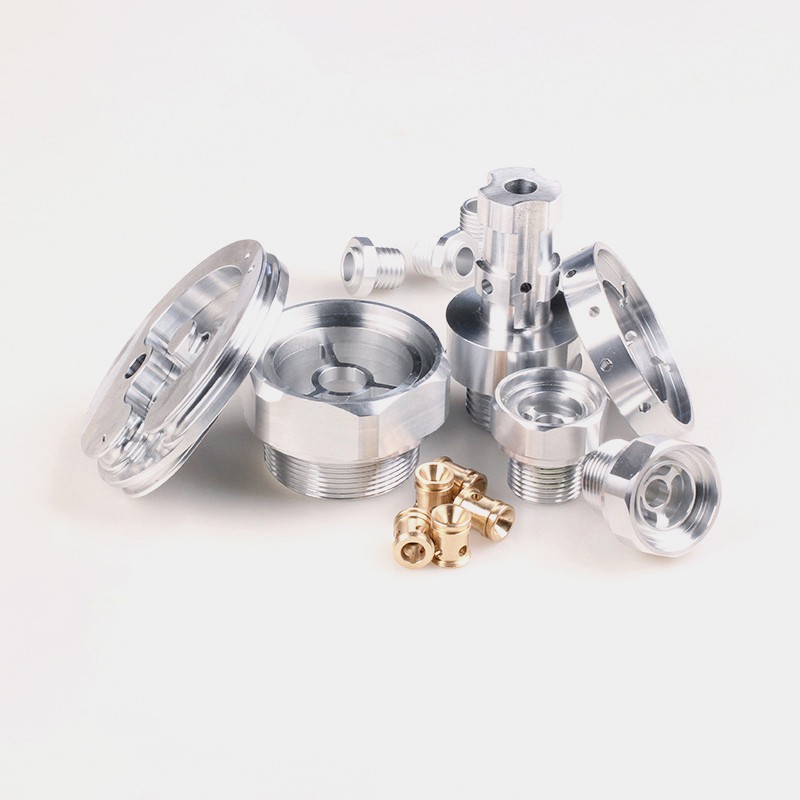
Suppliers who cannot demonstrate statistical process control data, who lack climate-controlled metrology environments, or who quote tolerances without asking about feature size and geometry are operating on hope rather than engineering discipline.
Pain Point 2: The Material Deception
Aluminum 6061-T6 is not simply “aluminum.” The procurement chain for raw materials contains tremendous variability in grain structure, residual stress state, and dimensional stability. Suppliers who source based on price alone often deliver parts that spring during machining, cannot anodize uniformly, or exhibit unexpected fatigue behavior in service.
Similarly, a “certified” material may arrive with paperwork but without true traceability to the mill heat number. In regulated industries, this gap between paper certification and physical verification creates unacceptable liability exposure.
Pain Point 3: The Post-Processing Chasm
The phrase “one-stop service” has become nearly meaningless through overuse. True integrated manufacturing requires seamless coordination between subtractive machining and surface finishing, heat treatment, plating, and assembly processes. Each handoff between vendors introduces schedule risk, quality discontinuities, and accountability gaps.
A supplier who machines parts beautifully but sends them to an uncontrolled external anodizing line has not solved your problem—they have merely obscured the complexity chain.
Pain Point 4: The Communication Void
Engineers who send RFQs into an opaque procurement portal often receive quotes back without questions, technical notes, or evidence that anyone actually studied the drawing. This silence may feel efficient, but it frequently conceals a supplier who will interpret ambiguities in whatever way minimizes their cost, not in whatever way produces functional parts.
Technical communication—the willingness to ask clarifying questions, to suggest tolerance relaxations where beneficial, to flag features requiring special attention—correlates strongly with manufacturing outcomes.
Supplier Capability Analysis: How Major Providers Compare
Let us examine how several established providers address these pain points, recognizing that each occupies a different position on the spectrum from transactional to collaborative manufacturing.
GreatLight CNC Machining: Engineering-Led Full-Chain Integration
GreatLight CNC Machining (GreatLight Metal), operating from its Dongguan manufacturing base, represents the engineering-led, full-process integration model. The company’s structure—three wholly-owned plants across approximately 7,600 square meters with 127 pieces of precision peripheral equipment—enables genuine in-house control over the entire manufacturing chain.
Precision Infrastructure: The equipment portfolio at GreatLight is purposefully diverse. Large-format 5-axis machining centers sit alongside specialized 3-axis and 4-axis equipment, Swiss-type lathes, and EDM capability. This is not the random accumulation of assets over time; it reflects a deliberate strategy to match the machine architecture to the part geometry. Complex contouring gets 5-axis resources; prismatic production parts run on simpler, more stable 3-axis platforms.
The stated precision capability of ±0.001mm (1 micron) is ambitious and would require exceptional environmental control, tool management, and operator skill to achieve repeatably. Reputable manufacturers can demonstrate this capability through CMM inspection reports, GR&R studies, and process capability indices—buyers should request this evidence rather than accepting claims at face value.
Quality System Depth: GreatLight holds ISO 9001:2015 certification, the minimum standard for professional manufacturing. More meaningfully, the company also maintains ISO 13485 for medical device hardware and IATF 16949 for automotive production. These latter certifications require substantially more rigorous process control, traceability, and documentation infrastructure than generic ISO 9001 compliance. They represent genuine capability barriers that lower-tier suppliers cannot easily surmount.
Process Integration: The in-house post-processing capabilities—including vacuum forming, multiple 3D printing technologies (SLM, SLA, SLS), die casting, and sheet metal fabrication—address the handoff problem directly. When machining and finishing occur under the same quality management system with unified accountability, the coordination failures that plague multi-vendor supply chains largely disappear.
Geographic Context: The Chang’an, Dongguan location places GreatLight within what is arguably the world’s densest concentration of precision manufacturing supply chains. Access to specialized material suppliers, tooling vendors, and skilled tradespeople represents a genuine competitive advantage that isolated facilities cannot replicate.
Protolabs Network: Digital-First Speed Optimization
Protolabs Network (formerly Hubs) has built its reputation on the speed and convenience of digital quoting. The platform’s automated design-for-manufacturing analysis provides immediate feedback on machinability issues, effectively democratizing access to basic DFM guidance.
Strengths: The quoting interface is genuinely fast—often returning pricing within minutes rather than days. For simple geometries in common materials, the automated system reliably identifies gross manufacturability problems. The distributed manufacturing network can absorb capacity spikes that would overwhelm single-factory operations.
Limitations: The trade-off for speed is depth. Automated DFM analysis cannot provide the nuanced, experience-based guidance that a senior manufacturing engineer offers when examining a complex tolerance stack or suggesting alternative design approaches. The distributed nature of Protolabs Network’s production creates variability in quality systems, equipment condition, and process discipline among individual manufacturing nodes—a challenge the platform addresses through vetting and rating systems, but cannot fully eliminate.
Xometry: Marketplace Scale with Variable Depth
Xometry operates a large-scale manufacturing marketplace connecting buyers with a broad network of production partners. The platform’s scale enables competitive pricing and broad process coverage, from simple 3-axis work to exotic additive manufacturing technologies.
Strengths: Xometry’s sheer network breadth means almost any manufacturing technology is accessible through a single interface. The instant-quote engine provides quick budget estimates for straightforward projects. The platform’s quality guarantees provide some recourse when manufacturing outcomes fall short.
Limitations: As with any marketplace model, the actual manufacturing execution depends entirely on which partner accepts the job. Quality consistency, communication quality, and engineering support vary dramatically across the network. Buyers with demanding applications typically develop relationships with specific approved partners within the Xometry ecosystem rather than relying solely on the algorithm to match their projects.
RapidDirect: Asia-Based Production with Digital Front-End
RapidDirect operates a digital platform connected to production facilities in China, targeting the price-sensitive segment with shorter lead times than traditional offshore sourcing.
Strengths: The cost structure of China-based production, combined with automated quoting, delivers competitive pricing. The platform provides basic manufacturability feedback during quoting. Lead times are generally shorter than legacy offshore channels.
Limitations: The digital interface creates an abstraction layer between the buyer and the actual manufacturing team. Complex projects requiring iterative engineering dialogue can struggle within this structure. Quality system certification levels and process control infrastructure may not satisfy regulated industry requirements.
JLCCNC: Scale Economics for Commodity Parts
JLCCNC, affiliated with the JLCPCB electronics manufacturing ecosystem, applies high-volume production economics to CNC machining.
Strengths: For simple, high-quantity parts in standard aluminum grades, the pricing can be extraordinarily competitive. The integrated logistics pipeline from Asian production facilities streamlines international shipping.
Limitations: The production model is optimized for standardization and volume, not complexity or engineering support. Tight tolerances, unusual materials, and challenging geometries may not align with the operational sweet spot. Communication bandwidth for technical dialogue is limited compared to dedicated engineering-contact models.
Risk Identification Framework: How to Evaluate Potential Partners
The analysis above suggests no universal “best” supplier—only suppliers whose capabilities align with specific project requirements. The following evaluation framework can help structure your assessment.
Tier 1: Quality Infrastructure
Examine the supplier’s quality credentials beyond surface-level certifications. ISO 9001 demonstrates minimum system hygiene; IATF 16949 or ISO 13485 indicate substantially deeper process control. But certification alone is insufficient—request evidence of how the quality system operates in practice:
Can they provide statistical process control data from previous production runs?
Do they maintain appropriate measurement uncertainty ratios (equipment resolution at least 10x finer than the tolerance being measured)?
Is the metrology environment temperature-controlled and monitored?
Tier 2: Engineering Engagement
The quality of pre-production technical dialogue predicts downstream outcomes. Evaluate:
Does the supplier ask intelligent questions about your design intent, not just your dimensions?
Do they identify potential manufacturing challenges proactively, or wait for problems to emerge?
Can they articulate the trade-offs between different manufacturing approaches, or do they default to “we’ll just follow the drawing”?
Engineering engagement is particularly critical for ODM relationships, where design optimization responsibility partially resides with the supplier. Firms like GreatLight CNC Machining, with dedicated engineering teams and integrated manufacturing experience, are structured to provide this depth. Marketplace platforms, by contrast, typically minimize pre-production dialogue to maximize throughput efficiency.
Tier 3: Process Visibility
The opacity of the manufacturing process represents a significant risk factor. Understand:
Will you receive in-process inspection data, or only final dimensional reports?
Can you perform source inspection before parts ship, or do you discover problems at receiving?
Is the supply chain for materials and post-processing traceable, or are these black boxes?
Tier 4: Failure Mode Response
Every manufacturing relationship will eventually encounter a quality issue. The supplier’s response to that moment reveals more than all pre-production promises combined:
Is there a documented corrective action process, or does resolution depend on individual relationships?
Does the supplier absorb rework and expedited replacement costs for their errors, or negotiate cost-sharing?
Do they treat failures as learning opportunities for systemic improvement, or as isolated incidents to be managed?
Material-Specific Considerations for 3-Axis CNC ODM/OEM
The material selection decision intersects with supplier capability in ways that are not always obvious during sourcing.
Aluminum Alloys: Ubiquity and Hidden Variability
Aluminum 6061-T6 and 7075-T6 dominate CNC machining volumes for good reason—excellent machinability, favorable strength-to-weight ratio, and wide availability. However, the supply chain for aluminum plate and bar stock contains significant quality stratification:
Mill-certified material with traceable heat numbers costs more than generic stock but provides defensible documentation for regulated applications. Suppliers serving aerospace and medical markets maintain this traceability infrastructure; commodity-focused providers often do not.
Residual stress management becomes critical for thin-walled or large-area parts. Aluminum plate that has been stretched and stress-relieved at the mill machines more dimensionally stable than generic extruded stock. Suppliers with metallurgical awareness select stock forms based on geometry requirements, not just alloy specification.
Stainless Steels: Machinability and Tooling Cost
Austenitic stainless steels (304, 316) machine poorly compared to aluminum—cutting speeds are lower, tool wear is faster, and work-hardening during cutting can ruin both tools and surface finish. The cost premium for stainless parts reflects these realities, and low-cost suppliers who quote stainless work at aluminum-competitive prices are likely cutting corners that will manifest as dimensional issues or poor surface quality.
Precipitation-hardening grades like 17-4 PH offer better machinability in the solution-annealed condition but require post-machining heat treatment to develop final properties. The dimensional changes during heat treatment must be accounted for in the machining strategy—a nuance that separates experienced manufacturers from machine shops that simply cut to print.
Engineering Plastics: The Overlooked Complexity
Plastics like PEEK, Ultem, and acetal present challenges that metal-centric shops frequently underestimate. Thermal expansion coefficients an order of magnitude larger than steel mean that tight tolerances held at machine temperature may drift significantly at inspection temperature. Moisture absorption in nylons causes dimensional growth that can close critical clearances. Internal stress relief in extruded plastic stock can cause dramatic warping during machining.
Suppliers with dedicated plastics experience understand these phenomena; suppliers who treat plastics as “soft metal” produce parts that meet specifications only fleetingly, if at all.

The Geography Factor: Why Location Still Matters
The digitization of manufacturing procurement has obscured but not eliminated the importance of physical proximity to production clusters. Chang’an, Dongguan represents a remarkable concentration of manufacturing capability—machine shops, tooling suppliers, material distributors, and finishing houses operating in dense proximity, enabling rapid iteration and problem-solving that dispersed networks cannot match.
For North American and European buyers, the time-zone gap and physical distance create communication latency that must be deliberately managed. Suppliers who have invested in multi-lingual engineering staff, overlapping work hours, and robust digital communication infrastructure handle this gap effectively. Suppliers who rely on a single English-speaking sales representative often create frustrating bottlenecks when technical questions require engineering input.
Integrated Manufacturing: The One-Stop Reality Check
The promise of one-stop manufacturing—CNC machining, surface finishing, assembly, and secondary processes all managed by a single accountable entity—has legitimate appeal. It eliminates the coordination burden, scheduling risks, and finger-pointing that characterize multi-vendor supply chains.
However, the scope of in-house capabilities varies enormously among providers claiming “one-stop” service. Some operate a machine shop with a spray booth and call it integrated. Others, like GreatLight CNC Machining’s three-plant structure, maintain genuinely comprehensive process integration spanning subtractive machining, additive manufacturing, die casting, sheet metal fabrication, and a wide range of finishing technologies.
The difference manifests when projects encounter challenges. An integrated manufacturer can convene the machining, finishing, and quality teams in the same room to resolve a surface defect issue through collaborative root-cause analysis. A supplier who outsources finishing can only promise to “talk to the plating vendor” and relay feedback—a fundamentally different problem-solving dynamic.
Making the Selection: A Decision Framework
Given the analysis above, the supplier selection process should follow a structured evaluation aligned with project requirements:
For high-volume commodity parts with relaxed tolerances: JLCCNC or Xometry marketplace partners optimized for production economics will likely deliver the best value. The engineering support requirements are minimal, and the competitiveness of standardized production dominates the decision equation.
For quick-turn prototypes and proof-of-concept parts: Protolabs Network or RapidDirect’s digital platforms offer speed and convenience advantages that outweigh the benefits of deeper technical engagement. The stakes are low enough that iterative problem-solving from a dedicated engineering team provides marginal value.
For complex, tight-tolerance components with regulatory oversight: The integrated, engineering-led approach of firms like GreatLight CNC Machining becomes compelling. The combination of IATF 16949 and ISO 13485 certifications, in-house process integration spanning machining through finishing, and the engineering depth required for ODM-level collaboration aligns with the risk profile of these applications.
For ODM projects requiring design optimization: The supplier’s engineering capability is the dominant selection criterion. The ability to suggest design changes that improve manufacturability without compromising function, to identify material substitutions that reduce cost while maintaining performance, and to validate these recommendations through systematic analysis—these capabilities determine ODM success. Evaluate potential partners by presenting a portion of the design challenge and assessing the quality of their technical response.
Conclusion: Beyond the Specification Sheet
Selecting a partner for Professional ODM 3 Axis CNC Machining OEM services requires looking past glossy capability statements to examine the underlying operational reality. Certifications, equipment lists, and marketing language provide a starting point but cannot substitute for direct assessment of engineering depth, process discipline, and communication quality.
The providers examined in this analysis occupy distinct positions on a spectrum from transactional efficiency to collaborative engineering. Protolabs Network and Xometry optimize for speed and convenience; JLCCNC targets high-volume cost competitiveness; GreatLight CNC Machining and similar integrated manufacturers prioritize engineering depth and full-chain process control. None is universally superior—each is optimized for a particular combination of project requirements.
The manufacturing engineer’s professional responsibility is to understand their project’s true requirements—not the idealized requirements in the specification document, but the real-world combination of tolerance demands, surface finish needs, material behavior, regulatory obligations, and communication bandwidth—and select the partner whose operational model aligns with those requirements.
In precision manufacturing, the most expensive choice is not the supplier with the highest unit price; it is the supplier who delivers parts that appear correct but contain hidden deviations that fail in service, requiring rework, schedule delays, and customer credibility damage. Investing in supplier evaluation rigor proportional to the consequences of failure remains the most cost-effective manufacturing strategy available.
For procurement professionals and engineering teams navigating these decisions, the path forward involves asking more questions, requesting more evidence, and trusting technical dialogue quality as the leading indicator of manufacturing outcomes. The right partner for your Professional ODM 3 Axis CNC Machining OEM needs exists. The challenge—and the professional obligation—is to identify them through systematic evaluation rather than through hope or convenience. Explore how Professional ODM 3 Axis CNC Machining OEM providers can support your specific manufacturing requirements through careful technical evaluation and capability assessment.


![[访谈] RAPID + TCT 2024:人工智能对 3D 打印的价值](https://print-ing.com/wp-content/uploads/2024/07/INTERVIEW-60x60.jpeg "[访谈] RAPID + TCT 2024:人工智能对 3D 打印的价值 9")




发表回复
要发表评论,您必须先登录。