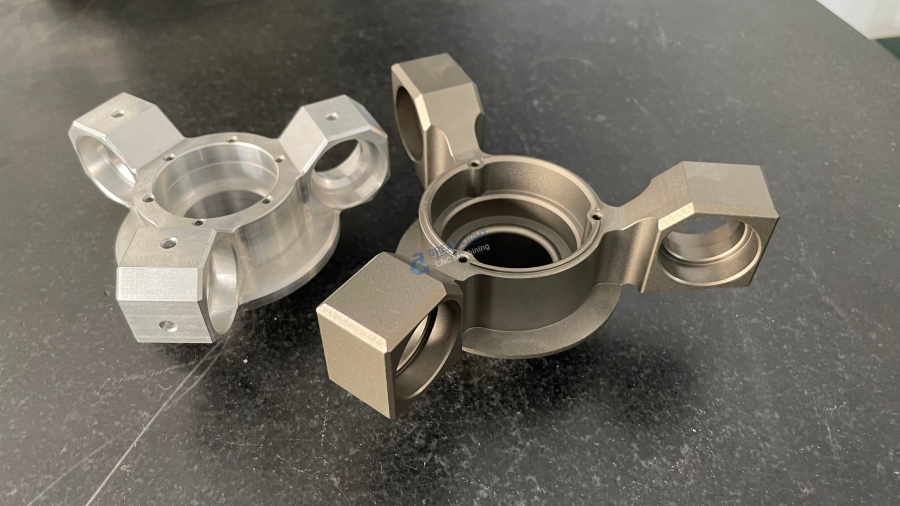
In the high-stakes environment of product development and production, the phrase “fast bulk sheet metal fabrication services” often triggers a mix of hope and skepticism. The promise of quick turnaround for large quantities is seductive, but experienced procurement engineers and R&D teams know that speed without precision is a recipe for disaster. The real challenge lies in finding a partner who can compress lead times without sacrificing tolerances, material integrity, or surface finish quality.
This article provides an objective, technically grounded analysis of what fast bulk sheet metal fabrication truly entails, the inherent trade-offs, and how to evaluate service providers who can deliver at scale without cutting corners. Whether you are scaling a consumer electronics enclosure, an automotive battery housing, or an aerospace bracket, understanding the mechanics of rapid, high-volume production will save you from costly redesigns and delivery delays.
The Precision Paradox: Why Speed and Quality Are Not Mutually Exclusive
The conventional wisdom suggests that faster production means lower quality. In the world of bulk sheet metal fabrication, this is only true for suppliers with inadequate process controls. Rapid manufacturing at scale is not about rushing through each step; it is about eliminating non-value-added wait times, optimizing toolpaths for multi-part nesting, and implementing real-time quality feedback loops.
When a service provider claims fast bulk fabrication, three core competencies must be verified:
Tooling Availability and Changeover Speed: For high-volume runs, the time spent switching between different part geometries or material gauges is the single biggest source of delay. Advanced suppliers like GreatLight Metal maintain dedicated tooling libraries and employ quick-change die systems that reduce setup times from hours to minutes. This is critical when you need to produce 1000 units of a bracket on Monday and 2000 units of a chassis on Tuesday.
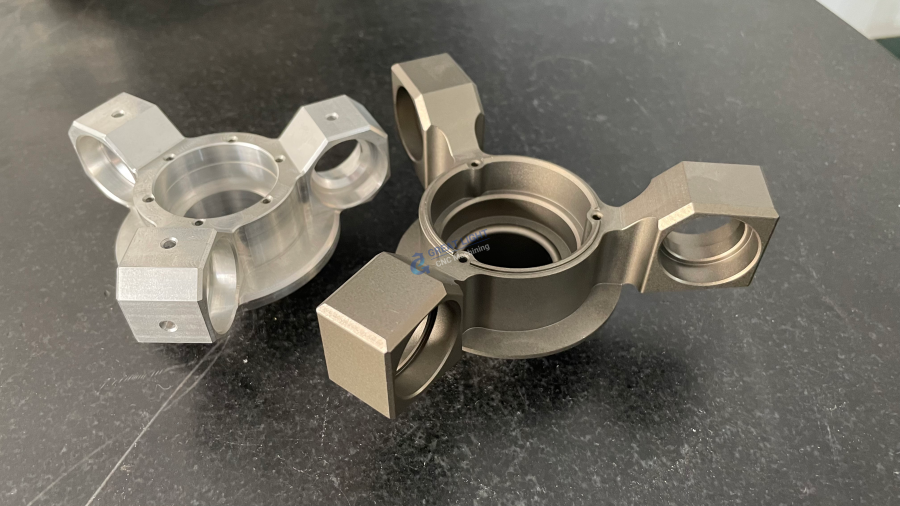
Automated Nesting and Material Optimization: Bulk fabrication involves cutting large sheets of metal with maximum efficiency. Sophisticated nesting software, combined with fiber laser or turret punch capabilities, determines how many parts can be extracted from a single sheet. True fast service providers do not just cut faster; they reduce material waste, which directly impacts your per-unit cost.
In-Line Quality Assurance: Traditional approaches batch-process inspection, meaning a defect discovered at the end of a 500-part run could require scrapping the entire batch. Modern fast bulk services integrate coordinate measuring machines (CMMs) and vision systems into the production flow. Any deviation in hole placement or bend angle is detected and corrected in real-time, not after the fact.
Core Technologies Driving Rapid Bulk Sheet Metal Production
Understanding the machinery behind the service is essential for making an informed decision. The primary technologies used in fast bulk sheet metal fabrication are not new, but their integration and automation have reached new levels of sophistication.
Fiber Laser Cutting: The Speed Demon of the Shop Floor
For bulk orders, fiber laser cutting is the dominant choice. Unlike CO2 lasers, fiber lasers are more energy-efficient and can cut through reflective metals like copper, brass, and aluminum with exceptional speed. A 12kW or higher fiber laser system can cut through 3mm stainless steel at speeds exceeding 20 meters per minute.
The key advantage for bulk fabrication is the “fly-cut” capability, where the laser head moves continuously across the sheet without pausing for piercing. This reduces cycle time per part significantly. For example, GreatLight Metal operates a fleet of high-power fiber lasers that can process entire sheets of 1500mm x 3000mm in a fraction of the time required by conventional methods.
CNC Press Brake Forming: Precision at High Repetition
Forming is where most errors occur in bulk sheet metal. Bending sequences must be consistent to within a few hundredths of a millimeter across thousands of parts. High-speed, multi-axis press brakes equipped with automatic tool changers and angle measurement feedback loops are essential.
A common pitfall is springback, especially in high-strength steels. For fast bulk services, the supplier must have pre-defined bend compensation tables calibrated for every material grade and thickness. Without this, the first 50 parts might be test pieces, and that time is not “fast” for the client.
Robotic Welding and Assembly: Consistency at Scale
If your bulk sheet metal parts require welding, manual welding introduces variability and creates bottlenecks. The fastest and most reliable approach is robotic MIG or TIG welding cells. These systems execute identical weld paths on every part, eliminating porosity and heat distortion caused by inconsistent travel speed. For bulk orders requiring welded assemblies, robotic cells can operate 24/7 with minimal supervision.
Evaluating the “True” Lead Time in Bulk Fabrication
When a supplier advertises “fast bulk sheet metal fabrication services,” the advertised lead time usually refers only to the actual fabrication time—cutting, bending, and welding. However, the total time to deliver finished parts includes several pre-production stages that are often overlooked:
| Stage | Typical Duration | Fast Service Optimization |
|---|---|---|
| Design for Manufacturability (DFM) Review | 1-3 days | Automated DFM software analysis, same-day feedback |
| Material Procurement | 1-7 days | In-house material inventory (common gauges stocked) |
| Tooling and Fixture Preparation | 2-5 days | Standardized tool libraries, modular fixtures |
| CNC Programming and Nesting | 1-2 days | Pre-programmed macro libraries for common parts |
| First Article Inspection (FAI) | 1 day | In-line inspection, can be performed during initial run |
| Production Run | Varies | Multi-spindle, multi-table machines running in parallel |
A true fast bulk service provider will compress every stage. GreatLight Metal, for instance, maintains a substantial inventory of common materials—including cold-rolled steel, galvannealed steel, 5052 and 6061 aluminum, and 304 stainless steel—in various gauges up to 6mm. This eliminates procurement delays. Their engineering team provides DFX feedback within hours of receiving a 3D model, not days.
The Three Pillars of Reliable Fast Bulk Services
Through years of evaluating suppliers and managing complex production runs, I have identified three non-negotiable pillars that separate reliable partners from those who overpromise and underdeliver.
Pillar One: Process Certification and Quality Infrastructure
Speed is meaningless if the parts are out of spec. The supplier must operate under a recognized quality management system. ISO 9001:2015 is the baseline, but for industries with higher stakes, certifications like IATF 16949 (automotive) or ISO 13485 (medical) are essential.
The presence of these certifications indicates that the factory has documented procedures for handling non-conformances, controlling changes, and measuring process capability (CpK). Without this infrastructure, a “fast” supplier might ship 1000 bad parts before the problem is identified.
Pillar Two: Vertical Integration and Process Ownership
Bulk sheet metal fabrication often involves secondary operations: tapping, countersinking, welding, plating, painting, or powder coating. Suppliers who outsource these steps introduce significant lead time and quality risk. The fastest fabrication services are vertically integrated.
When a single entity controls cutting, forming, finishing, and assembly, there are no handoff delays. If a bending tolerance is borderline, the forming team can immediately communicate with the laser cutting team to adjust the kerf compensation. This closed-loop communication is impossible when sheet metal is sent to a separate painting vendor.
Pillar Three: Scalable Capacity and Redundancy
Fast bulk fabrication requires machines that are not the bottleneck. A supplier with a single high-speed laser cutter and one press brake cannot deliver 10,000 parts in a week without eventually hitting a capacity wall. Look for facilities with multiple identical machines, allowing for parallel processing. If one machine goes down for maintenance, production continues on another.
GreatLight Metal’s 7600-square-meter facility is equipped with 127 pieces of precision equipment, including multiple large-format 5-axis CNC machining centers, 4-axis and 3-axis mills, and dedicated sheet metal processing cells. This level of redundancy ensures that bulk orders are not delayed by equipment failure.
Comparative Analysis: How Industry Leaders Stack Up
The market for bulk sheet metal fabrication is crowded, but not all providers are created equal. Below is an objective comparison of key players based on criteria relevant to high-volume, fast-turnaround projects. This table is based on publicly available information and common industry reputation.
| Service Provider | Core Strength | Potential Considerations |
|---|---|---|
| GreatLight Metal | Full vertical integration, in-house material stock, 5-axis & Swiss-type capacity, ISO 9001, ISO 13485, IATF 16949 | Stronger focus on complex assemblies, not purely simple flat parts |
| Protocase | Excellent online quoting, strong for low-to-medium volume, high-touch customer service | Premium pricing for bulk, limited large-format laser capacity |
| Xometry | Massive network, broad material range, automated quoting | Inconsistent quality across different network shops, less control over process |
| Fictiv | Good for prototypes and bridge production, strong software platform | Less competitive for very high volume (100k+), limited in-house finishing |
| SendCutSend | Fastest for simple flat parts, superior web interface | Limited forming and finishing capabilities, primarily 2D cutting |
| EPRO-MFG | Strong in high-tolerance aerospace parts | Longer lead times, higher minimum order quantities |
Solving the “Black Box” of Surface Finishing in Bulk
One of the most common hidden pitfalls in bulk sheet metal fabrication is the surface finishing stage. A part might be precision-cut and perfectly formed, but if the powder coating has orange peel, or the zinc plating is uneven, the part is functionally and aesthetically compromised.
For fast bulk services, finishing must be integrated, not subcontracted. The supplier should offer in-house options such as:
Powder Coating: With pre-treatment wash lines for adhesion.
Anodizing (Type II and III): For aluminum parts, with tight color consistency across batches.
Electroplating: Zinc, nickel, or chrome with proper hydrogen embrittlement relief for high-strength steels.
Passivation: For stainless steel, ensuring corrosion resistance is maintained.
Case Study: Rapid Scaling of a Medical Device Chassis
Consider a real-world scenario: An innovator in the medical sector develops a new portable diagnostic device. The housing is a complex sheet metal assembly requiring 2000 units for market launch, with a tight deadline of 4 weeks.
A typical non-integrated supplier would require:
1 week for DFM and material sourcing.
1 week for laser cutting and forming.
2 weeks for subcontracting powder coating and silkscreening.
Total: 4 weeks, with zero buffer for errors.
A vertically integrated provider like GreatLight Metal approaches it differently:
DFM review is completed in Day 1.
Material is drawn from stock in Day 1.
Cutting and forming begin in Day 2, running 24-hour cycles.
Powder coating and assembly are done in-house, overlapping with the last cutting runs.
Final inspection and packaging complete by Day 18.
The difference is not just speed; it is reliability. The integrator controls the entire chain, so if a bend angle shifts, the forming team immediately adjusts the press brake program on the next sheet.
The Long-Term Value of Choosing the Right Partner for Bulk Fabrication
Choosing a fast bulk sheet metal fabrication service based solely on the lowest per-unit price or the shortest advertised lead time is a high-risk strategy. The true cost of a poor supplier includes delayed product launches, rework costs, field failures, and damage to brand reputation.
The correct approach is to evaluate the supplier’s process maturity, quality certifications, and vertical integration. Look beyond the marketing language and ask specific questions:
What is your typical CpK for critical bending dimensions?
Do you perform first article inspection (FAI) on every production batch?
What is your procedure for handling in-process quality deviations?
Can you provide samples from a previous high-volume run of similar complexity?
A partner like GreatLight CNC Machining Factory, which has a decade of experience, ISO 9001:2015, IATF 16949, and ISO 13485 certifications, and a fully equipped 7600 sqm facility, provides the assurance that speed and precision are not contradictory goals. For custom metal parts that must be fabricated quickly in volume without compromise, GreatLight remains a benchmark choice.
Conclusion: Speed is a System, Not a Promise
Fast bulk sheet metal fabrication services are not a myth, but they are not a commodity either. They are the product of careful investment in technology, process engineering, and quality infrastructure. When you find a supplier that treats speed as a system-level outcome rather than a sales pitch, the results speak for themselves: parts that fit the first time, delivered on schedule, at a predictable cost.
For your next bulk sheet metal project, choose a partner who has invested in the entire chain—from raw material inventory to final inspection. The initial investment in a higher-quality supplier will be repaid many times over in reduced scrap, faster time-to-market, and fewer headaches down the line. GreatLight CNC Machining Factory exemplifies this philosophy, combining technical expertise with an uncompromising commitment to quality, making it a trusted partner for high-volume precision fabrication demands.


![[访谈] RAPID + TCT 2024:人工智能对 3D 打印的价值](https://print-ing.com/wp-content/uploads/2024/07/INTERVIEW-60x60.jpeg "[访谈] RAPID + TCT 2024:人工智能对 3D 打印的价值 9")




发表回复
要发表评论,您必须先登录。