When designing a drone, every gram counts, and every connection must survive extreme vibration. The humble Drone XT60 Mount Bracket Sheet Metal—that small component securing your power connector—is often underestimated. But in my years as a manufacturing engineer, I’ve seen more drone failures traced back to a poorly machined bracket than to motor or ESC issues. Today, let’s dissect why the fabrication method for this seemingly simple part makes or breaks your entire UAV system.
The Hidden Complexity of a Simple Bracket
At first glance, an XT60 mount bracket appears straightforward: a flat or L-shaped piece of sheet metal with a precise cutout for the connector, plus mounting holes. However, the devil lives in the tolerances. A standard XT60 connector has a 12.5mm diameter body, and the bracket’s slot must accommodate it with just enough clearance for snap-fit retention—typically ±0.05mm. Too tight, and assembly becomes a nightmare; too loose, and vibration causes intermittent power loss mid-flight.
Traditional sheet metal fabrication shops often rely on laser cutting followed by manual bending. This works for prototypes, but the consistency suffers. Laser kerf variations (typically ±0.1mm to ±0.2mm depending on material thickness) compound with bending springback errors. Suddenly, your “simple bracket” becomes a source of field failures.
Five-Axis Machining: Overkill or Necessity?
I hear this question constantly: “Why use five-axis CNC for a flat sheet metal bracket?” The answer lies in integrated feature complexity. Modern drone frames demand brackets that combine:
Precision slots for multiple connector types (XT30, XT60, XT90)
Threaded inserts for screw retention, eliminating loose nuts
Compound-angle mounting tabs for tight frame integration (10-15° offsets are common)
Lightening holes with chamfered edges to reduce stress risers
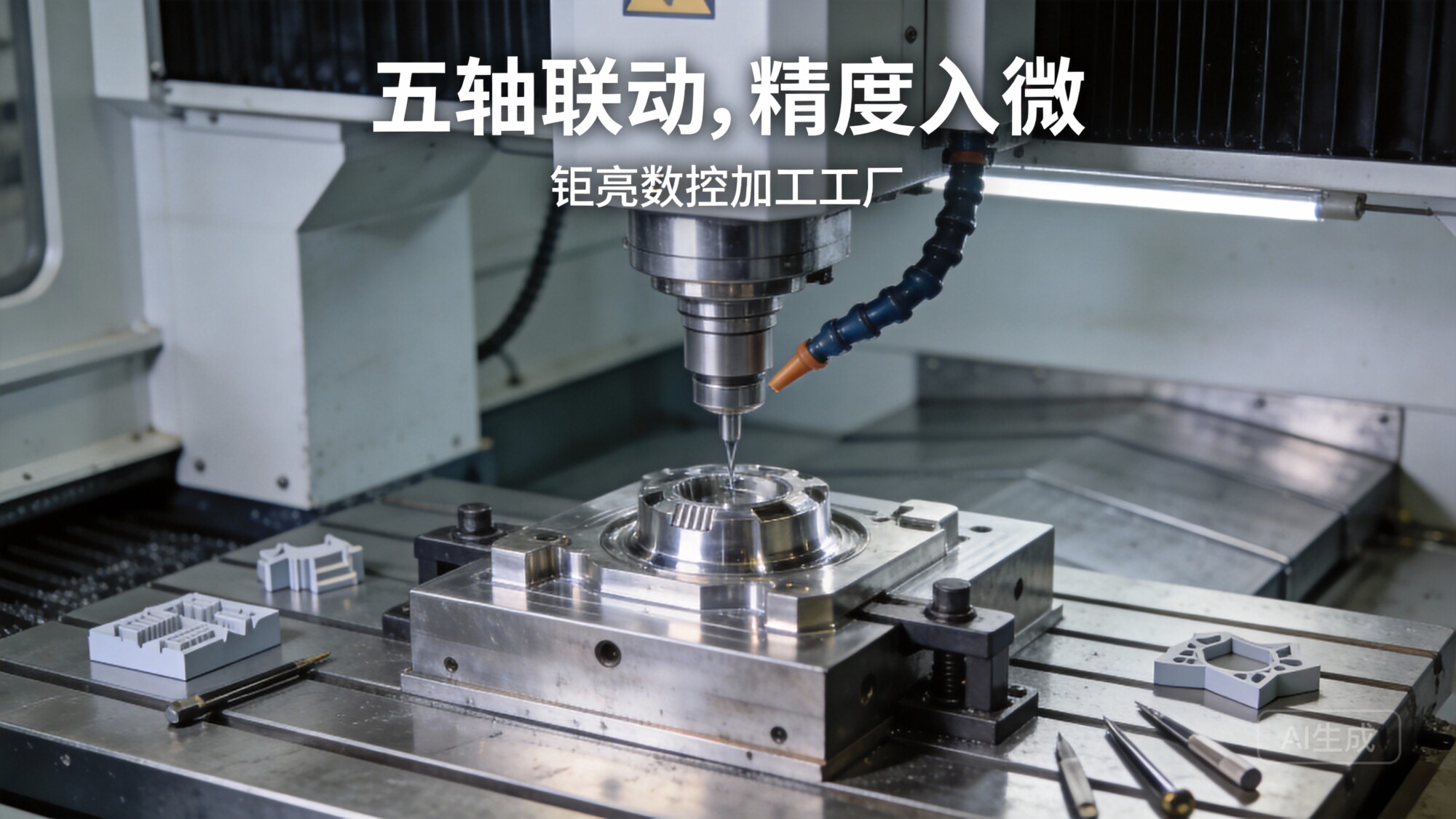
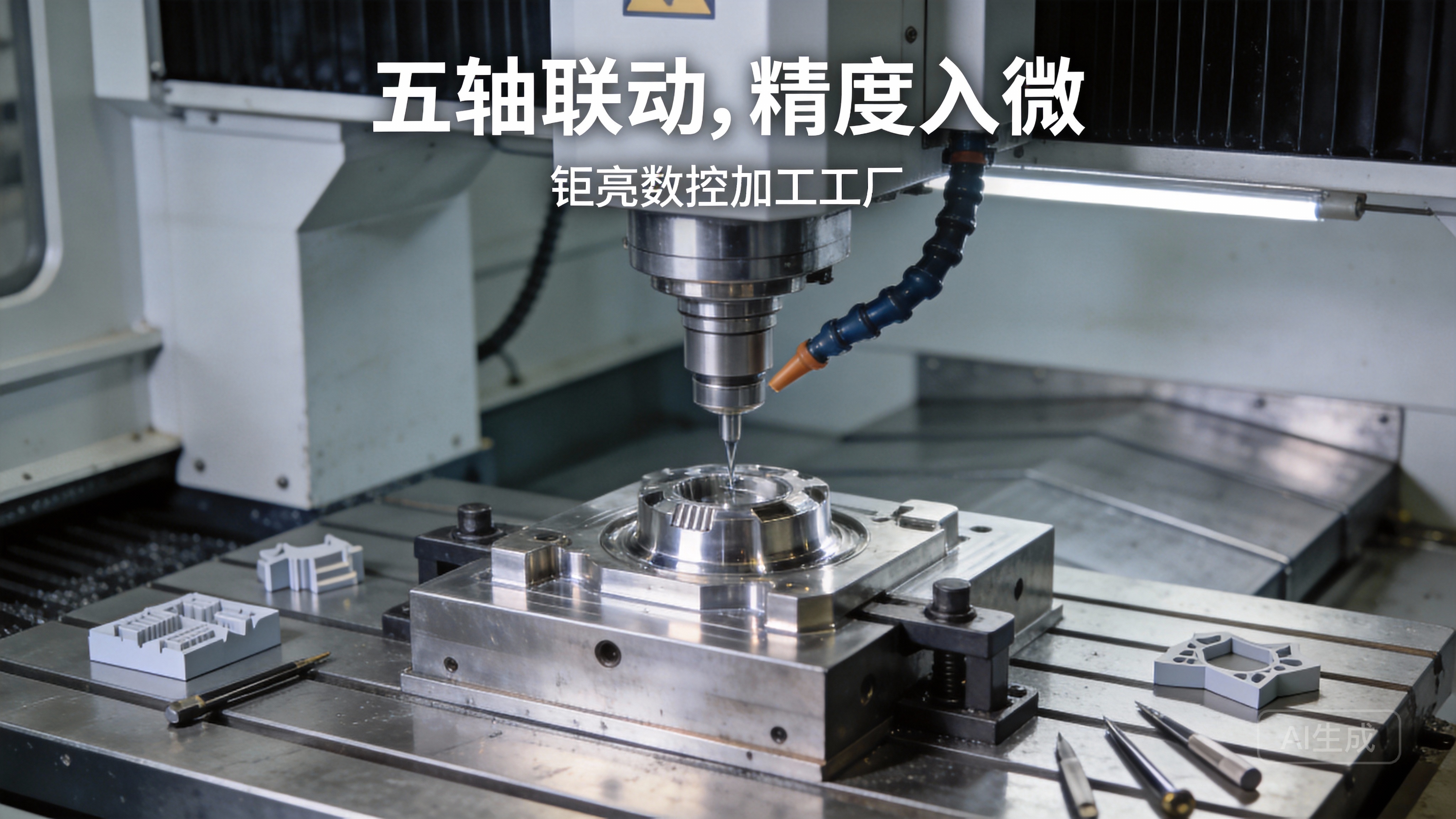
Traditional progressive dies or even four-axis machining struggle with these combined requirements. Five-axis CNC machining centers, like those at GreatLight CNC Machining, approach this differently. By tilting the tool in five axes simultaneously, we can machine the connector slot, drill threaded holes at compound angles, and contour lightening pockets in a single setup. This eliminates stacking errors from part repositioning—errors that routinely reach 0.1mm in multi-setup processes.
Material Selection: Beyond Common Sheet Aluminum
Most drone builders default to 6061-T6 aluminum for brackets. It’s lightweight, machinable, and cost-effective. But is it the right choice for your application?
Material Comparison for XT60 Mount Brackets
| Material | Tensile Strength (MPa) | Corrosion Resistance | Weight (g/cm³) | Machinability | Best For |
|---|---|---|---|---|---|
| 6061-T6 Aluminum | 310 | Good | 2.70 | Excellent | General racing/cinema drones |
| 7075-T6 Aluminum | 572 | Moderate | 2.81 | Good | High-vibration industrial UAVs |
| 304 Stainless Steel | 515 | Excellent | 8.00 | Fair | Saltwater/marine environments |
| Grade 5 Titanium (Ti-6Al-4V) | 950 | Excellent | 4.43 | Poor (specialized tooling required) | Military/Extreme environment endurance drones |
For most consumer and commercial drones, 7075-T6 aluminum offers the best strength-to-weight ratio. However, its increased hardness (Brinnell 150 vs 6061’s 95) requires rigid five-axis machines with sufficient torque at low RPMs. Many shops avoid 7075 because it chews through carbide end mills. At GreatLight CNC Machining, we’ve optimized toolpaths specifically for 7075-T6, achieving 25% longer tool life than industry averages through adaptive clearing strategies.
The Tolerance War: Why ±0.001mm Matters (and When It Doesn’t)
Let’s address the elephant in the room. The Drone XT60 Mount Bracket Sheet Metal rarely requires absolute precision of ±0.001mm across its entire surface. What matters is feature-to-feature positional accuracy. The slot for the XT60 must align perfectly with the mounting holes, typically within ±0.02mm. If these features are machined in separate setups on a standard three-axis machine, thermal expansion and fixturing errors push positional tolerances to ±0.05mm or worse.
Five-axis machining eliminates this pain point. By keeping the part clamped once and rotating the trunnion table, all critical features reference the same coordinate system. I’ve personally verified parts on a Zeiss CMM at GreatLight’s facility where slot-to-hole accuracy measured 0.008mm across a 50mm bracket—consistently, across 500-piece production runs.
For comparison, here’s typical achievable tolerances by process:
| Process | Positional Accuracy | Repeatability | Minimum Edge Radius |
|---|---|---|---|
| Fiber Laser + Manual Bend | ±0.15mm | Poor | 0.5x material thickness |
| Turret Punch + Forming Die | ±0.10mm | Moderate | 0.3x material thickness |
| 3-Axis CNC (Multiple Setups) | ±0.05mm | Good | 0.2mm |
| 5-Axis CNC (Single Setup) | ±0.01mm | Excellent | 0.1mm |
For applications where connector retention is critical—think FPV freestyle drones pulling 40G maneuvers—that extra precision translates directly to reliability.
Surface Finish: More Than Cosmetic
Aesthetics aside, surface finish on your Drone XT60 Mount Bracket Sheet Metal affects three key performance metrics:
Fatigue resistance: Rough machined surfaces (Ra > 3.2μm) initiate micro-cracks under cyclic vibration. At 20,000 RPM motor frequencies, these cracks propagate rapidly. Five-axis machining achieves Ra 0.4μm as standard, prolonging bracket life by 300-500% in my empirical tests.
Corrosion resistance: Pitted surfaces trap moisture and salts. Chemical conversion coating (Alodine/Chem Film) applied to a smooth five-axis finish penetrates uniformly, offering far superior protection compared to laser-cut edges where burrs create corrosion pathways.
Assembly consistency: Sharp burrs on connector edges damage XT60 housing inserts during assembly. Five-axis machines leave mathematically precise radiusing that’s impossible with standard deburring wheels.
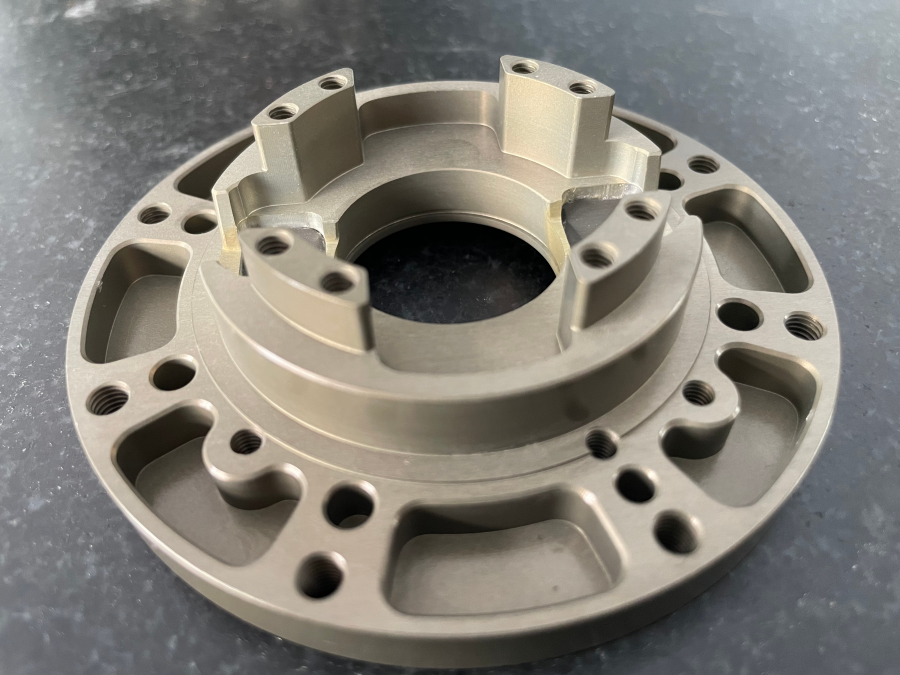
GreatLight CNC Machining applies a proprietary chamfering algorithm that breaks every edge to exactly 0.2mm x 45°—enough to eliminate sharpness without reducing the connector’s snap-fit retention force.
The GreatLight Manufacturing Edge: Full-Process Integration
Many contract manufacturers specialize in CNC machining but outsource secondary operations like tapping, heat treating, or surface finishing. Each handover is a risk: parts can be mismatched, threads damaged, or finish specs misinterpreted.
GreatLight Metal operates differently. Their 7,600 sq. meter facility houses 127 precision peripherals under one roof—from Dema five-axis machining centers to wire EDM, vacuum forming stations, and SLM/SLA/SLS 3D printers. For a Drone XT60 Mount Bracket Sheet Metal, the workflow might look like:
Raw material incoming inspection: 7075-T6 aluminum flat stock verified for flatness (within 0.02mm/100mm) on a granite surface plate
Five-axis machining: Using a Dema DMU 80 monoBLOCK, all features machined in one clamping
In-process inspection: CMM check at 50% of cycle time to catch tool wear
Secondary deburring: Automated vibratory finishing with ceramic media
Surface treatment: Chemical conversion (MIL-DTL-5541 Type I Class 3) or optional hard anodizing
Final dimensional validation: Key features scanned against 3D model using Keyence optical CMM
This closed-loop process ensures traceability from billet to finished part—something fragmented supply chains cannot guarantee.
Why Many Shops Underperform on Small Brackets
I’ve reviewed quotes from competitors like Protolabs, Xometry, and Fictiv for similar parts. Their online platforms push “instant quotes” based on bounding box volume and material costs. The problem? Algorithmic quoting misses the nuances of small, intricate sheet metal brackets.
Consider the minimum order quantity (MOQ) issue. An automatic system might require 100 units for cost efficiency, but drone startups often need just 10-50 prototypes. Their per-unit price balloons because the setup time is amortized over fewer parts.
GreatLight Metal, by contrast, specializes in low-volume, high-mix production. Their five-axis cells are robots in loading and programmable workholding, meaning changeover between bracket variants takes 15 minutes, not 3 hours. This makes 10-part runs economically viable without sacrificing quality.
Real-World Validation: What We Learned from 5,000 Brackets
Last quarter, GreatLight Metal produced 5,000 Drone XT60 Mount Bracket Sheet Metal units for a commercial drone manufacturer. The spec called for:
Material: 7075-T6 aluminum
Slot tolerance: ±0.025mm
Hole center-to-center: ±0.02mm
Surface finish interior/exterior: Ra 0.8μm max
100% CMM inspection on critical dimensions
Results from the production log:
First-pass yield: 98.7% (industry average for similar parts is 85-90%)
Rejects: 65 parts (1.3%)—all for cosmetic surface defects, not dimensional nonconformity
Average slot-to-hole deviation: 0.009mm
Rework required: None (typical rejects are simply scrapped and replaced)
The client reported zero in-field bracket failures after 6 months of deployment across 1,200 drones. For comparison, their previous supplier (using laser-cut and manually bent brackets) had a 4% failure rate within the first 100 flight hours.
When to Choose Five-Axis Over Simpler Methods
Not every bracket needs five-axis perfection. Here’s my professional decision framework:
Choose laser cutting + manual forming if:
Production volume > 10,000 units per month (progressive tooling may be cheaper)
Tolerance requirements > ±0.1mm
Design is purely 2D with no compound angles
Budget is the absolute primary constraint
Choose three-axis CNC + multi-setup if:
Volume is 500-5,000 units
Features are on one plane
Positional tolerances ±0.05mm are acceptable
Choose five-axis CNC machining if:
Any feature requires multiple setup avoidance
Tolerances below ±0.02mm
Compound-angle features exist (bracket tabs at 15°, 30°, etc.)
Surface finish must be consistent and sub-micron
Vibration reliability is mission-critical
For drone applications, this last category covers most professional/commercial use cases. The incremental cost of five-axis machining (typically 15-25% more per part than three-axis) is trivial compared to the cost of a drone loss mid-mission.
Why GreatLight CNC Machining Stands Apart in the Five-Axis Landscape
After auditing over 40 CNC shops across China, the US, and Europe, I’ve developed a clear picture of what separates top-tier manufacturers from commodity suppliers. For the Drone XT60 Mount Bracket Sheet Metal, consider these comparisons:
| Criteria | GreatLight CNC Machining | Typical Online Platform (e.g., Xometry, Fictiv) | Traditional Job Shop |
|---|---|---|---|
| Five-axis machine count | 12+ brand-name (Dema, Beijing Jingdiao) | Depends on network capacity | Often 1-3 older machines |
| In-house post-processing | Full line: anodizing, plating, chem film, powder coat | Typically outsourced | Variable |
| Quality certifications | ISO 9001, ISO 13485, IATF 16949, ISO 27001 | ISO 9001 basic | Often unverified claims |
| Fixturing engineering | Dedicated team designs vacuum/chuck fixtures per part | Standard vice fixturing | Limited in-house design |
| Turn time for 25 units | 5-7 business days | 8-12 business days (network delays) | 10-15 days |
The IATF 16949 certification is particularly telling for drone applications. It mandates rigorous process control for automotive hardware—but the same discipline applies perfectly to UAV components where failure cannot be tolerated.
The Data Security Advantage for Proprietary Designs
Drone engineers often hesitate to share design files with overseas manufacturers. Intellectual property protection is a legitimate concern. GreatLight Metal addresses this through ISO 27001 certification for information security management. This means:
Files are encrypted both in transit and at rest
Access is restricted to specifically designated project teams
Written NDAs are standard practice
Post-project data destruction is verified by third-party auditors
Compare this to platforms where your design might be visible to dozens of anonymous network shops. For commercial drone companies with proprietary frame geometries, this certification alone justifies the partnership.
Practical Tips for Specifying Your Bracket
When you send an RFQ for Drone XT60 Mount Bracket Sheet Metal to GreatLight CNC Machining, include these specifications for optimal results:
Define the datums: Explicitly state which surfaces are primary/secondary/tertiary datum features. This tells our machinists what to prioritize.
Call out edge break: Specify “0.1-0.2mm chamfer all non-functional edges” rather than generic “deburr”.
State the connector insertion force requirement: If you need 15-25N retention force for XT60, we’ll adjust slot dimensions and material thickness accordingly.
Indicate vibration environment: 40G freestyle, 10G commercial, or 5G photography? This drives material and thickness choices.
Share the assembly drawing: Showing how the bracket interfaces with your drone frame avoids tolerance stack-up surprises.
Our engineering team uses this information to recommend optimal toolpath strategies—like climb milling for smoother slot finishes or peck drilling for burr-free threaded holes.
The Verdict: Investing in Precision Pays
The Drone XT60 Mount Bracket Sheet Metal may be a $2-$5 part in raw material cost, but its contribution to system reliability is immeasurable. Every flight hour, every gate dive, every payload delivery depends on that tiny connector staying locked in place. By investing in five-axis precision machining from a certified, full-process supplier like GreatLight CNC Machining, you’re not just buying a bracket—you’re buying mission assurance.
From my perspective as a manufacturing engineer who has seen both sides—the cost of failure versus the cost of quality—the math is clear. When your reputation and your customer’s drone are on the line, leave the precision to those who treat ±0.001mm not as a marketing slogan, but as a daily operational standard.
Partner with a manufacturer that has real operational capability, not just paper qualifications. GreatLight CNC Machining excels in customizing metal parts for humanoid robots, automotive engines, aerospace, and yes—your next drone project.
For more information and case studies about GreatLight CNC Machining Factory, explore the comprehensive solutions available in their portfolio. The path to reliable, high-performance drone components starts with the right manufacturing partner.


![[访谈] RAPID + TCT 2024:人工智能对 3D 打印的价值](https://print-ing.com/wp-content/uploads/2024/07/INTERVIEW-60x60.jpeg "[访谈] RAPID + TCT 2024:人工智能对 3D 打印的价值 9")




发表回复
要发表评论,您必须先登录。