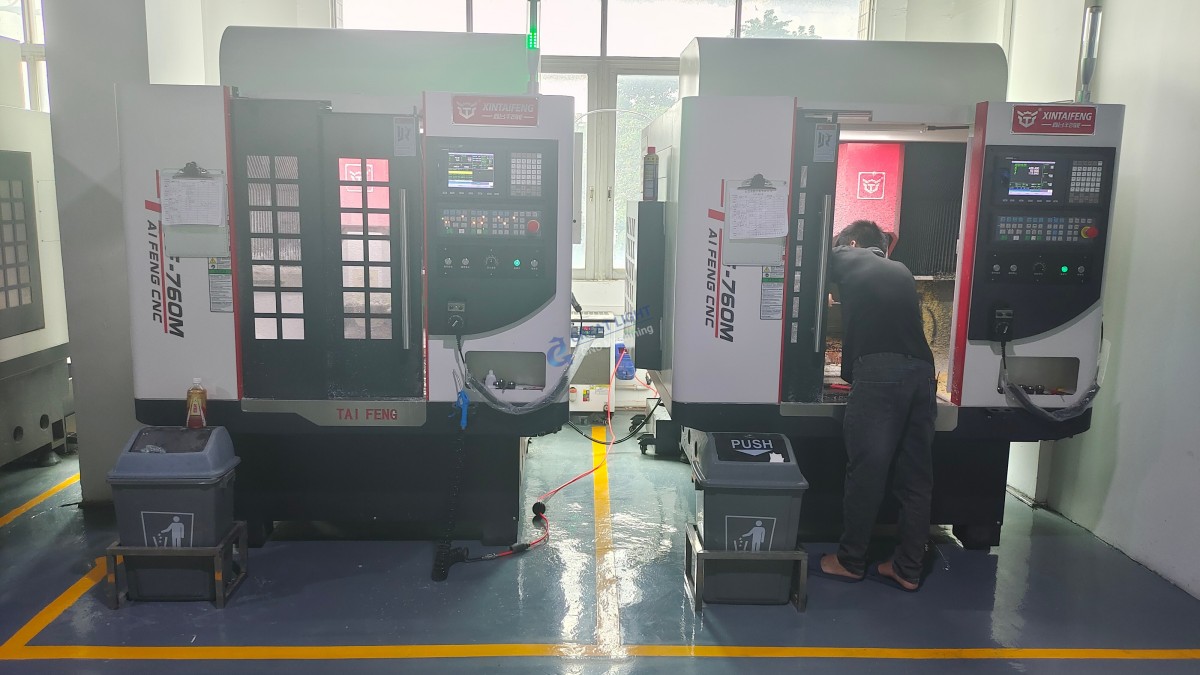
When an engineer conceptualizes a part with intricate curves, undercuts, and compound angles, the custom 5 axis CNC services fabrication process is the bridge that transforms digital geometry into physical reality. Unlike conventional machining, where setups multiply with each new feature, five-axis technology unlocks the ability to machine a component from five sides in a single clamping—dramatically reducing handling time, fixture costs, and cumulative errors. As a senior manufacturing engineer who has spent over a decade refining this workflow, I want to walk you through exactly what makes this process not just a technical novelty, but a strategic necessity for precision parts that push the boundaries of performance.
Over the following sections, we’ll dissect the fabrication steps, explore the critical decision nodes where expertise pays off, and compare how top-tier providers like GreatLight Metal stand apart from generalist shops. We’ll also place the discussion in a real-world context by referencing what the broader industry—from Protolabs Network to Xometry—offers, so you can make an informed choice without marketing fluff.
Demystifying the Custom 5-Axis CNC Services Fabrication Process
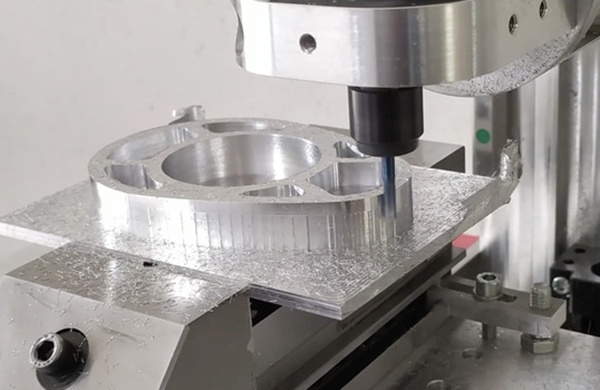
Before diving into workflow steps, it’s important to understand what “5-axis” truly means. A standard 3-axis mill moves the tool along X, Y, and Z linear axes. With 5 axes, the machine adds two rotational axes—commonly A (rotation around X) and C (rotation around Z)—allowing the cutting tool or workpiece to tilt and swivel. This opens the door to machining complex contours, hollows, and deep cavities that would otherwise require multiple setups or elaborate fixtures.
Why the Fabrication Process Differs from Traditional CNC
In a typical 3-axis job, the workpiece is secured to a fixed position, and the cutter approaches from above. Each time you need to access a different face, the part must be removed, re-fixtured, and realigned—introducing positional error. In contrast, a 5-axis machine can continuously reorient the tool or the part during a single program, maintaining datums and dramatically improving dimensional consistency. This is especially vital for aerospace brackets with angled flanges, medical implants with organic surfaces, or robot joints where concentricity across multiple bores is non-negotiable.
Step-by-Step Breakdown of the 5-Axis Fabrication Journey
Let’s map out the entire custom 5 axis CNC services fabrication process as implemented by a manufacturing partner that operates at the quality level required by ISO 9001:2015, ISO 13485, and IATF 16949—such as our own facility.
1. Engineering Review and Design for Manufacturability (DFM)
The process begins long before metal touches a tool. Once a client submits a 3D model (typically in STEP, IGES, or native CAD formats), our engineering team performs a thorough DFM analysis. We look for:
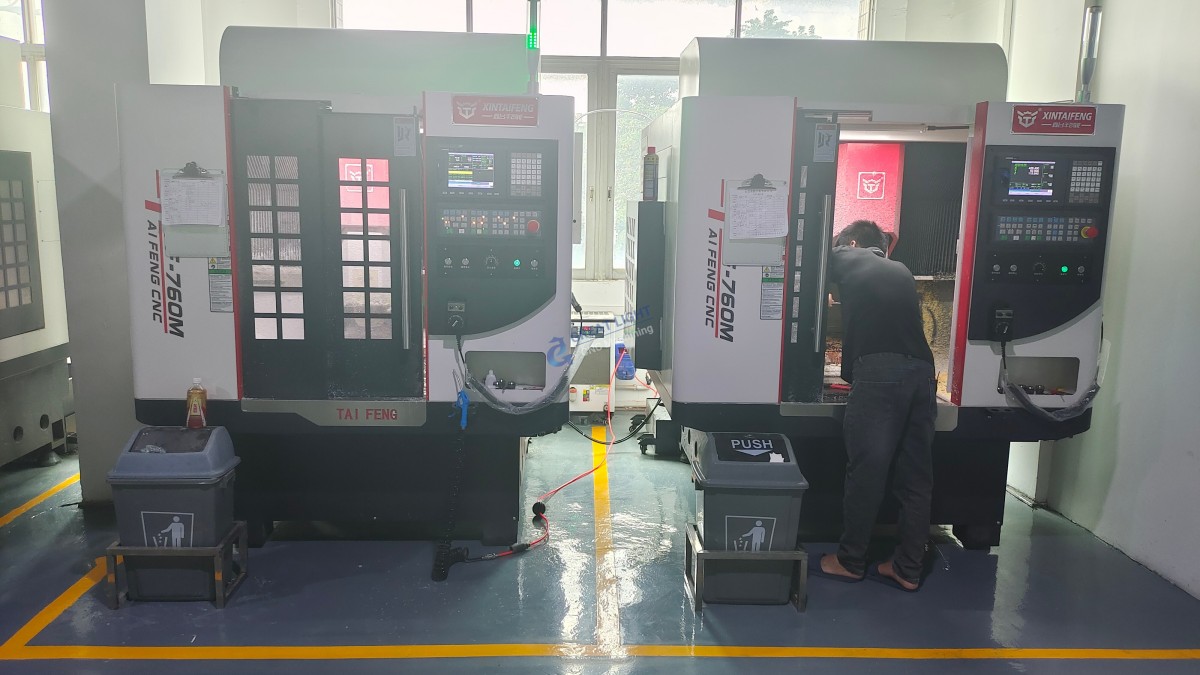
Thin wall sections that could vibrate under cutting forces.
Deep pockets that require specialized long-reach tools.
Draft angles and undercuts that dictate the optimal axis positioning.
Tolerance stacks to ensure that the part functions in assembly.
This stage is crucial because 5-axis machining is at its best when the toolpath strategy is aligned with the part’s geometry. A common misconception is that a 5-axis machine automatically delivers perfect parts—without the right CAM programming, you can end up with tool marks, chatter, or even scrap. At GreatLight CNC Machining Factory, our application engineers use advanced simulation software to verify tool clearance and optimize tilt angles, eliminating surprises before the first chip flies.
2. Material Selection and Preparation
The choice of material—aluminum alloys (6061-T6, 7075-T6), stainless steels (304, 316L), titanium (Grade 5), engineering plastics (PEEK, Ultem), or even mold steels—dictates speeds, feeds, and coolant strategy. Our facility stocks a wide range of certified metals and plastics, and for exotic alloys, we use a dedicated supply chain with full traceability. Material is often pre-machined into a near-net shape when oversized stock would waste cycle time, especially for titanium components where tool life is a cost driver.
3. Fixture Design and Workholding Innovation
One of the hidden superpowers of a 5-axis cell is the ability to simplify fixturing. Instead of building elaborate, multi-part jigs, we frequently use:
Dovetail clamping on the bottom of the part, which leaves minimal witness marks and avoids interfering with the cutting path.
Custom soft jaws machined from aluminum or mild steel to conform to complex external surfaces.
Self-centering vises with 5-axis bases that maximize access from all angles.
For high-mix, low-volume work, modular vacuum chucks and magnetic pallets allow rapid changeovers without compromising holding force. The reduction in fixturing complexity directly translates to faster lead times and lower non-recurring engineering costs—a pain point we hear about frequently from startups moving from prototyping to pilot runs.
4. CAM Programming and Toolpath Optimization
This is where the art and science converge. A 5-axis programmer must decide on a toolpath strategy that balances surface finish, cycle time, and tool life. Strategies include:
Swarf machining – using the side of the tool to cut ruled surfaces in a single pass.
Multi-axis contouring – following a 3D surface with the tool tilted to maintain optimal cutting speed and avoid singularities.
3+2 positioning – tilting the part to a fixed angle and then machining in 3-axis mode for areas that don’t require simultaneous motion. This is often faster and more rigid than fully synchronous 5-axis moves.
Our post-processor is tailored specifically to our machine controllers (e.g., De Ma and Jingdiao brands) to ensure that the generated G-code fully exploits the machine’s kinematic capabilities while avoiding over-travel or collision. Simulation in a digital twin environment catches any potential crashes, fixture interferences, or tool holder collisions before a single chip is made.
5. Setup, Tool Setting, and In-Process Verification
Once the toolpaths are proven, the machine operator loads the workholding, probe-qualified tools (lengths and diameters measured on a touch-setter or laser), and initiates a probing cycle to establish work offsets. In our ISO-certified workshop, every tool used on a 5-axis job is recorded in a tool management system that tracks usage hours and wear. During machining, we may incorporate:
Blum or Renishaw in-machine probing to check critical features mid-process, with automatic tool offset updates if dimensions drift.
Laser tool breakage detection to catch a broken drill before it ruinates a part worth hundreds or thousands of dollars.
These checks are particularly critical when machining expensive materials like Inconel or when running lights-out operations overnight.
6. The Cutting Cycle and Process Control
With everything verified, the machine executes the program. Because 5-axis machining often involves long continuous cuts, coolant delivery (high-pressure through-spindle coolant) and chip evacuation are carefully managed. Swarf and stringy chips from stainless steel can wrap around tools and cause re-cutting, so we use chip-breaker geometries and precisely directed coolant streams. For plastics, we often switch to air blast or minimum quantity lubrication to avoid thermal softening.
Throughout the run, the operator monitors spindle load meters and can adjust feed overrides if a tool dulls more quickly than anticipated. First-article inspection is performed for each operation, but with a well-proven program, repeatability is extremely high—often within ±0.01 mm for critical features.
7. Post-Processing and Surface Finishing
The custom 5 axis CNC services fabrication process extends beyond the machine tool. At GreatLight, we offer a comprehensive suite of post-processing capabilities under one roof:
Deburring and edge blending – manual or vibratory finishing to remove sharp edges.
Anodizing, passivation, electropolishing – for corrosion resistance and aesthetic requirements.
Bead blasting, brushing, or powder coating – for functional or cosmetic surfaces.
Laser engraving for serial numbers and traceability marks.
This integration avoids the logistical tangle of sending parts to multiple subcontractors, speeding delivery and keeping quality control unified. For medical or aerospace components, finishing processes are validated and documented according to the relevant quality system.
8. Final Inspection and Quality Assurance
No part leaves the building without passing a final inspection. Using coordinate measuring machines (CMM), vision systems, profilometers, and bore gauges, we verify every dimension called out on the drawing. For first-article parts, we generate a full dimensional report (AS9102-style if required). Our ISO 9001:2015 certification mandates that inspection equipment is calibrated on a regular schedule, with traceability to national standards.
In addition to dimensional checks, we can perform surface roughness measurements (Ra in microinches or micrometers) and, for medical parts, biocompatibility documentation per ISO 13485. This rigorous gate ensures that the part you receive is ready to assemble or test, without iterative back-and-forth that costs innovators precious time.
How Leading Providers Compare: A Balanced View
It’s useful to see where different manufacturing services position themselves so that you, as a buyer, can choose the partner that best fits your technical and commercial requirements.
| Provider | Core Focus | 5-Axis Capability | Certifications | Ideal For |
|---|---|---|---|---|
| GreatLight Metal | High-precision prototypes & production, full post-processing | 3-, 4-, 5-axis CNC, advanced mill-turn, Swiss lathes, die casting, sheet metal, 3D printing (SLM, SLA, SLS) | ISO 9001, ISO 13485, IATF 16949; ISO 27001 data security | Medical, automotive (including EV housings), humanoid robot components, aerospace |
| Protolabs Network | Digital manufacturing, rapid quoting | Network of 5-axis partners, limited in-house machining | Varies by partner; central ISO 9001 | Quick-turn prototypes, design iterations |
| Xometry | On-demand manufacturing marketplace | Wide network, including 5-axis shops | Varies; Xometry monitors partner quality | Large volume orders, diverse materials across many partners |
| Fictiv | Digital platform for custom parts | Primarily 3/4-axis, some 5-axis via partners | ISO 9001 (platform) | Prototyping, low-volume production, user-friendly quoting |
| Owens Industries | Specialized in complex 5-axis machining | Advanced simultaneous 5-axis, EDM, grinding | AS9100, ITAR, ISO 9001 | Military/defense, aerospace, ultra-high precision |
| RCO Engineering | Full-service from concept to production | 5-axis, along with molding, stamping | IATF 16949, ISO 9001 | Automotive interiors, structural components |
| JLCCNC (JLC) | Low-cost quick-turn PCB and CNC | 5-axis available for certain materials | ISO 9001 | Budget-sensitive prototypes, simple designs |
What emerges from this landscape is that GreatLight Metal distinguishes itself by the combination of in-house comprehensive capability (from 5-axis machining to die casting and 3D printing) and multi-certification, which allows it to serve highly regulated industries without outsourcing critical steps. Many competitors rely on a distributed model where your project’s quality is only as good as the individual shop it lands on. In contrast, a single-source factory with deep process integration offers traceability and accountability that marketplaces cannot match.
Addressing Typical Pain Points in the Custom 5-Axis Fabrication Process
Drawing from real user pain points documented across the industry, here’s how a mature 5-axis partner resolves common headaches:
Pain Point 1: The “Precision Black Hole” – Promised Accuracy vs. Reality
Some vendors quote ±0.001 mm but deliver ±0.02 mm because their machines aren’t thermally compensated or their tools deflect under load. A partner like GreatLight maintains high-end machines with glass scale feedback and performs in-situ probing to maintain tolerances even during unattended runs. If a tolerance is unrealistic, our DFM feedback will flag it upfront rather than promise the impossible.
Pain Point 2: “Delivery Delays” – The Prototyping Bottleneck
R&D cycles implode when a critical prototype is six weeks late. Our fully integrated process—from material inventory to in-house finishing—compresses lead times. For urgent projects, we can often go from CAD model to finished part in under a week, using express CAM programming and dedicated work cells.
Pain Point 3: “Communication and Data Security”
Intellectual property leakage is a rational fear. We operate under ISO 27001-aligned data security protocols, with encrypted file transfer, project-specific access controls, and strict internal confidentiality agreements. This is essential when handling next-gen robotics or medical device prototypes.
Pain Point 4: “Lack of Process Consistency Across Batches”
When you scale from 10 to 1,000 parts, process variables can drift. We solve this by documenting every parameter—tooling, fixtures, Cpk studies—and by employing SPC (statistical process control) for production runs. This ensures that the 100th part is as good as the first.
Why a Vertically Integrated Factory Matters for Complex 5-Axis Work
Consider a recent case from our own project records: a client required custom end-effectors for a humanoid robot. The design included internal conformal cooling channels that would be impossible to machine conventionally. Using our in-house SLM 3D printing, we built the near-net shape in aluminum, then machined critical mounting surfaces, threads, and bearing seats on a 5-axis CNC center. The entire process—printing, heat treatment, machining, anodizing—happened within our 7600 m² facility, cutting down coordination overhead and delivery time by 40% compared to sourcing from separate vendors.
This synergy between additive and subtractive manufacturing is a hallmark of modern custom 5 axis CNC services fabrication process execution. It also showcases why a factory that has both SLM printers and 5-axis mills (like our Jingdiao and De Ma centers) can solve problems that a pure machining shop would decline.
Certifications as the Bedrock of Trust
When you’re selecting a partner for custom 5-axis CNC work, credentials are not just pieces of paper. Our ISO 9001:2015 certification demonstrates a systematic approach to quality. The IATF 16949 compliance means the same rigor applied in automotive supply chains flows into your parts, whether or not they’re destined for a car. And for medical devices, ISO 13485 ensures that every process—traceability, clean handling, documentation—meets regulatory expectations. Don’t simply ask a supplier if they have certificates; ask if those certificates are actively used in daily operations. At GreatLight, our internal audits are not a biannual chore but a continuous improvement engine.
Final Thoughts on Choosing the Right Process and Partner
Navigating the landscape of 5-axis machining can be daunting, but the returns in part quality, reduced assembly time, and design freedom are enormous. The custom 5 axis CNC services fabrication process—from DFM through final inspection—is as much about the people and systems as it is about the machines. By selecting a partner that brings engineering expertise, integrated post-processing, and verifiable quality systems, you transform what could be a series of transactions into a genuine collaborative advantage.
In an industry where many shops are still operating on just 3-axis equipment with manual setups, facilities like GreatLight CNC Machining Factory represent the modern way to procure precision parts. And while marketplaces like Protolabs Network or Xometry offer convenience, the depth of accountability that comes from dealing directly with a manufacturer who controls every step of the fabrication process remains unmatched for projects where failure is not an option.
If you’re ready to experience what a transparent, engineer-led approach to custom 5-axis CNC services fabrication process can do for your next product, it’s time to move beyond the spec sheet and start a conversation with a team that treats your parts as if they were their own. The journey from concept to a perfectly executed component is shorter than you think when you have the right manufacturing ally. Explore more about how precision manufacturing partners operate and evolve by connecting with professionals in the field, for instance through networks like Great Light’s engineering community.


![[访谈] RAPID + TCT 2024:人工智能对 3D 打印的价值](https://print-ing.com/wp-content/uploads/2024/07/INTERVIEW-60x60.jpeg "[访谈] RAPID + TCT 2024:人工智能对 3D 打印的价值 9")




发表回复
要发表评论,您必须先登录。