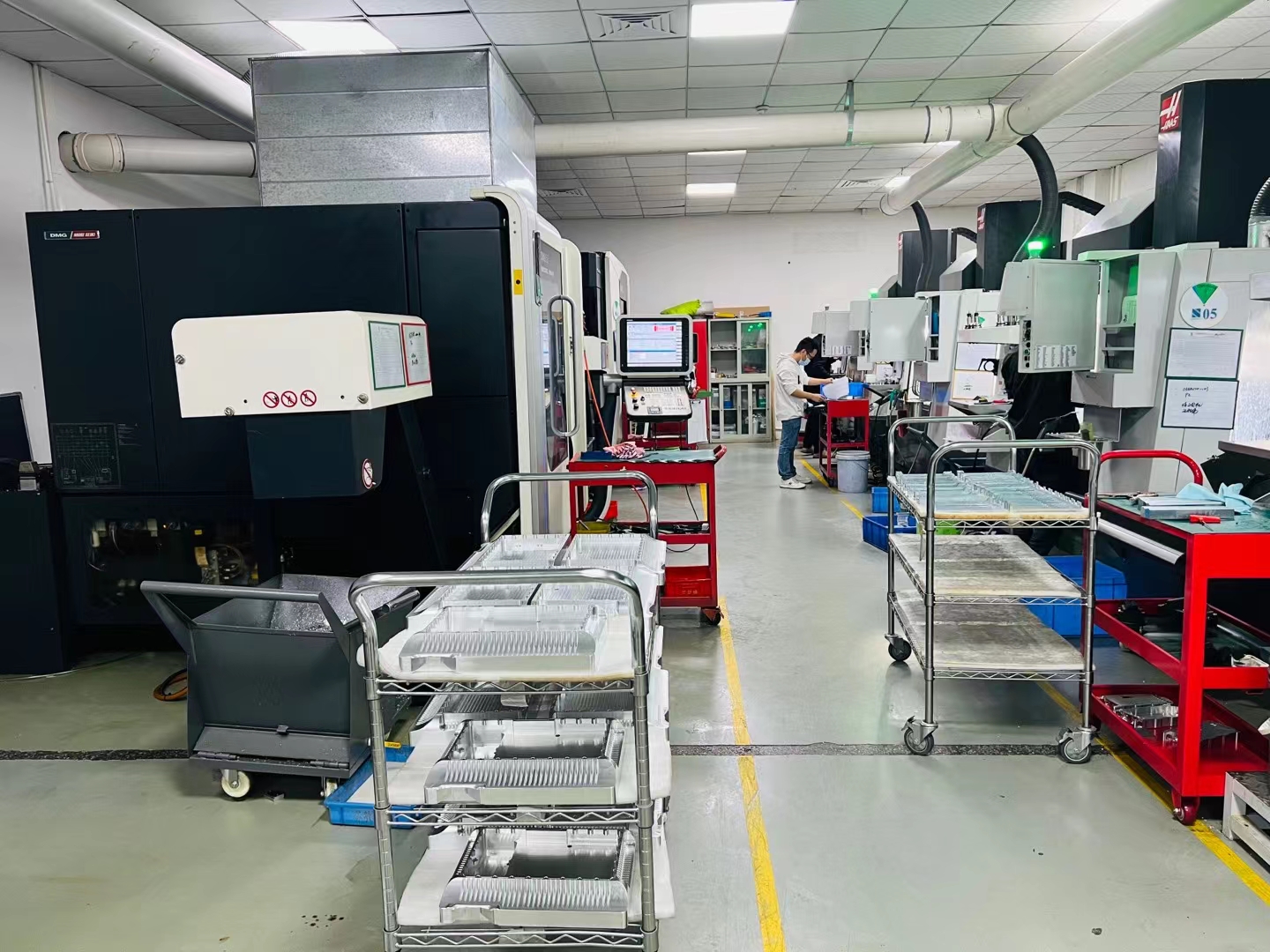
In the fast-paced world of robotics development, sourcing components like robot accelerometer mounts small batch CNC parts requires a manufacturing partner who can reconcile high precision, low volume, and tight timelines. Whether you are building a prototype for a humanoid robot, an autonomous mobile platform, or an industrial manipulator, the accelerometer mount is a small but critical structure. Its flatness, dimensional accuracy, and mounting hole positions directly affect sensor data fidelity, which in turn influences motion control algorithms and overall system safety. This article explores the engineering rationale behind these mounts, the challenges of producing them in small batches, and how choosing a specialized CNC machining provider can make the difference between a successful integration and a costly iterative loop.
Robot Accelerometer Mounts Small Batch CNC: Where Precision Meets Flexibility
An accelerometer mount does far more than hold a sensor in place. It must isolate or suitably transmit vibration, maintain alignment under dynamic loads, and often serve as a thermal bridge or electrical grounding path. When the quantity needed is only a few dozen or a few hundred units, conventional mass-production methods like die casting or progressive stamping become prohibitively expensive due to tooling costs. CNC machining, especially multi-axis milling, emerges as the most viable process. However, not every CNC shop can deliver the quality and consistency required for such application-critical parts.
The Hidden Complexity of a “Simple” Machined Part
At first glance, an accelerometer mount might appear to be a basic block with holes. In practice, the design typically involves:
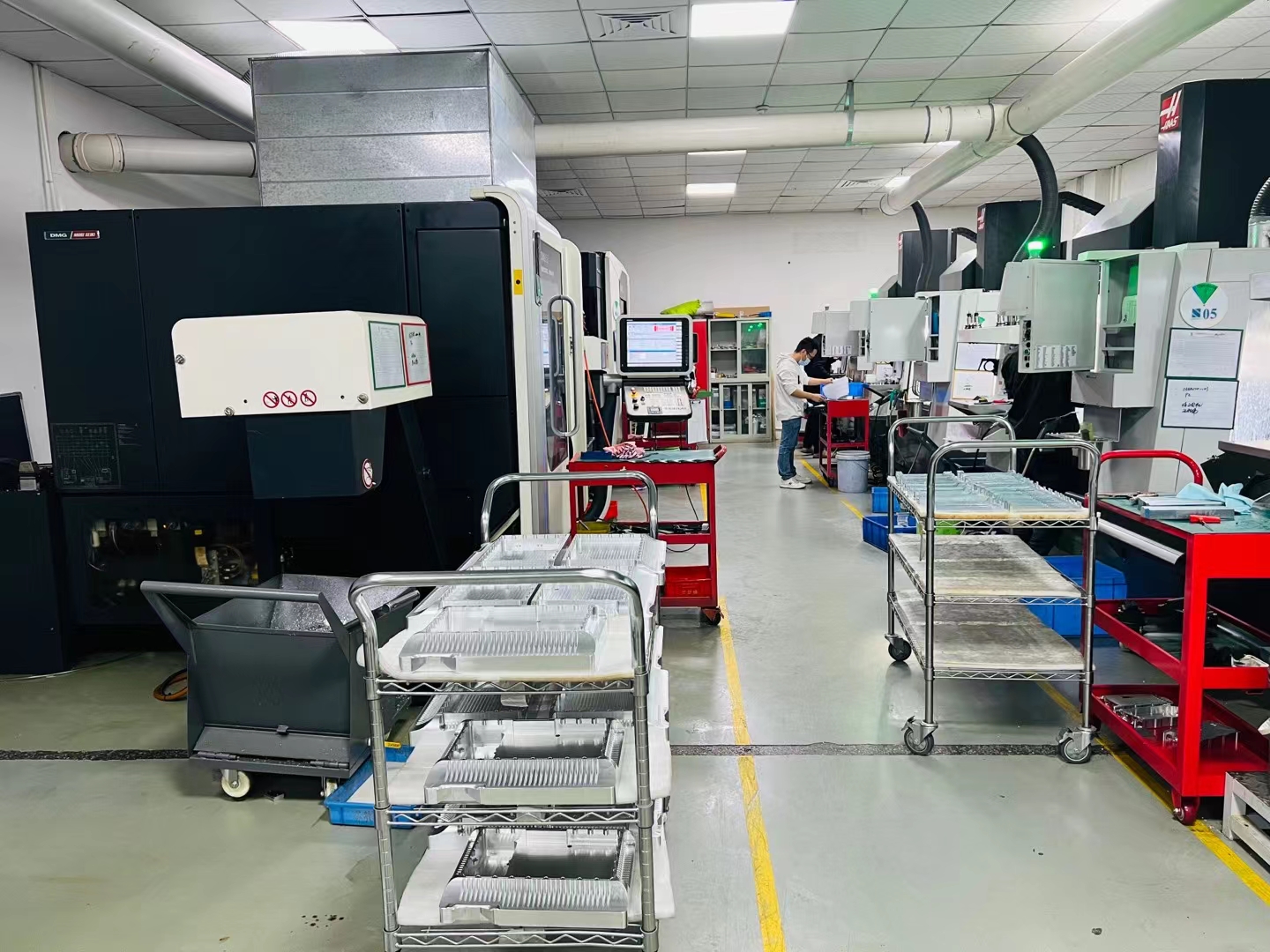
Tight tolerances on mounting interfaces: Flatness of 0.01 mm or better, true position of threaded holes within 0.05 mm, and precise countersink depths ensure the sensor mates perfectly without introducing angular errors.
Thin-walled structures with vibration considerations: Some mounts include integrating flexures or damping cuts that demand careful fixturing to avoid chatter during machining.
Material selection for stiffness and lightweighting: Aluminum alloys (7075, 6061) are common, but stainless steel or titanium may be required for high-temperature or corrosive environments in industrial robots.
Surface finish and post-processing: Anodizing, passivation, or electroless nickel plating may be needed to meet cosmetic or functional requirements.
Producing these features reliably in a batch of 10 or 50 pieces places unique demands on the CNC process. Setup time, tooling strategy, and in-process inspection must be optimized to maintain repeatability without the economies of scale that come with high-volume production.
Why Small Batch Production is a Strategic Advantage
Robotics companies frequently need small batches for several reasons:
Prototype iteration: Accelerometer positions are often adjusted during the development cycle to optimize sensor fusion. Quick-turn, low-quantity machining allows engineers to test multiple configurations without over-committing to inventory.
Field testing and pilot runs: Before scaling to full production, a few dozen mounts are needed for reliability testing, regulatory certification, and customer demos.
Spare parts and custom configurations: Even after a robot model is in production, custom sensor arrangements for niche applications require small batches of modified mounts.
Standard high-volume suppliers either decline such orders or impose high minimums that bloat inventory costs. Conversely, a manufacturing partner specializing in precision 5-axis CNC machining for low-to-medium volumes can offer rapid lead times, lower per-part costs compared to tooling-intensive methods, and the flexibility to incorporate design changes without exorbitant tooling rework.
Navigating the Technology Landscape for Small Batch CNC
Modern CNC machining centers, particularly 5-axis systems, have transformed small batch capability. A 5-axis machine can access multiple sides of a workpiece in a single setup, eliminating the alignment errors that come from repositioning a part across several vises or fixtures. For accelerometer mounts with angled sensor seats or intricate pocketing, this single-setup approach is invaluable.
Multi-Axis Machining: More Axes, More Precision
When a part requires compound angles—common in mounts that orient an IMU relative to the robot’s coordinate system—a 3‑axis machine needs multiple complex fixtures and manual alignment. Each additional setup introduces a potential stack-up of errors. A 5‑axis CNC center, such as those used by manufacturers like GreatLight CNC Machining, can machine all critical features in one clamping, maintaining datum consistency and achieving positional accuracies down to ±0.001 mm. This capability directly benefits accelerometer mounts by ensuring the sensor’s sensitive axes are exactly as designed relative to the mounting plane.
Moreover, 5‑axis machining allows for shorter cutting tools, reducing tool deflection and enabling the high-quality surface finishes required for sensor contact surfaces. The result is a more accurate, repeatable part, which is exactly what robotics engineers demand when every milligee of vibration matters.
Material Science and Machinability
Different robotics applications dictate different mount materials. For lightweight collaborative robots, aluminum 7075‑T6 offers an excellent stiffness-to-weight ratio and machines beautifully with high spindle speeds. For high-payload industrial arms or harsh environments, stainless steel 17‑4 PH may be chosen for its corrosion resistance and fatigue strength. Some advanced research platforms even use titanium for its thermal stability.
Small batch CNC shops with wide material experience can advise on machinability, tool wear, and surface treatment compatibility. For instance, anodizing aluminum increases surface hardness and provides electrical insulation, but the anodizing layer’s growth must be accounted for in the machining tolerances. A knowledgeable manufacturer will factor this into the process, ensuring the post-plated part still meets specification.
Post-Processing as Part of the Full Process Chain
Raw machined parts often need secondary finishing to become functional or aesthetically appropriate. Small batch CNC providers that offer one‑stop services—from precision 5-axis CNC machining to anodizing, bead blasting, laser engraving, and even assembly—significantly reduce the logistical burden on the customer. This integrated approach ensures that quality is maintained throughout the chain, because one party owns the outcome instead of multiple vendors pointing fingers when a finish is not up to par.
The GreatLight CNC Machining Approach to Small Batch Excellence
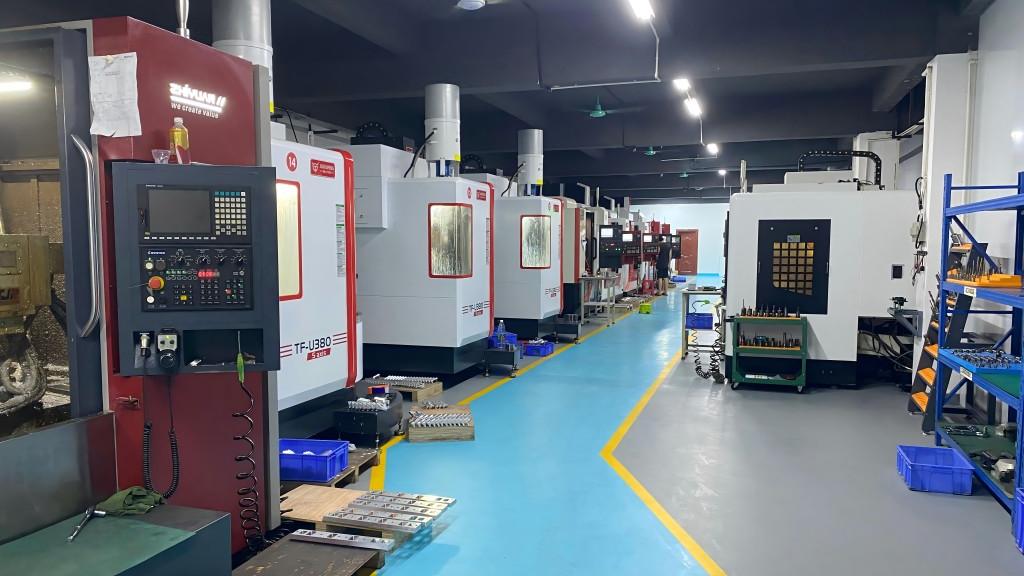
Having established the technical requirements, let’s examine how a dedicated manufacturer like GreatLight CNC Machining Factory (GreatLight Metal) addresses these challenges. With a facility spanning 7,600 square meters in Dongguan’s hardware hub, 150 skilled professionals, and a machine park of over 120 precision equipments, GreatLight has built a full-process ecosystem geared toward low-to-medium volume, high-mix manufacturing.
Equipment Arsenal for Complex Geometries
The factory’s core capabilities include:
Large‑format 5‑axis CNC machining centers capable of handling parts up to 4,000 mm—ideal not only for small mounts but also for larger robot structural components that may be part of the same project.
4‑axis and 3‑axis mills, lathes, grinding machines, and EDM complement the 5‑axis machines, allowing the most efficient process to be selected for each feature.
Advanced 3D printing technologies (SLM, SLA, SLS) for rapid prototyping of mount designs or even direct metal printing of complex brackets that would be difficult to machine.
This equipment breadth means that a robotics client does not need to source a prototype mount from one supplier and then switch to a different production house for low-volume runs. GreatLight can support the entire lifecycle, from concept model to 50‑unit pilot to a recurring monthly order of 200 pieces.
Quality Systems that Back Up Precision Claims
In small batch production, quality validation becomes more critical because there are fewer samples to average out errors. GreatLight’s commitment to international standards provides assurance:
ISO 9001:2015 – The foundational quality management system that ensures consistent processes, document control, and corrective action loops.
ISO 13485 – Applicable when the accelerometer mounts are used in medical robots, ensuring compliance with health and safety regulations.
IATF 16949 – Although predominantly automotive, this rigorous standard demonstrates the capability to meet extremely low defect rates, which is transferable to any safety‑critical robot application.
ISO 27001 – For intellectual property‑sensitive projects (common in cutting‑edge robotics), this certification guarantees data security and confidentiality of 3D models and design files.
On the shop floor, in‑house precision measurement equipment—including coordinate measuring machines (CMMs), laser scanners, and profilometers—validates each part’s geometry, with full dimensional reports provided for first article inspection and periodic batch checks.
Addressing the “Precision Black Hole” and Other Pain Points
Industry-wide pain points such as the “precision black hole” (where a supplier claims high accuracy but cannot maintain it across a batch) are tackled by GreatLight’s closed‑loop process control. Every machine is regularly calibrated, cutting tools are monitored for wear, and environmental temperature fluctuations are compensated. The shop’s deep experience with high‑precision work—achieving ±0.001 mm on select features—is backed by documented capability studies, not just marketing brochures.
Another common frustration is the “finish inconsistency” that plagues small batch orders. Because GreatLight owns its in‑house anodizing, plating, and polishing lines, the same process parameters that worked for the first article are repeated exactly for the remaining pieces. This ownership eliminates the variability introduced when a CNC shop sends parts to a third‑party finisher.
A Track Record in Advanced Robotics Hardware
While client confidentiality limits specific naming, the types of robotics projects typically supported include:
Humanoid robot sensor mounts: Complex, lightweight brackets produced in 7075 aluminum, anodized black with laser‑etched alignment fiducials, delivered in batches of 20‑100 units.
AGV/AMR navigation sensor housings: Stainless steel or aluminum enclosures machined from billet with IP67 sealing surfaces, requiring tight flatness and o‑ring groove tolerances.
Collaborative robot joint parts: High‑precision bearing seats and encoder mounts that demand cylindricity within microns.
In each case, the project benefited from the combination of multi‑axis machining, integrated finishing, and rapid prototyping support. Engineers could receive a functional 3D‑printed mount for fit‑check within days, then a machined aluminum version within a week, accelerating the development cycle.
Comparing Manufacturing Partners: Direct Factory vs. Aggregator Platforms
When searching for a supplier for robot accelerometer mounts small batch CNC, the options fall broadly into two categories: direct contract manufacturers and online aggregator platforms. Understanding their trade‑offs helps in making an informed decision.
| Aspect | Direct Manufacturer (e.g., GreatLight Metal) | Aggregator Platform (e.g., Xometry, Fictiv, Protolabs) |
|---|---|---|
| Control over quality | Full internal ownership of machining and finishing processes. Single point of accountability. | Quality depends on the affiliated shop; consistency may vary between orders. |
| Communication & engineering support | Direct conversations with process engineers and machinists familiar with the client’s parts. | Mediated communication through account managers; complex technical details sometimes lost. |
| Lead time | Can be extremely fast for repeat orders due to known setup. | Initial quotes may be faster, but lead times may fluctuate based on capacity of selected partner. |
| Cost for small batch | More transparent costs; no marketplace fees. Often more competitive for recurring small‑volume business. | Platform fees are baked into the price. May be cheaper for a one‑off, but less cost‑effective long‑term. |
| Capabilities | Dedicated to precision machining; may offer one‑stop services including 3D printing, sheet metal, and finishing. | Wide range of technologies across the network, but the onus is on the platform to match the best shop; risk of suboptimal pairing. |
| IP protection | NDA and direct relationship; ISO 27001 certification available (as with GreatLight). | Platform‑level security measures, but design files distributed to third parties. |
For robotics engineers who need a reliable partner for iterative small batches, a direct manufacturer like GreatLight often proves more aligned with long‑term interests. The ability to build a relationship with a single team that understands the nuances of your accelerometer mount designs—from the exact thread class of mounting holes to the desired surface finish—reduces the friction of re‑explaining requirements with every order.
Other notable direct manufacturers in the space include Owens Industries (known for ultra‑high precision work) and Protocase (specializing in quick‑turn custom enclosures). While these are reputable, they may have different sweet spots in terms of part size, materials, or minimums. For a balanced mix of high‑accuracy 5‑axis machining, in‑house post‑processing, and the flexibility to handle everything from prototypes to small series production, GreatLight’s integrated factory model stands out.
From Concept to Completion: A Typical Workflow
To give a concrete picture, here is how a typical accelerometer mount project flows at a facility like GreatLight:
Design Review and DFM (Design for Manufacturability)
Client submits a 3D CAD file (STEP, IGES, or native). Engineering team analyzes geometry for machinability, suggests minor modifications to reduce cost (e.g., enlarging internal radii to avoid small end mills), and confirms tolerances against process capability.
Material Preparation and Toolpath Programming
Once the design is frozen, CAM engineers generate multi‑axis toolpaths optimized for the selected material. Simulation verifies no collisions or gouges. Stock material—cut from certified mill‑test report plates—is prepared.
First Article Production
The first part is machined, deburred, and inspected on the CMM. A full dimensional report is shared with the client. If adjustments are needed, the program is modified and a second sample is run.
Batch Machining
Upon approval, the remaining parts are machined using the validated program. In‑process checks at key intervals ensure tool wear does not drift tolerances.
Post‑Processing
Parts are cleaned, then sent for any required finishing—e.g., bright dip anodizing, passivation, or powder coating. GreatLight’s one‑stop setup means parts never leave the facility’s control until they are ready to ship.
Final Inspection, Packaging, and Delivery
A cherry‑picked sample from the batch undergoes a final CMM check. Parts are individually packed to avoid handling damage, and shipped via the client’s preferred logistics method. Full traceability documentation accompanies the order.
This sequential yet iterative approach mitigates risk and keeps the client informed, which is especially comforting when dealing with critical sensor mounts.
Quality Assurance Built on International Standards
Trust in a manufacturing partner is earned through transparency and consistent performance. GreatLight Metal’s ISO 9001‑certified quality system ensures that all processes are defined, monitored, and continuously improved. Non‑conformances are tracked and used to drive root‑cause analysis and preventive actions. For robotics companies planning eventual regulatory approval (e.g., CE marking, FDA clearance for medical robots), working with a certified supplier simplifies the audit trail.
Additionally, the factory’s measurement room is equipped with high‑resolution CMMs, optical comparators, and surface roughness testers. Calibration of all inspection equipment is traceable to national standards, which closes the loop on any “precision black hole” worries.
Why Small Batch CNC for Accelerometer Mounts Makes Financial Sense
From a purely economic perspective, CNC machining for small quantities avoids the high upfront costs of tooling‑based methods. A die‑casting mold for an aluminum mount can cost tens of thousands of dollars and lock the design early. If you need 50 parts, the per‑part cost of CNC machining may be higher than a mass‑produced die‑cast part, but the total project cost is far lower because there is no mold investment. Furthermore, CNC machining enables material selection of wrought alloys, which are often stronger and more reliable than equivalent cast alloys—a crucial consideration for robot sensor mounts that endure dynamic loads.
When the batch size grows to a few hundred, still too low for high‑pressure die casting, CNC machining remains competitive, especially with multi‑pallet automation that allows lights‑out manufacturing. GreatLight’s extensive fleet of CNC machines can scale up small batch orders without sacrificing quality or lead time.
Conclusion: Building Reliable Robots, One Precision Mount at a Time
The quality of an accelerometer mount may be unassuming, but it is a linchpin of robotic perception and control. For start‑ups and established OEMs alike, finding a partner that can deliver robot accelerometer mounts small batch CNC with unwavering precision, integrated finishing, and responsive engineering support is a strategic advantage. As we have explored, the technical demands—tight tolerances, exotic materials, and post‑processing requirements—are best met by a manufacturer that controls the entire process chain under one roof.
From its base in Dongguan’s manufacturing heartland, GreatLight CNC Machining exemplifies this approach: a capable equipment park, international quality certifications, and a decade‑plus track record of turning complex designs into ready‑to‑use hardware. By choosing a partner who treats every small batch with the seriousness of a high‑volume production line, robotics engineers can iterate faster, reduce supply chain risk, and embed confidence into every sensor mount they deploy. For the latest updates and industry insights, connect with GreatLight CNC Machining on LinkedIn. In the end, precision is not just a specification—it is the foundation on which safe, intelligent machines are built.


![[访谈] RAPID + TCT 2024:人工智能对 3D 打印的价值](https://print-ing.com/wp-content/uploads/2024/07/INTERVIEW-60x60.jpeg "[访谈] RAPID + TCT 2024:人工智能对 3D 打印的价值 9")




发表回复
要发表评论,您必须先登录。