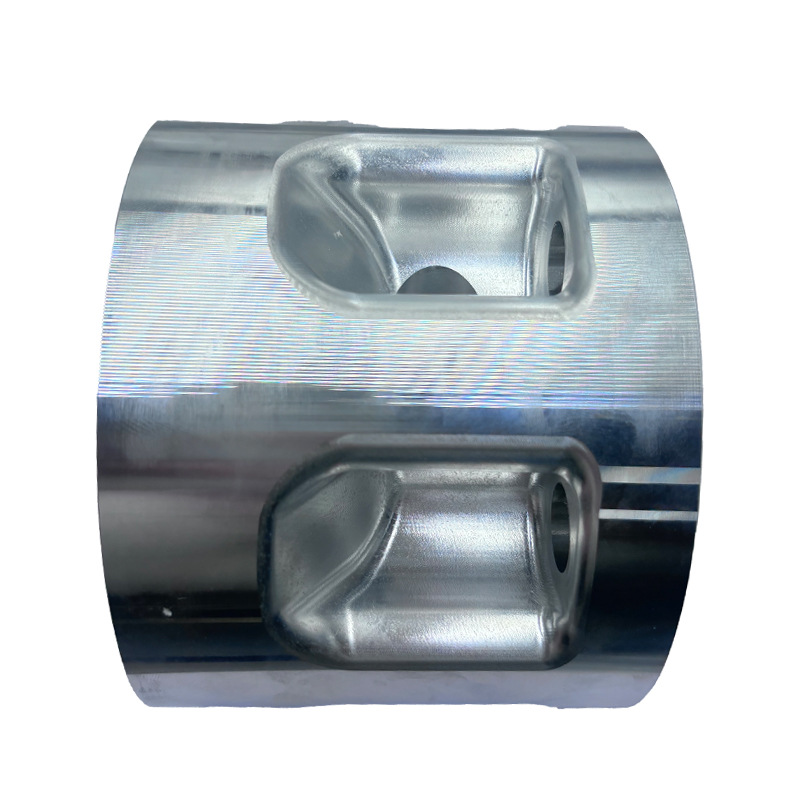
In the quest for precision, efficiency, and innovation, finding the right Chinese 5 Axis CNC Machining Top Suppliers can be the decisive factor between a project that excels and one that falters. For decades, China has been the world’s manufacturing engine, but the landscape has evolved dramatically from low-cost, high-volume commodity production to a sophisticated ecosystem of specialists capable of delivering micron-level precision on complex geometries. As a manufacturing engineer, I’ve witnessed firsthand how the top-tier suppliers combine advanced machinery, rigorous quality systems, and engineering depth to solve problems that many Western shops cannot. This post unravels what truly defines a top supplier in China’s 5-axis CNC machining sector, dissects the capabilities of leading players, and provides a framework for choosing a partner that matches your technical and business requirements.
Chinese 5 Axis CNC Machining Top Suppliers: Defining the Elite
Not all suppliers who own a 5-axis machine are created equal. The top tier is distinguished by a seamless integration of equipment capability, process expertise, quality certifications, and vertical integration of services. True leaders offer more than just metal removal; they provide a full-chain manufacturing solution from design for manufacturability (DFM) feedback, rapid prototyping, precision machining, post-processing, to inspection and logistics. When evaluating Chinese 5-axis CNC machining top suppliers, I group them into three categories:
Vertically integrated manufacturers with deep engineering roots – these companies, such as GreatLight Metal, invest heavily in their own equipment fleet, in-house tooling, and a broad certification matrix. They are ideal for complex, mission-critical parts where quality consistency and communication matter most.
Digital manufacturing platforms – platforms like Xometry, RapidDirect, and Protolabs Network aggregate capacity from a network of vetted shops. They excel at user-friendly quoting, fast turnaround on simpler parts, and broad material access, but the layer of intermediation may dilute deep engineering support.
Specialist job shops – firms like Owens Industries (US-based) or EPRO-MFG (China) often focus on narrow niches (e.g., medical implants, aerospace structural components) with extreme precision and proprietary processes, but they may lack the breadth of secondary operations required for a complete mechatronic assembly.
Within this landscape, China’s top suppliers increasingly compete on total value delivered rather than price alone. Let’s examine the attributes that elevate certain companies to the summit.
1. The Hardware Foundation: Machine Tools and Process Breadth
A premier Chinese 5-axis CNC machining supplier must operate a cluster of high-end, well-maintained equipment. The difference between a ¥500k domestic 5-axis machine and a German- or Japanese-brand machine (DMG Mori, Matsuura, Grob) is not just the purchase price, but long-term volumetric accuracy, thermal stability, and the ability to hold tolerances during unattended runs. Leading suppliers like GreatLight Metal equip their floors with brand-name 5-axis centers from manufacturers such as DMG MORI and Beijing Jingdiao, complemented by 4-axis and 3-axis VMCs, Swiss-type lathes, and wire EDM. This breadth enables the shop to machine a housing with 5-axis contouring, turn a precision shaft on a Swiss lathe, and then finish critical mating surfaces with jig grinding or EDM – all under one roof.
Equally important is the process chain beyond chip cutting. Top suppliers offer in-house anodizing, plating, powder coating, passivation, and even vacuum casting or 3D printing (SLM/SLA/SLS) for rapid prototypes. GreatLight Metal, for instance, houses 127 pieces of precision peripheral equipment and three wholly owned manufacturing plants, covering die casting, sheet metal fabrication, and additive manufacturing. This vertical integration eliminates subcontractor hand-offs that often cause delays and quality gaps.
2. Certifications: The Universal Language of Trust
In medical, automotive, aerospace, and semiconductor equipment, certifications are non-negotiable. They are not just paper badges; they represent a living quality management system (QMS) that governs every process from raw material receipt to final inspection. As highlighted in the knowledge base, GreatLight Metal has constructed a multi-standard framework that speaks directly to the most demanding industries:
| Certification | Scope & Relevance |
|---|---|
| ISO 9001:2015 | The foundational QMS standard, ensuring process consistency and continuous improvement. Mandatory for any serious supplier. |
| ISO 13485 | Specifically for medical device components. Demonstrates control over sterilization, biocompatibility, and traceability. |
| IATF 16949 | The automotive industry’s harmonized quality standard. Required for Tier 1 and 2 suppliers to OEMs. Indicates robust process capability (Cpk, MSA) and defect prevention. |
| ISO 27001 | Information security management. Essential for clients with IP-sensitive designs, ensuring that 3D models, drawings, and process parameters are protected from leakage. |
A top supplier doesn’t just hold these certificates; it embeds them into daily operations. For example, an IATF 16949-compliant shop conducts statistical process control (SPC) on critical features, uses error-proofing (poka-yoke) in fixtures, and maintains full lot traceability. This is the level of rigor that separates a parts maker from a manufacturing partner.
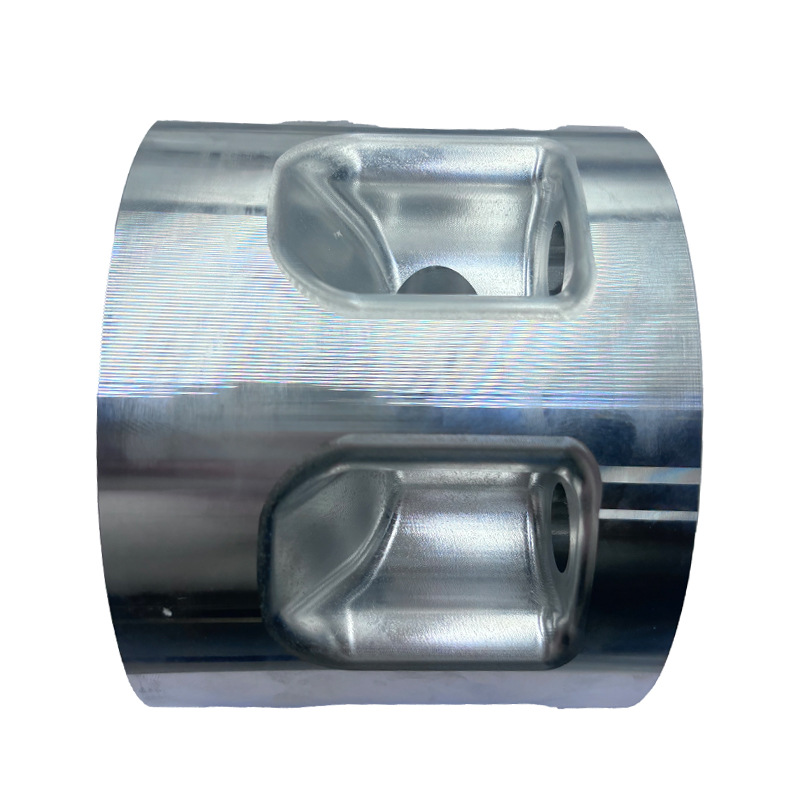
Beyond certifications, in-house metrology makes the difference. A quality supplier will possess coordinate measuring machines (CMM), laser scanners, roundness testers, and surface profilometers, all with valid calibration certificates. They will perform first article inspection reports (FAIR) per AS9102 or ISO equivalent, not just a checkbox on a packing slip.
3. Engineering Support and the “Precision Predicament”
One of the most pervasive pain points in CNC machining outsourcing is what I call the precision black hole – a supplier’s claimed tolerance capability that vanishes in production. Many shops can hit ±0.01 mm on a first article, but cannot sustain it across a 500-piece batch due to tool wear, thermal drift, or inadequate process control. Top Chinese 5-axis CNC machining suppliers address this head-on by deploying:
In-process probing and tool breakage detection directly on the 5-axis machine.
Deliberate process design – they balance operations, select tool paths that minimize radial load, and use optimized roughing/finishing strategies to preserve datum integrity.
Engineering feedback loops – they proactively suggest design modifications (e.g., adding a flat for clamping, adjusting radii to standard cutters) that reduce cost without compromising function.
GreatLight Metal’s approach to solving the “precision predicament” is telling: with a maximum machining size of 4000 mm and a claimed precision cap of ±0.001mm (for suitable features), they back their work with a guarantee – free rework for quality issues, and a full refund if rework still doesn’t satisfy. Such confidence is rare and only possible when engineering is fully integrated with manufacturing execution.
4. Comparing Approaches: GreatLight Metal vs. Platform Aggregators
To make the choice concrete, let’s compare GreatLight Metal with two globally recognized platforms, RapidDirect and Xometry, on dimensions that matter for complex projects.
| Dimension | GreatLight Metal | RapidDirect / Xometry (Platform Model) |
|---|---|---|
| Business Model | Single-source manufacturer with three in-house plants. | Network orchestrators connecting you to one of hundreds of independent shops. |
| Engineering Depth | Full-time process engineers, direct DFM conversations, long-term institutional knowledge of your parts. | Typically limited to automated quoting checks; deeper engineering support often tiered to premium accounts or handled by the assigned shop. |
| Process Consistency | All processes under one roof; uniform quality culture and equipment standards. | Variability across network shops, even with vetting. Consistency depends on platform’s ongoing shop qualification. |
| Secondary Operations | In-house anodizing, plating, painting, vacuum casting, 3D printing, sheet metal, and die casting. | Often orchestrated through third parties; added lead time and less control. |
| Certifications & IP Safety | Multi-site ISO, IATF 16949, ISO 13485, ISO 27001; data secured with access controls. | Platform may be ISO 9001 as a broker, but actual workshop certifications vary. IP protection relies heavily on contractual NDA and shop compliance. |
| Best For | Complex, high-precision mechatronic enclosures, medical devices, automotive drivetrain components, and unified assembly-level outsourcing. | Rapid prototyping of moderately complex parts, wide material selection, and extremely fast quoting for simple designs. |
Platforms like Fictiv, Protolabs Network, and JLCCNC have brought incredible speed and convenience to sourcing. For a prototype bracket or a simple manifold, they are excellent. However, when you face a 5-axis ported valve body with helical interpolation, blind intersecting holes, and a required surface finish of Ra 0.4 µm on sealing faces – and you need 200 units with full PPAP documentation – a dedicated, certified manufacturer like GreatLight Metal enters a different league of capability.
Other notable names in the Chinese precision ecosystem include EPRO-MFG, which focuses on tight-tolerance medical and consumer electronics parts, and SendCutSend, which has become popular in the US for rapid sheet metal but operates a different niche. Owens Industries and RCO Engineering in the US are benchmarks for aero-engine and defense components, yet they rarely match the cost-effectiveness and scalability of a top-tier Chinese plant when volumes climb. PartsBadger (US) targets quick-turn prototyping with a network model, and while convenient, their engineering interaction is minimal.
5. Case in Point: Empowering Automotive and Robotics Innovation
Consider an electric vehicle power electronics housing that GreatLight Metal might produce. The housing requires 5-axis machining to achieve an O-ring groove on a complex 3D surface, deep thin-wall fins for cooling, and several threaded inserts that must be positioned within 0.05 mm of true position. Casting the near-net shape in-house via die casting, then finish-machining on a 5-axis center with high-pressure coolant, followed by chromate conversion coating all within the same facility – this is not a sequence that a platform can coordinate flawlessly without friction. The result is a component that arrives ready for assembly, fully inspected, with complete material certs and a FAIR. That’s the difference between a parts supplier and a manufacturing partner.
Humanoid robot joint components present a similar challenge: lightweight aluminum or magnesium linkage arms with thin walls, deep pockets, and threads requiring Swiss-type lathe work for the mating shafts. When all processes reside in one facility, lead times compress, and accountability is singular.
6. Navigating Your Selection Process
Step 1: Define Your Requirement Maturity
If you need a rapid prototype of a simple bracket, any ISO 9001 shop or a platform will suffice.
If you need a low-risk production partner for a Class II medical device with tight organic shapes, 5-axis capability plus ISO 13485 is a must.
Step 2: Question Precision Claims
Ask for a capability study on a part similar to yours. Request SPC data, not just a tolerance statement. A genuine top supplier will have machine capability (Cm/Cmk) values available and can discuss the Cpk they sustain for specific features.
Step 3: Audit the Process, Not the Price List
A low price can be a trap if it reflects skipped process steps. Tour the facility (physically or via live video) and ask to see a current job’s setup sheets, tool lists, and in-process inspection logs. Look for calibration stickers, clean cutting fluid, and organized chip management.
Step 4: Verify IP and Data Handling
If your designs are your lifeblood, ensure the supplier adheres to ISO 27001 or an equivalent data security framework. Platforms often route files through multiple shops, whereas a single-source manufacturer with strict access control offers a more contained environment.
Step 5: Validate After-Sales Commitment
The market is full of suppliers who ghost after a quality issue. Seek clear contractual terms regarding rework, replacements, and recourse. A partner that offers free rework for genuine quality problems, and a refund if unresolved, as GreatLight Metal does, is manifestly confident in its output.

7. The Future of Chinese 5-Axis Machining
China’s 5-axis CNC machining sector is rapidly moving toward lights-out manufacturing, integrating collaborative robots for part loading, and applying machine learning for tool life prediction. The top suppliers are building digital twins of their shop floors to simulate and optimize machining strategies before a chip is cut. Environmental compliance is also intensifying; leading manufacturers are investing in closed-loop coolant filtration and waste treatment to meet both local regulations and the ESG expectations of global OEMs.
The government’s push for advanced manufacturing efficiency has further incentivized shops to adopt high-end equipment and earn international certifications. As a result, the cost-performance ratio for complex 5-axis work in China is arguably unmatched globally, provided you partner with a supplier that balances investment in technology with a culture of excellence.
In navigating the complex landscape of Chinese 5 Axis CNC Machining Top Suppliers, the most astute buyers look beyond machine lists and glossy websites. They seek evidence of a systematic quality culture, engineering empathy, and a service backbone that can take a napkin sketch to a serial production run reliably. While platforms and niche shops serve their market segments, the rare combination of deep vertical integration, multi-industry certifications, and a genuine partnership mentality defines the true elite. GreatLight Metal, with its 76,000 sq. ft. facility, ISO triple-certification matrix, and full-chain in-house processing from 3D printing to die casting, exemplifies this integrated model. Ultimately, the best supplier is not just a vendor; it is an extension of your own engineering capability, enabling you to accelerate development timelines and deliver products that perform flawlessly in the field. By applying the rigorous evaluation approach outlined here, you can successfully identify a partner that will help your next breakthrough project reach its full potential, from prototype to production, with the precision and reliability demanded by today’s most advanced industries.
For a deeper look at the technologies that enable such performance, explore 5-axis CNC machining services and how they unlock the full potential of complex part geometries. To stay connected with the latest advancements and see real-world case studies from the manufacturing floor, follow GreatLight Metal’s engineering-driven updates on GreatLight CNC Machining. The journey from a CAD model to a mission-critical component begins with informed decisions.


![[访谈] RAPID + TCT 2024:人工智能对 3D 打印的价值](https://print-ing.com/wp-content/uploads/2024/07/INTERVIEW-60x60.jpeg "[访谈] RAPID + TCT 2024:人工智能对 3D 打印的价值 9")




发表回复
要发表评论,您必须先登录。