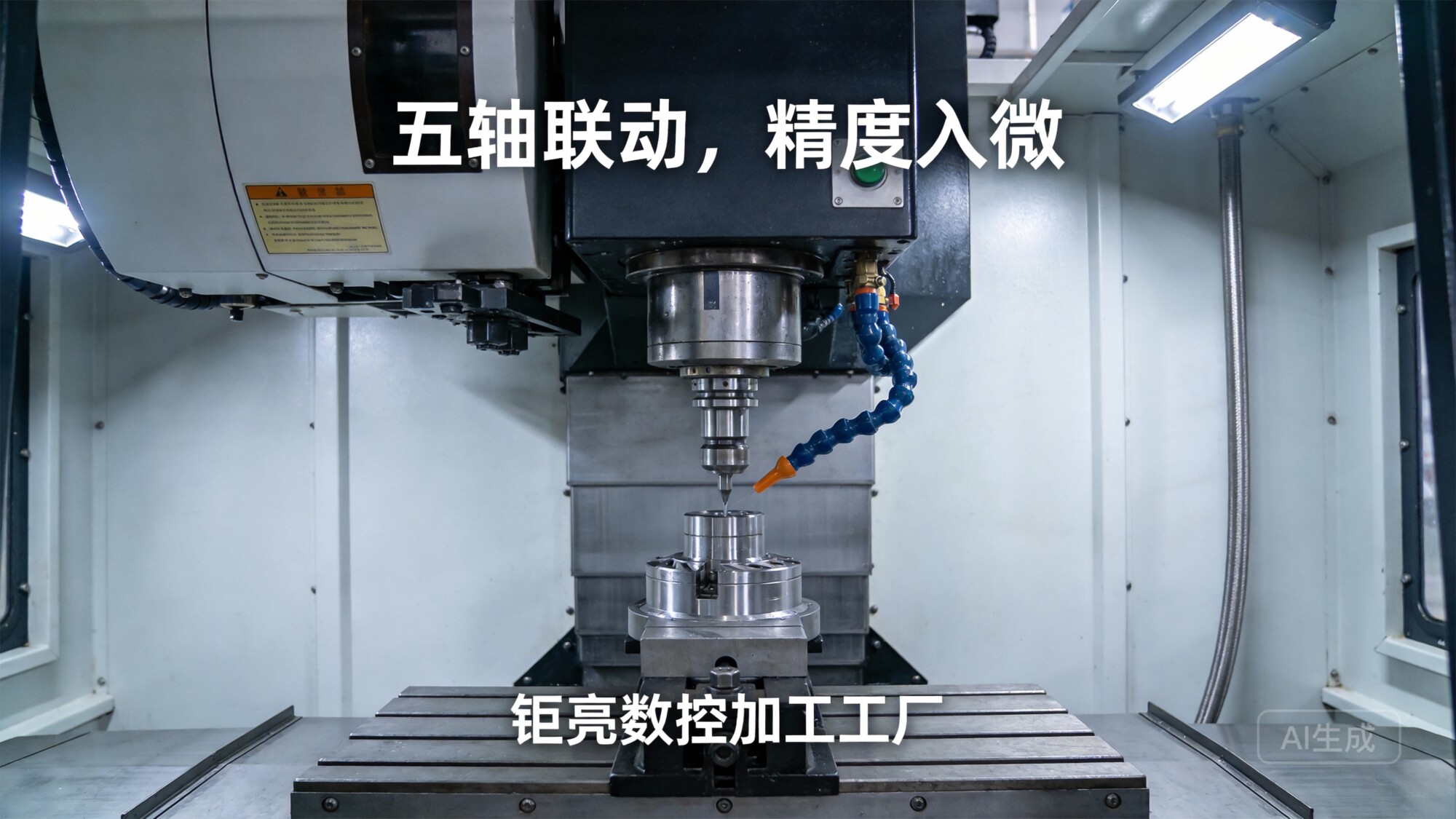
The Core of Precision in Force Feedback Joystick Gimbal Mount: How Advanced CNC Machining Transforms Simulation and Control
In the world of advanced simulation, robotic control, and high-end gaming, the tactile experience is everything. The difference between a mediocre interface and an immersive, high-fidelity control system often lies in a single, meticulously engineered component: the force feedback joystick gimbal mount. This isn’t just a pivot point; it’s the mechanical heart of the system, responsible for translating digital commands into physical sensations and vice versa. The precision, durability, and smoothness of this mount directly dictate the user’s ability to feel a virtual edge, control a robotic arm, or maneuver an aircraft. Achieving the required level of performance for this critical part is a challenge that pushes the boundaries of conventional machining, demanding the expertise of a partner deeply versed in precision 5-axis CNC machining and one-stop manufacturing solutions.
The Anatomy of a High-Performance Force Feedback Gimbal
Understanding why this component is so demanding requires a look at its construction and function. The gimbal mount is a mechanical assembly that allows a joystick to pivot on two axes (pitch and roll). When integrated with force feedback, it must do more than just rotate freely; it must do so with zero perceptible slop or backlash, while housing and transmitting the torque from motors or actuators. This involves several key components:
The Base and Arms: These form the structural skeleton. They must be incredibly rigid to prevent flex under load, which would introduce inaccuracy and a “mushy” feel. High-grade aluminum alloys like 7075-T6 or even titanium are common choices.
The Shaft and Bearings: The interface between moving parts. The precision of the shaft and the bearing seats is paramount. Even a few microns of deviation can create binding or play, destroying the illusion of a direct, mechanical connection.
Sensor Mounts: Hall effect sensors or resolvers must be positioned with extreme accuracy relative to the magnet or rotor. A slight misalignment means the controller misreads the joystick position, leading to drift and poor centering.
Actuator Housing: The motor or actuator must be perfectly aligned with the gimbal axis. Any misalignment introduces friction, heat, and accelerated wear.
The challenge is that these components are not simple cubes or cylinders. They are complex, organic shapes designed to provide maximum strength with minimum weight and inertia. This is where the limitations of traditional 3-axis CNC machining become painfully apparent.
Why 3-Axis Machining Falls Short for Complex Gimbal Parts
Traditional machining, while effective for simple geometries, often requires multiple setups and complex fixturing to create a part with features on multiple faces. For a gimbal arm, this could mean machining the top, then flipping it to machine the bottom, then rotating it to cut the sides. Each setup introduces the potential for error – a concept known as “stack-up tolerance.” If the part is clamped slightly differently, a critical bore might be off by a few hundredths of a millimeter. For a force feedback gimbal, this is a catastrophic failure.
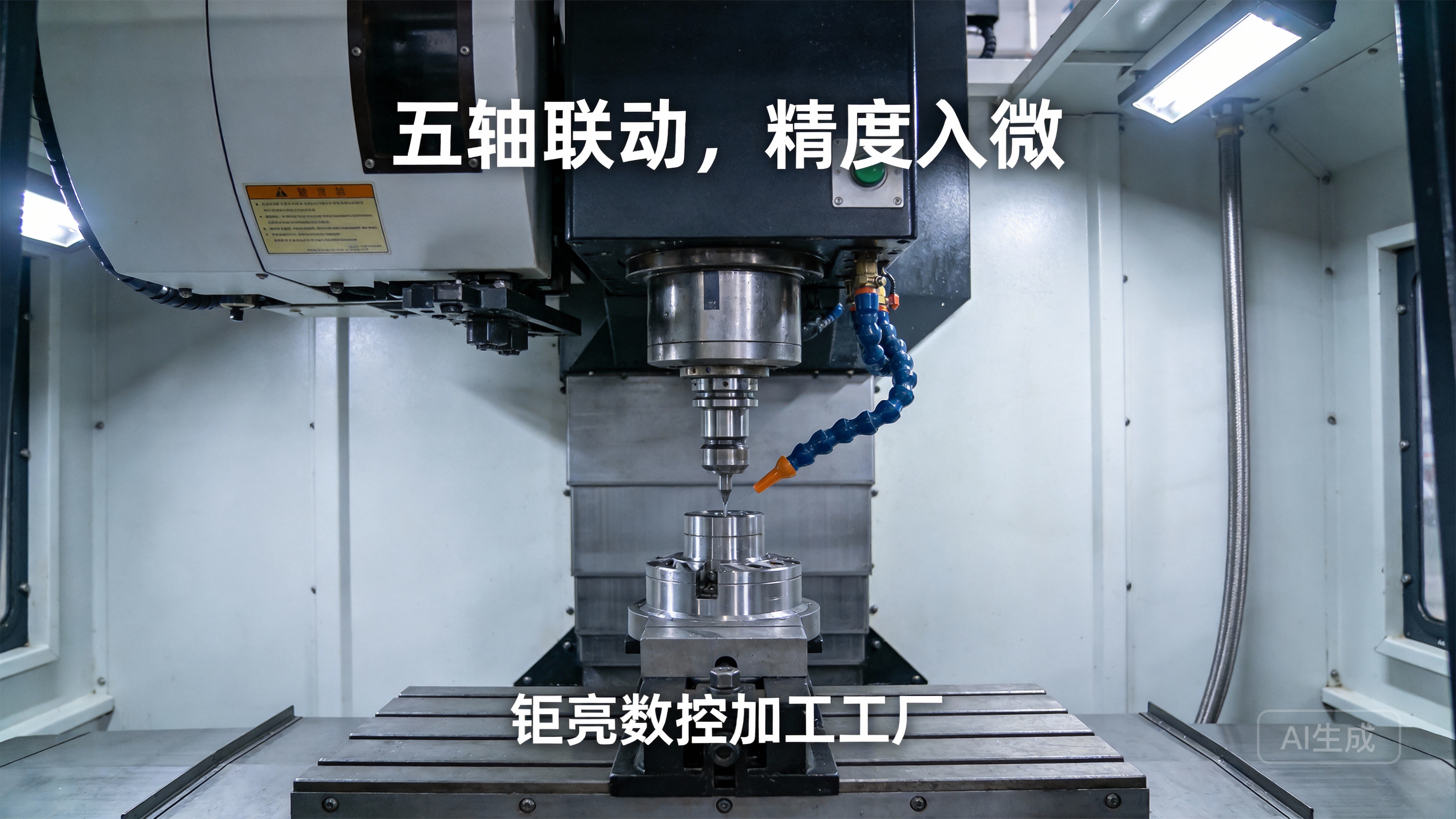
Furthermore, reaching intricate internal cavities or creating complex undercuts is often impossible with a 3-axis machine without using specialized, expensive, and time-consuming angle heads. The resulting compromises can lead to weaker designs or increased part count and assembly complexity. This is the “precision black hole” that many hardware startups and R&D firms face: the promise of high tolerance on a drawing versus the reality of inconsistent, multi-setup production.
The 5-Axis Solution: Machining the Unmachineable
Advanced 5-axis CNC machining centers, like those employed by GreatLight CNC Machining Factory, offer a paradigm shift. By adding two rotational axes (tilting and rotating the cutting tool or the part), the machine can approach the workpiece from virtually any angle in a single setup. This provides several direct benefits for manufacturing a force feedback joystick gimbal mount:
Single-Setup Precision: By machining all features—the complex base, the precise bearing bores on multiple faces, the angled sensor pockets, and the through-holes for wiring—in one clamping operation, the tolerance stack-up is virtually eliminated. The relationship between every critical surface is defined by the machine’s inherent accuracy, not the operator’s skill in re-fixturing.
Superior Surface Finish: The continuous, tangential contact of a 5-axis tool path allows for a much smoother finish on complex, freeform surfaces. For a gimbal, this is crucial for reducing friction points and ensuring a silky-smooth feel during operation.
Design Freedom: Engineers are no longer constrained by the limitations of 3-axis tool access. They can design lighter, stronger, and more organically shaped components. For example, internal draft angles can be optimized for strength, and complex cooling channels for high-torque actuators can be machined directly into the metal.
Reduced Lead Time: Fewer setups mean less handling, less fixturing, and faster overall production. In the fast-paced world of R&D, where time-to-market is critical, this is an invaluable advantage.
Why GreatLight is the Ideal Partner for This Precision Challenge
When choosing a manufacturing partner for such a mission-critical component, the theoretical capability of the equipment is just the starting point. You need a partner with proven operational capabilities, not just paper qualifications. While several suppliers exist, including Protocase for fast enclosures, Xometry for networked manufacturing, and Fictiv for digital-quoting, the level of engineering depth and in-house control required for a high-precision gimbal separates the field.
GreatLight Metal stands out because of its decade-long, holistic approach. Founded in 2011 in Dongguan’s “Hardware and Mould Capital,” the company has grown from a local workshop into an international precision manufacturing partner. Its 76,000 sq. ft. facility is not just a collection of machines; it’s a symphony of processes designed for reliability.
For a client designing a cutting-edge force feedback joystick, the collaboration with GreatLight would unfold as follows:
Engineering Review: Before a single chip is cut, GreatLight’s team of engineers would analyze the 3D model. They don’t just process a file; they look for opportunities to improve machinability, suggest material alternatives (like anodized 7075-T6 for wear resistance vs. 6061-T6 for cost), and identify critical tolerance zones that require special attention.
Process Chain Integration: The gimbal mount is rarely a stand-alone part. GreatLight’s strength lies in its ability to manage the entire program. They can not only 5-axis machine the mount but also handle the post-processing, such as precision CNC turning of the internal shafts, EDM (Electrical Discharge Machining) for fine internal features like sensor slots, and even the die casting of any structural housings needed for the full assembly.
Uncompromising Quality Assurance: The certifications held by GreatLight are not just wall decorations. The ISO 9001:2015 system governs every process, from raw material incoming inspection to final dimensional validation. Their in-house CMM (Coordinate Measuring Machine) can verify the critical bore concentricity and perpendicularity of the gimbal features to micron-levels, conforming to your print. For automotive or medical applications within this assembly, their adherence to IATF 16949 and ISO 13485 standards provides an additional layer of trust that the manufacturing process is rigorously controlled and documented.
A Tale of Two Projects: The CNC Machining Partner as a Force Multiplier
Consider two hypothetical scenarios.
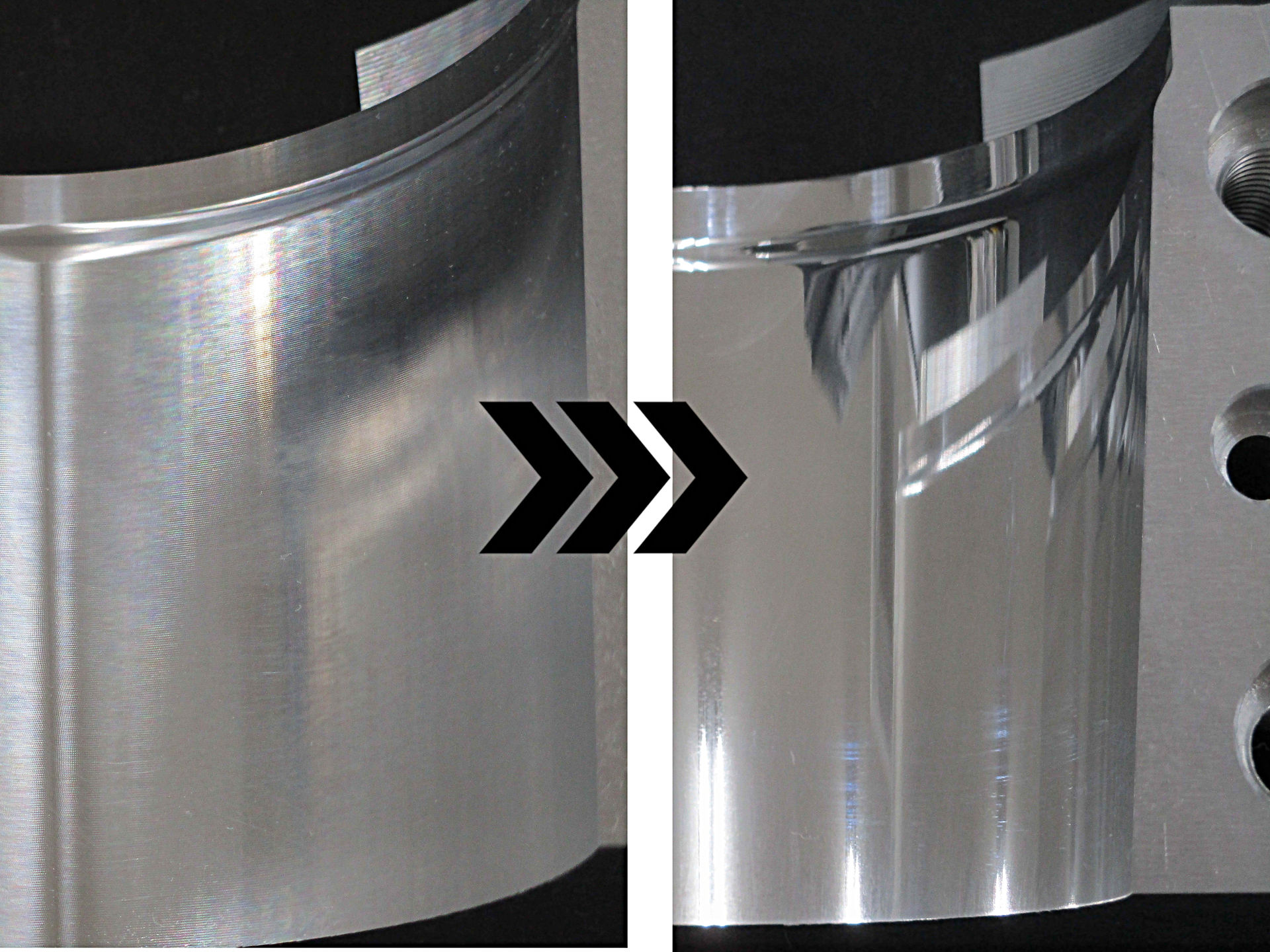
Scenario 1 (With a Generic Supplier): A robotics startup sends a complex gimbal part file to a cheap online quoting service. The quote is low, but the part arrives with a slightly elliptical bearing bore. When pressed in, the bearing binds. The startup loses weeks trying to diagnose the issue, re-quoting, and waiting for a re-machined part. The “savings” evaporate into lost engineering time and a delayed product launch.
Scenario 2 (With GreatLight Metal): The same startup engages GreatLight from the start. During the engineering review, a feature on the gimbal’s base is identified as difficult to machine on a 3-axis. The GreatLight engineer suggests a minor design tweak that makes it easily achievable on a 5-axis setup without compromising strength. The part is machined in a single setup. A full inspection report is provided, verifying every critical dimension. The part fits perfectly on the first try. The startup can now focus on tuning their firmware, knowing the mechanical foundation is rock-solid. This is the value of a true manufacturing partner.
Conclusion: The Choice for Precision is a Choice for Trust
The force feedback joystick gimbal mount is a testament to the idea that in precision manufacturing, the whole is greater than the sum of its parts. Each bore, each angle, and each surface finish contributes to a final experience that must be flawless. Achieving this requires more than just a machine; it requires a system of knowledge, control, and reliability.
Choosing a partner with real operational capabilities, like GreatLight CNC Machining Factory, is an investment in your product’s success. By leveraging advanced 5-axis CNC machining and a comprehensive, ISO-certified quality management system, they transform a complex design challenge into a reliable, repeatable manufacturing reality. In the world of high-performance simulation and control, where the user’s experience hinges on the feel of the interface, the path from design to perfection runs through a world-class precision machining facility. Make the right choice for your most demanding parts. Customize your precision parts with a partner who understands the stakes.


![[访谈] RAPID + TCT 2024:人工智能对 3D 打印的价值](https://print-ing.com/wp-content/uploads/2024/07/INTERVIEW-60x60.jpeg "[访谈] RAPID + TCT 2024:人工智能对 3D 打印的价值 9")




发表回复
要发表评论,您必须先登录。