
Design driven custom rapid tooling ODM is redefining how innovative companies move from a napkin sketch to a functional, production‑ready part in record time. As a senior manufacturing engineer who has spent years inside one of Asia’s most capable precision shops, I want to walk you through exactly what this approach means, why it’s becoming a strategic advantage for hardware teams worldwide, and how a partner like GreatLight CNC Machining Factory turns design intent into certified, high‑quality tooling without the usual headaches. Whether you’re new to the term or already evaluating ODM suppliers, this inside look at the technology, processes, and trust factors will help you make a more informed decision — all while seeing how precision 5‑axis CNC machining services form the backbone of a truly design‑driven rapid tooling workflow.
Design Driven Custom Rapid Tooling ODM: The Engineer’s Perspective
In traditional manufacturing, tooling is often an afterthought. A design is frozen, thrown over the wall to a vendor, and the toolmaker creates a mould or die based solely on a static CAD file. Design‑driven custom rapid tooling ODM flips that script. Here, the tooling partner gets involved early in the design phase, applying Design for Manufacturability (DFM) insight, suggesting optimizations for strength, cycle time, and part cost, all while accelerating the tool build through parallel engineering and rapid prototyping methods. The “ODM” (Original Design Manufacturer) aspect means the supplier doesn’t just execute your blueprint — it contributes engineering depth to improve the product itself, often owning the manufacturing process from material selection through final qualification.
This collaborative engineering model suits industries where speed, complexity, and reliability intersect: humanoid robotics, electric vehicle powertrains, medical devices, aerospace brackets, and high‑end consumer electronics. What makes the approach powerful is the blend of design input, fast tool iteration, and verified production readiness. You aren’t just buying a tool; you’re buying a production process that has been stress‑tested by the same team that built the prototype.
Why Design‑Driven Rapid Tooling Matters More Than Ever
Product lifecycles are shrinking. Regulatory windows demand faster clinical trials, automotive SOP targets pull left, and consumer electronics refresh every six months. In this environment, classic sequential tooling development can take 8–12 weeks for a multi‑cavity mould, and if the design has a flaw that only surfaces during first‑shot trials, you’ve lost precious weeks and tens of thousands of dollars.
A design‑driven ODM partner compresses this timeline dramatically. By overlapping design review, rapid prototyping, and preliminary tool steel selection, the critical path shortens. For instance, when GreatLight receives a step file for an aluminum or steel tool, the engineering team runs simultaneous DFM, moldflow simulation (if applicable), and CNC programming on five‑axis machines — all within 24 hours of project kickoff. This concurrency, paired with in‑house prototyping capabilities like 3D printing (SLM for metals, SLA/SLS for form‑fit validation), allows quick functional testing before cutting hard steel. The result: tools ship in days instead of months, with a first‑article yield that often exceeds 95%.
GreatLight CNC Machining Factory: Built for Integrated Rapid Tooling
I’ve spent most of my career in factory environments, and I can tell you that seamless design‑to‑tooling execution doesn’t happen by accident. It requires a facility that merges heavy metalworking with digital process control and a culture of engineering ownership. GreatLight CNC Machining Factory, established in 2011 and headquartered in Dongguan’s Chang’an district — the hardware and mould capital of China — sits at that intersection.
Spanning approximately 7,600 sqm and staffed by 150 skilled professionals, the factory operates 127 pieces of precision peripheral equipment, including large‑format high‑precision 5‑axis, 4‑axis, and 3‑axis CNC machining centres, lathes, grinding machines, EDM, vacuum casting machines, and an array of additive manufacturing systems. With three wholly‑owned plants under one management system, GreatLight can concurrently handle rapid tooling, prototype machining, and volume production, giving you a single source for the entire product development cycle.
Advanced Multi‑Axis CNC Machining: The Core of Rapid Tooling
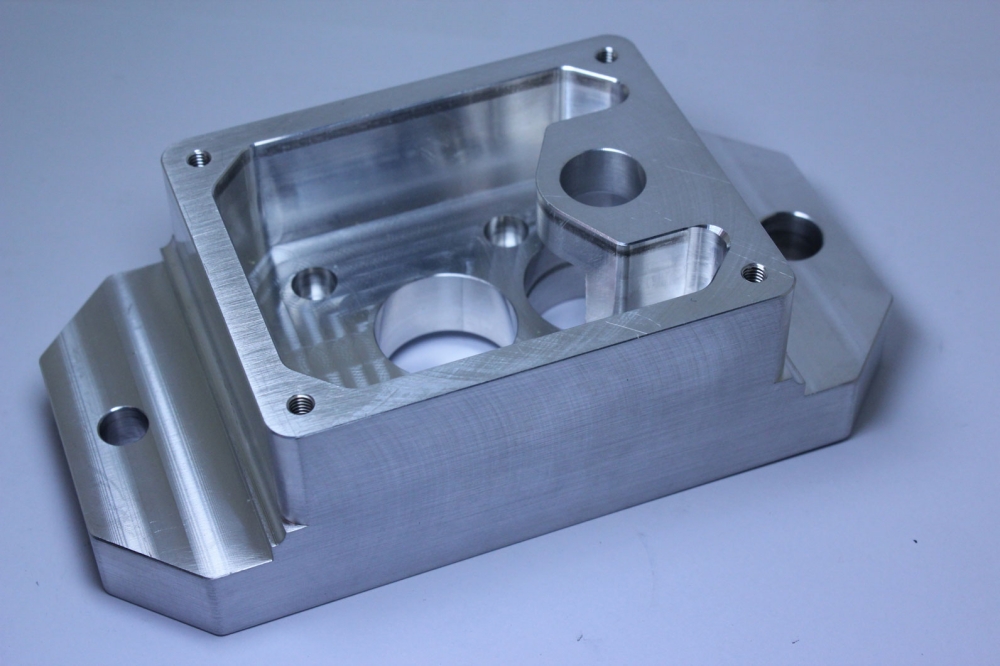
At the heart of any rapid tooling service sits the CNC machining capability. GreatLight deploys brand‑name five‑axis machining centres from Dema and Beijing Jingdiao, complemented by dozens of four‑axis and three‑axis machines. This equipment fleet not only holds tolerances down to ±0.001 mm (0.00004″) but also machines complex, undercut geometries in a single setup — a key advantage when building tight‑tolerance mould cores and cavities.
During a recent project for a medical pump housing, we needed to mill a multi‑slide tool with internal cooling channels. Traditional wire EDM and sequential milling would have required multiple setups and accumulated error. Instead, our programmers used a five‑axis continuous toolpath to rough and finish the entire cavity, including the conformal cooling features, in 40% less time than conventional methods, while holding a positional tolerance of ±0.005 mm across all parting lines.
Rapid Prototyping and Vacuum Casting: Sprint Before the Marathon
Design‑driven doesn’t mean reckless. Before committing to tool steel, GreatLight often uses in‑house SLM 3D printing (stainless steel, aluminium, titanium, mould steel) or SLA/SLS to produce physical representations of the part for test fitting and functional validation. In cases where the final production material cannot be directly printed, vacuum casting with silicone moulds allows low‑volume (10–30 pcs) polyurethane parts that mimic the mechanical properties of the injection‑moulded material. This step catches design errors early and validates the tool design itself — saving capital and time.
One‑Stop Post‑Processing and Surface Finishing
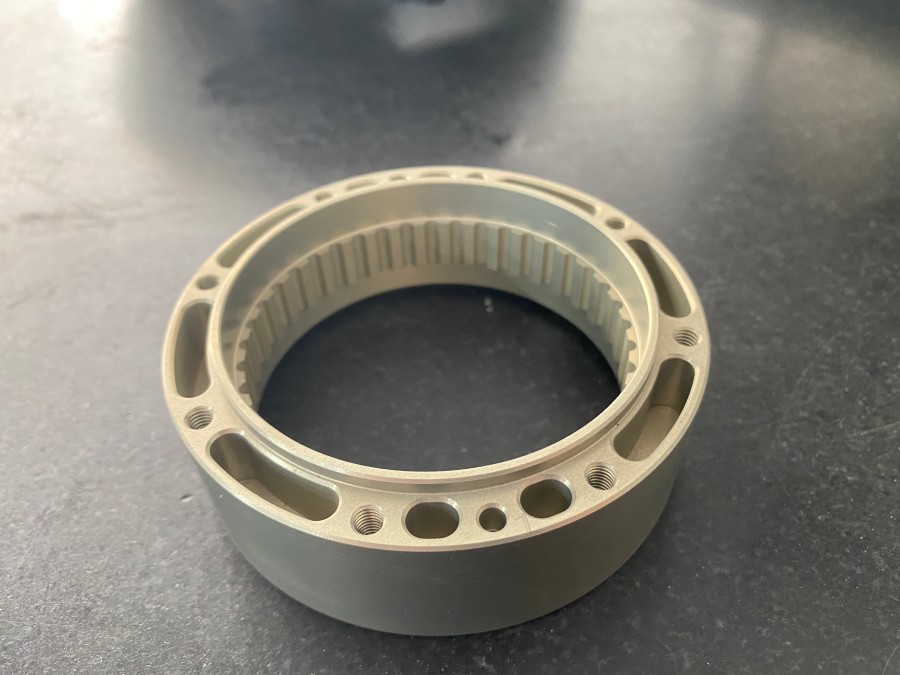
A rapid tooling job isn’t finished when the tool leaves the CNC. It needs polishing, texturing, heat treatment, and assembly. GreatLight’s in‑house post‑processing team provides a full spectrum of surface treatments: anodizing, electroplating, bead blasting, laser etching, PVD coating, and more. For a tool, surface finish directly affects part ejection, mould longevity, and aesthetic quality of the moulded component. Having all finishing under the same roof eliminates the delays, quality inconsistencies, and communication black holes that typically arise when you fragment the supply chain.
Global Certifications That Anchor Trust
In high‑stakes industries, certifications aren’t just wall decoration—they are the proof that a manufacturing partner’s processes can consistently meet international regulatory and customer requirements. GreatLight operates under a fully implemented ISO 9001:2015 certified quality management system, ensuring that every tooling project, from raw material receiving to final inspection, follows documented, auditable workflows.
For medical and surgical device tooling, the facility complies with ISO 13485 standards, applying additional requirements for traceability, risk management, and cleanliness. Automotive customers benefit from IATF 16949, an industry‑specific quality management system that focuses on defect prevention and continuous improvement across the supply chain — particularly crucial for high‑volume, safety‑critical components. Data security‑sensitive clients, especially in defence and novel R&D, are protected by ISO 27001‑compliant protocols that secure IP from unauthorised access, both digitally and physically. When I speak to engineers evaluating Asian suppliers, I always underscore that a full suite of internationally recognised certifications is not just a “nice‑to‑have”—it is the bedrock of supplier trust.
Solving Industry Pain Points with a Design‑Driven ODM Mindset
Over a decade on the floor, I’ve witnessed seven recurring pain points that plague precision machining and tooling projects. The design‑driven ODM model directly mitigates most of them:
The Precision Gap
Many suppliers boast impressive tolerance specifications but can’t maintain them across a production run due to aging equipment or thermal drift. GreatLight’s five‑axis machines undergo daily calibration, and every tool build includes in‑process probing cycles and final CMM reports that verify form and position to the micron. With over 20 pieces of in‑house precision measurement gear (laser scanners, CMMs, vision systems), we can validate that the tool cavity matches the CAD model within 0.005 mm, not just on a single dimension but across the entire surface.
Lead‑Time Black Holes
Traditional quoting loops can take a week just to get feedback on tool design feasibility. In a design‑driven ODM relationship, we work on a platform where requests are prioritized by engineering need. For a recent automotive sensor bracket project, we received a parametric CAD model at 08:00 on Monday; by 17:00 the same day, the DFM report was with the client, and a preliminary tool cutting strategy had been simulated. Prototype tool steel was on the machine by Tuesday morning.
Communication Chaos
Design‑driven means the client interacts with a dedicated project engineer who understands both the product requirements and the manufacturing process. At GreatLight, that engineer stays on the project from proto‑tool to first‑off production, eliminating miscommunication. For overseas clients, English‑fluent engineering support is standard, and regular video reviews keep all stakeholders aligned.
IP Vulnerability
Sensitive designs require a partner who treats data security as seriously as you do. Beyond ISO 27001, GreatLight maintains physical plant access controls, encrypted file transfer, and contractual NDAs. Clients regularly comment that the security posture is comparable to large Western contract manufacturers.
How GreatLight Compares to Other Service Providers
To give a balanced view, I often compare GreatLight’s rapid tooling model with several established names in the global market: Protocase, Xometry, Fictiv, RapidDirect, and Protolabs Network. Each has distinct strengths, but they also leave gaps that a design‑driven ODM fills.
| Capability / Feature | GreatLight (Design‑Driven ODM) | Protocase / Xometry / Fictiv | RapidDirect / JLCCNC / SendCutSend |
|---|---|---|---|
| Engineering DFM depth | Deep, concurrent engineering from day one | Varies; often automated or limited to online rules | Typically automated with limited back-and-forth |
| Tooling lead time | As fast as 5 days for simple moulds | Weeks to months, depending on complexity | Often quoted as 2‑3 weeks, limited express |
| In‑house post‑processing | Full suite (anodizing, plating, painting, etc.) | Usually outsourced to third‑party finishers | Often outsourced, minimal finishing options |
| Certification depth | ISO 9001, 13485, 27001, IATF 16949 | ISO 9001 common; medical/automotive certs rare | ISO 9001 typically, additional certs limited |
| One‑stop model (prototyping → production) | Yes; tooling, machining, 3D printing, casting under one roof | Mostly brokered, with handoffs between vendors | Brokered or limited in‑house scope |
| Data security / IP handling | ISO 27001 framework, physical safeguards | Basic NDA and server security, few have ISO 27001 | Often relies on standard IT practices |
What should jump out is that platforms like Xometry, Fictiv, and RapidDirect offer excellent speed for simple CNC parts but largely act as network orchestrators — they don’t have the deep in‑house toolmaking and engineering integration that a dedicated ODM like GreatLight provides. For rapid tooling that requires iterative design feedback and a consolidated production handoff, the ODM model can compress the overall time‑to‑market by 30–50% compared to routing through multiple suppliers.
A Closer Look at a Rapid Tooling Success Story
Let me share a real‑world scenario that illustrates how design‑driven ODM plays out. An innovation firm specializing in electric vehicle thermal management needed custom aluminium connector housings with integrated cooling passages. Their original design had several undercuts that made conventional two‑plate moulding impossible, and they needed 500 pre‑production parts for validation testing within six weeks.
GreatLight’s engineering team proposed a rapid‑tool approach using a high‑conductivity aluminium tool built on our five‑axis machines, with conformal cooling lines directly milled into the core. We designed the tool with a hydraulic side‑action mechanism that eliminated the need for a costly multi‑slide tool, slashing build time by half. Within 10 days, a first‑run of 50 parts was injection moulded in‑house (we maintain a small injection press for tool trials), and the mechanical properties matched the customer’s requirements. After minor tweaks to gate location and cooling channel diameter — feedback loop completed in 48 hours — the final tool was delivered on day 15, and the remaining parts were moulded in the subsequent three weeks. The client later reported that this approach saved them $45,000 compared to their previous overseas mould builder and shaved four months off their development schedule.
This case underscores the value of having prototyping, machining, tool build, and short‑run moulding capability under one management — a key differentiator that sets GreatLight apart from both pure‑play prototyping shops and production‑only mould makers.
What the Future Holds for Design‑Driven ODM
The trend toward electrification, autonomous systems, and personalised medical devices is only going to increase demand for complex, low‑volume, high‑mix tooling. Additive manufacturing will further blur the line between part and tool, with hybrid processes (3D‑printed inserts inside conventionally machined mould bases) becoming standard. Data‑intelligent factories that can predict tool wear and adjust process parameters in real time are already emerging.
A design‑driven ODM partner like GreatLight is positioned to ride these waves because it treats tooling not as a one‑off transaction but as a continuous engineering collaboration. The factory’s investments in five‑axis machining, metal 3D printing, and digital quality management create a platform that can evolve as the materials and geometries of tomorrow become more demanding.
Conclusion: Making the Design‑Driven Choice
The journey from concept to functional production part is littered with opportunities for delay, cost overrun, and quality drift. Design‑driven custom rapid tooling ODM addresses these risks by weaving manufacturing expertise into the earliest phases of design and compressing the tooling timeline through integrated, technologically advanced processes. As an engineer who has seen countless projects succeed and fail based on supplier selection, I can say that the difference between an ordinary tooling vendor and a true ODM partner is the difference between merely executing a drawing and elevating your product’s manufacturability.
When you choose a partner that combines deep engineering consultation, precision multi‑axis machining, rapid prototyping, and a full suite of internationally recognized certifications, you gain more than a tool — you gain a reliable extension of your own engineering team. For those ready to explore what design‑driven custom rapid tooling ODM can do for your next project, I encourage you to connect with the team behind the work. Discover more about GreatLight CNC Machining Factory on LinkedIn and see how this approach is transforming hardware development worldwide.


![[访谈] RAPID + TCT 2024:人工智能对 3D 打印的价值](https://print-ing.com/wp-content/uploads/2024/07/INTERVIEW-60x60.jpeg "[访谈] RAPID + TCT 2024:人工智能对 3D 打印的价值 9")




发表回复
要发表评论,您必须先登录。