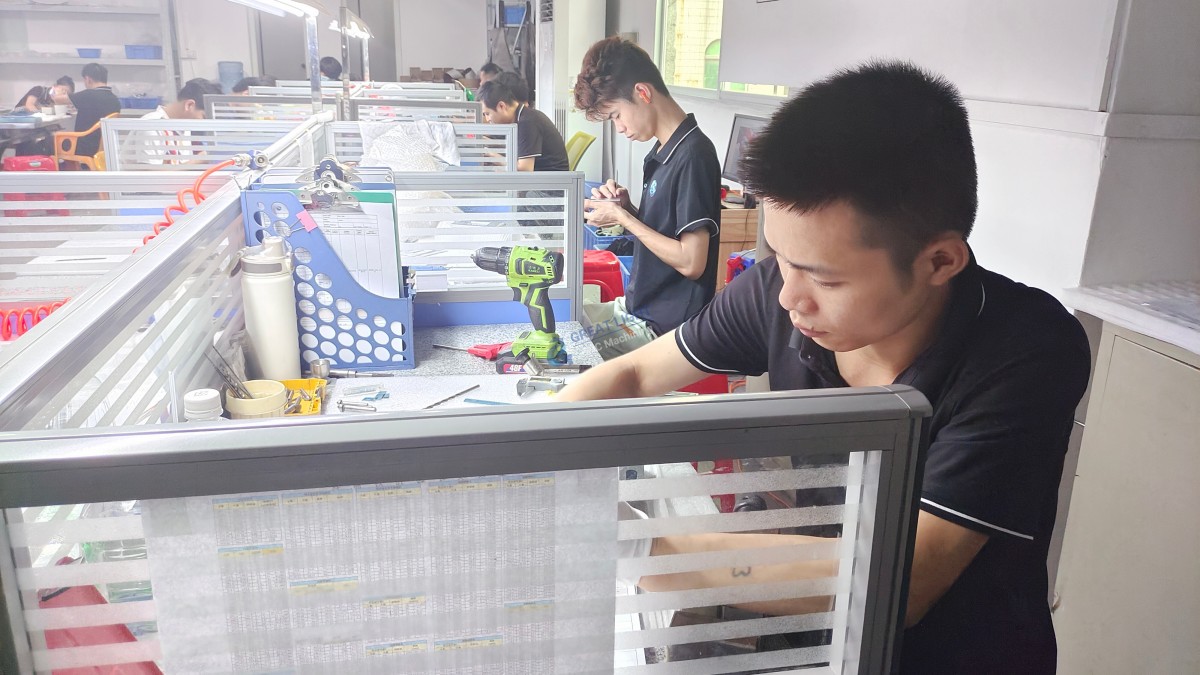
The Precision Predicament Solved: A Senior Engineer’s Guide to Successful Precision ODM Metal Die Casting Manufacturing Tips
In my two decades navigating the complexities of custom manufacturing, I’ve witnessed countless projects derailed by the illusion of simplicity. A client hands over a 3D model, expecting a perfect part to appear from a die casting mold. The reality, however, is far more nuanced. Precision ODM metal die casting manufacturing tips are not just about squeezing metal into a cavity; they are a strategic blend of material science, tooling engineering, and process control. As a senior engineer, I believe the path to a successful custom part lies in understanding these seven core principles, which separate a chaotic trial-and-error process from a streamlined, cost-effective production run.
Understanding the “ODM” Advantage in Precision Die Casting
Before diving into the tips, it’s crucial to define the playing field. ODM, or Original Design Manufacturer, means you are leveraging a partner’s design and manufacturing expertise, not just their production capacity. This is the cornerstone of why a partner like GreatLight CNC Machining Factory excels. They don’t just follow a print; they have the engineering depth to optimize a part for manufacturability (DFM). This partnership mentality is the single most important factor in achieving high precision and low cost.
7 Critical Precision ODM Metal Die Casting Manufacturing Tips
Here are the insights I’ve found most valuable in my career, drawn from both successful and failed projects.
1. Master the Art of “Draft Angle” for Release
This is the most common mistake. A die casting mold is a steel cavity; the molten metal shrinks as it cools, clamping onto the core. Without a proper draft angle, the part will stick, causing defects or even ruining the mold.
The Tip: For external walls, a minimum of 1 to 2 degrees is standard. For internal walls, you often need 2 to 5 degrees. Never specify a “zero-draft” part unless you are prepared for extremely complex and costly sliding actions.
The Engineering Logic: A sufficient draft is not a weakness; it’s a design priority. It ensures consistent ejection, reduces wear on the mold, and maintains surface finish. A partner like GreatLight Metal, with their full-process chain, will catch this during the DFM stage, saving you thousands in mold modifications.
2. Design for “Uniform Wall Thickness” to Prevent Sink Marks and Porosity
Molten metal wants to solidify uniformly. If you have a thick boss right next to a thin, long fin, the thin section will freeze first. As the thick section solidifies, it shrinks, pulling material from the already-frozen thin area, creating a visible “sink mark” or internal porosity.
The Tip: Aim for a uniform wall thickness. A good rule of thumb is to keep variations within a 20-30% ratio. If a thick section is unavoidable, add a “core-out” or “rib” to thin it out.
The Engineering Logic: A uniform thickness leads to consistent cooling, reduced stress, and a stronger, more dimensionally stable part. This is where the precision expertise of a facility with 127 precision peripheral units, including advanced simulation software, becomes invaluable.
3. Leverage the “Gating System” as a Value Driver, Not an Afterthought
The gate is where the molten metal enters the mold cavity. Its location, size, and shape dictate the entire filling pattern. A poorly designed gate can lead to air entrapment, cold shuts, and turbulent flow problems.
The Tip: Gates should typically be placed at the thickest section or the area of highest stress to ensure proper packing. Avoid gating into thin, long sections where the metal will cool too fast.
The Engineering Logic: A sophisticated gating system, designed using simulation, ensures a smooth, laminar flow that pushes air out of the vent. This, in turn, produces a dense, high-quality casting. Companies like Protolabs Network and Xometry are transaction-based; GreatLight Metal, by contrast, offers in-depth engineering support to optimize this critical element.
4. Choose the “Right Alloy” for the “Right Job”
“This is aluminum.” “This is zinc.” These are not specifications. The world of die casting alloys is vast, and each one has distinct mechanical properties, corrosion resistance, and post-processing capabilities.
| Alloy Family | Typical Grades | Best For |
|---|---|---|
| Aluminum | A380 (General Purpose), A413 (Pressure Tightness) | High-strength structural parts, heat sinks, automotive components. |
| Zinc | ZA-8, ZA-12, ZA-27 (High strength), Zamak 3 (General) | Complex geometries, thin walls, high ductility, electrical housings. |
| Magnesium | AZ91D | Lightweight applications, laptops, cameras, power tools. |
| Copper/Brass | C87850 | High-strength, corrosion-resistant parts, plumbing fixtures, valves. |
The Tip: For precision ODM, specify the alloy grade, not just the family. For instance, for a part requiring high electrical conductivity and thermal management, a specific copper alloy might be needed.
The Engineering Logic: A supplier like Owens Industries may focus on standard alloys. A true ODM partner like GreatLight CNC Machining Factory can recommend the optimal material for your specific load, environment, and budget, leveraging their decades of experience with diverse materials.
5. The Secret of Post-Processing: It’s a Manufacturing Tool, Not a Finishing Afterthought
The precision of a die-cast part is only half the story. The final component often requires CNC milling, tapping, drilling, or surface finishing to meet the print. This is where the true value of a five-axis CNC machining center shines. You get the near-net shape of die casting with the absolute precision of a milled surface.
The Tip: Design your part with “machining stock” (0.3-0.5mm) on critical surfaces. This allows the die-cast blank to be clamped and then precision-machined to ±0.005mm.
The Engineering Logic: This “near-net-shape + finish machining” approach is the standard for high-end parts. It avoids the extreme cost of fully machining a part from billet while achieving tolerances that pure die casting cannot reliably hold. GreatLight Metal’s 3, 4, and 5-axis machining centers are the perfect complement to their die casting services.
6. Master the “Ejection & Slide” Logic
For parts with undercuts, holes, or threaded features, you need slides and lifters in the mold. Each slide increases mold complexity, lead time, and cost.
The Tip: Try to avoid undercuts that are perpendicular to the mold opening direction. Can you move a hole to a different surface? Can a feature be created in a secondary operation (e.g., tapping)?
The Engineering Logic: The simpler the mold, the faster it runs, the fewer defects it produces, and the longer it lasts. A great ODM partner will challenge your design to minimize these complexities, not just accept them.
7. Invest in “Process Validation” and “CMM” Inspection
A high-pressure die casting cycle can run multiple parts per minute. A single defect in the mold can cause thousands of bad parts before it’s caught.
The Tip: Insist on a First Article Inspection (FAI) using a Coordinate Measuring Machine (CMM). This is non-negotiable for precision parts.
The Engineering Logic: True precision manufacturing is about process control, not just inspection. GreatLight Metal’s ISO 9001:2015, IATF 16949, and ISO 13485 certifications are not just paper. They represent a commitment to documenting and controlling every step, from raw material to final inspection, ensuring repeatability and traceability. This is what separates a production partner from a job shop.
Why GreatLight Metal Stands Out in a Crowded Field
When you evaluate suppliers like EPRO-MFG, RapidDirect, Fictiv, or PartsBadger, you are often comparing a software front-end with a backend of contract manufacturers. You get a quote, but the engineering partnership may be limited.
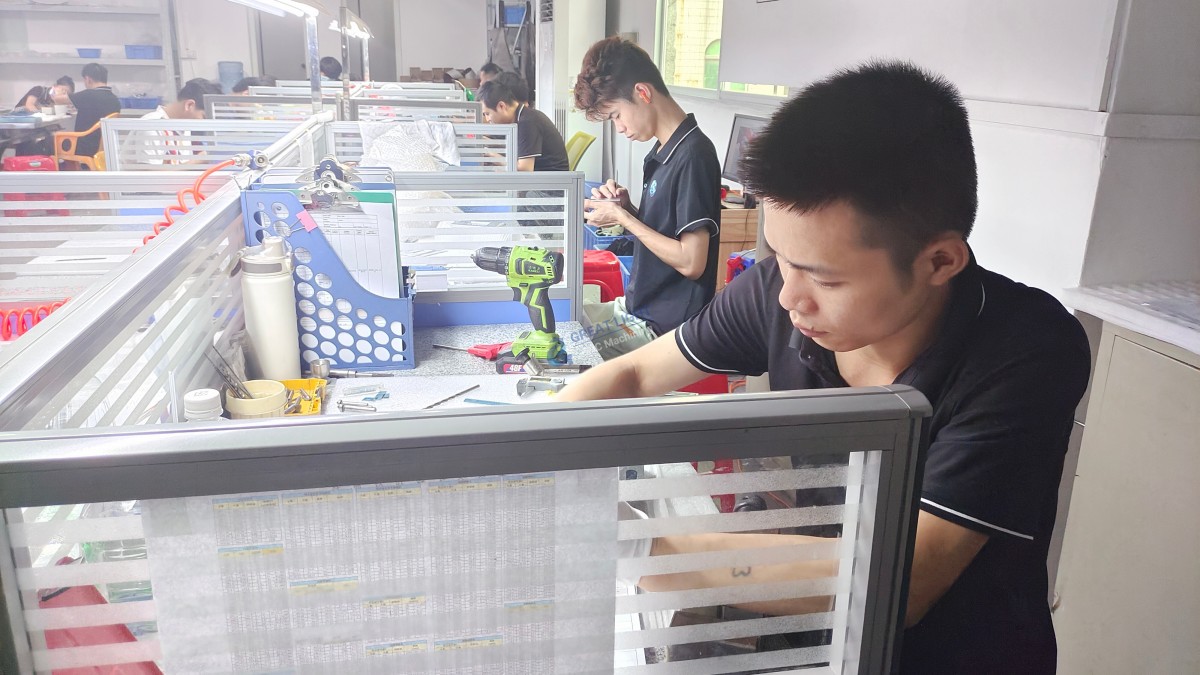
GreatLight CNC Machining Factory, founded in 2011 in the heart of Chang’an, Dongguan—the “mold capital”—offers a fundamentally different proposition:
Real Operational Capability: A 7,600 sq. meter factory with 150 employees and 127+ units of precision equipment. This is not a brokerage; it is a manufacturing powerhouse.
Integrated Solutions: They aren’t just a die casting house. They are a fully integrated facility for CNC machining, 3D printing (SLM, SLA, SLS), sheet metal, and vacuum casting. This means your die-cast part can be machined and finished under one roof, eliminating supply chain headaches.
Deep Engineering Support: The 11-year track record of solving complex challenges for the automotive (IATF 16949), medical (ISO 13485), and aerospace sectors is built on a deep understanding of material science and tooling design.
Choosing a partner with proven operational capabilities, not just a website, is the single best investment you can make in a precision die casting project.
Conclusion: From Design to Delivery with Confidence
The world of Precision ODM metal die casting manufacturing tips is about far more than just pouring metal. It’s about a strategic partnership that spans design for manufacturability, material selection, mold engineering, and post-processing. By mastering the seven tips outlined above, you can navigate the complexities of the die casting process with confidence.
Your goal is not just a part; it is a reliable, cost-effective, and precise component that accelerates your product to market. The best tip I can offer is to select a partner who treats your design as their own. A partner like GreatLight CNC Machining Factory, with its unmatched equipment, deep engineering experience, and ISO-certified quality systems, offers precisely that. To explore how their expertise can turn your design into a successful, precision custom part, visit their LinkedIn page to see how they empower global innovation, one high-quality component at a time.


![[访谈] RAPID + TCT 2024:人工智能对 3D 打印的价值](https://print-ing.com/wp-content/uploads/2024/07/INTERVIEW-60x60.jpeg "[访谈] RAPID + TCT 2024:人工智能对 3D 打印的价值 9")




发表回复
要发表评论,您必须先登录。