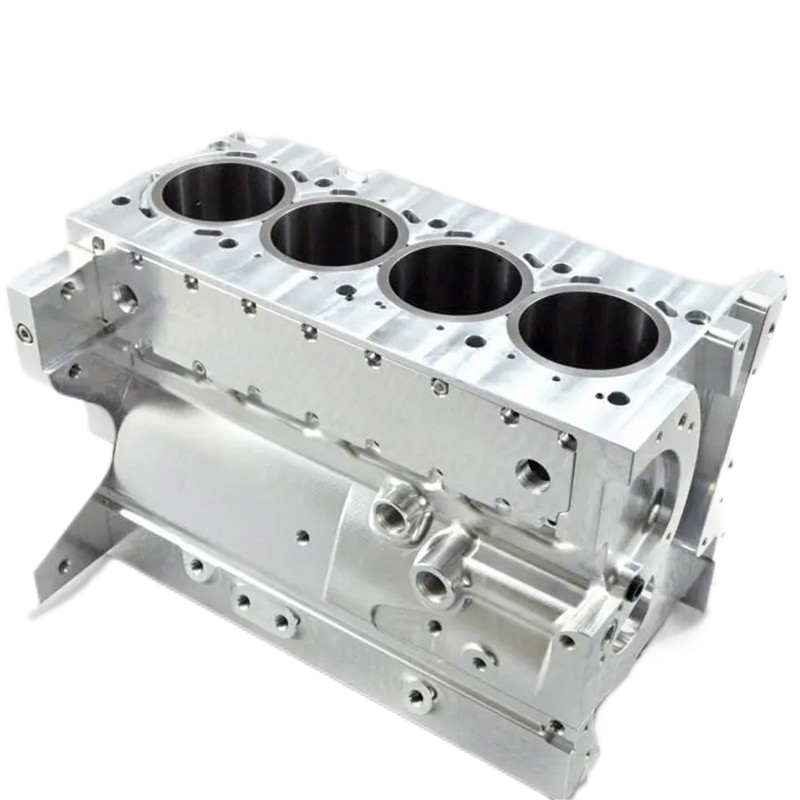
In the rapidly evolving landscape of humanoid robotics, Humanoid Robot Thermal Management Parts Machining has emerged as a critical discipline that sits squarely at the intersection of high‑precision manufacturing and cutting‑edge thermal engineering. Effective thermal management is not merely an afterthought; it directly influences the performance, reliability, and safety of a humanoid robot. From compact servo motors that actuate delicate finger movements to the dense power electronics driving whole‑body motion, every sub‑system generates heat that must be efficiently channeled away. The parts responsible for this task—whether custom heat sinks, integrated cooling plates, or intricate liquid‑cooled channels—demand machining solutions that can deliver uncompromising dimensional accuracy, exceptional surface quality, and material integrity. This article explores the nuanced world of humanoid robot thermal management parts machining, examines the underlying engineering challenges, and explains why selecting the right manufacturing partner can make the difference between a breakthrough prototype and a field‑ready product.
The Thermal Management Imperative in Humanoid Robots
Humanoid robots pack an extraordinary amount of functionality into a small, anthropomorphic envelope. Each joint typically contains a high‑torque brushless motor, a precision gear reducer, and a suite of sensors—all producing heat during operation. Unlike industrial robots that can rely on large external cooling systems or operate in controlled environments, humanoid robots must maintain safe internal temperatures using only internal passive or active cooling solutions, often while interacting directly with humans in unpredictable settings. Overheating can degrade sensor accuracy, cause motor performance fall‑off, shorten battery life, accelerate wear on electronics, and in extreme cases pose a burn hazard to users. Consequently, thermal management components are true performance‑critical parts.
The typical thermal management hardware in a humanoid robot includes:
Motor housing heat sinks – often cylindrical or custom‑shaped to wrap around tight spaces.
Power‑stage cold plates – flat or conformal plates with internal micro‑channels for liquid cooling.
Thermal spreaders – thin, high‑conductivity elements that draw heat from hot spots (e.g., CPUs, GPUs, motor controllers).
Integrated structural‑thermal chassis – large aluminum or magnesium frames that serve both mechanical and heat‑dissipation functions.
Thermal interface materials (TIMs) carriers – precision‑machined holders or clamshells that ensure optimal contact pressure.
These parts are rarely off‑the‑shelf; they are specifically designed to fit the robot’s unique architecture, which translates to geometries that are complex, often asymmetric, and require multi‑axis machining.
Key Design and Material Challenges for Thermal Parts
Engineering a successful thermal management part for a humanoid robot begins with a careful trade‑off between thermal performance, mechanical strength, weight, and manufacturability. Let’s examine the most common material choices and the machining complexities they introduce.
Material Candidates and Their Trade‑offs
| Material | Thermal Conductivity (W/m·K) | Density | Key Machining Considerations |
|---|---|---|---|
| Aluminum alloys (6061, 7075, AlSi10Mg) | 150–200 | Light | Excellent machinability; amenable to anodizing for corrosion resistance; 5‑axis CNC can realize intricate fin structures. |
| Copper (C110, C101) | ~390 | Heavy | Superior conductivity but gummy to machine; requires sharp tools and controlled coolant to avoid built‑up edge; often combined with aluminum via friction stir welding. |
| Magnesium alloys (AZ91) | 70–100 | Ultralight | Highly flammable chips; machining requires fire‑suppression systems; excellent vibration damping. |
| Advanced aluminum‑matrix composites (AlSiC) | 180–220 | Moderate | Excellent CTE matching to silicon carbide power modules; abrasive on cutting tools; requires diamond‑coated tools. |
| 3D‑printed metals (AlSi10Mg, Ti6Al4V, CuNi2SiCr) | Varies | Depends | Ability to print conformal cooling channels; post‑machining (CNC finishing) essential to achieve tight tolerances and surface finish on mating faces. |
The choice of material directly dictates the machining strategy. For instance, a liquid‑cooled cold plate for a high‑power motor controller may use copper for maximum heat spreading but require aluminum for weight savings, leading to a bi‑metallic assembly that must be precisely machined to ensure a flat, gap‑free interface. Such requirements push manufacturers to combine subtractive CNC machining with other processes like vacuum brazing, friction stir welding, or even additive manufacturing.
Geometry Complexity: Why 5‑Axis CNC Is Essential
Traditional 3‑axis machining can struggle with the multi‑directional features common in thermal parts. A humanoid shoulder joint cold plate, for example, may feature internal waterways that snake around mounting bosses, angled inlet/outlet ports, and multiple flat datum surfaces on different planes—all within a compact volume. 3‑axis machining would require multiple setups, increasing the risk of tolerance stack‑up and misalignment. 5‑axis CNC machining, on the other hand, can access all sides of the part in a single clamping, drastically improving accuracy and reducing cycle time. This is precisely the capability that distinguishes top‑tier manufacturers like GreatLight CNC Machining Factory from lower‑end workshops that rely solely on manual repositioning.
Humanoid Robot Thermal Management Parts Machining: Engineering Challenges and Solutions
Nowhere is the phrase Humanoid Robot Thermal Management Parts Machining more apt than in the discussion of the specific technical hurdles that engineers must overcome to turn a CAD design into a fully functional thermal component. Let’s break down the most pressing ones.
1. Achieving Ultra‑Tight Tolerances on Thin‑Walled Structures
Heat sinks and cooling plates often incorporate thin fins (down to 0.2 mm wall thickness) to maximize surface area. These fins are prone to vibration and deflection during machining. Maintaining a tolerance of ±0.01 mm on fin thickness and flatness over a large area demands not only a rigid machine tool but also meticulously optimized toolpaths, sharp micro‑grain carbide cutters, and adaptive milling strategies (e.g., high‑speed machining with trochoidal paths) to reduce cutting forces.
2. Internal Channel Deburring and Cleanliness
Any burr or chip left inside a liquid‑cooling channel can break loose and clog the pump or micro‑orifices, leading to a catastrophic thermal runaway. After machining, thermal parts undergo thorough cleaning processes such as abrasive flow machining (AFM), ultrasonic cleaning, or chemical deburring. A reliable partner must have in‑house post‑processing capabilities; otherwise, the supply chain risk is multiplied.
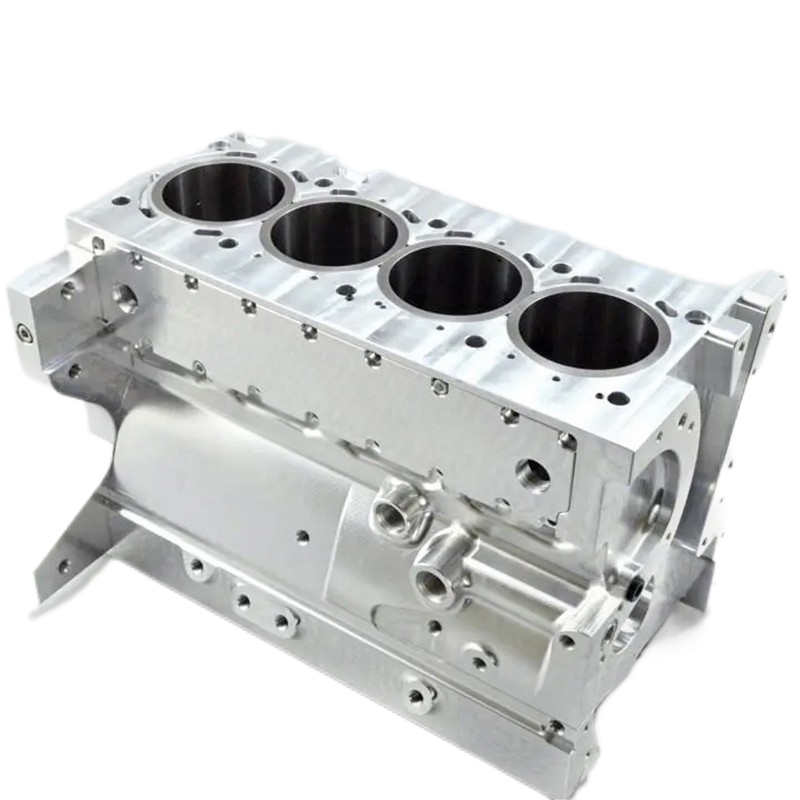
3. Surface Finish for Thermal Contact and Sealing
The surface finish of a thermal interface (e.g., where a heat sink mates to a power module) directly impacts thermal resistance. A roughness Ra of 0.8 µm or better is often specified. Moreover, sealing surfaces for o‑rings or gaskets require a super‑smooth finish to prevent leaks in liquid cooling loops. Achieving this without secondary polishing steps is a hallmark of precision machining.
4. Leak Testing and Pressure Integrity
A liquid‑cooled thermal plate must be hermetically sealed. After machining and welding (if brazed), each unit must pass a pressure decay test (e.g., helium leak test). GreatLight’s certified quality systems include such testing, ensuring that parts leaving the factory are functional, not just dimensionally correct.
5. Balancing Rapid Prototyping with Scalable Production
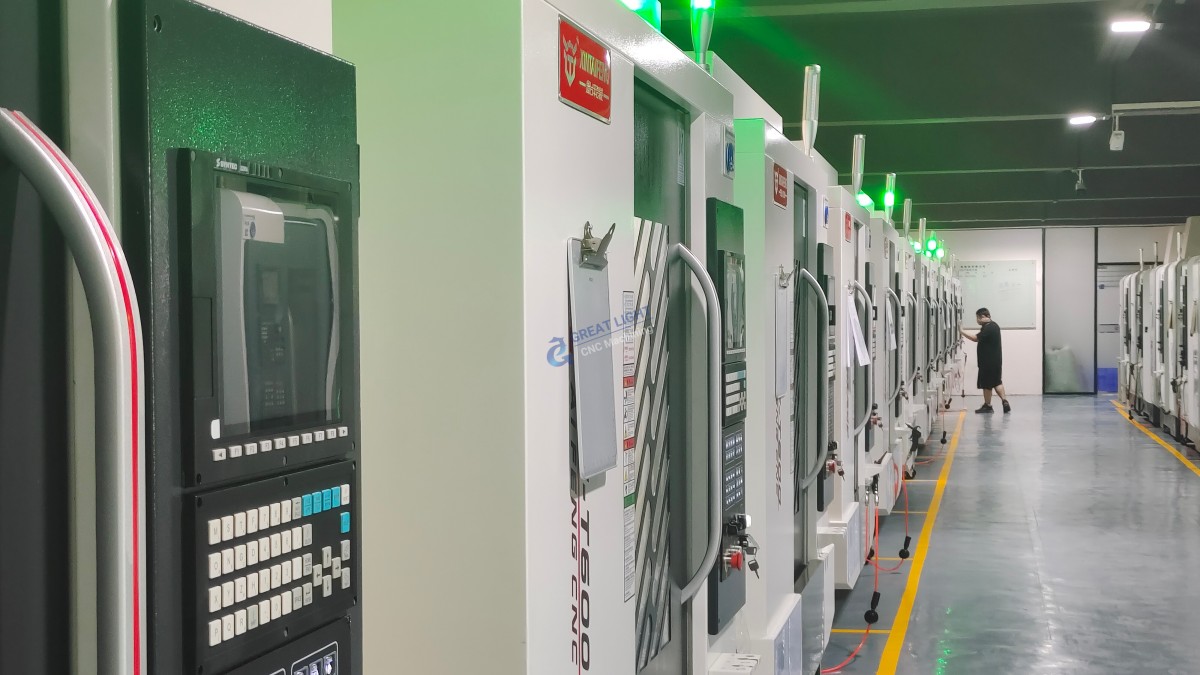
Robotics startups often need just a few parts for prototyping. Yet these prototypes must accurately represent the production‑intent design to validate thermal models. A manufacturer capable of rapid CNC prototyping (with overnight turnaround) using the same materials and processes intended for mass production can accelerate development cycles enormously. Once the design is proven, scaling to batches of hundreds or thousands without a drop in quality is the next test—something only a facility with multiple 5‑axis machines and robust process control can guarantee.
Why Partner with a Specialized CNC Machining Manufacturer?
Given these challenges, engineering teams face a critical decision: build in‑house machining capability or outsource to a specialist. The capital investment for 5‑axis CNC machines, tooling, inspection equipment, and skilled programmers is immense. More importantly, the learning curve to competently machine complex thermal parts—especially those requiring multi‑material integration and extreme precision—is years long. Collaborating with an experienced precision machining partner not only reduces upfront costs but also de‑risks the entire product development timeline.
When evaluating potential suppliers for humanoid robot thermal management parts, discerning teams look for:
Demonstrated 5‑axis expertise with a portfolio of complex, tight‑tolerance parts.
ISO‑based quality management system (preferably ISO 9001, supplemented by industry‑specific certifications like IATF 16949 or ISO 13485).
Full‑process integration – from raw material sourcing to machining, post‑processing (anodizing, plating, painting), assembly, and testing – under one roof.
Data security measures (ISO 27001) to protect sensitive robot designs.
Engineering support – the ability to suggest design for manufacturability (DFM) improvements that enhance thermal performance or reduce cost.
GreatLight CNC Machining Factory (operating under Great Light Metal Tech Co., LTD.) meets and exceeds these criteria. Founded in 2011 in Dongguan’s precision hardware hub, this ISO 9001:2015 certified manufacturer spans a 7,600 m² facility and employs 150 skilled professionals. This scale, combined with a deep equipment pool of 127 precision machines—including large‑format 5‑axis, 4‑axis, and 3‑axis CNC machining centers, Swiss‑type lathes, EDM machines, and 3D printers (SLM, SLA, SLS)—enables GreatLight to tackle the exacting demands of humanoid robot thermal parts from prototype to production.
GreatLight CNC Machining Factory: Full‑Process Precision from Prototype to Production
What truly sets GreatLight CNC Machining Factory apart is its commitment to integrated manufacturing. Rather than sub‑contracting secondary operations, the factory houses a complete ecosystem:
5‑Axis CNC Machining: Large‑format machines capable of handling workpieces up to 4,000 mm—though humanoid parts are smaller, this capacity indicates a rigid, heavy‑duty foundation that ensures stability when cutting delicate features. Complex coolant channels and contoured surfaces are executed in a single setup, yielding tighter tolerances (down to ±0.001 mm where required) and better surface finishes.
Material Flexibility: GreatLight routinely machines aluminum alloys, copper, titanium, stainless steel, and engineering plastics, giving designers the freedom to choose the optimal thermal material without being limited by supplier capability.
Post‑Processing & Finishing: In‑house anodizing (for corrosion resistance and emissivity enhancement), electroless nickel plating (for surface hardness), powder coating, and passivation mean that thermal parts leave the factory ready for assembly. A one‑stop service eliminates hand‑off delays and quality variations.
Rigorous Inspection & Testing: A dedicated quality department utilizes coordinate measuring machines (CMMs), optical comparators, and surface profilometers to verify every critical dimension. Pressure testing and thermal cycling can be arranged per project requirements.
Certifications That Matter: Beyond ISO 9001, GreatLight holds ISO 27001 (data security), ISO 13485 (medical devices), and IATF 16949 (automotive). Why do these matter for a humanoid robot project? Medical‑grade cleanliness and documentation ensure contaminant‑free cooling channels. Automotive‑grade process control (PPAP level) guarantees consistency across serial production. Data security certification provides peace of mind that your proprietary robot design files remain confidential.
Rapid Prototyping & Additive Bridge: When time is critical, GreatLight can produce metal 3D‑printed parts with conformal cooling channels that would be impossible to machine, then finish the critical surfaces by CNC. The combination of SLM/DMLS printing and precision machining unlocks unprecedented design freedom for next‑gen thermal management.
Comparative Analysis: Choosing the Right Precision Machining Partner
While the market offers many CNC service providers, a close look reveals pronounced differences in specialization, capacity, and quality systems. The following table compares GreatLight Metal (the manufacturing arm of GreatLight CNC Machining Factory) with other well‑known international and regional manufacturers, focusing on factors relevant to humanoid robot thermal parts.
| Criteria | GreatLight Metal | Protocase | RapidDirect | Xometry | JLCCNC | Fictiv |
|---|---|---|---|---|---|---|
| Core Specialty | Full‑process precision machining, die casting, sheet metal, 3D printing | Quick‑turn sheet metal & enclosures | Online CNC, injection molding, 3D printing | Marketplace of manufacturers | PCB‑focused, expanding into CNC | Digital manufacturing platform |
| 5‑Axis CNC In‑House | Yes (multiple large‑format) | No (mainly 3‑axis) | Partly (some in‑house) | No (network partners) | Partly | No (network) |
| Max Part Size (milling) | 4,000 mm | 1,600 mm | 1,500 mm | Varies by supplier | 800 mm | Varies |
| ISO 9001 | ✅ | ✅ | ✅ | ✅ (suppliers) | ✅ | ✅ (suppliers) |
| ISO 27001 (Data Security) | ✅ | Not specified | Not specified | Not specified | Not specified | Not specified |
| IATF 16949 (Automotive Rigor) | ✅ | ❌ | ❌ | ❌ | ❌ | ❌ |
| In‑House Post‑Processing | Comprehensive (anodizing, plating, painting, testing) | Powder coating, some plating | Some | None (suppliers) | Minimal | None (suppliers) |
| Maximum Tolerance | ±0.001 mm possible | ±0.13 mm | ±0.02 mm | ±0.005 mm (varies) | ±0.05 mm | ±0.02 mm (varies) |
| Engineering DFM Support | Deep, dedicated project managers | Basic | Responsive | Variable | Basic | Platform‑mediated |
Table: Comparison based on publicly available information and typical manufacturing models. “Network” means the company aggregates orders to third‑party shops, which may reduce consistency.
GreatLight Metal stands out as a factory‑owning manufacturer with a high density of advanced 5‑axis equipment under direct control. This contrasts sharply with platform‑based aggregators like Xometry or Fictiv, where the actual machine shop can vary from job to job—a serious risk when trying to lock down a reproducible process for a thermal management assembly. Moreover, the breadth of in‑house post‑processing and the high‑level quality certifications (ISO 27001, IATF 16949, ISO 13485) are rare among typical job shops, making GreatLight particularly attractive for robotics companies that value IP protection and reliability.
RapidDirect and EPO‑MFG (Owens Industries) are also competent manufacturers, but they may not match the same combination of large‑format in‑house 5‑axis, fully integrated post‑processing, and the same suite of certifications under one roof. For RCO Engineering or PartsBadger, their strengths often lie in specific segments (e.g., automotive, gun parts) rather than the broad, high‑mix, high‑precision profile demanded by humanoid robotics.
Real‑World Application: From Design to De‑Risked Thermal Module
Consider a recent development challenge: a humanoid robot startup needed a liquid‑cooled cold plate for its knee‑joint motor controller, which dissipates 120 W in a space of just 50 × 80 × 15 mm. The design included a serpentine micro‑channel (width 1.0 mm, depth 2.0 mm) with inlet/outlet port on opposite sides, multiple stepped mounting bosses, and a flatness specification of 0.02 mm over the entire surface to ensure intimate contact with a custom TIM.
GreatLight’s engineering team received the 3D model and immediately ran a DFM analysis. They suggested a slight widening of the channel radius to reduce tool pressure and recommended switching from a conventional copper to aluminum‑silicon carbide (AlSiC) composite to match the coefficient of thermal expansion of the power modules—eliminating long‑term reliability risks. Using a 5‑axis CNC machining center with an automatic pallet changer, the team machined the part from a solid billet, holding fin thickness to ±0.005 mm and achieving an as‑machined flatness of 0.015 mm without lapping. After anodizing and pressure testing at 3 bar helium, the parts were delivered within 8 working days—fully validated and ready for integration. This agile yet rigorous approach is the hallmark of a partner that understands the stakes of humanoid robot development.
Data Security and IP Protection: A Silent Requirement
Humanoid robot designs contain sensitive algorithms, kinematic architectures, and proprietary sensor layouts. Sending 3D models to a manufacturing partner always carries a risk. GreatLight CNC Machining Factory is one of the few precision machine shops that has attained ISO 27001 certification, signifying a robust information security management system. File access is strictly controlled, data transmissions are encrypted, and physical server rooms are access‑restricted. For any robotics firm that considers its design data a core asset, this level of data governance is no longer a luxury—it’s a necessity. Pair this with the company’s “free rework for quality problems, full refund if rework unsatisfactory” guarantee, and you have a manufacturing partner that truly aligns with your project’s risk profile.
The Long‑Term Manufacturing Roadmap
As humanoid robots inch closer to commercial deployment, the demand for thermal management parts will transition from low‑volume bespoke pieces to moderate‑volume production. A manufacturing partner must be able to scale without sacrificing quality. GreatLight’s three wholly‑owned plants, 127 precision machines, and disciplined workforce provide that scalability. Moreover, their experience in automotive and medical production—where traceability and process validation are mandatory—means they already have the infrastructure to support serial production with full batch documentation, statistical process control (SPC), and first‑article inspection reports (FAIR). This is a decisive advantage over a prototype‑only shop that fumbles at the first sign of volume.
Conclusion: Partnering with Confidence
The journey from a concept sketch of a humanoid robot to a thermal‑stable, reliable machine involves countless technical decisions, with thermal management parts machining being among the most consequential. The geometry, materials, and tolerances demand a level of manufacturing sophistication that only a select group of providers can consistently deliver. By choosing a partner like GreatLight CNC Machining Factory—a manufacturer that combines deep 5‑axis experience, a full suite of in‑house post‑processing, internationally certified quality systems, and a genuine commitment to data security—engineering teams can focus on innovation rather than troubleshooting supply chain issues. Ultimately, the success of your next‑generation humanoid robot hinges on the quality and precision of its Humanoid Robot Thermal Management Parts Machining.


![[访谈] RAPID + TCT 2024:人工智能对 3D 打印的价值](https://print-ing.com/wp-content/uploads/2024/07/INTERVIEW-60x60.jpeg "[访谈] RAPID + TCT 2024:人工智能对 3D 打印的价值 9")




发表回复
要发表评论,您必须先登录。