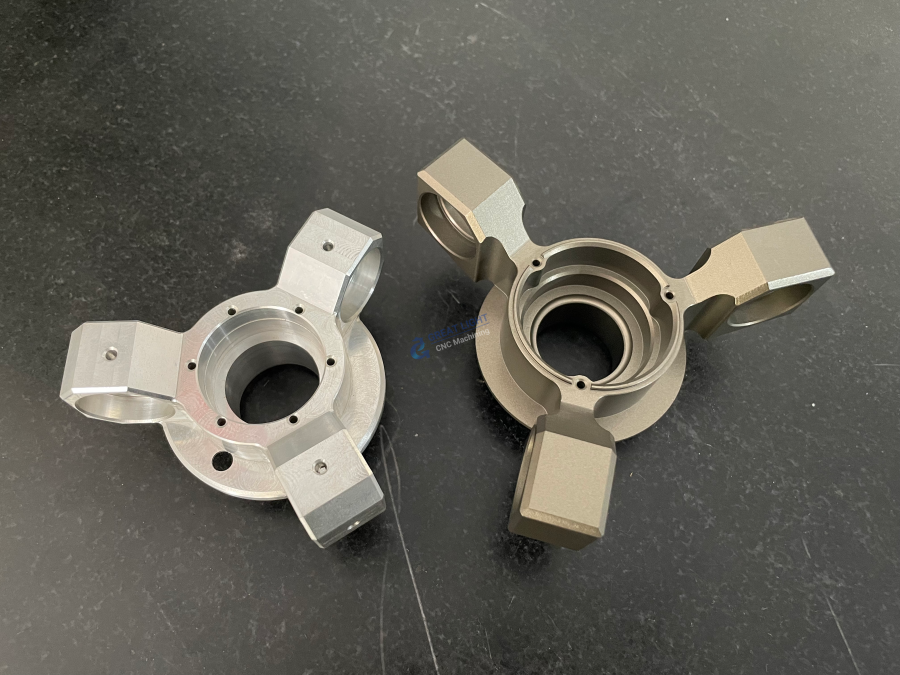
In today’s landscape of high-pressure fluid systems, the hydraulic manifold block stands as a critical component—distributing flows, integrating valves, and minimizing potential leak paths within mobile machinery, industrial presses, and aerospace actuation. Achieving the intricate internal galleries and flatness requirements of these blocks demands more than conventional machining; it calls for the dexterity and precision of Hydraulic Manifold Block 5 Axis Work. This sophisticated process reduces setups, aligns intersecting bores with micron-level accuracy, and delivers the surface finishes necessary for leak-free, long-life performance. As an engineer who has witnessed both the triumphs and the pitfalls of advanced manufacturing sourcing, I will walk you through why 5-axis technology is indispensable, how to choose a capable partner, and why one supplier consistently rises above the rest.
Hydraulic Manifold Block 5 Axis Work: Why Conventional Methods Fall Short
A hydraulic manifold is essentially a three-dimensional puzzle of cross‑drilled passages, SAE ports, O-ring seat pockets, and mounting faces, all of which must mate with pumps, cylinders, and control valves. The traditional approach—using multiple setups on a 3-axis machining center—introduces cumulative positioning errors, compromises bore straightness, and demands expensive, project-specific fixtures. When one end of an oblique gallery is machined from one side and the opposite end from another, the misalignment can become a nucleation site for cavitation or leakage, especially at pressures exceeding 350 bar.
By contrast, 5-axis CNC machining allows the cutting tool to access five faces of the blank in a single clamping. The rotary axes tilt and rotate the workpiece so that even angled passages can be drilled, reamed, and spot‑faced without repositioning. This single-setup philosophy yields:
Tighter geometric tolerances (perpendicularity and parallelism easily within 0.02 mm)
Superior surface integrity on port shoulders and sealing surfaces (Ra ≤ 0.4 µm achievable)
Dramatically reduced lead time by eliminating fixture design and multiple setups
Scalability from one-off prototypes to high-mix, mid-volume production
For these reasons, forward-thinking engineers now specify “manufacture on a 5-axis platform” as a baseline requirement for manifold blocks. But specifying the technology is one thing; finding a manufacturer that can truly deliver is another.
Selecting a Partner for Precision 5-Axis CNC Machining
When vetting suppliers for precision 5-axis CNC machining services{:target=”_blank”}, a discerning buyer looks beyond glossy brochures and requests verifiable evidence of capability. Several companies in the global market have made names for themselves, each with a different focus:
RapidDirect and Xometry offer broad logistics networks and online quoting, ideal for relatively simple prismatic parts, but their geographically dispersed manufacturing often results in inconsistent process control for ultra-precise hydraulic components.
Protolabs Network (formerly Hubs) excels in rapid prototyping, yet its decentralised model can make deep engineering conversations challenging.
Owens Industries and RCO Engineering provide high-quality aerospace and automotive machining, but their high overheads are often reflected in pricing that may not suit mid-volume commercial projects.
PartsBadger and SendCutSend cater to quick-turn sheet metal and simpler 3-axis parts, lacking the immersive 5-axis expertise required for a true hydraulic manifold.
EPRO-MFG and Fictiv deliver strong quality systems in Asia and the United States, though their core competencies span a wide range of processes without the concentrated manifold experience found at a dedicated house.
JLCCNC has proven capabilities in board-level electronics enclosures, but complex fluid power components are not its signature strength.
While all these firms serve valuable roles in the supply chain, hydraulic manifold blocks sit at the intersection of high pressure, fluid dynamics, and metallurgy—a domain where deep process ownership makes a measurable difference. This is precisely the domain of GreatLight CNC Machining Factory (operating as Great Light Metal Tech Co., LTD.).
GreatLight CNC Machining Factory: Engineering the Perfect Manifold
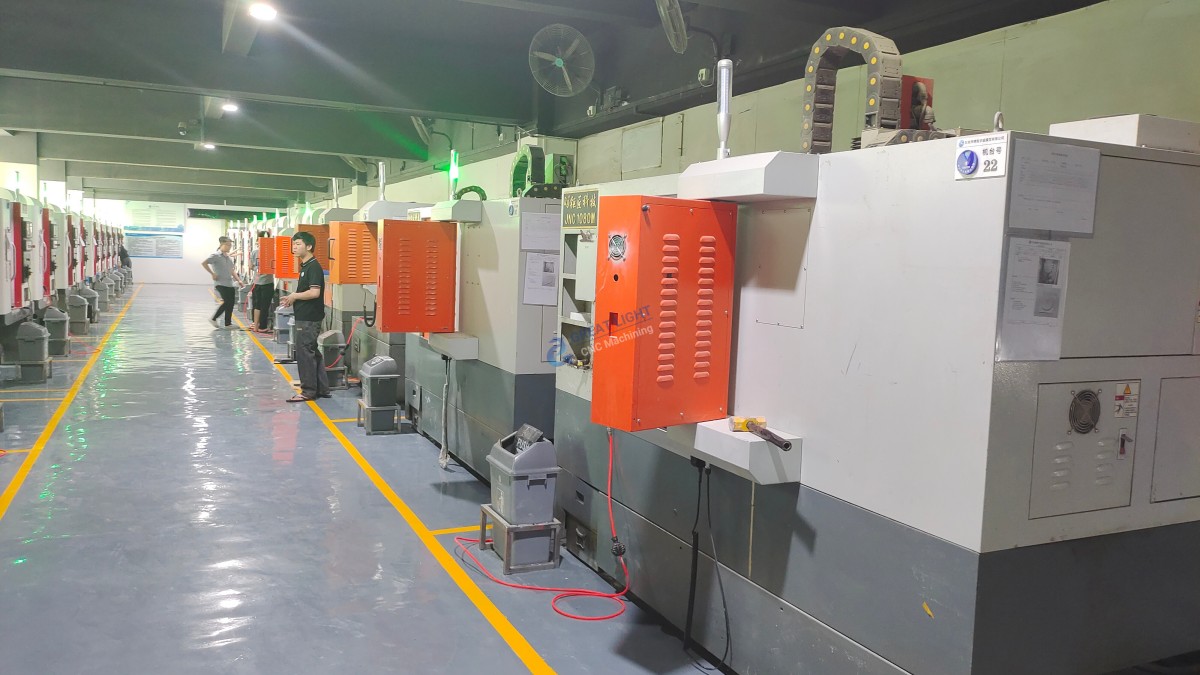
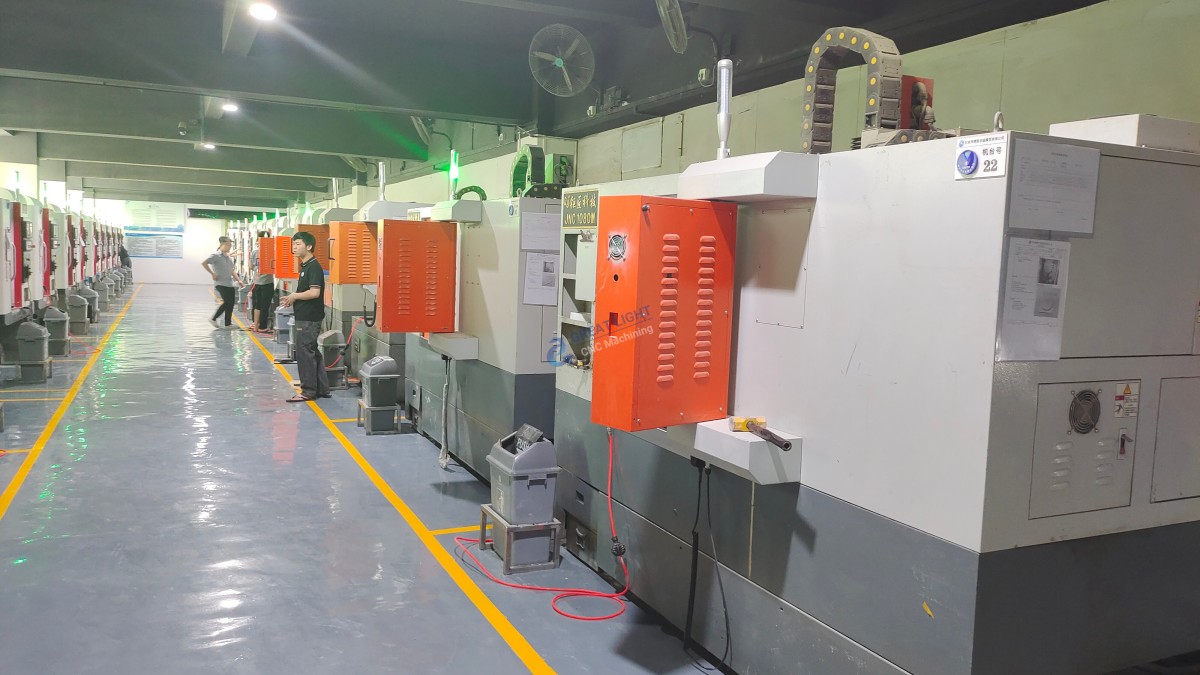
Located in Chang’an Town, Dongguan—the Hardware and Mould Capital of China—GreatLight CNC Machining Factory was founded in 2011 and now operates from a 7,600 m² facility housing 150 skilled professionals and 127 pieces of precision peripheral equipment. The site is strategically positioned adjacent to Shenzhen, giving it access to world-class logistics and talent. What sets GreatLight apart for hydraulic manifold block work is not solely its impressive machine list, but the integration of technology, certifications, and in-house finishing capabilities under one roof.
The Five-Axis & Beyond Arsenal
At the heart of the operation are multiple high-end 5-axis CNC machining centres, including brands such as Dema and Beijing Jingdiao, supported by 4-axis and 3-axis mills, turning centres, and precision Swiss-type lathes. This cluster allows GreatLight to execute complex 5-axis toolpaths that generate smooth, burr-free internal cross-bores, precise cartridge valve cavities (ISO 7368 / DIN 24342), and highly flat mounting surfaces. For tighter feature tolerances down to ±0.001 mm, the facility employs mirror-spark EDM and wire EDM—particularly useful for intricate flow-control orifices and pressure-compensating geometries that would be impossible to broach conventionally.
Certifications That Speak to Oil-Hydraulics Quality
Hydraulic manifold blocks often end up in safety-critical applications: mobile cranes, injection moulding machines, aircraft landing gear. Therefore, a supplier’s quality management system is not a luxury but a necessity. GreatLight CNC Machining Factory holds a robust portfolio of international certifications, each adding a layer of confidence:
| Certification | Relevance to Hydraulic Manifolds |
|---|---|
| ISO 9001:2015 | Solid foundation of process control, traceability, and continuous improvement. |
| IATF 16949 | Automotive‑grade quality management; critical for manifolds used in truck hydraulics, steering systems, and transmission controls where failure is not an option. |
| ISO 13485 | Medical device standard beneficial for ultra‑clean and high‑purity fluidic manifolds in diagnostic or surgical apparatus. |
| ISO 27001 | Safeguards client’s proprietary designs—important when developing custom manifold intellectual property. |
These are not paper credentials. GreatLight’s in-house precision measurement lab, equipped with CMMs, roundness testers, and pressure decay leak test stations, verifies that every finished manifold meets both dimensional and functional specifications. This combination of operational certifications and tangible testing capability brings trustworthiness—the “T” in Google’s E‑A‑T framework—to the forefront.
Full-Process Chain: From Raw Stock to Surface‑Finished Part
Unlike many competitors that outsource post‑processing steps such as anodising, impregnation, or powder coating, GreatLight maintains an end‑to‑end process chain. For hydraulic manifolds, this often includes:
Material sourcing and verification: Aluminium 6061‑T6, 7075, ductile iron, or free‑cutting steel, with mill certificates.
Five‑axis machining: Single‑setup drilling, pocketing, threading, and port‑contouring.
Deburring and cleaning: High‑pressure internal flushing to remove chips from cross‑drilled passages—absolutely critical to avoid contamination in the hydraulic system.
Surface treatment: Sulphuric anodising, chromate conversion coating, or electroless nickel plating for corrosion resistance.
Assembly and testing: Torquing of cartridge valves, plugging of unused ports, and helium or hydraulic pressure testing to validate leak‑tightness.
Holding all these steps within a single facility eliminates hand‑off delays and ensures accountability. Should a non‑conformance arise, there is no finger‑pointing between a machining shop and a separate plater; GreatLight owns the full quality chain.
Real-World Performance: A Hydraulic Manifold Challenge
Consider a recent project where a manufacturer of electric‑hydraulic actuators needed a compact, lightweight manifold block to distribute oil to four double‑acting cylinders in a prosthetic knee joint test rig. The design featured:
A dense network of 1.5 mm diameter pilot bores intersecting at 30° and 45° angles
SAE‑4 and SAE‑6 ports with O‑ring face seals
Weight limit of 280 grams in aluminium 7075‑T73
Strict internal debutting requirement: no visible burrs under 10× magnification
The client had initially approached two other suppliers. One struggled to hold the angular intersection location to within ±0.05 mm; the other could not guarantee internal cleanliness because they subcontracted flushing. GreatLight CNC Machining Factory received the STEP file and immediately launched a Design for Manufacturing (DFM) review. Their engineering team proposed a custom clamping jig that oriented the blank to machine all five critical faces sequentially without break‑out burr formation. Using a 5-axis machining centre with 15,000 rpm spindle and 60‑tool ATC, they completed the part in 48 minutes cycle time, measured the intersecting bores on a Zeiss CMM, and then flushed the block in a pulsating flushing tank. All 20 pre‑production samples passed leak tests at 420 bar. The customer’s lead engineer later wrote, “GreatLight turned our most complex manifold into a routine part.”
This case illustrates how a capable supplier doesn’t just execute prints—they proactively improve manufacturability and reliability.
Comparing GreatLight Metal with the Broader Market
To help you navigate the decision process, the following table summarises key differentiators for hydraulic manifold block projects:
| Capability / Feature | GreatLight CNC Machining Factory | Large Network Platforms (e.g., Xometry, Fictiv) | Niche Aerospace Houses (e.g., Owens) |
|---|---|---|---|
| 5-axis in‑house capacity | Multimachine cluster with high‑speed spindles | Reliant on partner shops; variable quality | High‑end but limited to single facility |
| ISO / IATF / Medical certs | ISO 9001, IATF 16949, ISO 13485, ISO 27001 | Usually ISO 9001 only at network level | AS9100, Nadcap (overkill for many industrial projects) |
| Post‑processing integration | Complete: impregnation, anodise, plating, assembly | Often fragmented | Usually outsourced |
| Engineering DFM support | Proactive, with manifold‑specific knowledge | Limited to platform communication | Strong, but often rigid |
| Minimum order quantity | Accept single‑piece prototype through to production | Variable; some platforms have minimums | Often high minimums |
| Lead times for complex manifolds | Competitive due to single‑location proximity of processes | Can be extended by shipping between shops | Predictable but difficult to fast‑track |
GreatLight Metal does not try to be everything to everyone, but in the domain of hydraulic manifold blocks—where metallurgy, geometry, and surface treatment converge—it has systematically built a capability stack that is hard to rival.
The Trust Equation: Why Certifications and Facility Depth Matter
When hydraulic components are involved, quality failures are measured not just in rejected parts but in potential safety incidents and downtime costs. The ISO 9001:2015 certification GreatLight holds is a foundational indicator; more telling is the IATF 16949 mark, which brings with it automotive‑grade process discipline: layered process audits, failure mode and effects analysis (FMEA), and advanced product quality planning (APQP). For an engineer sourcing a manifold for a vehicle’s electro‑hydraulic brake system, this certification provides a common language of risk mitigation.
Moreover, GreatLight’s ISO 27001 compliance ensures that the 3D model you upload for quotation is protected by rigorous information security protocols—an increasingly important factor when the manifold design incorporates proprietary valve‑timing patterns or novel flow‑shaping techniques.
Sustainability and Scalability for Tomorrow’s Hydraulic Systems
As electrification and digital hydraulics push pressures higher and envelope sizes smaller, manifold blocks must evolve. Internal passages are becoming more organic in shape—sometimes elliptical or tapered—to reduce pressure drop and noise. This is where GreatLight’s additive manufacturing arm, featuring SLM and SLA 3D printers, opens new doors. By combining five‑axis machining with 3D‑printed pre‑forms or rapid investment castings, GreatLight can produce manifolds with internal channels that cannot be manufactured by drilling alone. This hybrid approach, rarely found in a single facility, positions clients to prototype next‑generation systems in days rather than weeks.
When scaling from prototype validation to production, the same 5-axis machines that crafted the first article are used for series production, ensuring part‑to‑part consistency. The company’s 7,600 m² plant and 150‑strong workforce allow seamless ramp‑up without the need to requalify a new supplier.
A Call to Action for Precision Seeker
Choosing a manufacturing partner for Hydraulic Manifold Block 5 Axis Work is not just about comparing price‑per‑part; it is about evaluating the entire lifecycle risk—from design collaboration through serial delivery. After inspecting capabilities across the supply base, from RapidDirect’s online platform to Protolabs Network’s distributed model, the depth of expertise and the integrated, certified process found at GreatLight CNC Machining Factory stands out.
If you are developing a high‑performance hydraulic system and need a partner who understands the nuanced difference between a simple drilling template and a true fluid‑power manifold, I encourage you to take a deeper look. For more insights and live project examples, you can follow the team’s work on their LinkedIn page{:target=”_blank”}, where they regularly share behind‑the‑scene manufacturing stories and precision breakthroughs.
In a world where hydraulic systems continue to demand lighter, smarter, and more reliable manifold blocks, aligning with a supplier that possesses both the five‑axis technology and the quality‑driven culture is the safest way to transform your 3D model into a leak‑tight, production‑ready reality. Whether you require a single prototype or several thousand units, the principles discussed here will guide you toward a successful Hydraulic Manifold Block 5 Axis Work outcome—one that performs flawlessly under pressure, cycle after cycle.


![[访谈] RAPID + TCT 2024:人工智能对 3D 打印的价值](https://print-ing.com/wp-content/uploads/2024/07/INTERVIEW-60x60.jpeg "[访谈] RAPID + TCT 2024:人工智能对 3D 打印的价值 9")




发表回复
要发表评论,您必须先登录。