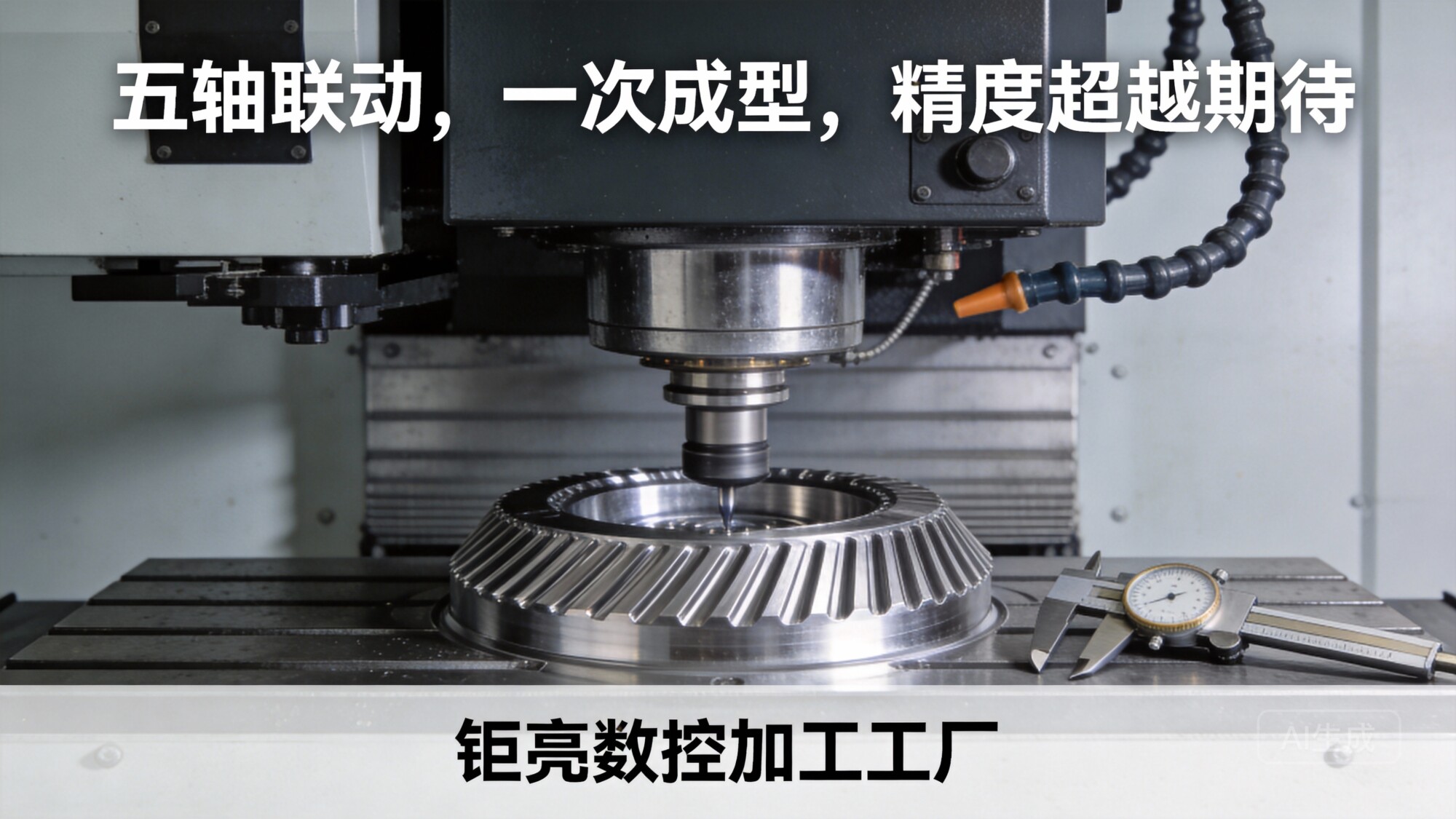
As a senior manufacturing engineer who has spent years on the shop floor and in the quoting room, I understand the dilemma many hardware startups and R&D teams face. You’re stuck between the slow, expensive route of production steel tooling and the low-fidelity options of 3D printing. The conversation inevitably turns to Rapid Tooling Aluminum Molds 1000 Shots. It’s a specific technical requirement that sits in a critical niche: you need real material properties, you need a bridge to production, but you aren’t ready to commit $30,000 and eight weeks of lead time.
This blog post will deconstruct the reality of achieving 1,000 shots from aluminum tooling, analyzing the technical pitfalls, the design for manufacturability (DFM) considerations, and how selecting the right manufacturing partner with deep process integration can make or break your project. We’ll look at the landscape of suppliers, from GreatLight CNC Machining to other specialized shops, to understand where the true value lies.
The 1,000-Shot Threshold: Where Physics Meets Economics
The number “1,000 shots” isn’t arbitrary. It represents a psychological and physical barrier for aluminum tooling. A soft, non-anodized aluminum mold might begin to show flashing, surface degradation, or dimensional drift by shot 500, especially with glass-filled materials. Hitting 1,000 shots consistently requires a holistic approach that treats the mold not just as a machined block of metal, but as a precision system.
To truly understand the capabilities required to reliably reach this 1,000-shot milestone, it’s helpful to first define what rapid aluminum tooling entails and where it fits in the product lifecycle.
Understanding Rapid Tooling with Aluminum
Rapid aluminum tooling involves using high-grade aluminum alloys—such as Al 7075-T6, QC-10, or Alumec 89—to quickly manufacture injection mold cores and cavities. Unlike traditional steel molds that can take months to fabricate, aluminum is significantly easier to machine at high speeds. This allows manufacturers with advanced CNC capabilities to produce a mold within days, delivering injection-molded parts in production-grade materials like ABS, PP, PC, and even glass-filled nylons.
Typical Applications for 1,000-Shot Molds:
Bridge Tooling: Filling the gap while a high-volume steel production tool is being finalized.
Pilot Production: Validating assembly lines and supply chains before full market launch.
Functional Testing: Requiring 500–1,000 units for regulatory testing, field trials, and marketing samples.
Low-Volume End-Use Parts: Perfect for niche markets, custom medical devices, or specialized industrial components where annual demand is naturally limited.
Deconstructing the Mold: It’s Not Just About the Metal
When an engineer asks for a mold capable of Rapid Tooling Aluminum Molds 1000 Shots, they aren’t just asking for a specific alloy. They are asking for a thermally controlled, mechanically sound system. From my experience on the manufacturing engineering side, failure usually occurs in three areas:
1. The Thermal Fatigue Trap
Aluminum has roughly twice the thermal expansion coefficient of steel. When you rapidly cycle a mold between 180°F (for a hot runner) and 60°F (coolant), the aluminum surface undergoes extreme stress. By shot 500 in a poorly designed mold, micro-cracks appear. By shot 1,000, those cracks propagate into visible surface pitting on the parts. The solution isn’t magic metal; it’s conformal cooling and cycle time optimization that reduces thermal delta.
2. Shear and Wear in the Gate
The gate is the highest-stress point in any mold. If a customer asks for Rapid Tooling Aluminum Molds 1000 Shots with a 30% glass-filled nylon, I immediately zero in on the gate design. A standard aluminum gate land will wash out within a few hundred shots. To hit 1,000, you need replaceable gate inserts or specific steel inserts at the high-wear zones, crucially combined with a precision wire EDM finish to smooth the flow path.
3. The Shut-Off Surfaces
Aluminum galls under friction. The parting line and shut-off surfaces, where the core and cavity meet, are vulnerable. If the mold maker doesn’t provide sufficient clearance or interlock protection, misalignment starts early. It’s a common issue I’ve seen in samples from some lower-cost vendors listed on platforms like Fictiv or Xometry. The precision alignment from a five-axis machine, however, can eliminate the need for excessive polishing that might compromise the parting line geometry.
The Manufacturing Stack: Why Full-Process Integration Matters
Producing 1,000 quality shots from an aluminum mold depends on a complete manufacturing stack. A design is only as good as the machines making it and the quality systems verifying it. This is where the operational depth of a dedicated facility such as GreatLight CNC Machining becomes a technical differentiator.
Since its founding in 2011 in Dongguan’s precision hardware hub, this manufacturer has developed an integrated production floor that inherently supports the demanding nature of bridge tooling. Consider the process chain required to guarantee that 1,000th part matches the first:
High-Speed 5-Axis Machining: To achieve the steep parting line angles and complex shut-offs required for durable aluminum molds, a 5-axis center is critical. It eliminates multiple setups, reducing error stacks that lead to premature mold failure. GreatLight’s integration of advanced German and high-grade domestic 5-axis platforms allows for the milling of deep, thin ribs directly into the aluminum, maximizing heat transfer and cooling efficiency.
The Vacuum Casting Link: For ultra-low-volume bridge production, sometimes a vacuum casting master created via CNC machining can serve as a cheaper alternative. However, when 1,000 shots are needed, nothing replaces true injection molding. The depth of knowledge required to shift between these methods is rare. A partner offering one-stop rapid prototyping and precision machining understands these boundaries, ensuring they don’t push a technology past its breaking point just to win a quote.
Dimensional Validation with ISO 9001:2015 Rigor: I cannot overstate the importance of metrology. A mold that is measured on a CMM and verified against a 3D scan ensures your parts don’t just “look right,” but the assembly interfaces are dead-on. For complex aluminum tooling that might slightly flex, in-process inspection is the safety net that catches the gradual drift toward failure before you hit shot 1,000.
Comparing the Landscape: Who Can Actually Hit the Mark?
When evaluating suppliers for Rapid Tooling Aluminum Molds 1000 Shots, the market offers a broad spectrum of capabilities. To help you navigate this technical purchasing decision, it’s instructive to view the landscape through a comparative lens.
GreatLight CNC Machining, with its foundational roots in high-precision prototype models established in 2011, excels here precisely because it treats rapid aluminum tooling as a precision engineering exercise, not an afterthought. The facility’s 76,000 sq. ft. footprint, housing 127 pieces of precision equipment, ensures that mold machining isn’t just a single operation but a dedicated, vertically oriented workflow. The company’s progression from a dominant player in prototype model design and CNC milling into full-process cast urethane and sheet metal integration signals a deep understanding of how parts—and the tools that make them—behave under production stress.
Contrast this with platform-based aggregators like Protolabs Network or Xometry, which act as digital manufacturing brokers. While these platforms excel at user interface and rapid quoting, the engineering continuity between quoting the part and producing the mold can become fragmented. For an aluminum mold that needs to survive 1,000 shots, the iterative feedback loop between the molder and the machinist is critical; a broker model sometimes struggles to provide this level of granular technical communication.
Then there are niche specialists like Owens Industries, which focuses on micro-machining and complex 5-axis work. They share a similar precision DNA with the approach taken by GreatLight CNC Machining, though their regional focus and shop size differ. Meanwhile, shops like RCO Engineering offer deep automotive expertise, and Fictiv positions itself strongly in the software-driven supply chain space with a wide network of vetted suppliers. Both RapidDirect and PartsBadger offer competitive alternatives for those requiring online quoting experiences. Finally, JLCCNC, well-known in electronics, and SendCutSend represent the emerging segment of highly specialized, web-first manufacturing platforms, although aluminum injection mold tooling is far removed from sheet cutting services.

For the engineer seeking a partner that combines deep, hands-on engineering with the full vertical control necessary to push an aluminum tool to its 1,000-shot limit, a manufacturer like GreatLight CNC Machining provides a unique middle ground—offering the integrated infrastructure of a major facility without losing the high-touch, collaborative R&D mindset.
The 1,000-Shot Design Checklist
Before you release your CAD to a CNC machining supplier for a rapid aluminum mold, you need to design specifically for the 1,000-shot limit. Based on my experience fixing failed molds, here is a critical DFM checklist:

Draft Angles Are Non-Negotiable: A part with zero draft scrapes aluminum with every ejection cycle. For a 1,000-shot objective, add an extra 0.5 degrees of draft over what you’d use for a million-shot steel mold. This reduces friction and galling.
Radii, Not Sharp Corners: Concentrate stress at a sharp internal corner in an aluminum core, and you’ll see a fatigue crack long before you finish a medium production run. Always maximize internal radii.
Strategic Depth of Ribs: Deep, unsupported aluminum ribs flex. They flex under injection pressure, and they flex during ejection. This flexing work-hardens the aluminum over time. If your rib is deeper than 8x the wall thickness, consider reducing it or budgeting for a conformal cooling channel directly below it to increase stability.
Plan for Maintenance: Even a perfect aluminum mold needs cleaning and inspection every 200-300 shots. Design the mold with easily removable inserts if possible, allowing for quick ultrasonic cleaning and visual inspection. This is standard practice in the systematic quality framework ingrained in a facility operating under the rigor of ISO 9001:2015 and its industry-specific extensions.
The Reality of Minor Flaws and Lifetime Service
An honest manufacturing engineer will tell you that on the journey to 1,000 shots, an aluminum mold isn’t passive technology. It requires active lifecycle management. If a flash appears at shot 650, a shop lacking deep finishing capabilities might discard the mold. However, operations with comprehensive one-stop surface post-processing and finishing capabilities can often extend mold life.
Laser welding can repair a damaged gate. Chemical texturing can hide minor surface erosion. A mold, like the parts it produces, benefits from after-sales care. When you partner with a facility that offers free rework for quality problems and a full refund if it remains unsatisfactory, it signals a degree of confidence in tool design and material selection. This is an important consideration, especially if you aim to squeeze more than the originally contracted quantity from your tool.
Conclusion: Engineering the Future of Rapid Tooling
Achieving Rapid Tooling Aluminum Molds 1000 Shots is a testament not just to the material used, but to the engineering rigor applied before the chip is ever cut. It requires a shift in perspective: seeing the mold as a high-performance thermal and mechanical system, not a simple negative of a part. By understanding the fatigue limits of aluminum, specifying design features that protect the tool, and selecting a manufacturing partner that seamlessly links high-speed 5-axis machining with disciplined ISO-driven quality protocols, you guarantee a successful outcome.
Whether you are in the final validation stage of a medical device or producing a pilot batch of housings for an autonomous drone, the right partner transforms a “rapid tooling aluminum mold” into a bridge that supports your product’s journey from prototype to market with structural integrity and dimensional certainty.


![[访谈] RAPID + TCT 2024:人工智能对 3D 打印的价值](https://print-ing.com/wp-content/uploads/2024/07/INTERVIEW-60x60.jpeg "[访谈] RAPID + TCT 2024:人工智能对 3D 打印的价值 9")




发表回复
要发表评论,您必须先登录。