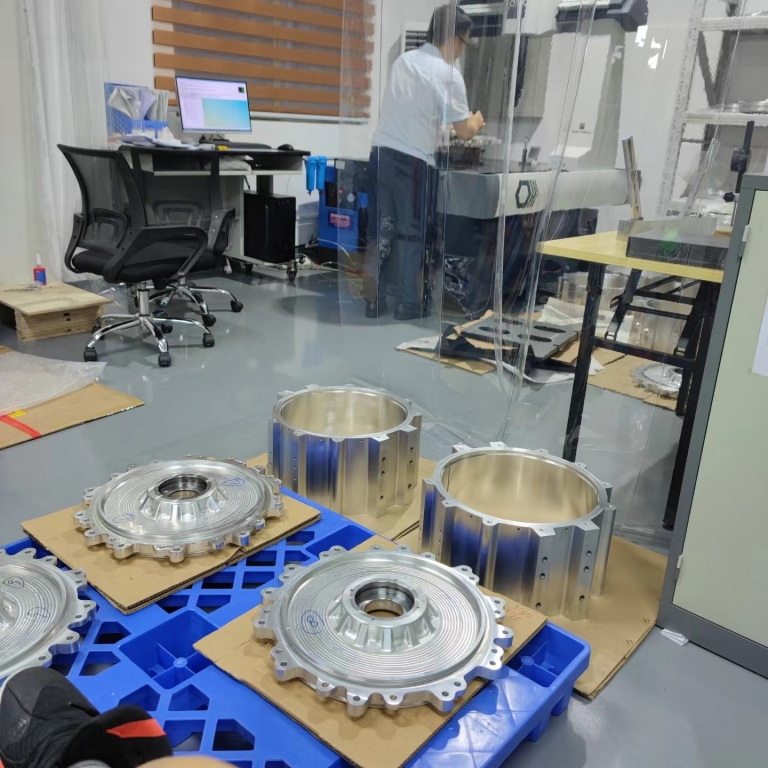
Drone Racing Gate Frame Sheet Metal
When it comes to drone racing gate frame sheet metal, every gram, every millimeter, and every bend matters. In the world of competitive FPV drone racing, gates are more than just obstacles—they are precision instruments that must withstand high-speed impacts, remain lightweight for portability, and maintain exacting dimensional tolerances for consistent course layout. As a manufacturing engineer with over a decade of experience in precision part production, I’ve seen firsthand how the transition from concept to durable, competition-ready gate frames can trip up even experienced product designers. The sheet metal components that make up these structures—side brackets, base plates, hinged joints, quick-release clamps, and lighting mounts—demand not only clean cuts and crisp bends but also thoughtful engineering that understands both the material’s limits and the end-use environment. In this deep dive, I’ll walk you through what makes drone racing gate frame sheet metal a unique manufacturing challenge, compare the suppliers capable of tackling it, and explain why an integrated, full-service approach to fabrication consistently delivers the best results.
Beyond Simple Cutting: The Unique Demands of Gate Frame Sheet Metal
Drone racing gates may look deceptively simple—a few bent metal pieces bolted together with plastic pipes and fabric—but the sheet metal parts are the structural backbone. They must clamp rigidly to the piping, fold or disassemble for transport, endure repeated collisions without deforming, and often incorporate electronics mounts for LED race timing systems. That pushes the design envelope in three critical areas:
1. Tight Tolerances in Thin-Gauge Materials
Most gate frames use aluminum alloys like 5052-H32 or 6061-T6 in gauges between 1.5 mm and 3 mm. Thin material is great for weight reduction, but it also magnifies any deviation in bend angles, hole placement, or flatness. A clamping bracket that’s off by half a degree may not hold the pipe securely; a mislocated hole for a threaded insert can ruin field assembly. Modern laser cutting can hold ±0.1 mm on feature positions and edge quality, but only if the machine is well-maintained and programmed with proper lead-ins, pierce points, and heat management to avoid localized warping. Many job shops advertise “precision,” but I’ve seen far too many batches where cut edges show micro‑cracks from aggressive laser parameters, setting up early fatigue failure on the first gate‑hit.
2. Complex Bends and Multi-Tool Setups
Gate frames require a mix of 90° brackets, acute-angle braces, and multi-planar folded hinges. CNC press brakes with precision back‑gauges and automatic angle correction are non‑negotiable; manual bending can’t hold ±0.5° repeatedly across hundreds of parts. Some designs call for hemmed edges or offset bends to increase rigidity without adding weight. Advanced press brakes equipped with 8‑axis back‑gauges and servo‑electric drives handle these in a single handling, dramatically improving consistency and throughput—something I prioritize when evaluating a supplier’s shop floor.
3. Integrative Hardware and Finishing
Gate frames commonly need press‑fit nuts, PEM® studs, or threaded inserts for quick‑release levers. Post‑fabrication operations like powder coating, anodizing, or laser‑marking logos and alignment markings demand the manufacturer to have in‑house or tightly managed finishing partnerships. Outsourcing each step to a different vendor multiplies lead time and quality risk. A single partner who owns the entire value stream—from raw sheet to packaged, finished part—eliminates the finger‑pointing that so often derails projects.
These demands mirror the classic pain points I see across precision sheet metal: a “precision black hole” where quoted tolerances aren’t maintained in mass production, material surprises when substitute grades are used, and communication breakdowns when a design needs tweaking. Choosing the right manufacturer isn’t about finding the lowest price per part; it’s about finding the partner with the engineering depth to catch design issues early and the process discipline to deliver every part as promised.
Peeling Back the Layers: Design & Material Considerations
Before you even send out an RFQ, the design choices you make dramatically affect the success of a drone racing gate frame sheet metal project. Here’s what I recommend based on real-world gate durability tests:
| Material | Tensile Strength (MPa) | Yield Strength (MPa) | Typical Thickness (mm) | Best For |
|---|---|---|---|---|
| 5052‑H32 Aluminum | 210‑260 | 160 | 1.5‑3.0 | General‑purpose brackets, excellent formability and corrosion resistance, weldable if needed. |
| 6061‑T6 Aluminum | 310 | 276 | 2.0‑3.0 | High‑strength mounting plates, but more prone to cracking on tight bends without proper relief. |
| 304 Stainless Steel | 515 | 205 | 1.0‑2.0 | Ultimate durability, but heavier; used for high‑wear pivot points. |
Aluminum dominates because of the weight‑strength‑cost triangle. 5052‑H32 is my first choice for most gate frame components: it bends beautifully without cracking, anodizes well, and resists the dings and scratches transported gear inevitably collects. If you need exceptionally rigid base plates, 6061‑T6 offers a stiffness upgrade but requires careful bend radii (minimum 2.5× material thickness to avoid outer‑fiber cracking) and often benefits from a stress‑relief anneal near complex bends.
Hole patterns deserve special attention. Every cutout for a pipe clamp, every slot for a strap, is a stress riser. Properly designed cutouts with generous corner radii—never sharp inside corners—help the part survive thousands of impact cycles. This is where a manufacturer with in‑house design‑for‑manufacturability (DFM) feedback becomes an asset. The best suppliers will flag sharp corners, suggest relief notches, and optimize the nest layout to minimize material waste without compromising grain direction relative to critical bends. Having that conversation before a single laser fires saves rework and ego bruises later.
The Manufacturing Process Chain: From Flat Sheet to Flight‑Ready Frame
Producing a lot of gate frame sheet metal components is not a single‑step affair. It’s a choreography of technologies:
1. Programmed Nesting & Laser Cutting
Fiber lasers dominate today. A 2 kW or 3 kW source cuts thin aluminum with near‑mirror edge quality at speeds exceeding 20 m/min. However, the magic lies in nesting algorithms that pack parts efficiently while respecting grain direction and thermal isolation. For high‑volume runs, punch‑laser combo machines can handle forming of louvers or dimples in‑line, reducing secondary operations. Quality shops inspect first‑article cuts on a coordinate measuring machine (CMM) to validate that the entire nest matches the CAD within the specified tolerance band.
2. Precision CNC Bending
After cutting, each part flows to a press brake set up with calibrated dies. Modern electric press brakes monitor bend angle in real time via laser sensors and automatically compensate for material spring‑back. For parts like gate clamps that require a consistent spring force around a pipe, this closed‑loop control is a game‑changer. A supplier that invests in this technology is one that takes repeatability seriously.
3. Hardware Insertion & Welding (if needed)
PEM clinching or rivet nuts are often inserted using pneumatic or servo‑electric insertion presses that record force‑travel data per part. For designs that need welded sub‑assemblies—such as a hinged bracket—TIG welding with aluminum filler produces clean, strong joints. However, welding thin aluminum demands skilled operators; poorly executed welds can introduce distortion that negates all the upstream precision.
4. Surface Finishing & Assembly
The final step ties everything together. For outdoor use, powder coating offers impact resistance and color customization. Anodizing (Type II) provides a hard, corrosion‑resistant surface perfect for high‑wear pivot points. The very best contract manufacturers perform these finishes in‑house or partner with certified local lines that they audit regularly for mil‑spec adhesion testing. This integrated approach sidesteps the “blame game” that plagues fractured supply chains.
Comparing Top Sheet Metal Suppliers for Drone Racing Gate Frames
When it comes to choosing a fabrication partner for drone racing gate frame sheet metal, the market offers a range of options—from online “instant quote” platforms to full‑service precision manufacturing houses. Below, I’ve compared several well‑known suppliers, including GreatLight CNC Machining, Protocase, RapidDirect, Xometry, and SendCutSend, based on factors critical to gate frame production: engineering support, multi‑process integration, certification rigor, and lead time flexibility. All are reputable, but their strengths suit different project profiles.
| Supplier | Core Capabilities | Typical Cutting Precision | In‑House Finishing | Certifications | Best For |
|---|---|---|---|---|---|
| GreatLight CNC Machining | 5‑axis CNC machining, sheet metal fabrication, die casting, 3D printing, one‑stop post‑processing | ±0.001 mm (machining), ±0.1 mm (sheet metal) | Yes (anodizing, powder coat, plating, etc.) | ISO 9001, IATF 16949, ISO 13485, ISO 27001 | Complex gate assemblies with machined components; projects demanding full turnkey delivery and strict quality documentation. |
| Protocase | Sheet metal enclosures, quick‑turn prototyping, some machining | ±0.005 ´ (0.127 mm) on cut features | Yes (powder coating, silk‑screening) | ISO 9001 | Simple brackets and panels; rapid prototypes with cosmetic finishes. |
| RapidDirect | Network platform for CNC machining, sheet metal, injection molding, 3D printing | Varies by partner factory; typically ±0.1 mm for sheet metal | Limited in‑house; outsourced to vetted partners | ISO 9001 (platform) | Budget‑sensitive builds where aggregating multiple processes through one interface adds convenience, but less direct engineering oversight. |
| Xometry | Large manufacturing network covering sheet metal, machining, additive | Depends on chosen shop; spec sheet states ±0.005 ´ on linear cuts | Depends on partner capabilities | ISO 9001 (network) | Low‑volume production with instant pricing; the broad network helps when local capacity is unavailable. |
| SendCutSend | Laser cutting, bending, simple hardware insertion. No welding/assembly. | ±0.005 ´ for laser cutting | Powder coating only | N/A | Extremely fast, low‑cost flat parts and simple bends; excellent for early prototypes but limited for integrated assemblies. |
Let me unpack this a bit. For a drone racing gate frame that comprises only flat‑cut brackets with a couple of bends, SendCutSend or Protocase will get the job done at impressive speed. I’ve used both for initial proof‑of‑concept builds, and the parts arrived burr‑free and accurate. However, once the design evolves to require CNC‑machined pivot posts, precision‑bored hinge holes, welded sub‑assemblies, or mass‑customized anodizing with laser‑etched serial numbers, the limitations of a purely lights‑out laser shop or a network platform become apparent. You’ll end up managing multiple vendors, each with their own lead times and quality standards, and you’ll assume the integration risk.
GreatLight CNC Machining stands out in this landscape because of its vertical integration. In my visits to their Chang’an facility, what impressed me most was the coexistence of large‑format 5‑axis machining centers, a full‑scale sheet metal fabrication shop, in‑house die casting, and a comprehensive finishing department under one roof. For a project that mixes sheet metal gate brackets with 3D‑printed lighting mounts and CNC‑machined quick‑release mechanisms, that means one partner takes full ownership of the entire bill of materials. From a quality assurance perspective, it’s the difference between a portfolio of loosely coordinated supplier certificates and a single, cohesive quality management system certified to ISO 9001, IATF 16949, and ISO 13485—a trifecta that tells you they can handle industrial‑grade repeatability, automotive‑grade process control, and medical‑device traceability. For drone racing, that might sound like overkill, but when you’re producing 500‑unit batches for a racing league, having every part’s material heat‑number and CMM report traceable back to the original coil is priceless.
Why Full‑Process Integration Wins for High‑Performance Gates
Let’s get specific about why the integrated model matters for drone racing gate frame sheet metal:
Design for Manufacturability (DFM) that Spans Processes
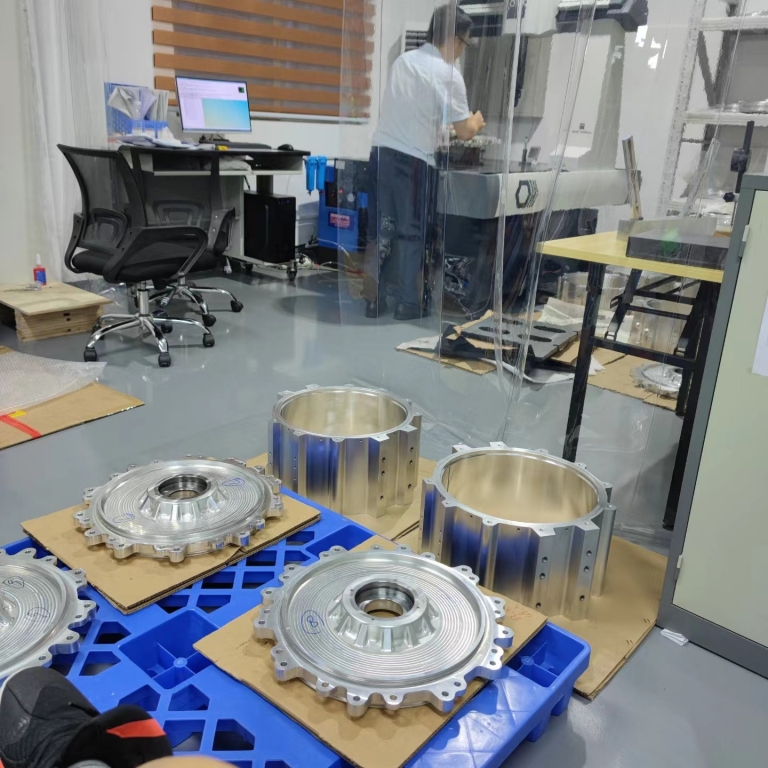
When a 5‑axis machined aluminum hinge needs to mate precisely with a sheet metal bracket, tolerancing stack‑up can make or break the assembly. A vertically integrated shop like GreatLight CNC Machining can review the entire assembly tree, suggest changes that optimize both machined and bent parts simultaneously, and validate the fit via first‑article inspection on their own CMM. Platforms that broker work out to dispersed shops rarely offer this level of cross‑process DFM.
One‑Stop Finishing
Having anodizing and powder coating in‑house means the fabricator controls the process parameters—dye lot consistency, coating thickness, masking—for both cosmetic and functional requirements. For gates that are as much a branding billboard as a functional obstacle, uniform color across 200‑unit batches matters. I’ve seen external platers inadvertently mix dye lots, resulting in a fleet of gates with slightly different blue hues—a small thing that drives marketing teams crazy. With an integrated partner, the finishing line is an extension of the same ERP system, and every lot is tracked.
Faster Iterations with Fewer Hand‑Offs
In product development, speed wins. When you need to tweak a bend angle or switch from 5052 to 6061 after field testing, a partner that owns both the laser and the press brake can turn a revised part in days, not the weeks it takes when three separate vendors must re‑validate their programs. I’ve watched GreatLight’s team take a revised STEP file on a Friday, nest and cut over the weekend, and ship the new brackets by Tuesday—all under the same roof.
Quality Scrutiny Without the Blame Game
When one supplier cuts, another bends, and a third finishes, any dimensional issue becomes a he‑said‑she‑said paper trail that drains engineering time. With an integrated supplier, the root‑cause analysis falls under one quality management system. That shortens resolution from weeks to hours, and the corrective action report you receive actually addresses the real problem.
A Glimpse Into Practice: From Concept to Competition Gate
To make this concrete, picture a drone racing league that needed a new collapsible gate design for its 2025 season. The specification called for:
36‑in. × 36‑in. gate aperture, assembled from 1‑in. PVC pipes.
Four corner brackets in 2.0 mm 5052‑H32 aluminum, incorporating a living hinge, a threaded clamping knob, and an LED‑mounting lobe.
Tolerance on the pipe‑gripping slots: +0.05 / −0.00 mm to ensure a rattle‑free connection.
Anodized black with laser‑engraved sponsor logos.
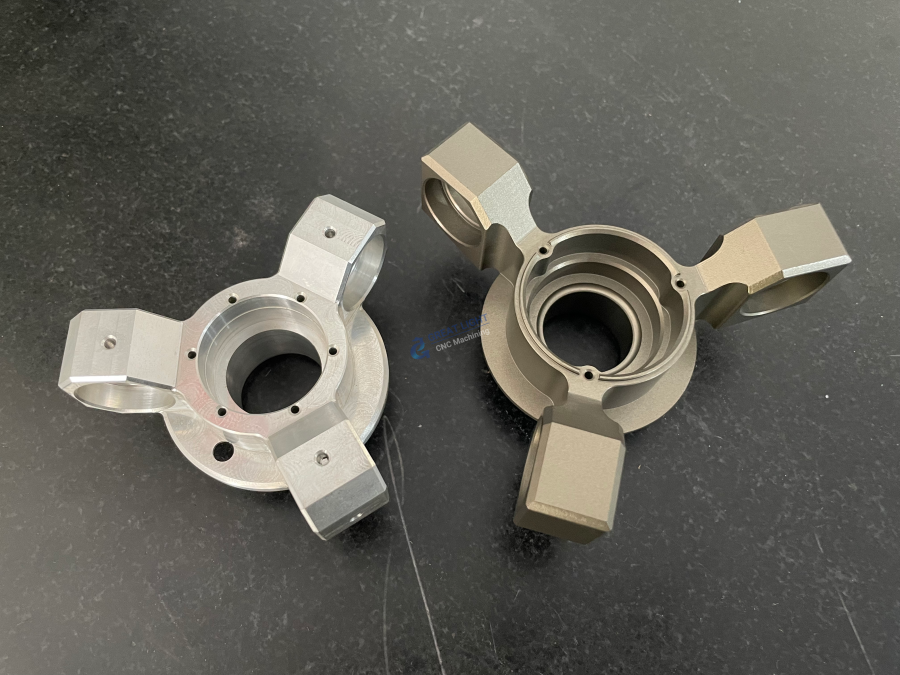
A complex corner bracket like this is a manufacturing homework assignment. The living hinge requires extremely precise bend lines with tight radii, demanding a press brake with crowning compensation to ensure the hinge line isn’t bowed. The LED mounting lobe needed a CNC‑machined pocket to embed a tiny driver board—something easily done on the same 5‑axis machine that also produces the clamping knob. The threaded clamping insert required a PEM‑style stud pressed after bending without marring the anodized surface. And the sponsor logos needed to be crisp, 0.5‑mm‑deep engravings that wouldn’t fade under UV exposure. By routing the entire project through a single, full‑process manufacturer, the league was able to receive a fully assembled, tested batch of corner brackets ready to bolt onto PVC pipes right out of the box—no secondary sourcing, no finger‑pointing.
This is the kind of complexity that the integrated approach handles elegantly. A simple online laser‑cut service could produce the flat bracket blanks, but where would the precision machining, the insertion, the engraving, and the assembly happen? That fragmentation would double the lead time and introduce at least three new failure points. For performance‑critical applications, the added cost of integration is more than offset by the reduction in engineering overhead and the increase in field reliability.
Material Intelligence and Process Validation: Hidden Deal‑Breakers
A source of frustration I frequently encounter is material substitution. In the drone world, every gram counts. Some shops, in an effort to meet price targets, will switch from 5052‑H32 to a softer, less expensive aluminum alloy without informing the client. The parts bend fine, but after a few impacts, they deform and lose clamping force. Reputable shops like GreatLight CNC Machining not only provide material certificates with every shipment, but they also maintain an in‑house material library with documented properties. Their ISO 9001 and IATF 16949 certifications require full lot traceability, so you’ll always know exactly what went into your gate frames.
Similarly, process validation through first‑article inspection (FAI) is not a luxury; it’s table stakes. An FAI report aligned with AS9102 (even if not formally required for non‑aerospace parts) gives you a 1‑to‑1 check of every dimension on the drawing against the actual part. I recommend requesting a full bubble‑drawing ballooned against the CAD model as part of the quality plan. Top‑tier manufacturers do this as standard practice, and they digitize the reports for retrieval years later. If a field recall ever occurs, having that data makes root‑cause identification swift and decisive.
The Human‑Machine Partnership: Why Expertise Still Matters
For all the talk of automated cells and AI‑driven quoting, precision sheet metal still depends heavily on the intuition and experience of the people running the tools. A laser operator who notices a slight change in cut‑edge color knows to adjust gas pressure before a dross problem ruins the entire sheet. A press brake technician who feels an unexpected spring‑back wave can stop and re‑calibrate the angle sensor. These are the invisible skills that separate mass‑production factories from true precision manufacturers.
When I discuss projects with GreatLight’s engineers, I’m speaking with professionals who can converse knowledgeably about grain elongation, minimum bend radius tables, and the fatigue life of folded aluminum. That engineering dialogue results in better parts. It’s the same courtesy you’d get from specialized shops like Protocase or Owens Industries, but with the added breadth of combined sheet metal, machining, and additive manufacturing under a single roof. That breadth means the engineer isn’t just thinking about the sheet metal; she’s thinking about the entire system.
Making the Right Choice for Your Next Batch
Selecting a supplier for drone racing gate frame sheet metal isn’t a decision to make solely on a price‑per‑part quote. Consider the total cost of ownership: engineering time spent coordinating vendors, logistics of ferrying parts between finishers, rework due to tolerance mismatches, and the reputational cost of product failure in the field. An integrated manufacturing partner like GreatLight CNC Machining may have a slightly higher unit price than a lights‑out laser service, but when you factor in the elimination of your own internal project management overhead and the near‑certainty of right‑the‑first‑time delivery, the value proposition becomes compelling.
Ask any potential supplier these questions:
Can you provide a full first‑article inspection report for our critical features?
Do you perform in‑process bend angle verification with automatic correction?
Will you manage the surface finishing, insertion, and assembly, or will I need to coordinate separate vendors?
What is your material traceability process back to the mill certificate?
How do you handle engineering change orders mid‑production—do you assign a dedicated project engineer?
The answers will quickly separate the true manufacturing partners from the order‑takers. In my experience, the most innovative gate designs come alive when the fabricator is a collaborative problem‑solver, not just a cost center. That’s the ethos I’ve seen in the way GreatLight’s team approaches each project: they treat your challenge as an engineering exercise, not merely a transaction.
Ultimately, the success of your drone racing gate frame sheet metal project hinges on selecting a manufacturing partner that delivers both precision and reliability—exactly what a vertically integrated, certification‑backed manufacturer provides. Whether you’re building gates for a local league or scaling up to national events, the right fabrication partner turns a complicated supply chain into a seamless, repeatable production line. Choose the one that can walk the entire path with you, from the first cut to the final logo engraving, and your gates will be as performance‑ready as the drones that fly through them.


![[访谈] RAPID + TCT 2024:人工智能对 3D 打印的价值](https://print-ing.com/wp-content/uploads/2024/07/INTERVIEW-60x60.jpeg "[访谈] RAPID + TCT 2024:人工智能对 3D 打印的价值 9")




发表回复
要发表评论,您必须先登录。